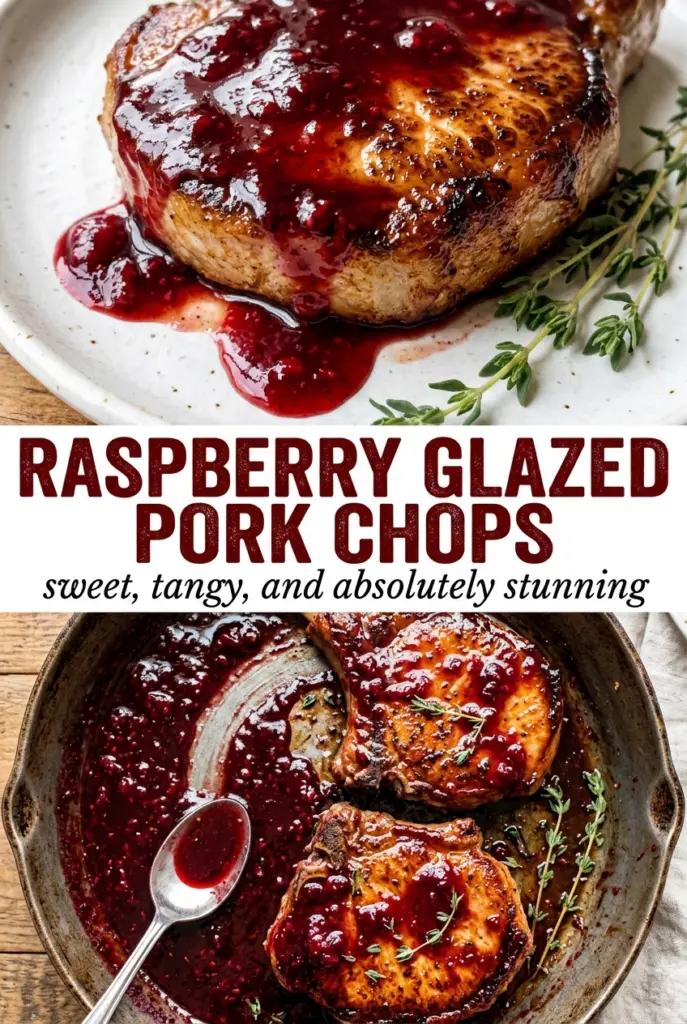
Sticky raspberry glazed pork chops hit that sweet-savory balance that keeps this dish from feeling ordinary. The glaze turns glossy and jewel-toned in the pan, clinging to the pork in a way that looks polished but still tastes homey. When the chops are browned first and finished in the sauce, you get a deep sear on the outside and a bright, tangy glaze that wakes up every bite.
The key here is using raspberry jam as the base instead of fresh fruit alone. Jam gives the sauce body and sweetness from the start, while balsamic vinegar and Dijon pull it back from candy-sweet into something with depth. The rosemary and garlic don’t shout; they steady the fruit and keep the glaze tasting balanced instead of dessert-like.
Below, I’ll walk you through the sear that builds flavor fast, the small simmer that turns the sauce into a true glaze, and a few smart swaps if you need to work with what’s already in your kitchen.
The glaze thickened up beautifully and coated the pork chops instead of running all over the plate. I used bone-in chops like suggested, and they stayed juicy with a nice sear.
Raspberry Glazed Pork Chops with that sticky ruby finish are the kind of dinner you’ll want to make again when you need something fast but still a little special.
The Seared Chop Is the Difference Between Juicy Pork and Gray, Steamed Meat
Pork chops can go dry fast if they’re rushed, and they can go bland just as fast if they never get a proper crust. The sear here isn’t just about color. It gives the glaze something to cling to later, and it builds the browned bits in the pan that the sauce needs.
Bone-in chops hold up better than boneless in this kind of quick skillet recipe because the bone slows down the heat a little and helps the meat stay juicy. The other key is not crowding the pan. If the chops are packed in too tightly, they’ll steam instead of sear, and the glaze won’t have the same depth when it goes in.
- Bone-in pork chops — These stay juicier than thin boneless cuts and give you more forgiveness during the sear. One-inch thickness is the sweet spot; thinner chops cook too fast and can turn tough before the glaze is ready.
- Raspberry jam — This is doing the heavy lifting for body and sweetness. A smooth jam works best, but if yours has a lot of seeds, that’s fine; the glaze will still reduce properly.
- Balsamic vinegar — It keeps the glaze from tasting flat. If you swap in apple cider vinegar, the sauce will be sharper and less rounded, but it still works in a pinch.
- Dijon mustard — Dijon adds a quiet bite and helps the glaze emulsify a little, which keeps it from tasting like warmed fruit preserves. Grainy mustard can work, but it’ll leave a rougher texture.
- Fresh rosemary — Fresh rosemary is worth using here because dried rosemary can taste woody and aggressive in such a quick sauce. If you only have dried, use about a third as much and crush it between your fingers first.
What Each Ingredient Is Actually Doing in This Pork Dish

- Pork (cut properly for the method) — Pat dry so it browns instead of steams. Even thickness ensures uniform cooking.
- Oil or butter (the browning medium) — High-heat oil essential for proper searing. Creates pan flavor.
- Seasonings (salt, pepper, spices) — Build flavor boldly. Pork carries the entire profile.
- Aromatics (garlic, onion, ginger) — Cook with fat to bloom flavors. Become foundation of dish.
- Sauce or liquid (the moisture keeper) — Keeps lean pork from drying. Balance richness with acid.
- Vegetables (if using) — Layer by cooking time so everything finishes together. Hard vegetables first.
- Acid (vinegar, wine, citrus) — Brightens sauce and prevents heavy flavor. Add near end.
- Proper doneness (145°F, slightly pink center) — Pork is safe at this temp and stays juicy. Higher temps dry it out.
How to Build the Glaze So It Sticks to the Pork
Getting the Sear Right
Season the pork chops well with salt and pepper, then lay them into the hot oil and leave them alone until the first side releases easily. That takes about 4 to 5 minutes, depending on the thickness of the chops and your skillet. If they stick when you try to turn them, they’re not ready yet. A good crust will be deep golden and set, not pale and spotty.
Turning the Pan Bits Into Sauce
Once the pork comes out, keep the same skillet on the stove. Add the garlic and stir it for only about 30 seconds; if it browns, it turns bitter before the jam even goes in. Then add the jam, balsamic, Dijon, rosemary, and broth. The mixture should look loose at first, then bubble into a glossy sauce that starts to coat the spoon after a few minutes.
Finishing Without Drying Out the Chops
Return the pork to the pan and spoon the glaze over the top as it simmers for another 2 to 3 minutes. You’re not cooking the chops from raw here; you’re warming them through and letting the glaze cling. If the sauce gets too thick before the pork is heated, splash in a tablespoon of broth and stir. You want a sticky glaze, not a paste.
Honey-Balsamic Version
Swap half the raspberry jam for honey if you want a glaze that leans a little less fruity and a little more round and sticky. The sauce will be smoother and slightly less tart, but you’ll lose some of the bright raspberry color and berry edge.
Dairy-Free and Gluten-Free by Default
This recipe already works for both diets as written, as long as your jam and broth are certified gluten-free if that matters for your kitchen. That’s one reason this kind of skillet glaze is such a useful weeknight dinner: it doesn’t need flour or cream to feel complete.
Using Chicken Instead of Pork
Chicken cutlets or boneless thighs work well with this glaze if pork isn’t what you have. Cutlets cook faster and give you a lighter result, while thighs stay juicier and handle the sweet-tangy sauce with more richness.
Storage and Reheating
- Refrigerator: Store leftovers in an airtight container for up to 3 days. The glaze will thicken as it chills, which is normal.
- Freezer: It freezes reasonably well for up to 2 months, though the glaze may loosen a bit after thawing. Freeze the pork and sauce together, then thaw in the fridge overnight.
- Reheating: Warm gently in a skillet over low heat with a splash of broth or water. High heat is the mistake here; it dries the pork out and can make the glaze sticky in the wrong way.
Answers to the Questions Worth Asking
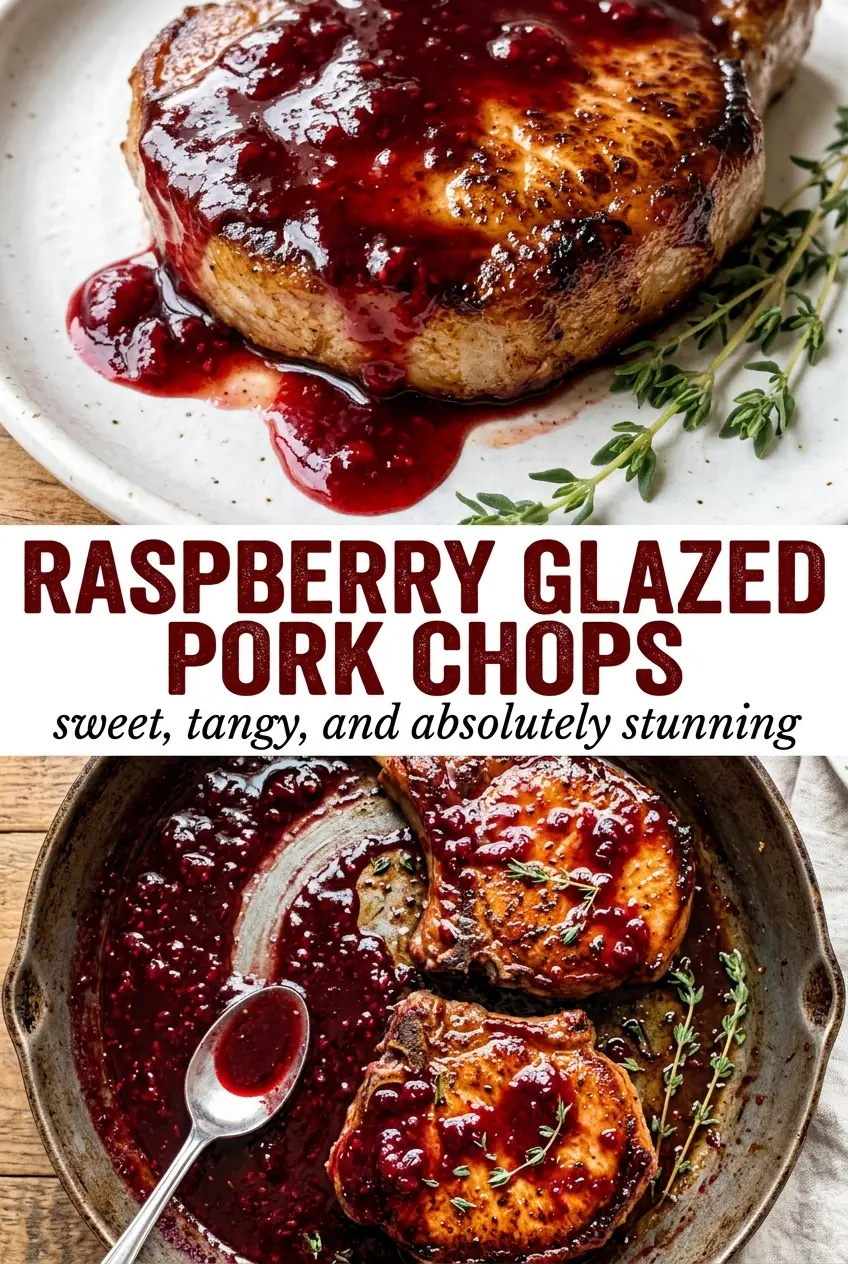
Raspberry Glazed Pork Chops
Ingredients
Equipment
Method
- Season the pork chops with salt and pepper.
- Heat the olive oil in a skillet over medium-high heat, then sear the chops for 4–5 minutes per side until golden; set aside.
- In the same pan, sauté the garlic for 30 seconds.
- Stir in the raspberry jam, balsamic vinegar, Dijon mustard, rosemary, and chicken broth.
- Simmer the sauce for 3–4 minutes until it reduces to a glaze.
- Return the pork chops to the pan and coat them in the raspberry glaze.
- Cook for 2–3 minutes until the pork chops are heated through.
- Garnish with fresh raspberries and rosemary, then serve.