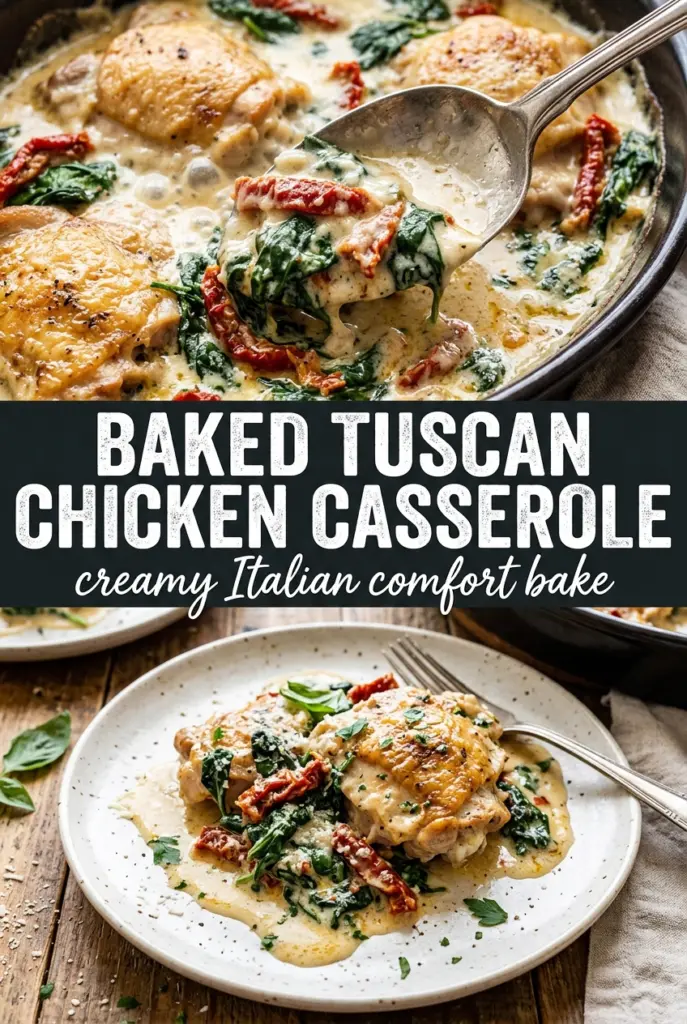
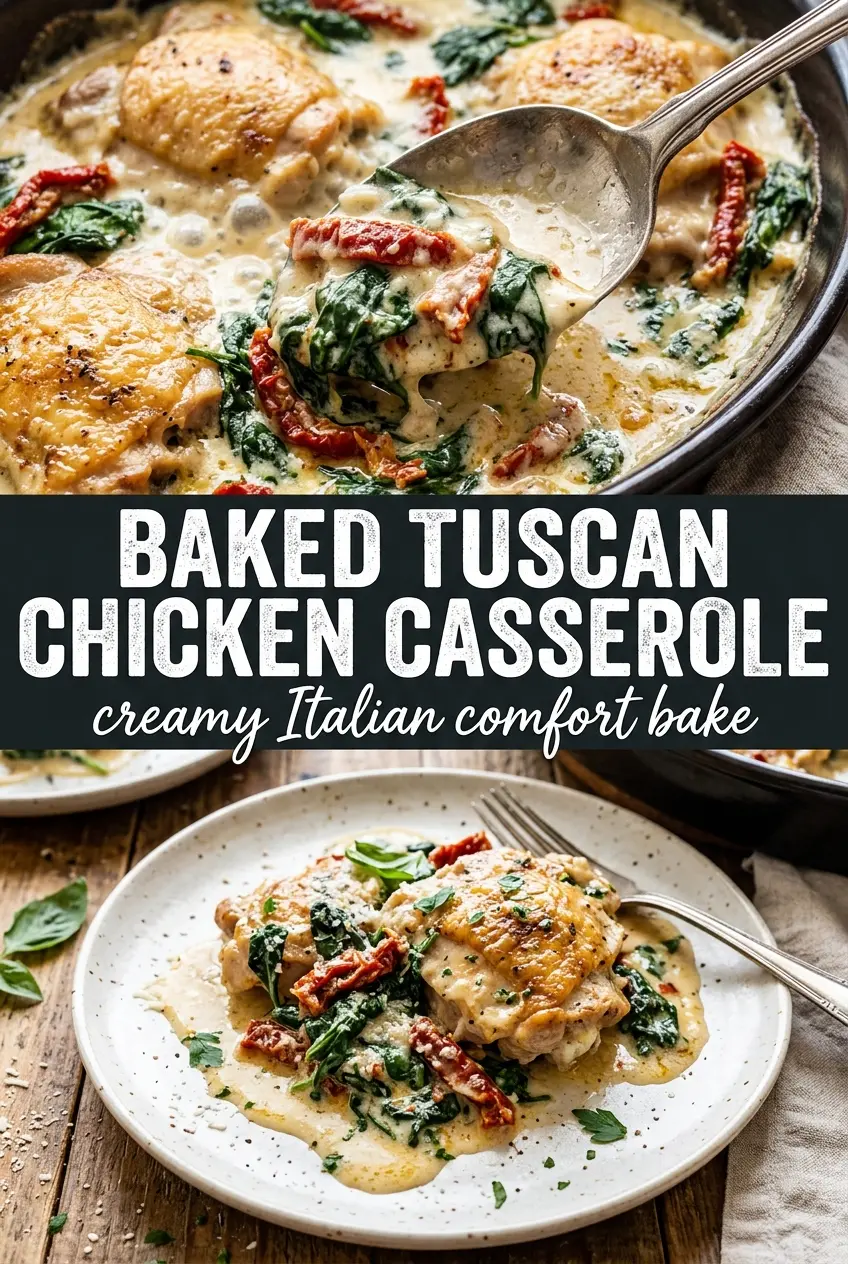
Golden chicken thighs tucked into a silky Parmesan cream sauce are what make this baked Tuscan chicken casserole worth putting on repeat. The skin stays crisp enough to give you that first satisfying bite, while the sauce around it turns rich and glossy with sun-dried tomatoes, garlic, and spinach folded in at the end. It eats like something you’d order at a cozy restaurant, but it lands on the table with one pan and a lot less fuss.
The part that makes this version work is the sear before the bake. That deeply browned skin does more than look good; it seasons the sauce as the fat renders into the pan. Using bone-in, skin-on thighs keeps the chicken juicy through the oven time, and stirring the spinach in after baking keeps it bright instead of swampy. The cream and Parmesan go in after the pan is deglazed, which keeps the sauce smooth instead of grainy.
Below you’ll find the exact cues that tell you the chicken is ready, plus a few smart swaps for making this dish lighter, lower-carb, or easier to stretch for a bigger crowd.
The sauce stayed silky and didn’t split, and the chicken skin was still crisp after baking. I served it over rice and my husband went back for seconds before I even sat down.
Baked Tuscan chicken casserole with crispy skin and a creamy sun-dried tomato sauce is the kind of dinner that disappears fast.
The Seared Skin Is What Keeps This Casserole from Going Bland
If you skip the sear, you lose the best part of this dish: the chicken skin turns pale and soft, and the sauce has less depth. That first 6 to 7 minutes skin-side down is where the flavor starts. The fat renders, the bottom of the pan collects browned bits, and those bits become the base of the sauce instead of going to waste.
The other mistake people make is rushing the oven step with the sauce too thick or too thin. This recipe wants a sauce that looks loose in the pan before it goes into the oven. It thickens as the chicken finishes cooking and the Parmesan melts into it. If it looks heavy before baking, it usually turns pasty by the end.
- Chicken thighs — Bone-in, skin-on thighs stay tender and juicy while the sauce finishes around them. Breasts can work, but they dry out faster and don’t give you the same built-in richness.
- Sun-dried tomatoes in oil — These bring concentrated tomato flavor and a little oil from the jar helps carry the garlic and spices. Drain them, but don’t rinse them; you want that seasoned surface flavor.
- Heavy cream — This is what gives the sauce its body. Half-and-half can work in a pinch, but it won’t thicken as smoothly and is more likely to look thin once the spinach goes in.
- Parmesan — Grate it yourself if you can. Pre-shredded cheese often melts with a grainier texture because of the anti-caking coating.
- Baby spinach — Add it at the end so it wilts into the sauce instead of disappearing. Mature spinach needs longer and can make the sauce feel watery.
- Chicken broth — This loosens the browned bits in the pan and keeps the sauce from feeling too heavy. Use a low-sodium broth if you want more control over the seasoning.
What Each Ingredient Is Actually Doing in This Chicken Casserole

- Chicken (the protein foundation) — Cut into uniform pieces or use breasts. Don’t overcook or it becomes dry.
- Sauce or cream (the moisture keeper) — This prevents chicken from drying. Balance richness with acid.
- Base ingredient (rice, pasta, or vegetables) — This provides substance. Choose what works with your sauce.
- Cheese (optional melting finish) — Layer some inside and top with more. Creates golden, bubbly top.
- Seasonings (salt, pepper, garlic, herbs) — Build flavor boldly. Taste before baking and adjust.
- Vegetables (if using) — Add by cooking time so everything finishes together. Softer vegetables last.
- Baking temperature (350-375°F) — This cooks chicken through without drying edges. Use thermometer for 165°F.
- Resting time (5-10 minutes) — This lets casserole set so it slices cleanly. Don’t cut too early.
Building the Sauce Around the Chicken, Not Beside It
Seasoning and Searing the Thighs
Pat the chicken dry before seasoning it. Moisture on the skin is the enemy of browning, and wet chicken tends to steam instead of sear. Set the thighs skin-side down in hot olive oil and leave them alone until the skin is deep golden and releases without dragging. If they stick, they are not ready yet. Flip them just long enough to color the second side, then pull them out.
Cooking the Garlic and Tomatoes in the Pan
Use the same pan without cleaning it out. Those browned bits stuck to the bottom are what give the sauce its backbone. Cook the garlic and sun-dried tomatoes for about a minute, just until the garlic smells sweet and the tomatoes look glossy. If the garlic starts to brown hard, lower the heat right away so it doesn’t turn bitter.
Turning the Broth and Cream into a Sauce
Pour in the broth and scrape the pan until the bottom is clean. That deglazing step is what pulls all the flavor into the sauce instead of leaving it behind on the skillet. Stir in the cream, Parmesan, Italian seasoning, and red pepper flakes over steady medium-low heat. If the sauce looks slightly loose at this stage, that is exactly right; it will tighten in the oven.
Finishing in the Oven
Return the chicken skin-side up so the tops stay exposed as they bake. Uncovered heat helps the skin stay crisp and lets the sauce reduce around the edges. Bake until the chicken reaches 165°F in the thickest part and the sauce bubbles at the sides. Stir the spinach in after baking so it wilts gently instead of turning dull and overcooked.
How to Adapt This Without Losing the Creamy Tuscan Feel
Make it dairy-free without thinning the sauce
Use full-fat canned coconut milk in place of the cream and skip the Parmesan or use a dairy-free hard cheese you know melts well. The sauce will taste a little different, but it still turns silky if you keep the heat low and don’t boil it hard after the coconut milk goes in.
Use chicken breasts when that’s what you have
Chicken breasts work, but they need less oven time and a little more attention. Sear them just until browned, then bake until they hit 160°F and rest off the heat for a few minutes; they’ll carry over to safe temperature without drying out. The sauce stays the same.
Make it lower-carb and still filling
This dish already fits a low-carb table well on its own. Serve it over cauliflower mash, zucchini noodles, or wilted greens instead of pasta or rice, and spoon plenty of sauce over the top so the plate still feels complete.
Stretch it for more people
Add an extra half cup of broth and another handful of spinach, then nestle in a few more thighs if your pan is large enough. The sauce won’t be quite as thick, but it keeps the same flavor and gives you more spooning sauce for potatoes, rice, or bread.
Storage and Reheating
- Refrigerator: Store covered for up to 4 days. The sauce thickens as it chills, and the chicken skin softens a bit, but the flavor stays excellent.
- Freezer: It freezes better than many cream sauces if you pull the chicken off the bone first. Freeze in a tightly sealed container for up to 2 months, though the sauce may separate slightly after thawing.
- Reheating: Reheat gently on the stove or in a covered dish at 325°F with a splash of broth or cream. High heat is the mistake here; it can break the sauce and dry the chicken before the center is hot.
Answers to the Questions Worth Asking
Baked Tuscan Chicken Casserole
Ingredients
Equipment
Method
- Preheat the oven to 400°F, and set out a large oven-safe skillet or braiser. Season chicken thighs with salt, pepper, garlic powder, Italian seasoning, and smoked paprika.
- Heat olive oil in the skillet over medium-high heat, then sear chicken skin-side down for 6-7 minutes until deeply golden. Flip and sear for 3 more minutes, then remove the chicken to a plate.
- Cook garlic and sun-dried tomatoes in the same pan for 1 minute, scraping up browned bits. Pour in chicken broth and deglaze, then stir in heavy cream, Parmesan cheese, Italian seasoning, and red pepper flakes until combined.
- Return chicken skin-side up to the pan, then bake uncovered for 20-22 minutes at 400°F until the chicken reaches 165°F and the sauce is bubbling around the thighs.
- Stir baby spinach into the sauce until wilted, so it turns bright green and disperses through the creamy pool. Garnish with fresh basil and serve.