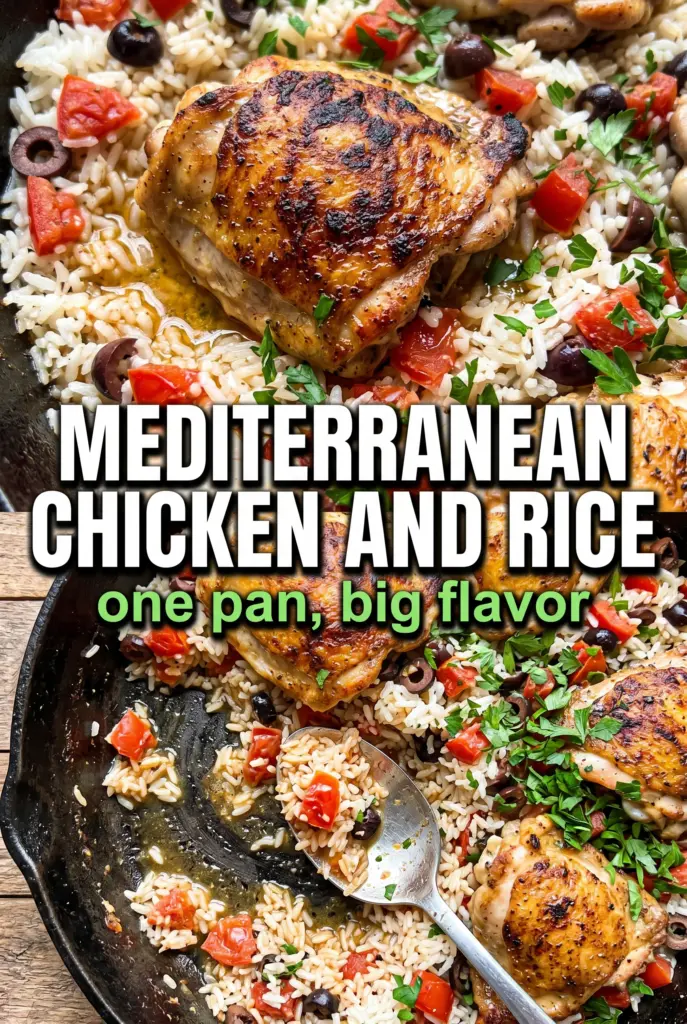
Golden chicken thighs, lemony rice, briny olives, and soft feta turn the whole pan into a full dinner with almost no extra work. The rice cooks underneath the chicken and picks up every bit of seasoned drippings, which is why this dish tastes layered instead of just mixed together. When the skin finishes uncovered at the end, it comes out crisp while the rice stays fluffy and fragrant.
The trick here is starting the rice with broth and the leftover marinade before the chicken goes on top. That gives the grains a head start and seasons them from the inside, so they don’t taste flat under all that rich chicken. The brief marinade helps the surface of the chicken take on lemon and garlic without needing hours in the fridge, and the foil cover keeps the rice from drying out before the thighs are cooked through.
Below you’ll find the small details that keep the rice from turning mushy, how to get the chicken skin browned without overcooking the grains, and a few smart swaps if you need to adjust what goes into the pan.
The rice came out fluffy and full of lemon flavor, and the chicken skin actually crisped up even with the rice underneath. I was worried the olives would overpower it, but they gave the whole pan just the right salty bite.
Save this Mediterranean Chicken and Rice for the night you want crisp chicken, lemony rice, and one pan that does all the work.
The part that keeps the rice fluffy under the chicken
The biggest mistake with chicken and rice baked in one pan is crowding in too much liquid too late, then covering the dish so tightly that the grains steam into paste. Here, the rice gets its broth before the chicken goes in, and that matters. The grains start cooking immediately instead of waiting for the chicken juices to release, which helps them finish tender without collapsing.
Skin-on thighs are the right cut for this method because they stay juicy through a longer bake and give off enough fat to season the rice below. If you swap in boneless chicken, shorten the bake and watch the rice closely, because the dish loses some of that built-in richness. The foil cover is not optional at the start; it traps steam just long enough to cook the rice through before the top is exposed for browning.
What each ingredient is doing in the pan
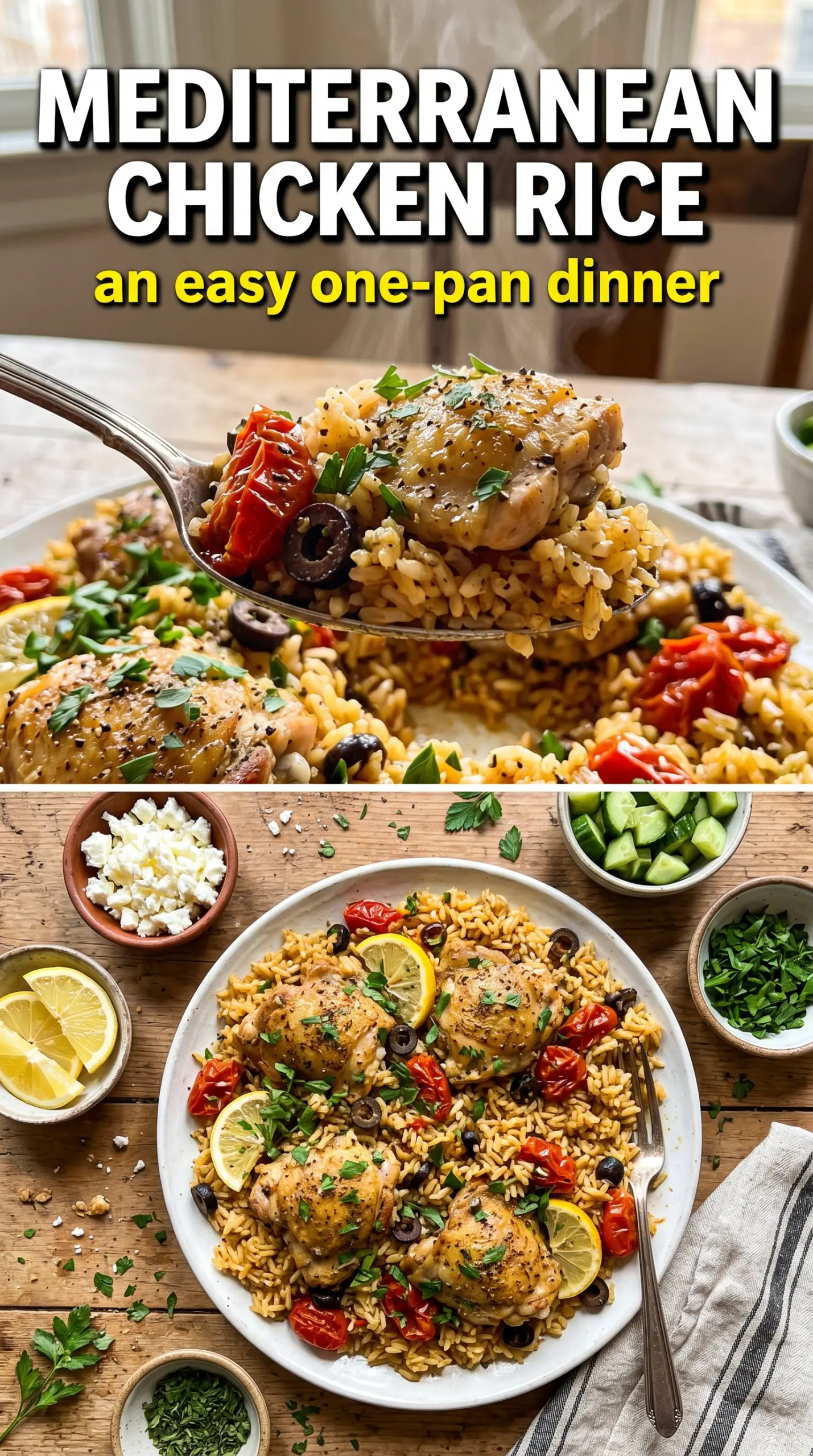
- Chicken thighs — Bone-in, skin-on thighs are what make this dish satisfying. They hold up to the longer oven time and keep the rice from drying out. Chicken breasts work in a pinch, but they cook faster and won’t give you the same rich pan juices.
- Olive oil, lemon, garlic, and oregano — This is the backbone of the marinade. The oil helps the herbs cling to the chicken, the lemon brightens the rice, and the garlic perfumes the whole dish. Fresh lemon juice matters here; bottled juice tastes flat next to the olives and feta.
- Long-grain white rice — Long-grain rice stays separate and fluffy instead of turning sticky under the chicken. Don’t swap in instant rice; it will overcook before the thighs are done. If you use basmati, keep the liquid the same and expect a slightly lighter texture.
- Chicken broth — Broth seasons the rice from the start. Water will work, but the finished dish tastes thinner and needs more salt to wake it up.
- Cherry tomatoes, Kalamata olives, and feta — These are the Mediterranean elements that give each bite contrast. The tomatoes soften into little bursts of sweetness, the olives bring salt and depth, and the feta melts just enough over the hot rice to turn creamy without disappearing.
How to layer the pan so nothing dries out
Marinating the chicken just long enough
Whisk the olive oil, lemon juice, zest, garlic, oregano, salt, and pepper, then coat the chicken and let it sit for 20 minutes. That short rest is enough to season the surface and loosen the garlic aroma without pushing the lemon so far that it starts to change the texture of the meat. If you leave it much longer, especially with a lot of lemon juice, the chicken can start to taste a little cured on the outside instead of roasted.
Building the rice base
Spread the rice in the baking dish and pour the broth over it before adding the chicken. Stir in a pinch of salt and any remaining marinade so the grains get seasoned evenly. If the rice is left dry in spots, those patches stay hard in the finished dish, so use the back of a spoon to level it into an even layer.
Roasting under foil, then uncovering for color
Nestle the chicken skin-side up into the rice, scatter the tomatoes and olives around it, and cover the pan tightly with foil. The first 30 minutes is about cooking through, not browning. When the foil comes off, the skin starts to crisp and the rice finishes absorbing the last bit of liquid; if the top looks dry before the rice is tender, put the foil back on for a few minutes and keep going.
Finishing with feta and herbs
Crumbled feta goes on immediately after the pan comes out of the oven so it softens into the hot rice instead of sitting on top in hard little pebbles. Add the parsley and lemon wedges last. That final hit of freshness keeps the dish from tasting heavy, especially after the browned chicken skin and salty olives.
How to adapt this for different tables and different pantry shelves
Dairy-free version
Leave out the feta and finish with extra parsley and a squeeze of lemon. You lose the creamy, salty finish, so add a few more olives or a pinch of flaky salt at the table if you want that same briny pop.
Using boneless chicken thighs
Boneless thighs work well if that’s what you have, but they cook faster and won’t season the rice quite as deeply. Start checking them a few minutes early and expect the rice to need the full bake time unless your oven runs hot.
Swapping the rice
Basmati is the best substitute if you want a lighter, more aromatic result. Brown rice needs a different liquid ratio and a much longer bake, so it won’t fit this timing without adjustment.
Storage and Reheating
- Refrigerator: Store leftovers in an airtight container for up to 4 days. The rice firms up a little as it chills, but the flavor holds well.
- Freezer: This freezes fairly well, though the rice gets softer after thawing. Freeze in portions and wrap tightly; thaw overnight in the fridge before reheating.
- Reheating: Reheat covered in the oven at 325°F with a splash of broth or water to loosen the rice. The common mistake is blasting it in the microwave uncovered, which dries out the chicken and turns the rice tough at the edges.
Questions I Get Asked About This Recipe
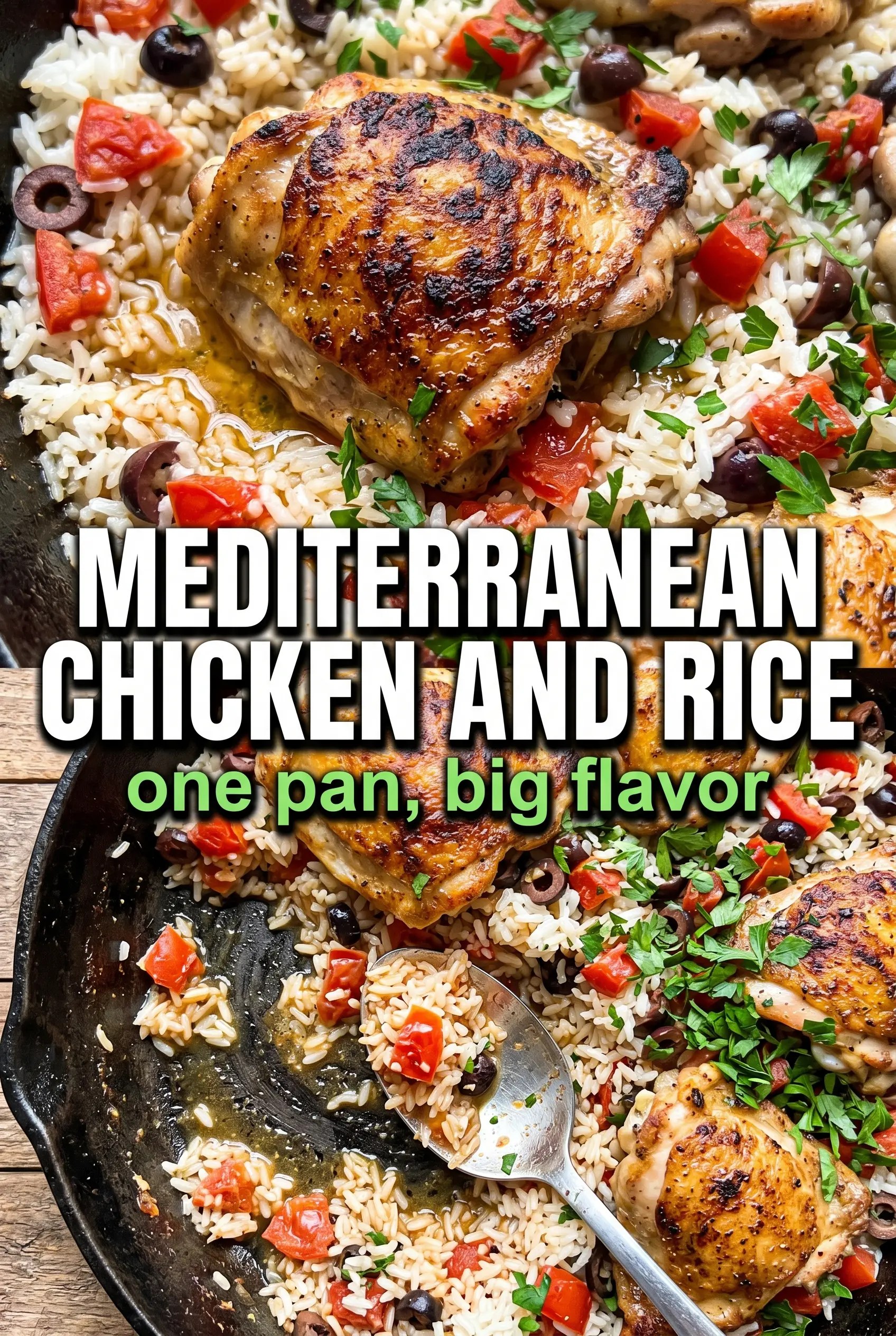
Mediterranean Chicken and Rice
Ingredients
Equipment
Method
- Whisk together olive oil, fresh lemon juice, lemon zest, minced garlic, dried oregano, and salt and pepper to taste. Marinate chicken thighs for 20 minutes so the herbs and lemon coat the meat.
- Preheat the oven to 375°F. Spread long-grain white rice in a 9x13 baking dish and pour chicken broth over the rice.
- Stir in a pinch of salt, then add the remaining marinade to the baking dish. Spread the rice into an even layer for consistent cooking.
- Nestle the marinated chicken skin-side up into the rice. Scatter cherry tomatoes and Kalamata olives around the chicken.
- Cover tightly with foil and bake for 30 minutes at 375°F. Look for bubbling around the edges and rice starting to soften.
- Remove the foil and bake for 15 more minutes at 375°F until the chicken skin is golden and the rice is cooked through. The top should be visibly browned and the liquid should be absorbed.
- Immediately crumble feta cheese over the hot dish right after baking. Watch it soften and melt into the grains.
- Garnish with fresh parsley and serve with lemon wedges. Serve warm straight from the baking dish.