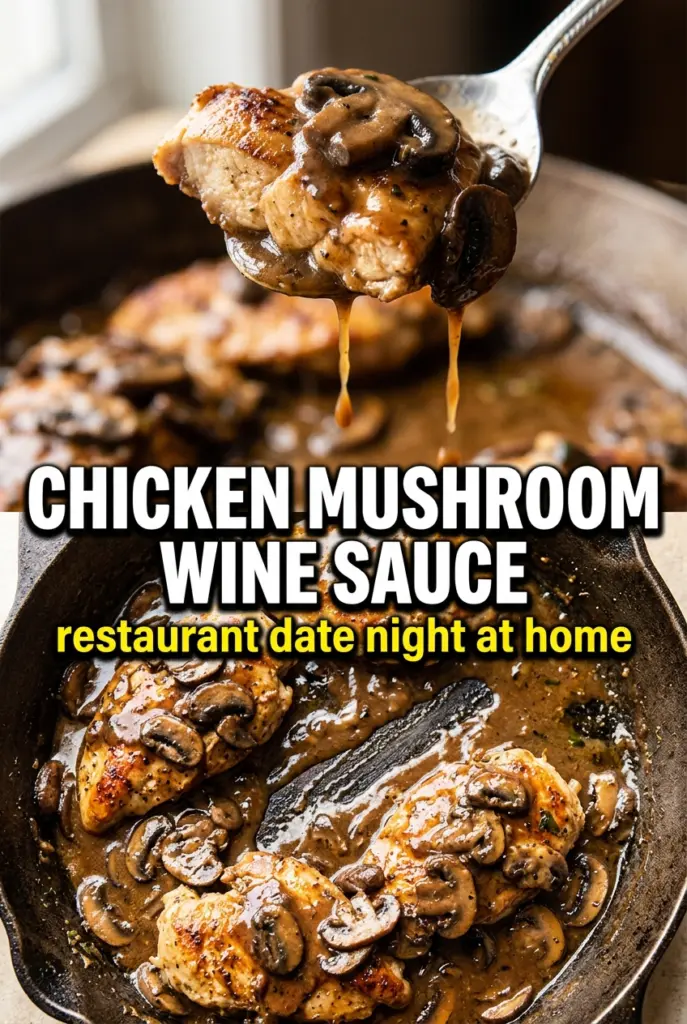
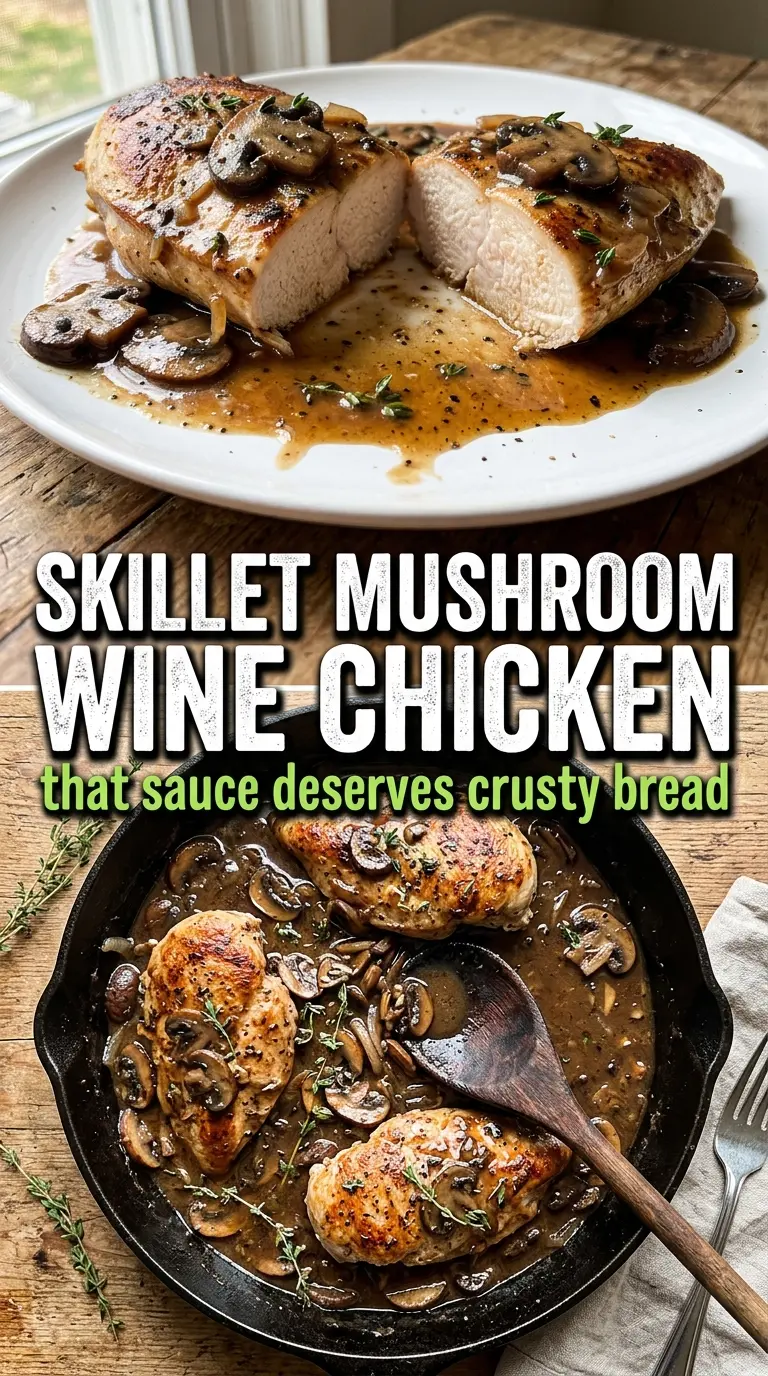
Golden seared chicken breasts tucked into a deep mushroom wine sauce earn their place on the dinner table fast. The chicken stays juicy, the mushrooms turn deeply savory, and the sauce cooks down until it clings to the spoon instead of running off the plate. It looks polished enough for guests, but it still comes together in one skillet with weeknight-friendly timing.
The part that makes this version work is the layering. The chicken browns first, then the mushrooms cook in the same pan until they pick up real color, and only then does the wine go in to pull every browned bit into the sauce. Heavy cream and Dijon add body and a little sharpness, which keeps the sauce from tasting flat. If you rush the mushroom step or boil the cream hard, the sauce loses that glossy finish. The gentle simmer at the end is what brings everything together.
Below, you’ll find the small details that matter most: how to get a good sear without drying out the chicken, which wine gives the cleanest flavor, and how to adjust the sauce if you want it a little richer or a little lighter.
The sauce reduced beautifully and stayed silky when I added the cream. I was nervous about the wine, but it cooked down fast and gave the mushrooms such a rich, deep flavor.
Save this skillet chicken and mushroom wine sauce for the nights when you want a glossy pan sauce with almost no extra cleanup.
The Trick to Keeping the Cream Sauce Smooth After the Wine Goes In
The main risk here isn’t the chicken. It’s the sauce. Once wine hits a pan, it needs a minute to reduce before anything creamy follows, or the whole thing can taste thin and sharp. Let the wine cook until the liquid no longer smells raw and the bottom of the skillet looks glossy again, not puddled.
Another common misstep is high heat after the cream goes in. Cream thickens from gentle simmering, not a hard boil. If you see the sauce bubbling aggressively, pull the pan back a notch and keep stirring along the edges of the skillet so the dairy stays unified with the reduction instead of separating.
- Browned bits in the skillet — Those are the backbone of the sauce. Scraping them up with the wine gives you depth that plain broth can’t match.
- Cremini mushrooms — Their earthy flavor stands up to wine better than white button mushrooms. If that’s what you have, they still work, but the sauce will taste a little milder.
- Dijon mustard — This doesn’t make the sauce taste mustardy. It sharpens the cream and helps the sauce stay balanced after the wine reduces.
- Fresh thyme — Dried thyme works on the chicken, but fresh thyme in the sauce keeps the finished dish from tasting heavy.
What Each Ingredient Is Doing in the Pan Sauce
The chicken breasts should be even in thickness before they hit the skillet. If one end is much thicker, pound it lightly so the meat cooks at the same pace and the outside doesn’t overbrown before the center reaches 165°F. A quick, generous seasoning of salt, pepper, garlic powder, and thyme gives the chicken its first layer of flavor before the sauce even starts.
Use a dry red wine with enough character to stand up to the mushrooms, or a dry white wine if you want a lighter, brighter sauce. Don’t cook with anything sweet. The cream will soften the edges, but a sweet wine stays noticeable in the finished dish. Chicken broth adds volume without making the sauce heavy, while butter gives the mushrooms a richer finish than oil alone.
- Chicken breasts — Boneless, skinless breasts keep this fast, but they need even thickness. That matters more than size.
- Dry wine — This is where the sauce gets its depth. If you don’t cook with wine, use extra broth plus a teaspoon of white wine vinegar at the end for brightness, though the flavor will be less layered.
- Heavy cream — Half-and-half can work in a pinch, but the sauce will be thinner and a little more fragile when reheating.
- Cremini mushrooms — They hold up better than watery mushrooms and brown beautifully once the pan is hot enough.
Getting the Chicken Browned Before the Sauce Starts
Seasoning and Searing the Cutlets
Pat the chicken dry before seasoning it. Moisture on the surface delays browning and makes the skillet hiss instead of sear. Set the chicken in hot olive oil and leave it alone until it releases easily from the pan and the first side has a deep golden crust. If it sticks hard, it needs another minute; forcing it early tears off the best part of the crust.
Building Flavor with Mushrooms and Garlic
After the chicken comes out, the mushrooms go into the same skillet with the butter. Let them sit long enough to release their liquid, then keep cooking until that liquid evaporates and the edges turn deeply browned. Add the garlic only after the mushrooms have color, because garlic burns fast and turns bitter if it hits the pan too soon.
Reducing the Wine and Finishing the Sauce
Pour in the wine and scrape the pan well. The liquid should come up in a fast simmer and reduce by about half before the broth and cream go in. After that, keep the heat low enough that the sauce barely bubbles at the edges. Return the chicken at the end and spoon the sauce over the top so the meat warms through without overcooking.
How to Adapt This Skillet Chicken Without Losing the Good Part
Creamier, Richer Sauce
Add an extra tablespoon of butter at the end or use a splash more cream. The sauce will coat the chicken more heavily and taste a little more luxurious, but it will also sit heavier on the plate.
Dairy-Free Version
Use olive oil instead of butter and swap in full-fat unsweetened coconut milk or an unsweetened dairy-free cooking cream. The sauce won’t taste quite as classic, but you’ll still get a silky finish if you keep the heat low and reduce the wine first.
Gluten-Free Dinner
This recipe is naturally gluten-free as written, as long as your broth is certified gluten-free. That’s one of the reasons it works so well for a dinner that feels a little special without extra fuss.
Using Chicken Thighs Instead
Boneless thighs bring more richness and stay tender even if they cook a minute longer. They’ll make the dish taste a little deeper, but you’ll want to watch the sauce closely because the rendered fat can make it feel heavier.
Storage and Reheating
- Refrigerator: Store leftovers in an airtight container for up to 3 days. The sauce thickens as it chills, which is normal.
- Freezer: Freezing isn’t ideal because the cream sauce can separate after thawing. If you do freeze it, cool it quickly and thaw it in the refrigerator before reheating gently.
- Reheating: Warm it slowly in a covered skillet over low heat with a splash of broth or water. High heat is the mistake that splits the sauce and dries out the chicken.
Questions I Get Asked About This Recipe
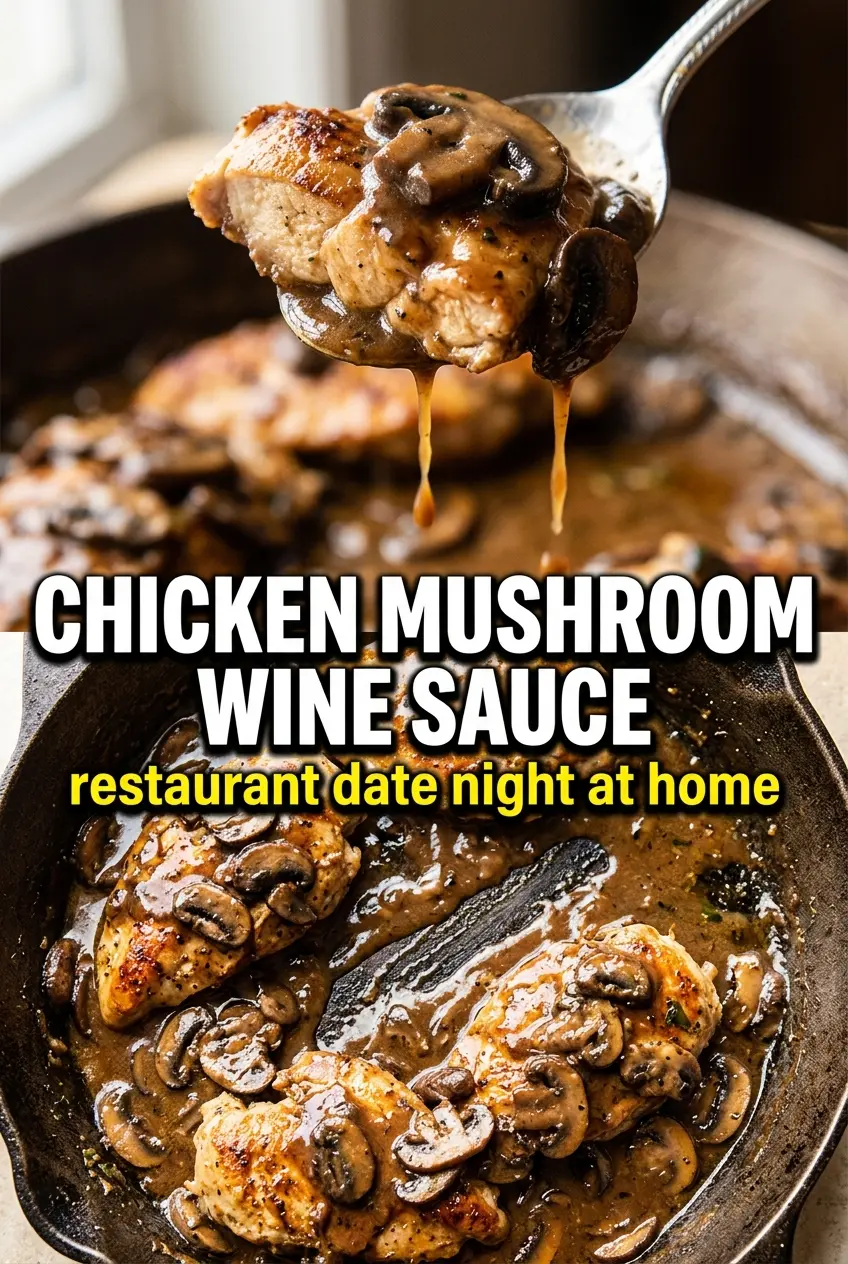
Skillet Chicken and Mushroom Wine Sauce
Ingredients
Equipment
Method
- Season the chicken breasts generously with salt, pepper, garlic powder, and dried thyme. Over medium-high heat, heat olive oil in a large skillet.
- Sear the chicken for 5-6 minutes per side until golden and cooked through to 165°F, pressing only as needed for contact. When done, remove the chicken to a plate, keeping any drippings in the skillet.
- Melt the butter in the same pan. Add sliced cremini mushrooms and cook over medium-high heat for 5-6 minutes until deeply golden, scraping any browned bits as they loosen.
- Add the minced garlic and cook for 1 minute until fragrant. Pour in the dry red wine (or white wine) and deglaze, scraping up all browned bits from the bottom.
- Simmer the wine for 3 minutes to reduce slightly and deepen the flavor. Add chicken broth, heavy cream, Dijon mustard, and fresh thyme leaves.
- Simmer for 5-6 minutes until the sauce thickens and looks dark and glossy. If it bubbles too aggressively, lower the heat slightly to keep it simmering.
- Return the chicken breasts to the pan and spoon the sauce over each breast to coat. Garnish with fresh thyme sprigs and serve immediately while the sauce clings to the chicken.