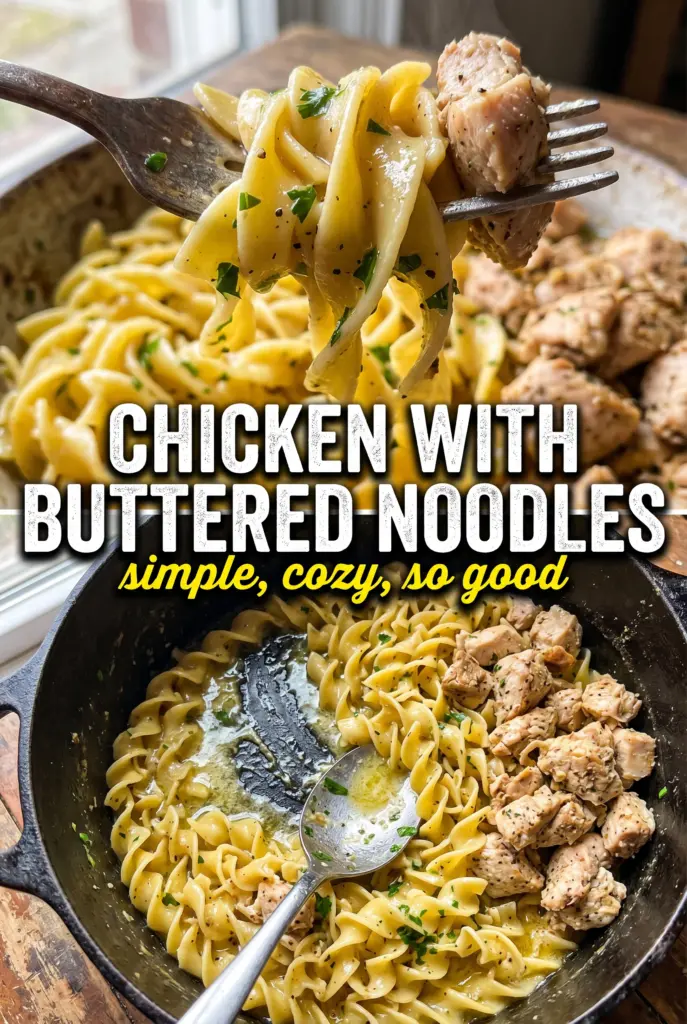
Chicken with buttered noodles is the kind of dinner that lands on the table fast but still feels like you paid attention. The noodles turn silky in garlic butter, the chicken stays juicy if you slice it after resting, and the Parmesan melts just enough to cling to every bite. It’s plain in the best way: comforting, familiar, and built on texture instead of fuss.
What makes this version work is the order. The chicken sears first, then the same skillet picks up the garlic butter, so none of those browned bits get wasted. Egg noodles are the right shape here because they hold onto the sauce without turning heavy, and a splash of reserved pasta water gives the butter enough body to coat instead of pool.
The noodles came out glossy instead of greasy, and the chicken stayed juicy after slicing. I added a little extra pasta water like you said and the garlic butter coated everything perfectly.
Save these chicken butter noodles for the night you want a glossy garlic butter dinner with almost no cleanup.
The Reason the Noodles Stay Glossy Instead of Greasy
The difference between a buttered noodle dish that feels silky and one that sits heavy is the pasta water. Butter alone coats, but it doesn’t emulsify well enough to cling in a light, even layer. A small splash of starchy water turns the melted butter into a loose sauce that grabs onto the noodles instead of slipping off them.
The other trap is adding the noodles to a skillet that’s too hot. If the pan is still ripping hot from the chicken, the butter can separate before it ever coats the pasta. Let the heat settle to medium before the noodles go in, then toss until every strand looks shiny and lightly lacquered.
What Each Ingredient Is Actually Doing in This Dish
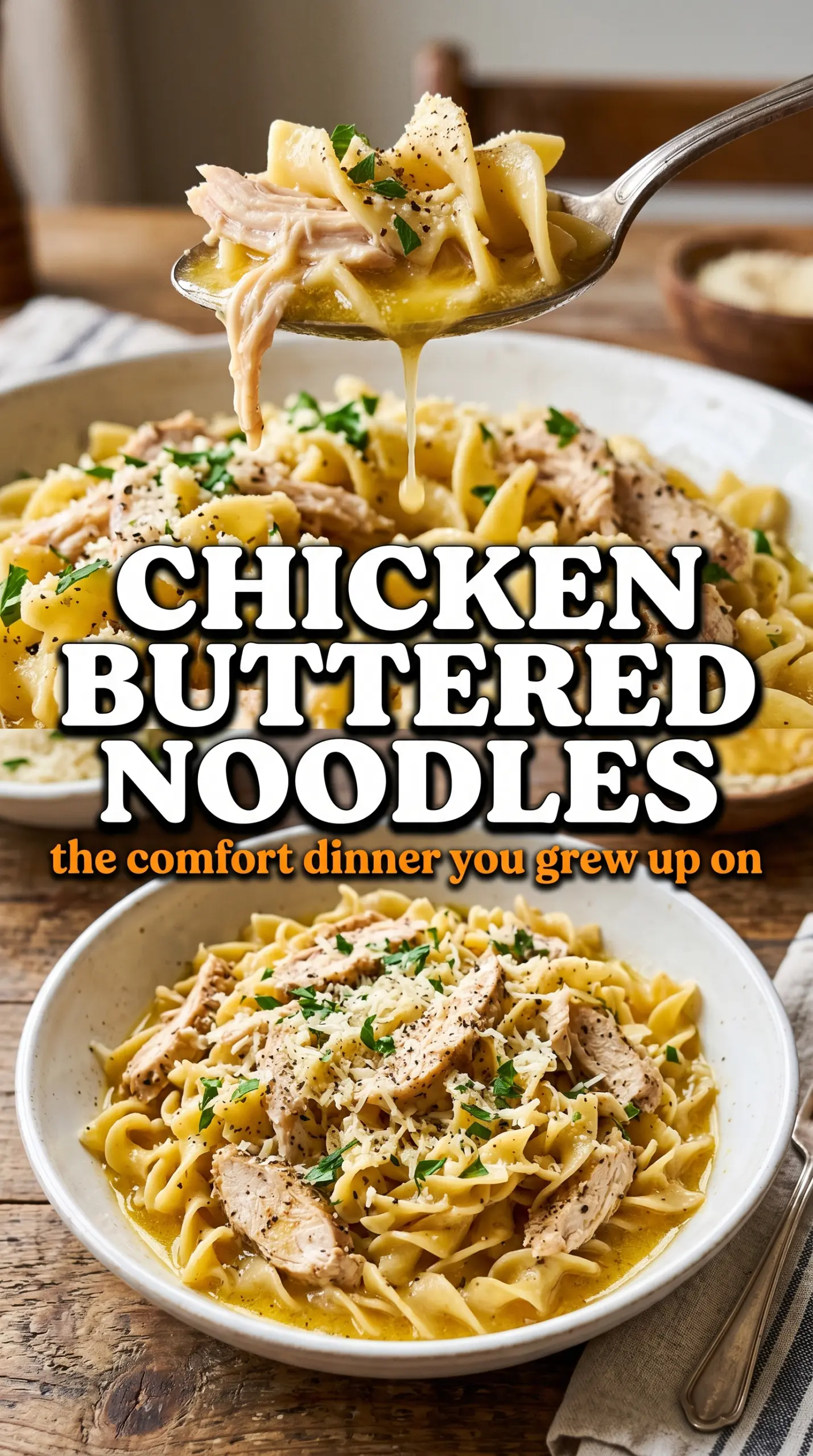
- Chicken breasts — Boneless, skinless breasts cook quickly and slice cleanly over the noodles. If you use chicken thighs, they’ll be juicier and a little richer, but they need a minute or two longer and won’t give you the same lean, neat slices on top.
- Egg noodles — These are the right noodle for a butter sauce because their soft, springy shape catches the garlic butter without fighting it. If you swap in spaghetti or linguine, the dish still works, but it loses that cozy, old-school texture that makes this recipe feel like comfort food.
- Butter and garlic — This is the sauce, so don’t rush it. The garlic needs just a short cook in the butter until fragrant; if it browns hard, the sauce tastes bitter and the whole dish turns sharp instead of mellow.
- Reserved pasta water — This is the part that keeps everything together. A few tablespoons at a time loosen the sauce just enough to coat the noodles without making them soupy.
- Parmesan — Use the grated kind, not the shelf-stable powder if you can help it. Freshly grated Parmesan melts better and adds a salty finish that balances the butter.
Getting the Chicken Sear and the Sauce in the Same Pan
The Sear That Builds the Flavor
Season the chicken well before it ever touches the skillet, then lay it in the hot oil and leave it alone until it releases with a deep golden crust. If you keep moving it, you lose that browning and the pan won’t have the same flavor base. Cook to 165°F in the thickest part, then rest it before slicing so the juices stay in the meat instead of running into the noodles.
Turning the Drippings into Garlic Butter
After the chicken comes out, lower the heat before the butter goes in. That keeps the garlic from scorching and lets the browned bits on the bottom melt into the sauce. The garlic should smell fragrant in about a minute; if it starts to turn dark, pull the pan off the heat right away and keep stirring.
Coating the Noodles Without Making Them Heavy
Add the cooked egg noodles and toss them through the butter until they look evenly glossy. Start with a small splash of pasta water and add more only if the pan looks dry. The goal is a light coating that clings to the noodles, not a puddle at the bottom of the skillet.
The Finish With Parsley and Parmesan
Stir in the parsley off the heat so it stays bright and fresh. Then pile the chicken over the noodles and finish with Parmesan right before serving. If you add the cheese too early, it can clump instead of melting across the top.
How to Adapt This for Bigger Hunger, Different Diets, or What’s in the Fridge
Use Chicken Thighs for a Richer Result
Chicken thighs work well here if you want a deeper, slightly richer bite. They take a little longer to cook through, but they stay tender and give the dish more of a buttery, savory finish.
Make It Gluten-Free With the Right Pasta
Swap in a sturdy gluten-free noodle that holds up to tossing, then watch the pasta water a little more closely because some gluten-free pastas release less starch. The sauce will still work, but you may need an extra splash of butter or water to keep it glossy.
Go Dairy-Free Without Losing the Garlic Base
Use a plant-based butter that melts cleanly and skip the Parmesan, or finish with a dairy-free hard-style cheese. The dish will still be comforting and garlicky, though it won’t have quite the same salty richness from the real cheese.
Stretch It for Four Hungry Plates
Add an extra handful of noodles and a touch more butter and pasta water if you need the dish to serve a bigger table. The chicken will still anchor it, but the sauce should stay light enough to coat instead of disappearing under the extra pasta.
Storage and Reheating
- Refrigerator: Store leftovers in an airtight container for up to 3 days. The noodles will absorb some of the butter as they sit.
- Freezer: The chicken freezes well, but the noodles soften after thawing, so I don’t recommend freezing the finished dish.
- Reheating: Warm gently in a skillet over low heat with a splash of water or a small knob of butter. High heat dries out the chicken and makes the noodles clump.
Answers to the Questions Worth Asking
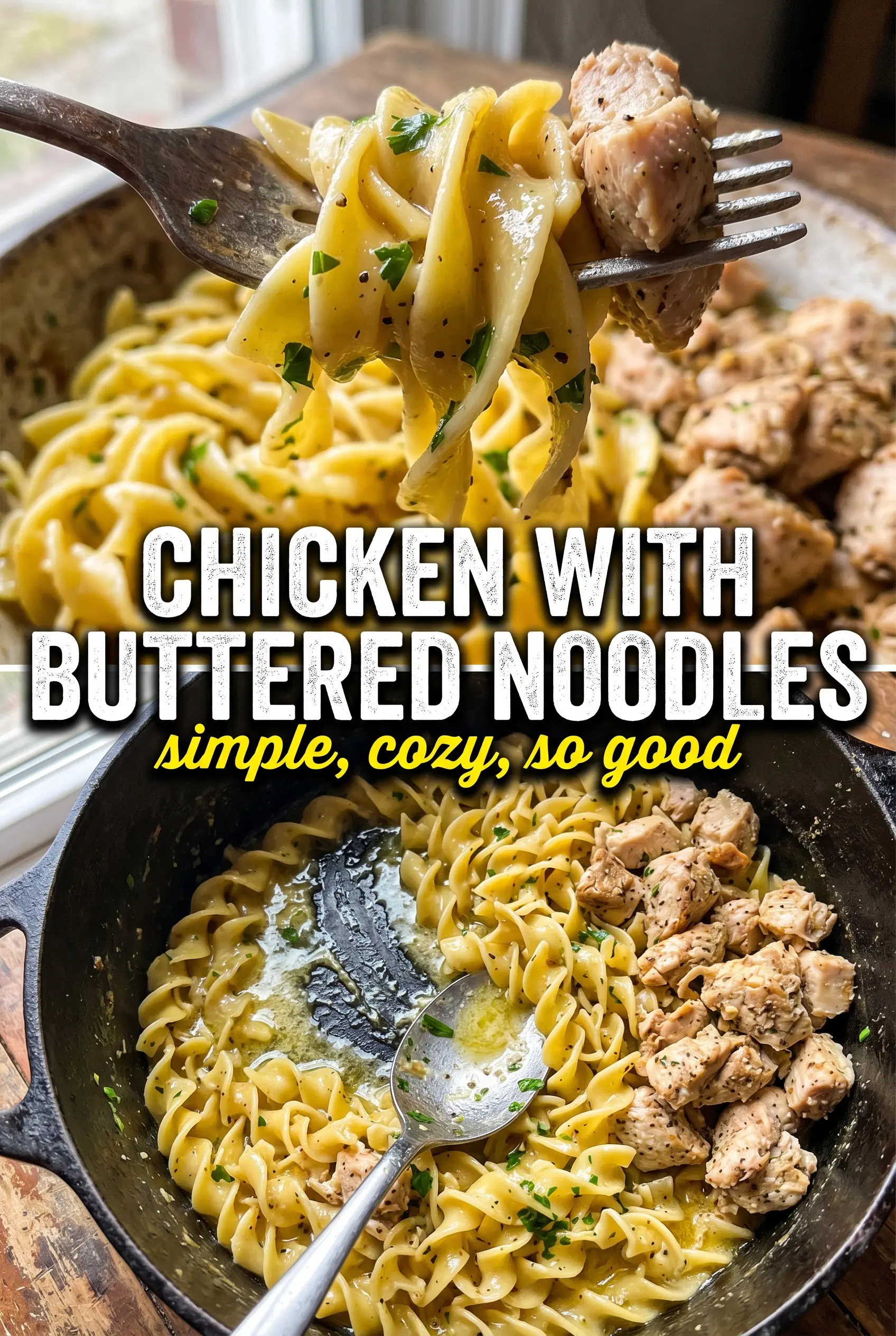
Chicken with Buttered Noodles
Ingredients
Equipment
Method
- Season the boneless skinless chicken breasts with salt, pepper, garlic powder, and Italian seasoning to taste, then place in a cast iron skillet with olive oil over medium-high heat. Sear for 5-6 minutes per side until golden and an internal temperature reaches 165°F, then rest and slice.
- Melt butter in the same cast iron skillet over medium heat, then add minced cloves garlic and red pepper flakes. Cook for 1-2 minutes until fragrant.
- Add the cooked egg noodles to the garlic butter and toss to coat, using reserved pasta water as needed to keep the sauce silky. Continue tossing until the noodles look glossy and evenly coated.
- Season with salt and pepper to taste, then stir in chopped fresh parsley. Toss just until the parsley is evenly distributed.
- Divide the garlic butter noodles among plates and top each portion with sliced chicken. Serve immediately while the butter is glistening.
- Scatter grated Parmesan cheese generously over the top of each plate. Finish with an even, visible dusting before serving.