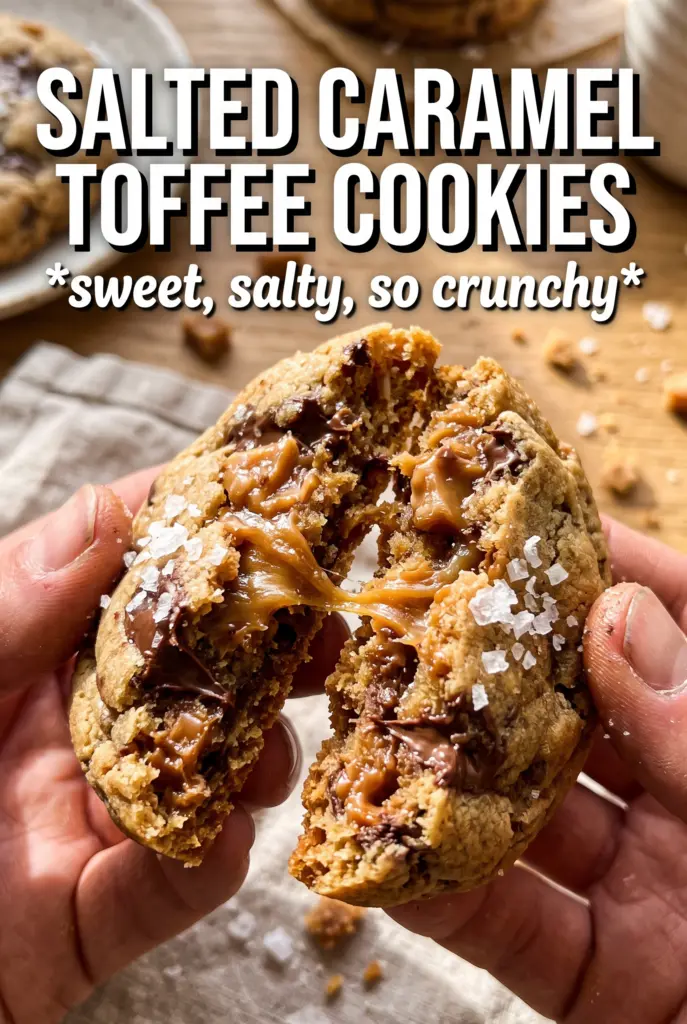
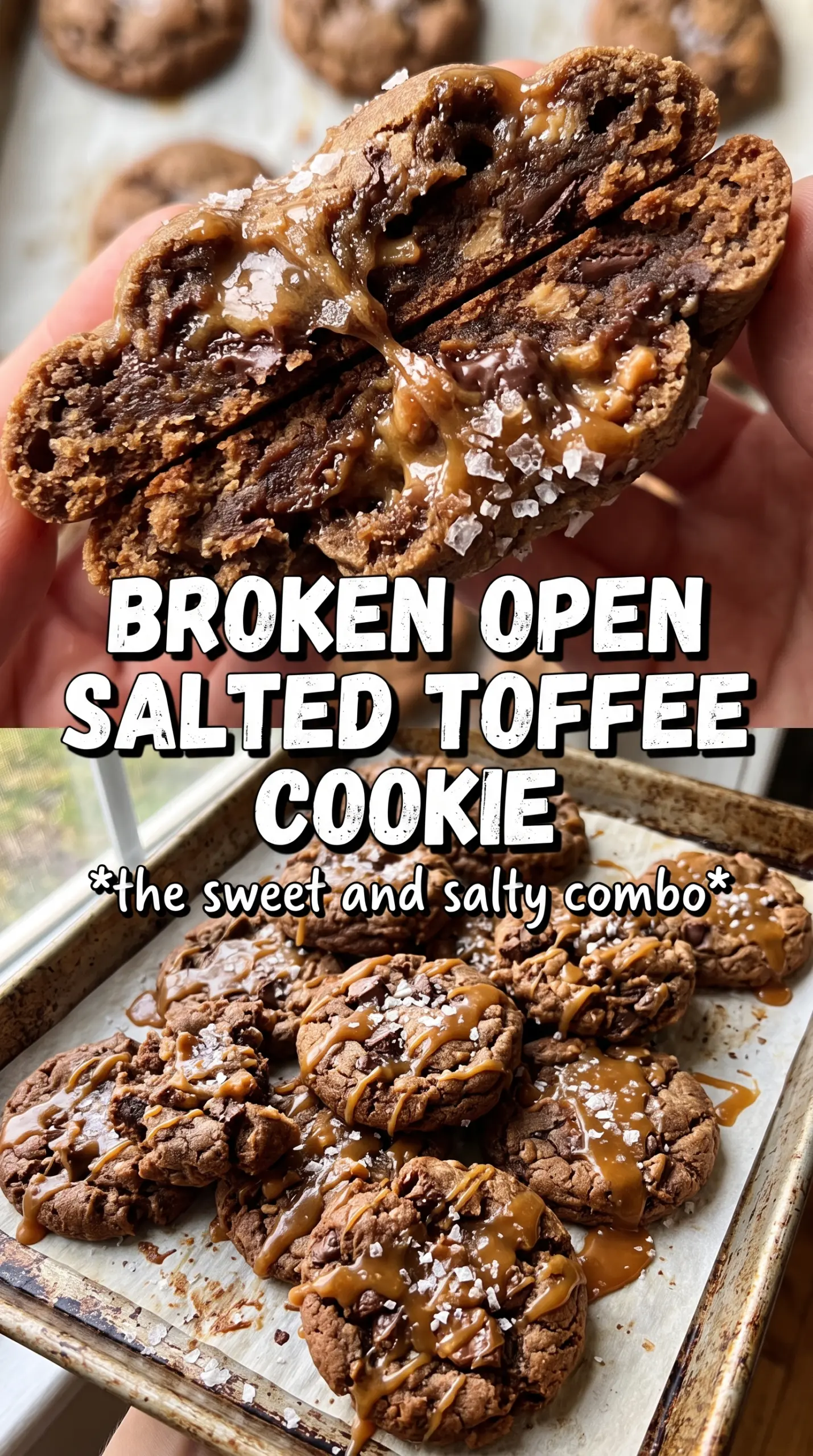
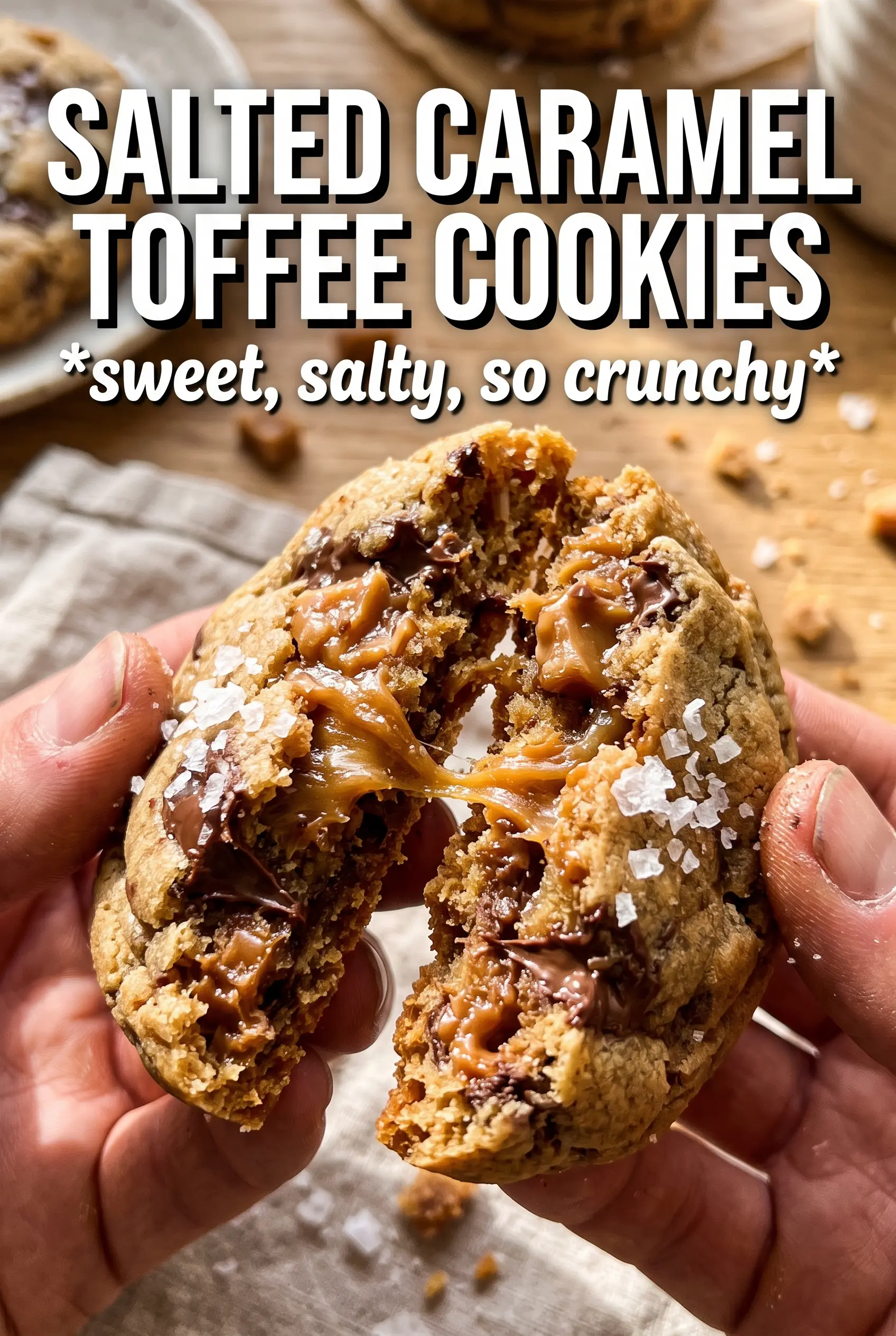
Salted caramel toffee cookies bake up with crisp edges, soft centers, and those little pockets of melted caramel that turn sticky and glossy as they cool. The toffee gives each bite a deep, buttery crunch, and the flaky sea salt keeps the sweetness from running away with the whole cookie. They’re the kind of cookie people hover over while they’re still warm, then come back for once the caramel has set into chewy little seams.
What makes this version work is the mix of textures in the dough itself. Brown sugar brings chew, granulated sugar helps the edges set, and the caramel bits soften just enough in the oven to create those pools without collapsing the whole cookie. Pressing a few extra bits on top right after baking matters too, because some of the best caramel flavor happens on the surface, where it meets the heat first.
Below, I’ve included the little details that keep the cookies from spreading too much and the swaps that still give you a good batch if you’re missing one of the mix-ins. The salt finish is worth keeping. It sharpens every bite.
The caramel stayed gooey in the middle and the toffee bits gave the edges this perfect little crunch. I baked mine right at 11 minutes and they were soft, chewy, and salty-sweet in the best way.
Save these salted caramel toffee cookies for when you want crisp edges, gooey caramel pockets, and a salty finish in every bite.
The Trick to Keeping the Caramel Chewy Instead of Disappearing
The main failure point in cookies like this is adding mix-ins that look sturdy in the bowl but melt into a puddle in the oven. Caramel pieces need the dough to be thick enough to hold them in place, and that means creaming the butter and sugars until the mixture is light, not just blended. That extra air gives the cookies structure so the caramel softens without running out across the pan.
There’s also a timing detail that matters more than most people think: pull these when the edges are set and the centers still look a little underdone. They finish on the hot pan, and that resting time is where the texture settles into chewy instead of dry. If they look fully baked in the oven, they’ve gone too far.
- Brown sugar — This brings the chew and keeps the cookies from baking up flat and crisp. Light or dark brown sugar both work, but dark brown sugar gives a deeper caramel note.
- Caramel pieces or caramel chips — These are the ingredient that create the soft, gooey pockets. Soft caramel candies cut into small pieces can work, but they need to be chopped fairly small so they melt instead of sitting in hard chunks.
- Toffee bits — The toffee gives sharp crunch and a buttery edge that balances the soft caramel. Heath-style bits are ideal because they stay distinct in the dough.
- Caramel extract — Optional, but useful if your caramel pieces are mild. It boosts the aroma without adding more sweetness, so the cookies still taste layered instead of just sugary.
What Each Ingredient Is Actually Doing in This Recipe
- Primary ingredient (the star) — Quality matters most. Choose the best you can find.
- Cooking medium (oil, butter, or broth) — This carries flavors and prevents dryness.
- Seasonings (salt, pepper, spices, herbs) — Layer flavors so nothing overpowers. Build depth gradually.
- Aromatics (garlic, onion, herbs) — Cook with fat to bloom flavors. Become the foundation.
- Supporting ingredients — Complement the main ingredient without overpowering it.
- Sauce or liquid (if applicable) — Brings flavors together. Balance richness with acid.
- Acid (lemon, vinegar, wine, or other) — Brightens and prevents flat-tasting results.
- Final finish (garnish, glaze, or sauce) — Prevents one-dimensional taste and adds visual appeal.
Building the Dough So the Mix-Ins Stay Put
Cream the butter and sugars until light
Beat the softened butter with both sugars until the mixture turns paler and looks fluffy around the edges of the bowl. That texture tells you air has been incorporated, which helps the cookies spread in a controlled way instead of slumping into thin discs. If the butter is too warm, the dough turns greasy and the cookies spread too fast, so start with butter that yields to pressure but still holds its shape.
Fold in the dry ingredients just until no flour streaks remain
Once the eggs and vanilla are in, add the flour mixture and mix only until the dough comes together. Overmixing after the flour goes in makes the cookies tougher and can turn the crumb dry around the edges. Stop as soon as the last dusty streak disappears, then switch to a spatula for the toffee bits and caramel pieces so you don’t break them up.
Bake until the edges set and the centers still look soft
Scoop the dough into 2-tablespoon rounds and leave a little space between them, because the caramel helps them spread a touch as they bake. Pull the tray when the edges are golden and the centers look slightly puffed and underbaked. Right away, press extra toffee bits and caramel pieces onto the tops, then finish with flaky sea salt so the heat can help everything adhere.
Make Them Extra Salty-Sweet
Use a generous pinch of flaky sea salt on top of each cookie right after baking. That final salt doesn’t just decorate the cookies; it sharpens the caramel and keeps the sweetness from feeling heavy. If you skip it, the cookies still work, but they lose the contrast that makes them stand out.
Dairy-Free Version
Swap in a plant-based butter that behaves like sticks, not a soft tub spread, and use dairy-free caramel chips or chopped dairy-free soft caramels. The texture will still be chewy, but the flavor will be a little less rich and the edges may brown a bit faster, so start checking a minute early.
Chocolate-Topped Variation
Swap out half of the caramel pieces for chopped milk chocolate or chocolate chips if you want a more candy-bar style cookie. The chocolate softens into pockets instead of full melt puddles because the dough is fairly thick, and the result is less sticky but more balanced if you like a darker finish.
How to Freeze the Dough
Portion the dough into balls, freeze them on a tray until firm, then move them to a freezer bag. Bake straight from frozen and add 1 to 2 minutes to the time. This keeps the caramel from over-melting before the cookies set, which is the main problem with trying to freeze fully baked versions.
Storage and Reheating
- Refrigerator: Store in an airtight container for up to 5 days. The caramel firms up in the fridge, so the cookies taste best after sitting at room temperature for a few minutes.
- Freezer: Freeze baked cookies for up to 2 months, layered with parchment. The caramel stays a little chewier than fresh, but they still thaw well.
- Reheating: Warm a cookie in the microwave for 8 to 10 seconds, just until the caramel softens. Too long in the microwave turns the caramel sticky and can make the cookie greasy.
Questions I Get Asked About This Recipe
Salted Caramel Toffee Cookies
Ingredients
Equipment
Method
- Preheat oven to 375F and line baking sheets with parchment.
- Whisk all-purpose flour, baking soda, and salt in a mixing bowl until evenly combined.
- Beat softened unsalted butter with granulated sugar and brown sugar until light and fluffy, then beat in eggs, vanilla extract, and caramel extract if using.
- Fold the flour mixture into the wet ingredients just until no dry streaks remain.
- Fold in toffee bits and soft caramel pieces or caramel chips.
- Scoop dough into 2-tablespoon rounds and bake 10-12 minutes until golden at the edges.
- Immediately press extra toffee bits and caramels on top while the cookies are hot.
- Sprinkle generously with flaky sea salt, then cool on the pan for 5 minutes.