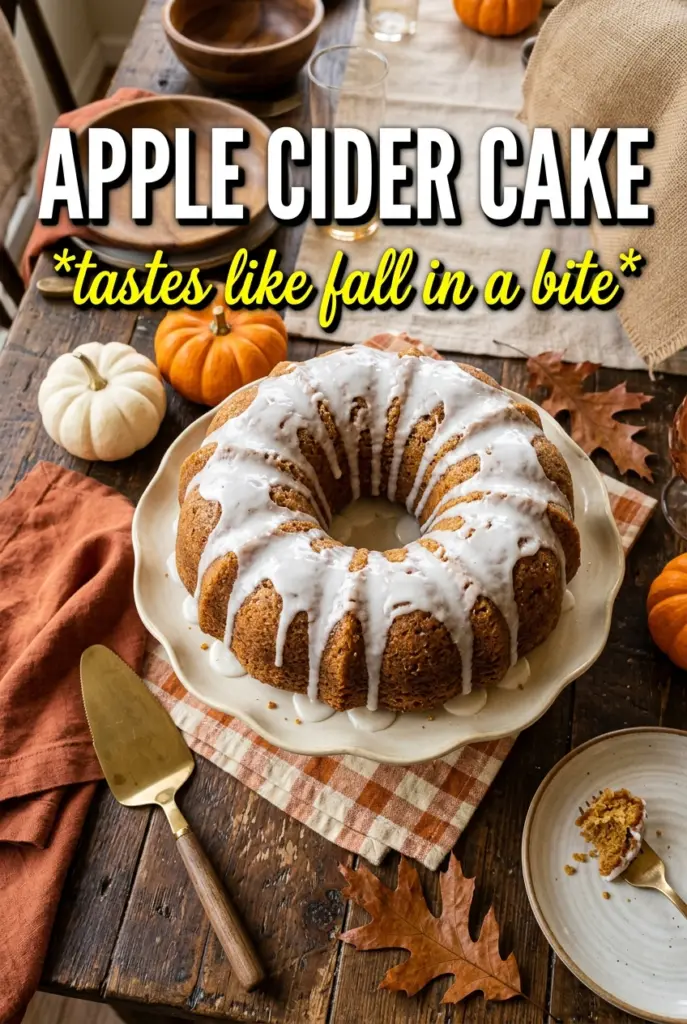
Apple cider cake earns its place on the table with soft, spiced layers that stay tender for days and a frosting that cuts through the sweetness instead of smothering it. The reduced cider gives the crumb a deeper apple note than you get from juice alone, and the cinnamon-nutmeg-allspice mix makes each bite smell like it came out of a bakery case. Finished with cream cheese frosting and a caramel drizzle, it lands in that sweet spot between homey and special.
The trick is reducing the cider first. That step concentrates the flavor without adding extra liquid, so the cake tastes like apples instead of just sugar and spice. I also like the sour cream here because it keeps the layers plush and gives the batter enough richness to hold up under frosting. Don’t rush the cooling stage either; if the cakes are even slightly warm, the frosting will slip and the caramel will run right off the sides.
Below, I’ve laid out the details that matter most: how to keep the layers tender, what to watch for when you reduce the cider, and the small swaps that still give you a cake worth serving proudly.
The cider reduction made the cake taste like actual apples instead of just spice, and the layers stayed so moist that I could slice it cleanly the next day. The frosting was light enough to balance the caramel drizzle without feeling heavy.
Save this apple cider cake for the days when you want a tender spiced layer cake with cream cheese frosting and a caramel finish.
The cider reduction is what keeps this cake from tasting flat
Most apple cider cakes rely on plain cider straight from the bottle, and the flavor often gets lost once it’s baked into a full layer cake. Reducing the cider first solves that problem. You’re concentrating the apple flavor before it ever hits the batter, which gives the finished cake a deeper taste without making it heavy or wet.
The other thing that matters here is balance. Brown sugar adds molasses warmth, sour cream keeps the crumb soft, and the spice mix stays in the background instead of taking over. If your cider reduction is still warm when you add it, the butter mixture can loosen too much and the batter won’t hold air as well. Cool it completely before it goes in.
What each ingredient is doing in this cake
- Apple cider — Reducing it to half a cup concentrates the apple flavor and keeps the batter from becoming too loose. Apple juice won’t give you quite the same depth, but it can work in a pinch if cider isn’t available.
- Brown sugar — This brings moisture and a deeper caramel note that plain white sugar can’t match. Packed brown sugar helps the cake bake up tender instead of dry.
- Sour cream — This is what gives the crumb its soft, plush texture. Full-fat plain Greek yogurt is the best substitute if you need one, but the cake will be a little less rich.
- Cream cheese frosting — The tang keeps the cake from tasting too sweet, especially with the caramel drizzle on top. Let the cream cheese and butter soften fully before beating, or the frosting can turn lumpy.
- Caramel drizzle — This is a finishing move, not an extra layer of sweetness for its own sake. Warm it just enough to pour cleanly; if it’s too hot, it will melt the frosting and slide off the cake.
Building the batter so the layers bake up even
Start with the cider
Pour the cider into a small saucepan and simmer it until you have 1/2 cup left. You want slow bubbles and a slightly syrupy look, not a hard boil that can scorch the flavor. Let it cool completely before you move on. If you add it hot, it can melt the butter in the batter and weaken the cake’s structure.
Whip air into the butter and sugar
Beat the softened butter and brown sugar until the mixture looks pale and fluffy, almost like thick frosting. That step builds the lift that helps the layers stay light. Add the eggs one at a time, then the vanilla and cooled cider. If the batter looks a little separated at this stage, it usually comes back together once the dry ingredients go in.
Alternate the flour and sour cream
Add the dry ingredients in batches, alternating with the sour cream. Start and end with the flour mixture so the batter stays stable and doesn’t curdle. Stop mixing as soon as you no longer see dry streaks; overmixing here is how you end up with a tight, chewy cake instead of a tender one. Divide the batter evenly between the pans so the layers bake at the same pace.
Bake until the centers spring back
Bake at 350°F until the cakes pull slightly from the sides and the centers spring back when touched. A toothpick should come out with a few moist crumbs, not wet batter. If the tops are browning too quickly before the centers are set, the oven is likely running hot, so check them a few minutes early. Cool the cakes completely before frosting or the layers can tear.
Three ways to adjust the cake without losing the point of it
Make it gluten-free with a 1:1 flour blend
A good 1:1 gluten-free baking flour works here because the cake already has sour cream and butter for tenderness. Don’t swap in almond flour or coconut flour by themselves; the texture will fall apart or turn dense. The layers may need an extra minute or two in the oven.
Skip the cream cheese frosting for a lighter finish
A simple vanilla buttercream works if you want a sweeter, less tangy cake. You’ll lose that cheesecake-like contrast, so the caramel drizzle becomes more important for balance. If you go this route, add a pinch of salt to the frosting to keep it from tasting flat.
Turn it into a sheet cake for easier serving
Bake the batter in a 9×13-inch pan if you don’t want to layer and stack. The crumb stays the same, but you’ll need to watch the bake time and start checking early. This version is easier to transport, and the caramel can be drizzled right over the frosting in wide ribbons.
Storage and Reheating
- Refrigerator: Store covered for up to 5 days. The frosting firms up a bit, but the cake stays moist.
- Freezer: Freeze unfrosted layers wrapped tightly in plastic and foil for up to 2 months. Thaw in the refrigerator overnight before frosting.
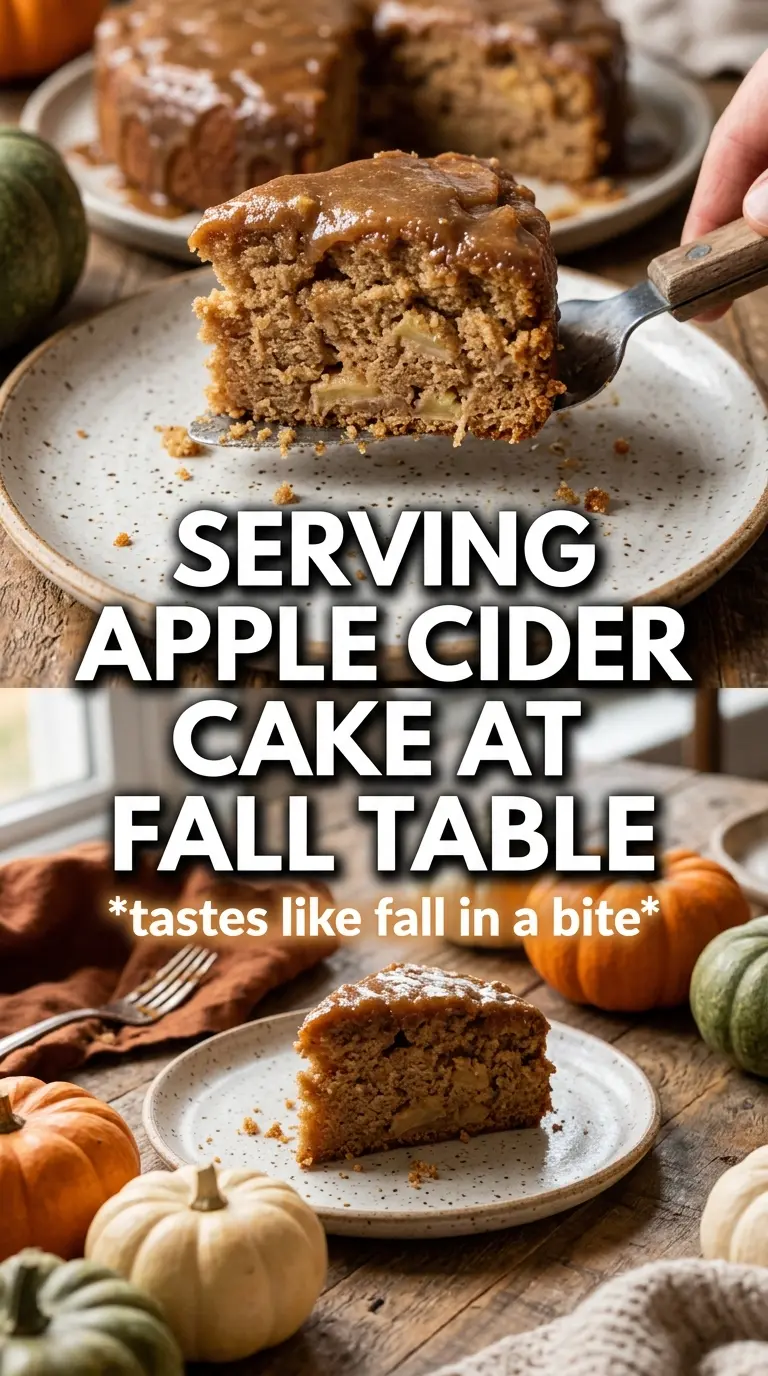
- Reheating: Bring slices to room temperature before serving for the best texture. If you want a warm slice, heat it very briefly; too much heat will soften the frosting and make the caramel slide.
Questions I Get Asked About This Recipe
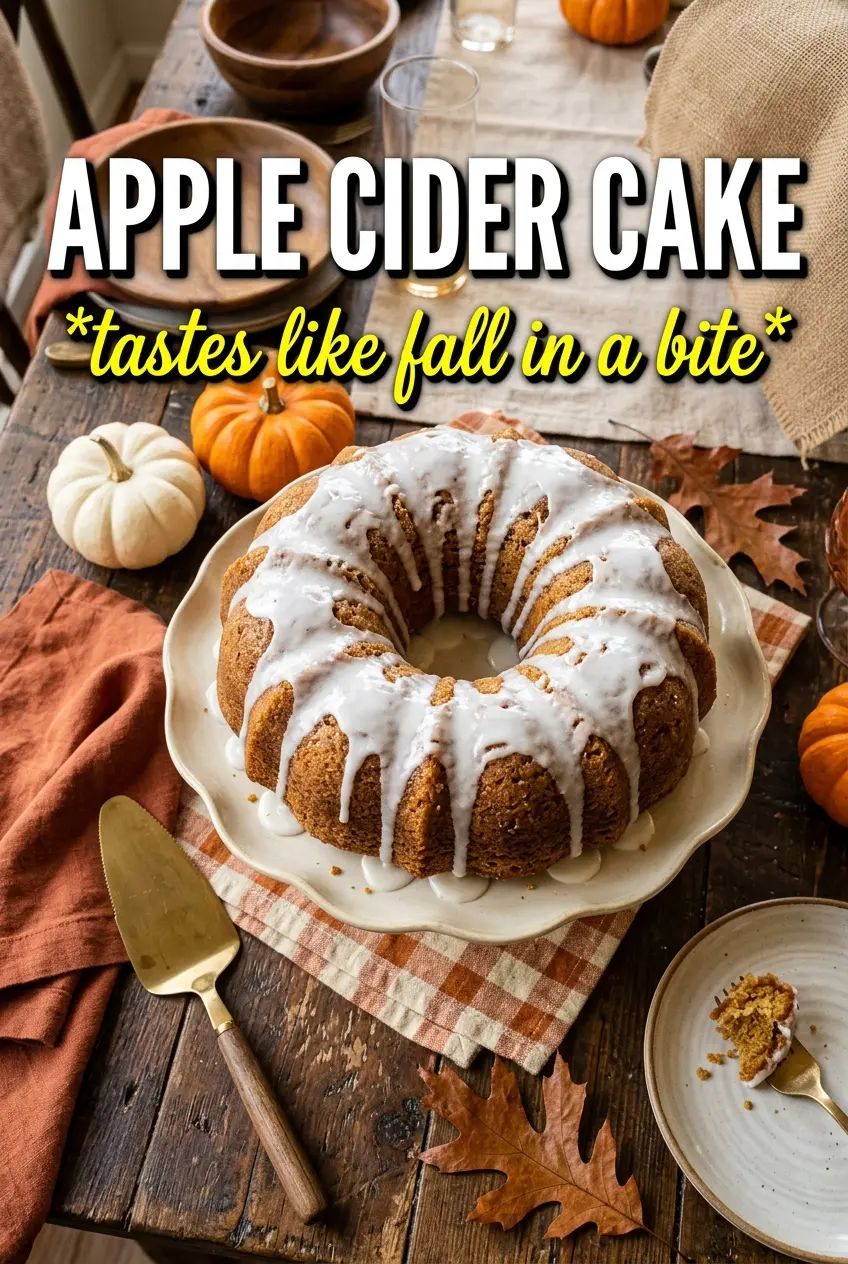
Apple Cider Cake
Ingredients
Equipment
Method
- Reduce apple cider to 1/2 cup, then cool completely so it won’t melt the batter. Preheat the oven to 350°F and grease two 9-inch pans with a thin coat.
- Whisk flour, baking powder, baking soda, cinnamon, nutmeg, allspice, and salt until evenly combined. The mix should look uniformly speckled with spices.
- Beat softened butter and packed brown sugar until very fluffy. Add eggs and vanilla, then beat in the reduced apple cider until smooth.
- Alternate adding the flour mixture and sour cream to the butter mixture, mixing just until incorporated. Divide the batter evenly between the two prepared pans.
- Bake for 35–40 minutes at 350°F, until a toothpick in the center comes out clean or with a few moist crumbs. Cool the cakes completely before frosting.
- Beat cream cheese frosting ingredients (cream cheese, butter, powdered sugar, vanilla, and 2 tablespoons cider) until fluffy and spreadable. Frost the top of one cooled layer, stack the other layer, then frost the outside.
- Drizzle caramel over the stacked cake so it cascades down the sides. Use a spoon to create thin, uneven lines for the layered look.