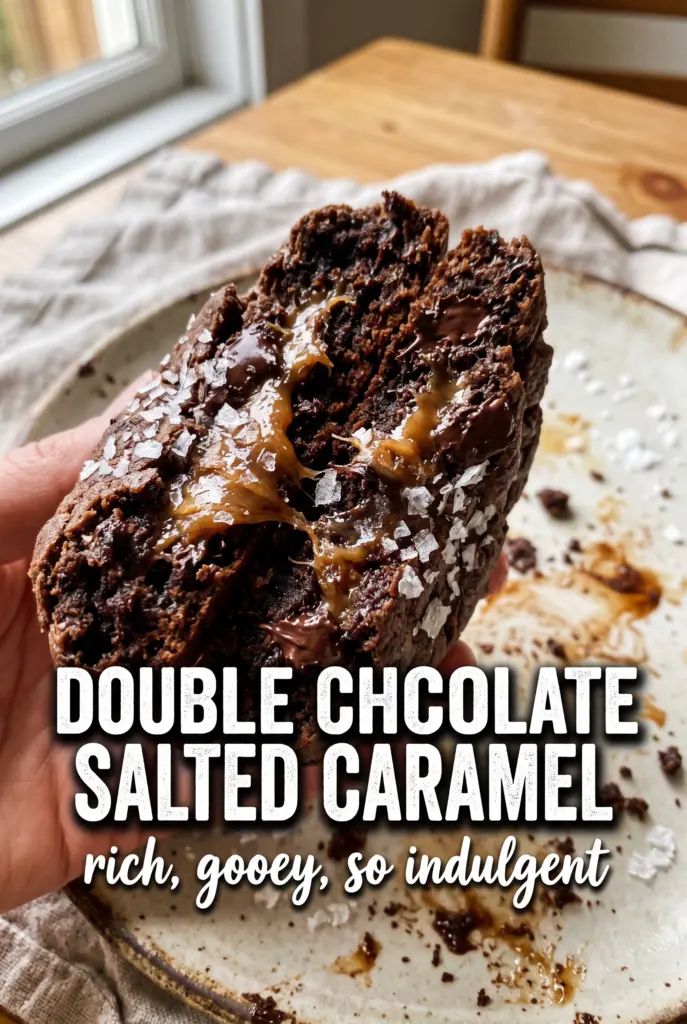
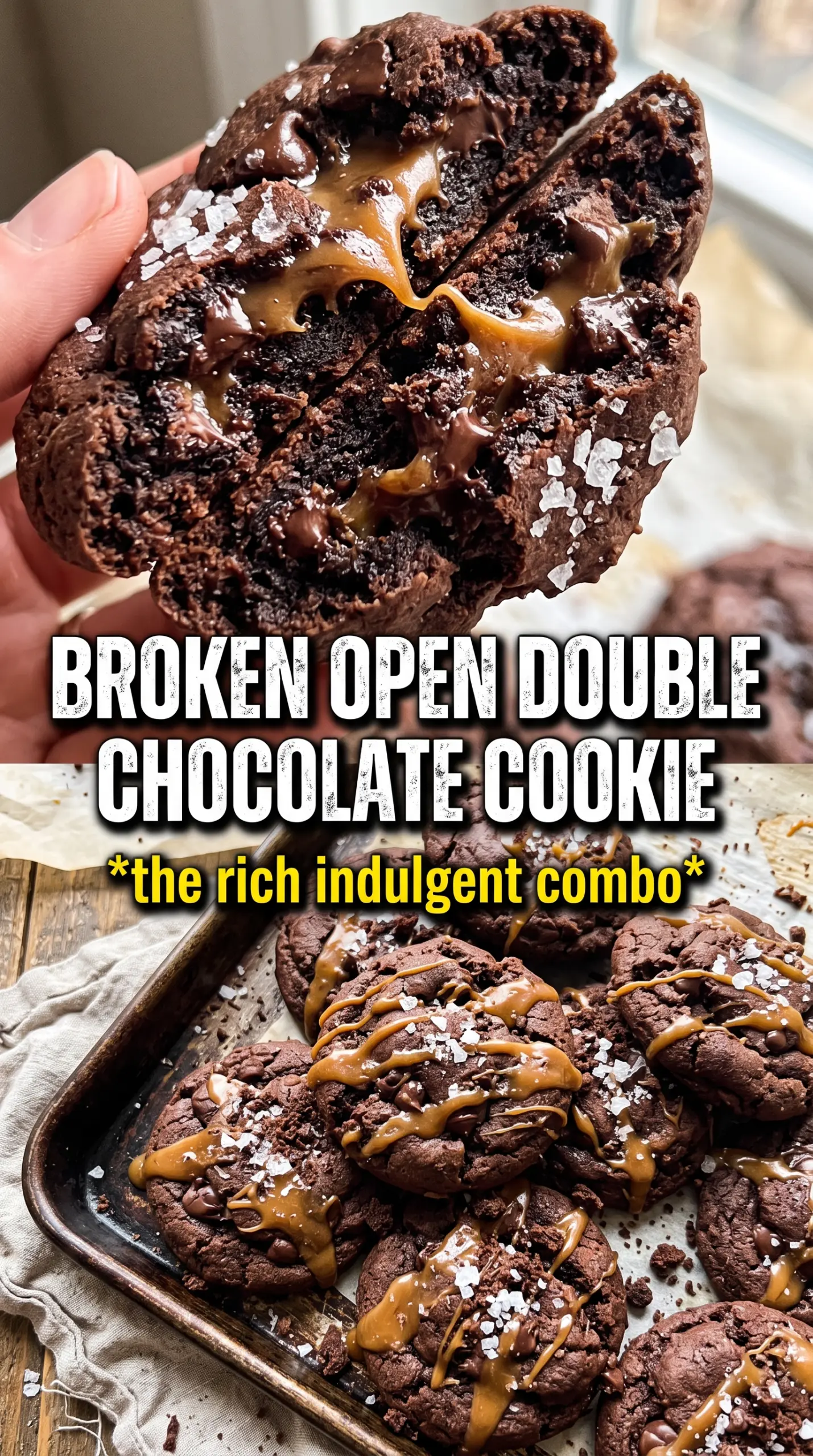
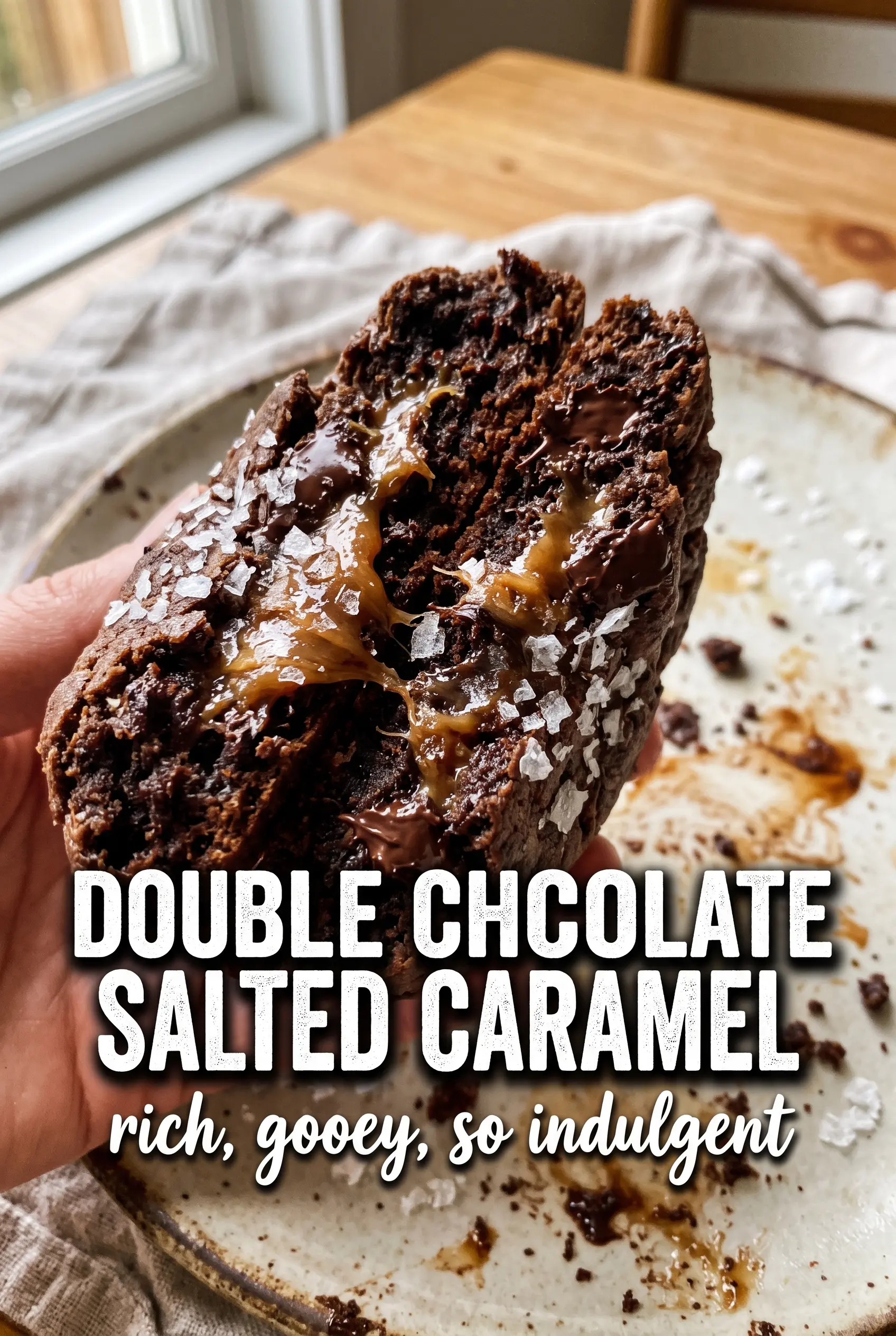
These double chocolate salted caramel cookies bake up thick at the edges, soft in the middle, and packed with little pockets of melted chocolate around a gooey caramel center. The first bite is all fudgy cocoa and dark chocolate, then the caramel catches you in the middle with a warm, sticky pull that makes these feel a little extra without being fussy.
The trick is keeping the dough sturdy enough to hold the caramel while still baking into a tender cookie. Cocoa powder gives these a deep chocolate base, brown sugar keeps the texture chewy, and the salted finish cuts through the sweetness so the caramel doesn’t take over. Wrapping the dough completely around each caramel matters more than people think; any exposed edge is where the filling leaks.
If you’ve had caramel cookies spread too thin or end up with a hollow center, the notes below will help. I’ve also included the little timing details that keep the cookies soft instead of dry, plus a few swaps for when you need to work with what’s in the pantry.
The caramel stayed tucked right in the middle and the cookies baked up soft and fudgy instead of spreading flat. I sprinkled the salt on as soon as they came out, and that little salty bite made the chocolate taste even richer.
Love the fudgy centers and gooey caramel pull? Save these double chocolate salted caramel cookies for the next time you need a rich cookie that disappears fast.
The Trick to Keeping the Caramel Inside the Cookie
The most common problem with caramel-filled cookies is leakage. If the dough isn’t sealed all the way around the candy, the caramel finds the weak spot and runs out onto the pan before the cookie has time to set. That leaves you with a flat cookie and a sticky mess instead of a soft center.
The other mistake is overbaking them. These cookies should come out when the edges look set and the centers still look slightly underdone. They finish on the baking sheet, and that short rest is what keeps the middle tender while the caramel stays soft instead of turning to glue.
- Seal the dough like a pocket. Press the caramel into the center, then wrap the dough up and over it from every side. If you can see even a little caramel peeking through, pinch it shut.
- Use parchment, not a bare pan. Caramel that escapes will harden on the pan, and parchment gives you a cleaner release.
- Pull them early. The cookies should look just set around the edges. If you wait for the centers to look fully baked, they’ll turn dry by the time they cool.
What Each Ingredient Is Actually Doing in These Cookies
- Cocoa powder — This is what gives the dough its deep chocolate base without adding extra moisture. Use a good unsweetened cocoa if you can; it makes the chocolate flavor taste fuller and less flat.
- Brown sugar — It brings chewiness and a little molasses depth, which matters because the caramel is already adding sweetness. Swapping it all for white sugar would make the cookies thinner and crisper.
- Soft caramel candies — The texture of the candy is the whole point here. Use soft caramels that melt smoothly; hard caramels won’t give you that gooey center, and chewy ones can stay too firm after baking.
- Dark chocolate chips — They balance the caramel and keep the cookies from tasting one-note sweet. The chips also create those melted puddles that make the cookie feel extra rich.
- Flaky sea salt — Don’t skip this. The salt lands on top while the caramel is still hot and gives the cookies that sweet-salty finish that keeps people reaching for another one.
Building the Dough, Wrapping the Centers, and Baking Them Just Enough
Mix the Dry Ingredients First
Whisk the flour, cocoa powder, baking soda, and salt together until the mixture looks even and there are no dark streaks of cocoa hiding at the bottom. That step keeps the cookies from tasting patchy, and it prevents one bite from being bitter while another tastes plain. Cocoa tends to clump, so don’t rush it.
Beat the Butter and Sugars Until Fluffy
Cream the butter with both sugars until the mixture lightens in color and looks airy, not greasy. That extra beating gives the cookies a better structure and helps them spread less. Add the eggs and vanilla after that, and stop as soon as they’re combined; if the mixture looks curdled, it usually just needs a few more seconds of mixing.
Fold in the Chocolate and Shape the Cookies
Once the dry ingredients go in, mix only until the dough comes together. Overmixing after the flour is added makes cookies tougher, and this dough should stay tender. Scoop 2-tablespoon portions, flatten each one slightly, tuck a caramel in the middle, and wrap the dough around it so the seam disappears underneath.
Bake Until the Edges Set
These bake fast, usually 10 to 12 minutes, and the centers will look soft when they come out. That’s exactly right. The cookies need those few minutes on the hot pan to finish setting, and the flaky sea salt should go on immediately so it sticks to the warm chocolate and caramel.
How to Adjust These Cookies Without Losing the Gooey Center
Use milk chocolate chips instead of dark
Milk chocolate makes the cookies sweeter and softer in flavor, but you lose some of the contrast that keeps the caramel from tasting one-dimensional. If you go this route, keep the flaky salt on top so the finish still has balance.
Make them gluten-free with a 1:1 baking blend
A good 1:1 gluten-free flour blend can work here because the dough already has enough cocoa and sugar to stay tender. The texture may come out a little more delicate, so chill the dough for 20 minutes if it feels soft before shaping.
Add chopped pecans for a salted caramel twist
A handful of chopped pecans adds crunch and gives the cookies a praline-like feel. Fold them in with the chocolate chips so they’re evenly distributed, but don’t overload the dough or the cookies can become crumbly around the caramel center.
Storage and Reheating
- Refrigerator: Store in an airtight container for up to 4 days. The caramel firms up as they chill, but the cookie stays tender.
- Freezer: Freeze baked cookies for up to 2 months, or freeze the shaped dough balls before baking. If freezing dough, add the caramel center just before baking for the cleanest result.
- Reheating: Warm a baked cookie in the microwave for 8 to 10 seconds or in a 300F oven for a few minutes. Heat it just enough to soften the caramel; too much heat will make it run out.
Questions I Get Asked About This Recipe
Double Chocolate Salted Caramel Cookies
Ingredients
Equipment
Method
- Preheat the oven to 375°F and line baking sheets with parchment.
- Whisk all-purpose flour, cocoa powder, baking soda, and salt until evenly combined.
- Beat softened unsalted butter with brown sugar and granulated sugar until very light and fluffy.
- Beat in the eggs one at a time, then mix in vanilla extract until smooth.
- Fold the flour mixture into the wet ingredients just until no dry streaks remain.
- Fold in dark chocolate chips until the dough is thick and studded.
- Scoop about 2-tablespoon portions of dough, flatten slightly, and place one soft caramel candy in the center.
- Wrap dough around the caramel and seal completely to enclose it.
- Roll into a ball and place on the prepared baking sheet, spacing apart.
- Bake for 10–12 minutes until the edges are set and the caramel is still gooey inside.
- Sprinkle with flaky sea salt immediately after baking, then cool for 8 minutes before eating.