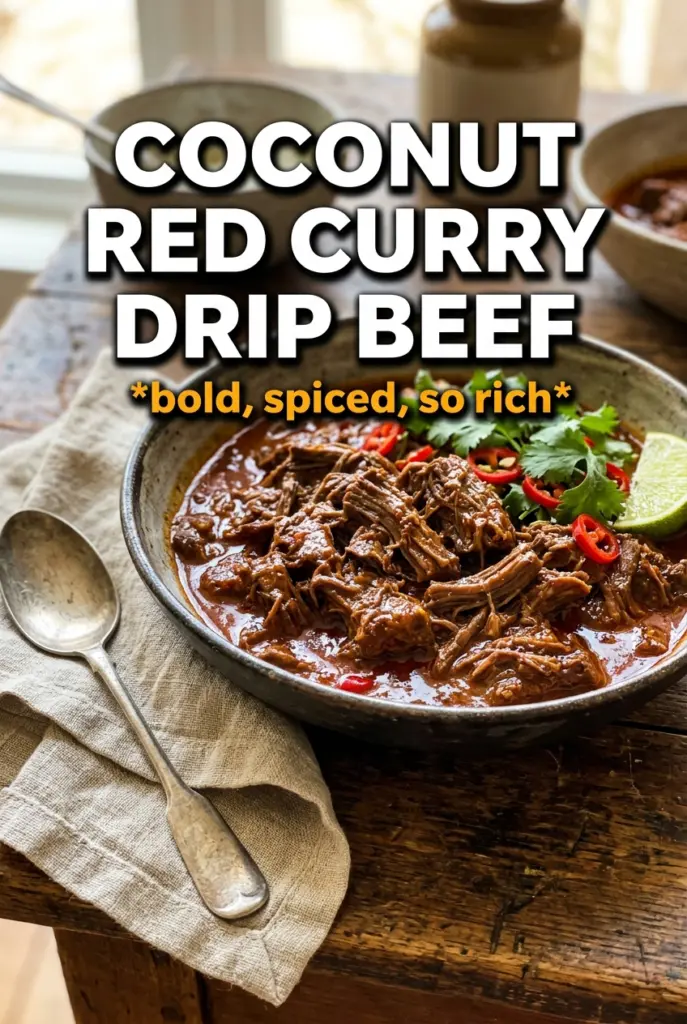
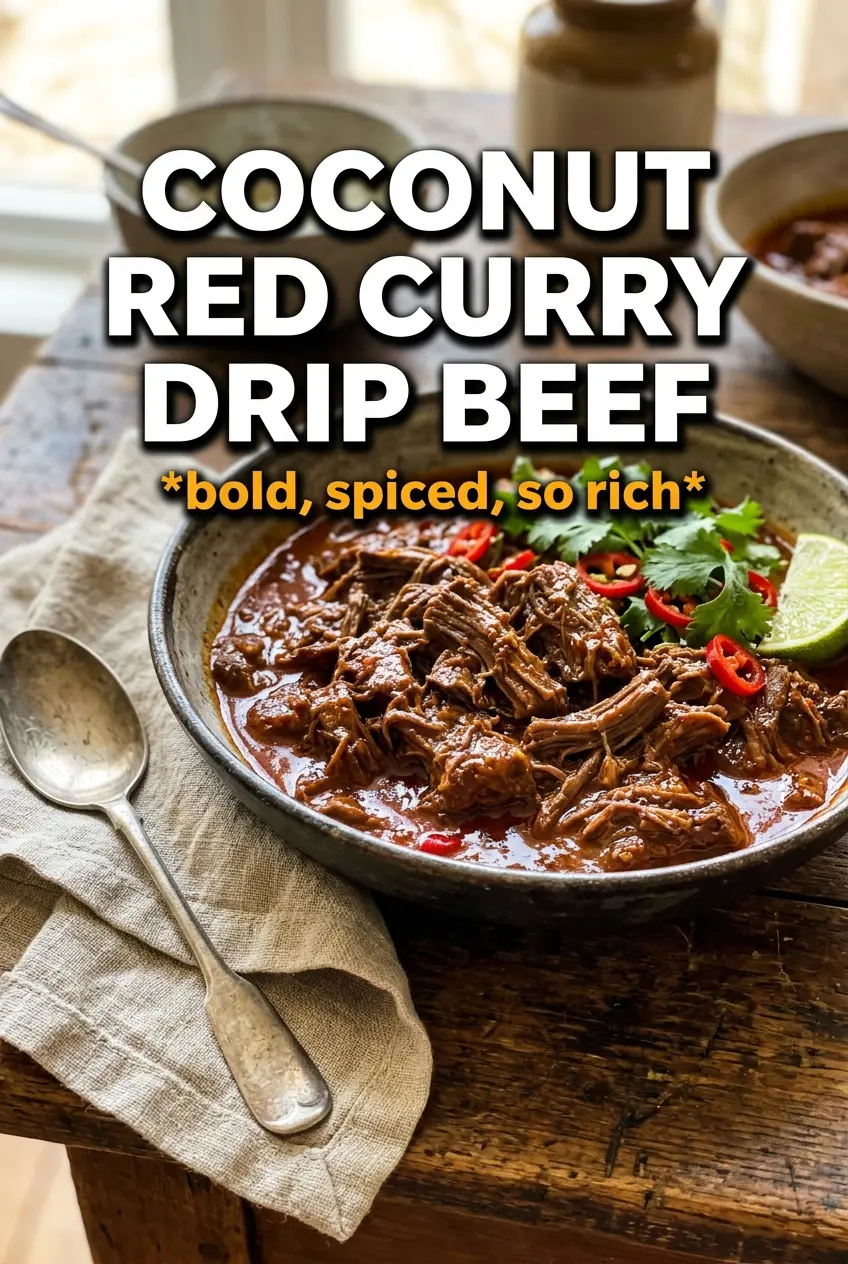
Coconut red curry drip beef turns a plain chuck roast into something spoon-tender, richly sauced, and built for rice. The beef shreds into long, soft strands that soak up the coconut-curry broth instead of sitting in it like an afterthought, and the whole pot finishes with enough brightness from lime to keep the sauce from tasting heavy.
What makes this version work is the balance in the slow cooker. Coconut milk brings body, diced tomatoes add acidity, and the red curry paste carries heat and aromatics without needing a separate stovetop sauce. Bruised lemongrass does a lot of quiet work here too; it perfumes the whole pot while the beef cooks, then comes out before serving so you get the flavor without the woody texture.
Below, I’ve included the one technique detail that keeps the sauce from tasting flat at the end, plus a few smart swaps for when you need to work with what’s already in the pantry.
The beef shredded beautifully after 8 hours on low, and the lime at the end woke up the whole coconut curry sauce. I served it over jasmine rice and the broth soaked in just enough without getting greasy.
Save this coconut red curry drip beef for the nights when you want fall-apart beef, a silky curry broth, and one slow cooker doing all the work.
The Trick to Keeping the Curry Broth Rich Instead of Watery
The mistake most slow-cooker beef curries make is stacking too much liquid and then walking away. Chuck roast gives off plenty of juices as it cooks, and coconut milk behaves better when it has less competition in the pot. Here, the tomato, broth, and coconut milk are enough to build a sauce that stays spoonable after eight hours instead of thinning out into something flat.
Red curry paste also needs direct contact with the liquid base before it goes over the beef. Whisking it into the coconut milk and tomatoes first distributes the spices evenly, so you don’t end up with pockets of harsh heat or bland sauce. The lime goes in at the end for a reason: if it cooks all day, the bright edge disappears and the sauce tastes heavier than it should.
- Beef chuck roast — This cut is made for long, low cooking. It has enough fat and connective tissue to turn silky and shred easily; leaner beef tends to dry out before it gets to that point.
- Coconut milk — Use full-fat coconut milk if you can. Light coconut milk won’t give you the same body, and the sauce can taste thin even after the beef is tender.
- Red curry paste — This is where the main heat and Thai-inspired flavor come from, so choose a paste you like. If yours is very salty or very spicy, start with a little less and taste the sauce before serving.
- Lemongrass — Bruising the stalk helps release its citrusy aroma into the sauce. Leave it in whole so you can remove it cleanly after cooking; chopped lemongrass can be fibrous and distracting in the finished beef.
- Fish sauce and lime juice — These are the finishing pieces that make the sauce taste complete. Fish sauce deepens the savory side, while lime brings the whole dish back to life after hours in the slow cooker.
What Each Ingredient Is Actually Doing in This Recipe

- Primary ingredient (the star) — Quality matters most. Choose the best you can find.
- Cooking medium (oil, butter, or broth) — This carries flavors and prevents dryness.
- Seasonings (salt, pepper, spices, herbs) — Layer flavors so nothing overpowers. Build depth gradually.
- Aromatics (garlic, onion, herbs) — Cook with fat to bloom flavors. Become the foundation.
- Supporting ingredients — Complement the main ingredient without overpowering it.
- Sauce or liquid (if applicable) — Brings flavors together. Balance richness with acid.
- Acid (lemon, vinegar, wine, or other) — Brightens and prevents flat-tasting results.
- Final finish (garnish, glaze, or sauce) — Prevents one-dimensional taste and adds visual appeal.
Let the Slow Cooker Do the Work, Then Finish With Acid
Build the Sauce First
Whisk the coconut milk, tomatoes, curry paste, garlic, ginger, fish sauce, brown sugar, cumin, and broth until the curry paste is fully dispersed. You want the mixture to look smooth and evenly speckled, not streaky or clumped, because curry paste that sits in one spot will cook unevenly. Season the beef well before it goes in; that first layer of salt matters because the roast is thick and needs time to absorb it.
Cook Until the Beef Gives Way
Set the chuck roast in the Crockpot and pour the sauce over the top, then add the bruised lemongrass. Cook on low for 7 to 8 hours until the beef pulls apart with almost no resistance from a fork. If it still feels tight in the center, it needs more time; undercooked chuck shreds into chunks, while properly cooked chuck falls apart in soft strands.
Shred in the Sauce, Not on the Side
Pull out the lemongrass first, then shred the beef right in the slow cooker so every strand gets coated in the curry broth. This is where the dish changes from pot roast in sauce to something that eats like curry. Stir in the lime juice at the end and taste again before serving; if the sauce seems muted, a pinch more salt usually fixes it faster than more heat does.
Make it dairy-free without losing body
This recipe is already dairy-free as written, which is one reason it works so well in the slow cooker. Keep the full-fat coconut milk in place, because it gives the sauce its creamy texture without needing cream or butter. If you swap to a lighter coconut milk, the sauce will taste thinner and the curry will feel less cohesive over rice.
Use beef shoulder or brisket if that’s what you bought
Either cut works as long as it has enough marbling to survive a long cook. Brisket will taste a little richer and slice into softer shreds, while shoulder behaves a lot like chuck and pulls apart easily. Keep the cook time flexible and go by tenderness instead of the clock.
Make it lower-carb by changing the serving base
The beef itself is naturally low in carbs, so the easiest change is serving it over cauliflower rice or steamed cabbage instead of white rice. The sauce is bold enough to carry a lighter base, and the extra lime at the end helps keep the dish from feeling heavy.
Stretch it for a bigger crowd
You can double this recipe in a large slow cooker, but don’t crowd the beef so tightly that the sauce can’t circulate. If the pot is packed full, add a little extra broth rather than extra curry paste, since too much paste can push the sauce into bitter territory. Serve with plenty of rice so the broth has room to shine.
Storage and Reheating
- Refrigerator: Store in an airtight container for up to 4 days. The sauce thickens as it chills, and the flavor gets even deeper by the next day.
- Freezer: It freezes well for up to 3 months. Cool completely, portion with some sauce, and freeze flat in containers or freezer bags so the beef stays covered and doesn’t dry out.
- Reheating: Rewarm gently on the stove over low heat or in the microwave at medium power, stirring once or twice. Add a splash of broth or water if the sauce has tightened up, and don’t boil it hard or the beef can go stringy.
Questions I Get Asked About This Recipe
Coconut Red Curry Drip Beef
Ingredients
Equipment
Method
- Season the chuck roast generously with salt and pepper, pressing it into the surface so it won’t spot. Set the beef aside while you mix the curry base.
- Whisk coconut milk, diced tomatoes, red curry paste, garlic, ginger, fish sauce, brown sugar, cumin, and beef broth until smooth and evenly colored.
- Place the beef in the Crockpot and pour the curry sauce over it, then tuck the bruised lemongrass into the liquid.
- Cook on Low for 7-8 hours, until the beef is fall-apart tender when pulled with a fork. Keep the lid on to maintain steady heat and prevent the curry from reducing too much.
- Remove the lemongrass and shred the beef directly in the sauce so the meat soaks up the coconut-red curry broth. Stir well to redistribute the shredded beef.
- Stir in the lime juice and adjust seasoning with more salt and pepper as needed. Taste for balance between creamy coconut, curry heat, and bright citrus.
- Serve the shredded beef over steamed rice and top with cilantro, lime wedges, and sliced red chili for a fresh, spicy finish.