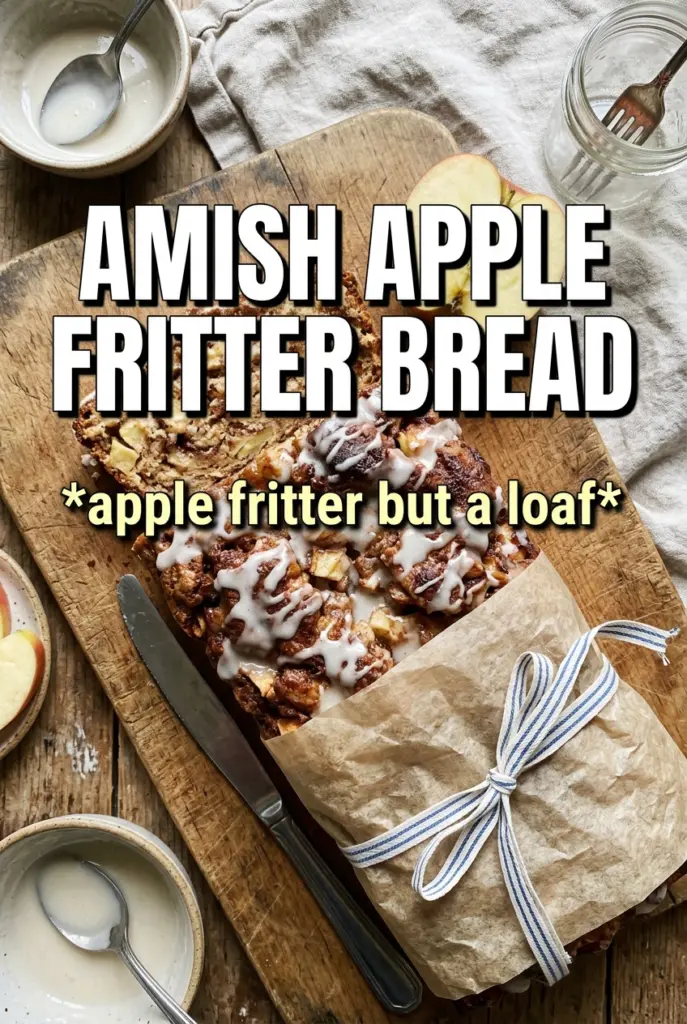
Amish apple fritter bread bakes up with a soft, buttery crumb, cinnamon-sugar pockets, and tender apple pieces in every slice. The top turns golden and just a little crisp, then the warm glaze sinks into the ridges and sets into that familiar bakery-style finish. It tastes like the best part of an apple fritter, only easier to slice and share.
What makes this loaf work is the layering. Half the cinnamon sugar goes straight onto the apples, which keeps the fruit from tasting flat and helps create those jammy, swirled pockets in the middle. The batter stays simple and sturdy enough to hold the fruit without turning soggy, and the milk gets added with the dry ingredients in stages so the loaf stays tender instead of dense.
Below, I’ve included the little details that keep this bread from sinking in the center or turning gummy around the apples. If you’ve ever had quick bread bake unevenly, the process notes here will help a lot.
The cinnamon apples stayed tucked into the loaf instead of sinking, and the glaze set up beautifully while the bread was still warm. My kitchen smelled amazing for hours.
Save this Amish Apple Fritter Bread for the mornings when you want cinnamon apples, a soft loaf, and a warm glaze in every slice.
The Trick to Keeping the Apples in the Bread, Not at the Bottom
Most quick breads go wrong for one of two reasons: the fruit is too wet, or the batter is too loose to hold it. This loaf avoids both by tossing part of the cinnamon sugar with the diced apples first, which lightly coats the fruit and keeps the juices from bleeding straight into the batter. That small step also gives you concentrated pockets of apple-cinnamon flavor instead of one bland layer.
The other detail that matters is how the batter goes into the pan. Half the batter, then half the apples, then the remaining cinnamon sugar, then the rest of the batter, then the final apples. That layering keeps the fruit suspended through the loaf instead of sliding to the base while it bakes.
What the Butter, Milk, and Apples Are Each Doing Here
- Apples — Use firm baking apples if you can. They hold their shape and give you distinct little bites instead of turning into applesauce. Peel them and dice them finely so they soften evenly and don’t leave big wet pockets in the loaf.
- Brown sugar and cinnamon — This is the apple fritter part of the bread. Brown sugar melts into the fruit and makes a sticky swirl that tastes deeper than plain granulated sugar. Don’t skip the second sprinkle of plain cinnamon sugar; it creates the ribbon on top that makes each slice taste finished.
- Butter — Softened butter creamed with sugar traps air, which gives the loaf some lift before the baking powder and baking soda finish the job. If the butter is too cold, the mixture stays grainy and the bread bakes heavier.
- Whole milk — Whole milk gives the loaf enough richness to stay tender without making it greasy. You can use 2% in a pinch, but the crumb won’t be quite as plush.
- Powdered sugar glaze — The glaze should be thin enough to drizzle, not paste-like. Add the milk slowly. If it gets too loose, it runs off the loaf instead of catching in the warm ridges on top.
How to Build the Loaf So It Bakes Evenly
Starting with the Pan and Oven
Grease the 9×5 pan well and preheat the oven before you begin mixing. Quick bread needs consistent heat from the start, or the center will lag behind while the edges set too fast. If your oven runs hot, the top can brown before the middle is done, so start checking at the 55-minute mark and use a toothpick in the center, not near the edge.
Mixing the Batter Without Toughening It
Beat the butter and sugar until the mixture looks pale and fluffy, then add the eggs and vanilla. Once the dry ingredients go in, alternate them with the milk and stop mixing as soon as the flour disappears. Overmixing builds a tight, gummy loaf, and you’ll notice it most around the apple pockets.
Layering for the Swirl
Pour in half the batter, then add half the apples and some of the cinnamon sugar. Repeat with the remaining batter and apples. That order keeps the fruit distributed and gives you the ribboned look when you slice the bread. If the apples sit all on top, they’ll press into the center and leave the bottom plain.
Knowing When It’s Done
The loaf is ready when the top is deeply golden and a toothpick inserted in the center comes out clean or with a few moist crumbs. If you pull it too early, the middle can collapse under the weight of the apples. Let it rest for a bit before glazing so the sugar doesn’t slide off in a thin puddle.
How to Adapt This for Different Kitchens and Different Eaters
Gluten-Free Version
Use a 1:1 gluten-free baking flour that already includes xanthan gum. The loaf will be a little more delicate, but the cinnamon apples and glaze still carry it well. Let it cool fully before slicing so the crumb has time to set.
Dairy-Free Swap
Use a plant-based butter stick and unsweetened non-dairy milk. The flavor stays close, but the crumb won’t be quite as rich. Choose an unsweetened milk so the glaze doesn’t end up cloying.
Extra-Streusel-Style Top
If you want more crunch, save a spoonful of the cinnamon sugar mixture and sprinkle it over the batter before baking. It won’t turn into a full streusel, but it does give the top a slightly crackly finish under the glaze.
Storage and Reheating
- Refrigerator: Store covered for up to 4 days. The glaze softens a little, and the crumb gets denser after the first day, but the flavor stays good.
- Freezer: Freeze the unglazed loaf or individual slices wrapped tightly for up to 2 months. Thaw at room temperature, then glaze after thawing if you want the best texture.
- Reheating: Warm slices briefly in the microwave or in a low oven until just heated through. Don’t blast it too long, or the apples dry out and the glaze turns tacky instead of soft.
Answers to the Questions Worth Asking
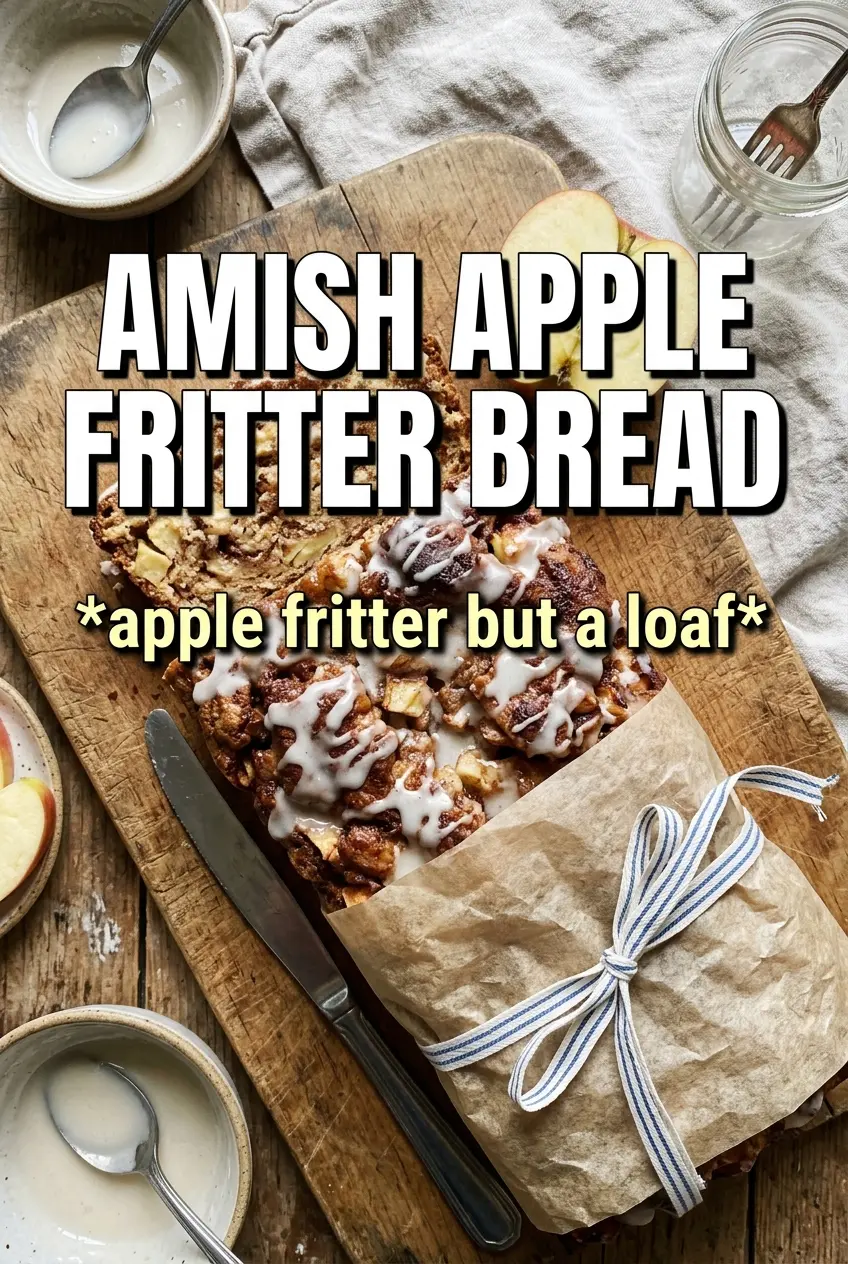
Amish Apple Fritter Bread
Ingredients
Equipment
Method
- Preheat oven to 350F and grease a 9x5 loaf pan, so the loaf releases cleanly after baking. The pan should be well-coated with an even film.
- Mix brown sugar and cinnamon, then toss half with the diced apples to coat the fruit. You should see cinnamon-sugar clinging to the apple pieces.
- Beat butter and granulated sugar until fluffy, 1 to 2 minutes, for a lighter batter texture. Stop when the mixture looks pale and thicker.
- Add eggs and vanilla extract, mixing until smooth and fully combined. The batter should look glossy and uniform.
- Whisk flour, baking powder, baking soda, and salt together in a bowl to evenly distribute the leaveners. This helps prevent dense spots in the loaf.
- Alternate adding the dry mixture and whole milk to the butter mixture, mixing just until incorporated. Stop as soon as no dry streaks remain.
- Pour half the batter into the prepared pan, spreading it into an even layer. Aim for full pan coverage so the loaf bakes consistently.
- Layer half the apple mixture over the batter, then sprinkle the remaining plain cinnamon sugar. You should see a distinct cinnamon-sugar layer on top of the apples.
- Pour the remaining batter on top and spread gently to the edges. Finish by adding the remaining apples so they peek through the top.
- Bake at 350F for 55 to 60 minutes, until a toothpick comes out clean. The loaf should look golden and set in the center.
- Drizzle with powdered sugar glaze while warm, so it soaks slightly and forms a thick sheen. Let the glaze set for a few minutes before slicing.