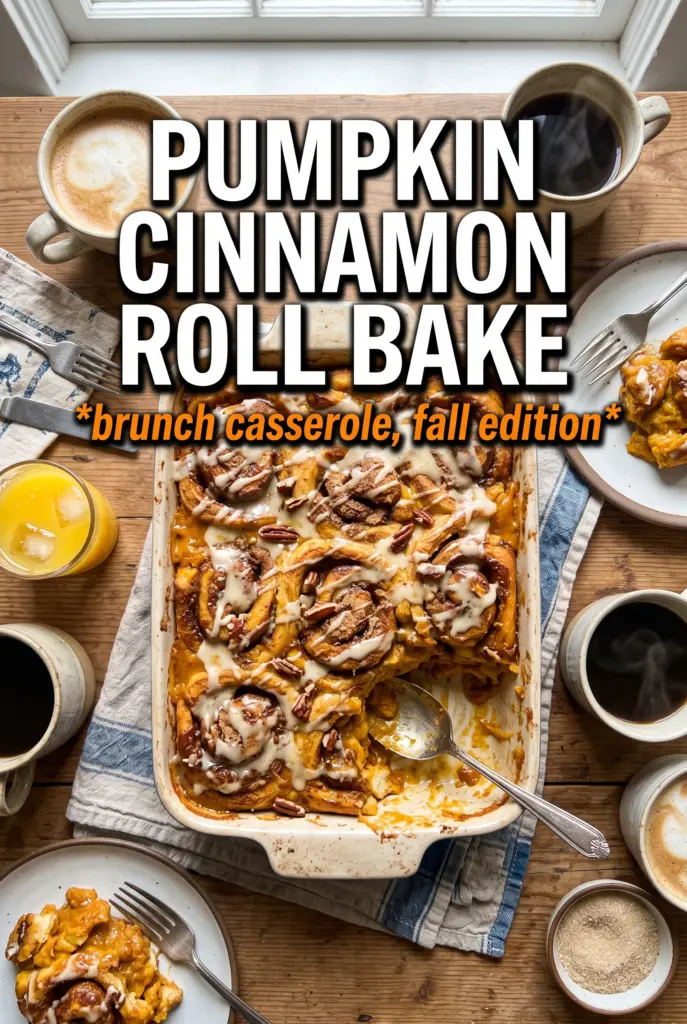
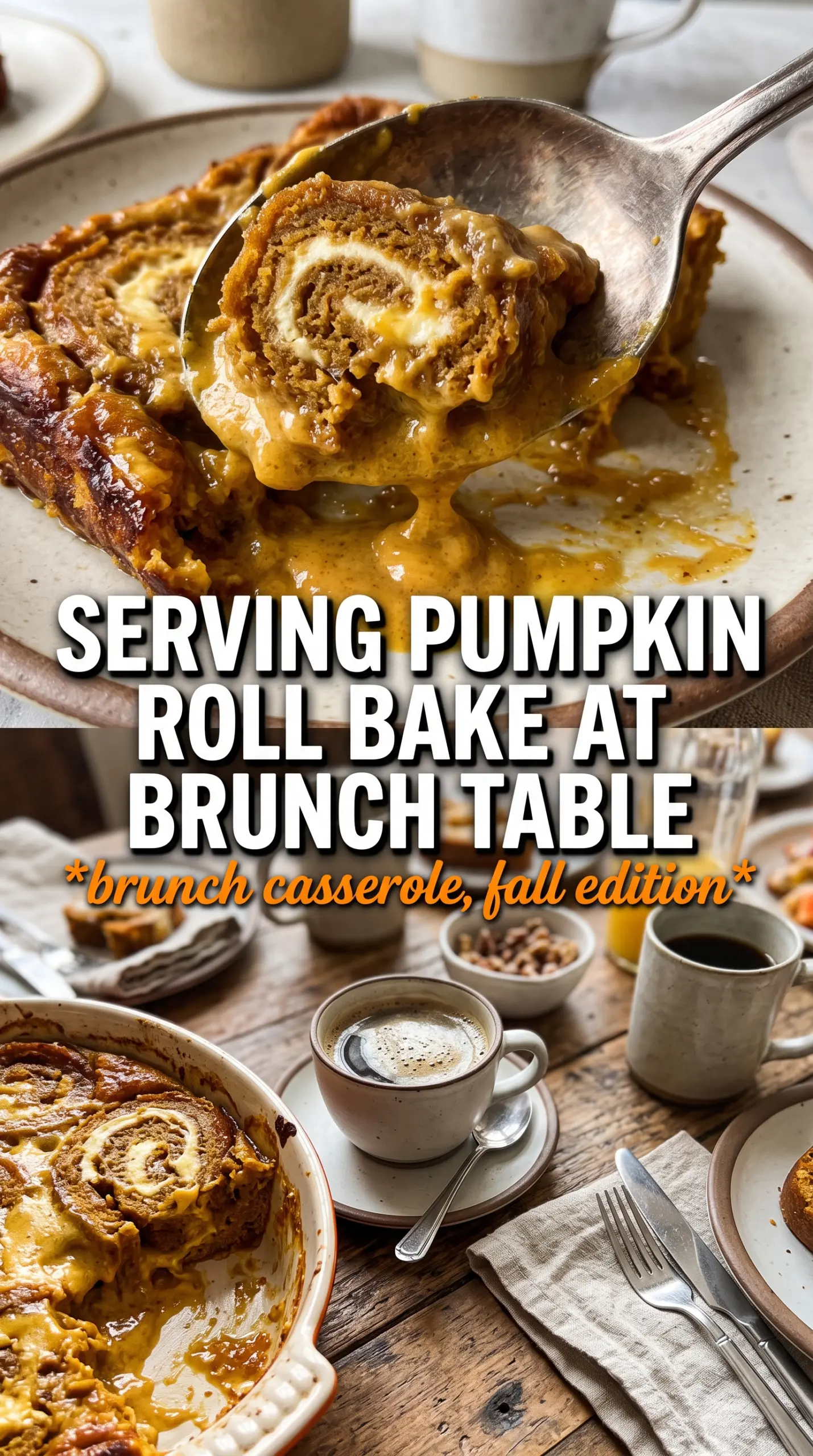
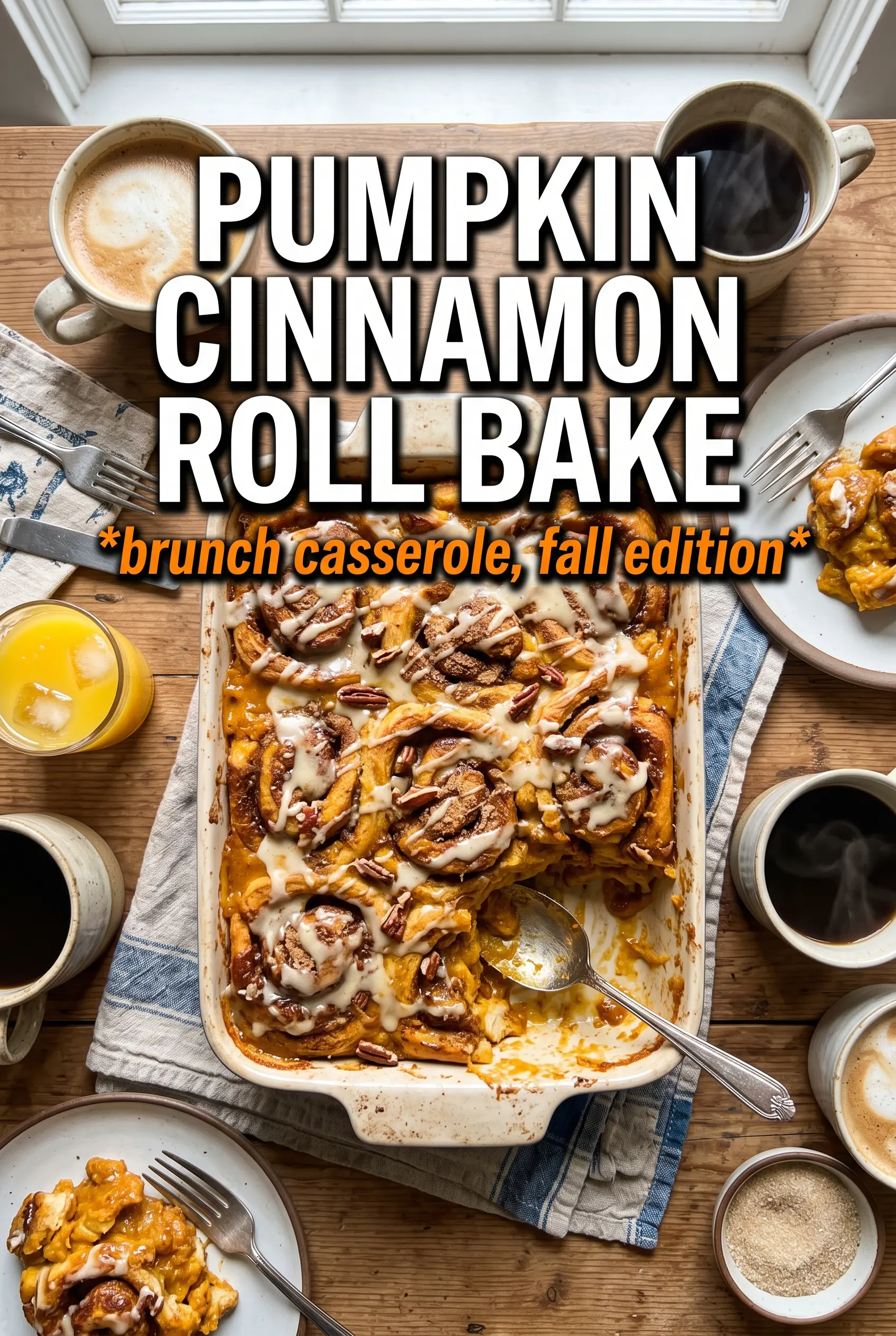
Golden cinnamon rolls baked into a pumpkin custard turn soft at the center, puffed at the edges, and sticky in all the right places. The frosting melts into the warm bake and settles into every gap, so each spoonful gets a little pastry, a little pumpkin spice, and that sweet cream cheese finish without any extra fuss.
What makes this work is the balance between the custard and the rolls. The eggs and cream set the dish into a tender bread-pudding texture, while the pumpkin puree adds body without making it heavy. Cutting the rolls into quarters matters too, because smaller pieces soak up the custard faster and bake through before the tops dry out.
Below, I’ve laid out the small details that keep the bake from turning gummy, plus a couple of easy swaps if you want to stretch it or change the flavor a little.
The rolls baked up fluffy on top but stayed soft and custardy underneath, and the maple frosting on top gave it just enough extra sweetness without being cloying. My kids kept sneaking pieces before I could even get it to the table.
Save this Pumpkin Cinnamon Roll Bake for a breakfast that comes out puffed, gooey, and finished with maple cream cheese frosting.
The Trick to Keeping the Center Custardy, Not Soggy
This bake sits right on the line between soft and wet, and the difference comes down to soak time and pan size. The cinnamon roll pieces need a few minutes to drink in the custard, but they shouldn’t sit long enough to dissolve into mush before the oven gets involved. A 9×13 dish gives enough room for heat to move through the rolls so the edges brown while the center sets.
The other place people go wrong is baking by color alone. The top will look golden before the middle is fully set, and if you pull it too early the custard underneath stays loose. You want the rolls puffed, the edges browned, and the center just set when you tap the pan gently.
- Quartered cinnamon rolls — Cutting them small gives you more surface area for the pumpkin custard to coat. Larger chunks stay doughy in the middle longer and don’t absorb the flavor as evenly.
- Eggs — They’re what turn this from a pan of soaked rolls into a true bake. There isn’t a real substitute here if you want the custard to set properly.
- Pumpkin puree — Use plain pumpkin puree, not pumpkin pie filling. Pie filling is already sweetened and spiced, which throws off both the texture and the balance.
- Heavy cream — This keeps the custard rich and helps it bake up tender. Half-and-half works in a pinch, but the final result will be a little less plush.
- Maple syrup in the frosting — This is the quiet upgrade. It loosens the frosting just enough to drizzle and adds a deeper sweetness that plays well with the pumpkin spice.
What Each Ingredient Is Actually Doing in This Recipe
- Primary ingredient (the star) — Quality matters most. Choose the best you can find.
- Cooking medium (oil, butter, or broth) — This carries flavors and prevents dryness.
- Seasonings (salt, pepper, spices, herbs) — Layer flavors so nothing overpowers. Build depth gradually.
- Aromatics (garlic, onion, herbs) — Cook with fat to bloom flavors. Become the foundation.
- Supporting ingredients — Complement the main ingredient without overpowering it.
- Sauce or liquid (if applicable) — Brings flavors together. Balance richness with acid.
- Acid (lemon, vinegar, wine, or other) — Brightens and prevents flat-tasting results.
- Final finish (garnish, glaze, or sauce) — Prevents one-dimensional taste and adds visual appeal.
Building the Bake So the Rolls Stay Puffy
Cut and Coat the Rolls
Cut each cinnamon roll into quarters and scatter the pieces evenly in the greased dish. That even spread matters because crowded spots trap steam and turn soft in a dull way instead of baking up with a little edge and lift. If the pan looks piled in the middle, spread the pieces out before you add the custard.
Whisk the Custard Until It Looks Uniform
Whisk the eggs, pumpkin puree, cream, brown sugar, spice, cinnamon, vanilla, and salt until the mixture looks smooth and thick but still pourable. You’re looking for no streaks of egg white and no clumps of pumpkin. If the custard is poorly mixed, you’ll get pockets that taste eggy in one bite and bland in the next.
Let the Rolls Soak Before Baking
Pour the custard over the rolls evenly, then give the pan about 5 minutes to sit before it goes into the oven. That short rest helps the centers start absorbing the liquid, which keeps the bake from drying out on top while the middle catches up. Don’t leave it much longer than that or the rolls can get too saturated and lose their shape.
Bake Until Set at the Center
Bake at 350°F for 30 to 35 minutes until the top is puffed and deep golden. The center should look set when you jiggle the pan lightly, not sloshy. If the top browns before the middle firms up, lay a loose piece of foil over it for the last few minutes so the custard can finish without overbrowning.
Finish with Warm Frosting
Mix the frosting packets with maple syrup while the bake is still warm, then drizzle it over the top. Warm pastry will melt some of it into the crevices and leave the rest glossy on top. If you wait until the bake is fully cool, the frosting sits in thicker ribbons instead of soaking in a little.
Small Swaps That Still Keep the Texture Right
Dairy-Free Version
Use a rich dairy-free cream substitute and a dairy-free cinnamon roll brand if you can find one. The bake will still set because the eggs do the structural work, but the frosting packets won’t be an option, so swap in a simple powdered sugar glaze made with plant milk and maple syrup.
A Slightly Less Sweet Bake
Cut the brown sugar back by 1 to 2 tablespoons if you want the pumpkin spice to stand out more. You’ll still get the soft, custardy texture, but the cinnamon roll frosting will read as the sweeter finish instead of competing with the filling.
Gluten-Free Shortcut
Use a gluten-free refrigerated cinnamon roll if your store carries one, then watch the bake a little closely because some gluten-free doughs set faster on the edges. The custard and topping stay the same, but the texture may be a bit more delicate when you scoop it.
Make It More Maple-Forward
Add an extra tablespoon of maple syrup to the frosting and leave the custard as written. That keeps the bake balanced while giving the top a warmer maple note that fits the pumpkin and cinnamon without making the filling overly sweet.
Storage and Reheating
- Refrigerator: Store covered for up to 4 days. The rolls soften as they sit, but the flavor stays good.
- Freezer: Freeze individual portions tightly wrapped for up to 2 months. The texture gets a little softer after thawing, so it’s best for leftovers, not make-ahead perfection.
- Reheating: Warm in the microwave in short bursts or in a 300°F oven until heated through. Don’t blast it too long or the custard tightens and the rolls turn dry around the edges.
Answers to the Questions Worth Asking
Pumpkin Cinnamon Roll Bake
Ingredients
Equipment
Method
- Preheat the oven to 350F and grease a 9x13 baking dish.
- Cut each cinnamon roll into quarters and scatter the pieces in the prepared dish.
- Whisk eggs, pumpkin puree, heavy cream, brown sugar, pumpkin pie spice, cinnamon, vanilla extract, and salt until smooth.
- Pour the pumpkin custard evenly over the cinnamon roll pieces.
- Let the bake soak for 5 minutes before placing it in the oven.
- Bake for 30-35 minutes at 350F until puffed and golden, with the custard set around the edges.
- Mix both cream cheese frosting packets with the maple syrup and drizzle over the warm bake.