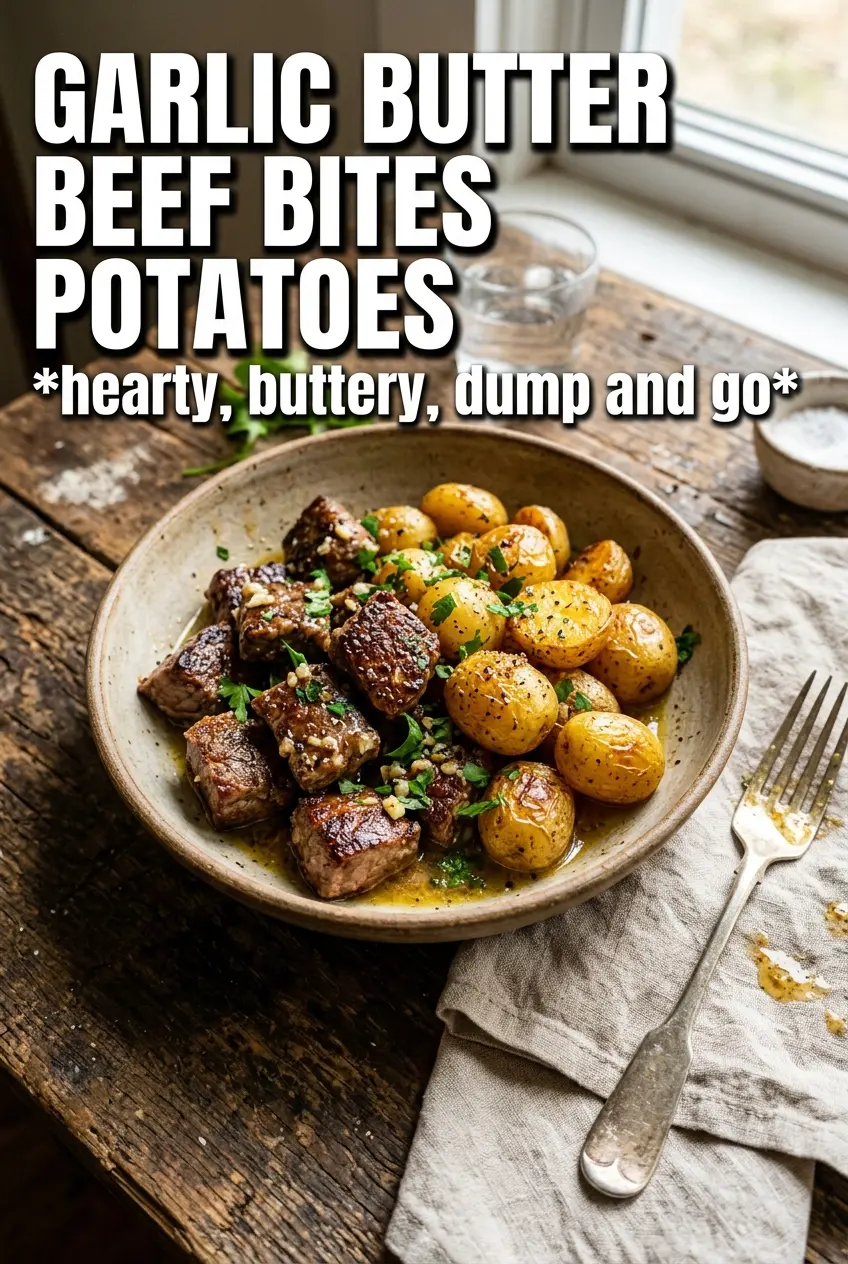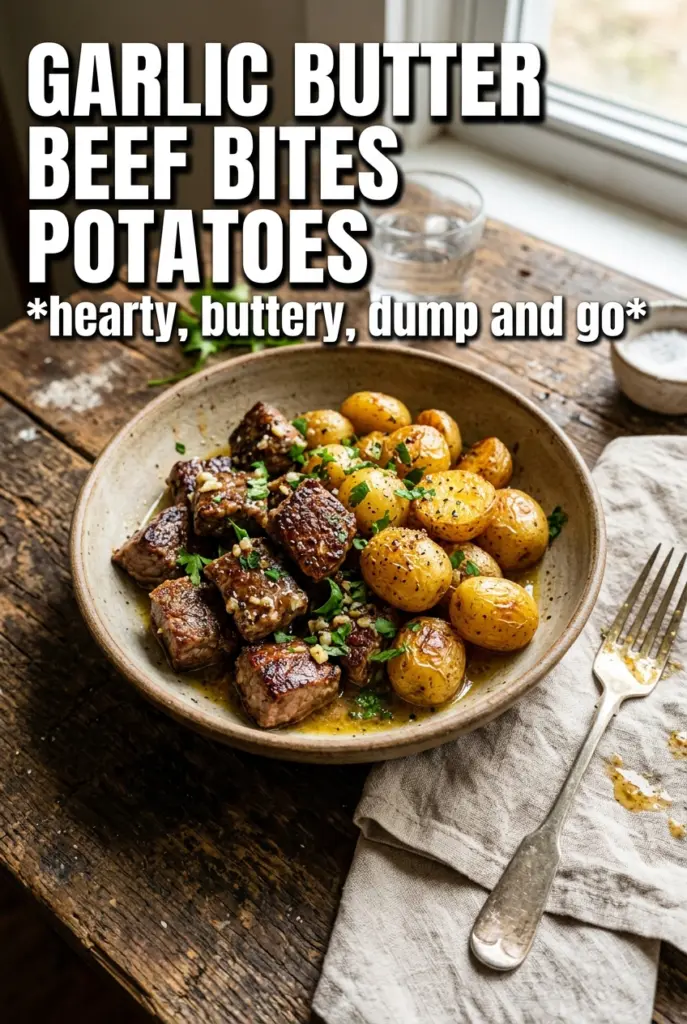
Slow cooker garlic butter beef bites with potatoes come out rich, tender, and coated in a glossy sauce that clings to every cube of beef and every halved potato. The beef turns spoon-tender without falling apart into shreds, and the potatoes soak up the garlic butter in a way that makes the whole bowl taste like it cooked longer than it did.
What makes this version work is the order of the ingredients and the balance of liquid. The potatoes go in first so they can sit in the cooking juices and soften evenly, while the beef stays on top where it can braise instead of steaming under a heavy layer of starch. The butter goes in cubed, not melted, so it slowly melts into the broth and Worcestershire sauce and turns into a proper pan-style sauce instead of greasing the top of the Crockpot.
Below, I’ll walk through the small details that keep the beef tender and the sauce silky, plus a few smart swaps if you want to change the cut of beef or make it dairy-free.
The beef stayed unbelievably tender and the potatoes picked up all that garlic butter. I cooked it on low for 7 hours and the sauce was just thick enough to coat everything without getting greasy.
Pin these slow cooker garlic butter beef bites with potatoes for a tender beef dinner with a silky garlic butter sauce and no extra babysitting.
The Trick Is Keeping the Beef on Top, Not Buried
The biggest mistake with slow cooker beef and potatoes is layering everything in a way that traps the beef under the starch. When the potatoes sit on top, they steam and the beef underneath can overcook before the liquid has time to do its work. Here, the potatoes form the base and the beef rests above them, where it can braise in the hot buttered broth instead of boiling itself dry.
That setup also helps the sauce stay more balanced. The beef drippings, butter, garlic, and Worcestershire all settle through the potatoes as they cook, so nothing tastes flat or separated at the end. If your slow cooker runs hot, start checking at 6 hours on low; once the beef yields easily with a fork, stop there.
What Each Ingredient Is Actually Doing in the Pot
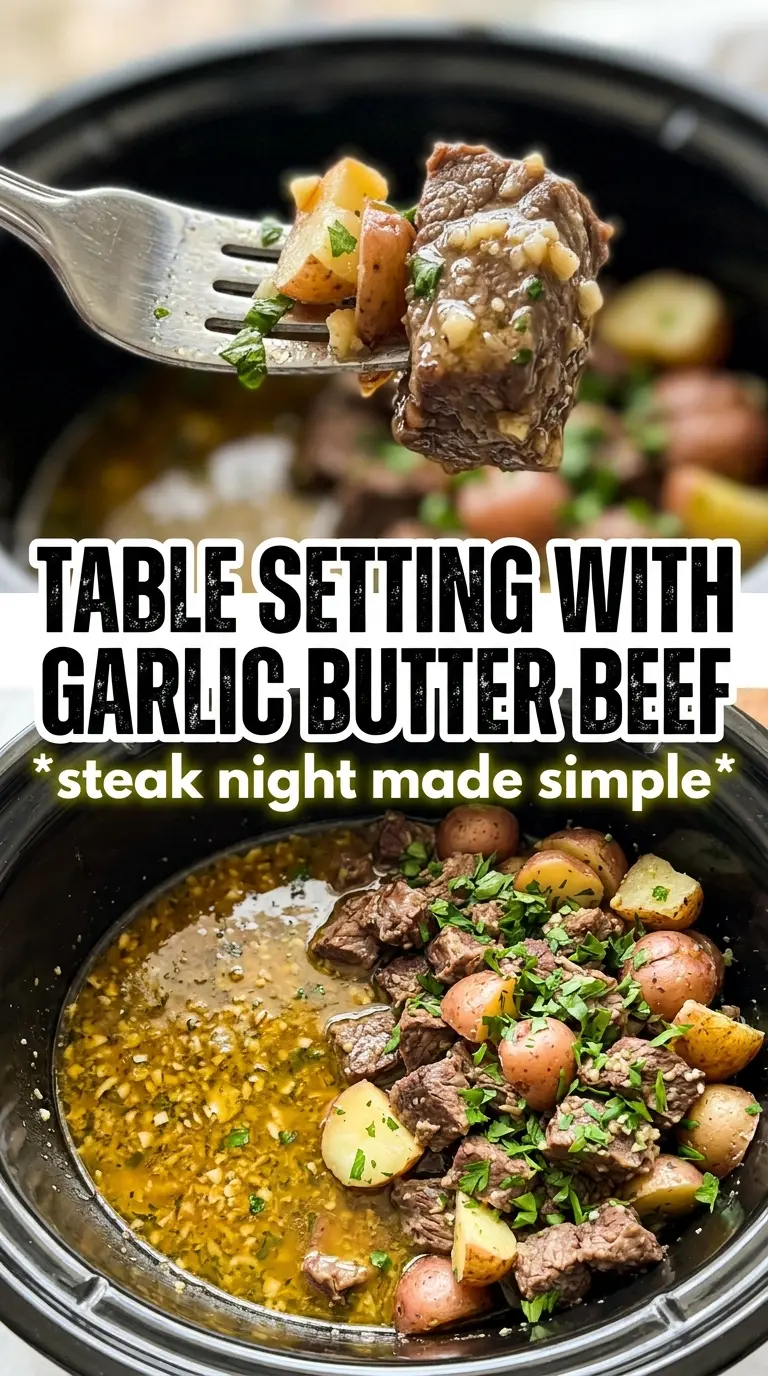
- Beef sirloin or chuck — Sirloin stays a little cleaner and firmer, while chuck gives you a richer, more fall-apart result. Chuck needs the full low-and-slow cook time; sirloin can go from tender to dry if you leave it too long, so it’s the better choice if your slow cooker runs aggressively hot.
- Baby potatoes — These hold their shape without turning chalky or disintegrating. Halving them gives the sauce more surface area to cling to, and the cut side soaks up more flavor than whole potatoes ever could.
- Unsalted butter — Butter is what turns the broth into a real sauce here. Unsalted is the right choice because it keeps the seasoning under control, especially once the Worcestershire and parmesan go in at the end.
- Beef broth and Worcestershire sauce — Broth keeps everything moist, but Worcestershire is what gives the dish its depth. Don’t skip it unless you have to; if you do, add a splash of soy sauce or extra salt so the sauce doesn’t taste thin.
- Garlic, Italian seasoning, and smoked paprika — Garlic is the headline, but the seasonings keep it from tasting one-note. The smoked paprika adds a subtle savory edge, and garlic powder plus fresh garlic make the flavor taste rounded instead of sharp.
How to Keep the Sauce Rich Instead of Watery
Season the beef before it goes into the pot
Tossing the beef with salt, pepper, garlic powder, onion powder, and smoked paprika before cooking gives you seasoned meat all the way through, not just a flavored sauce on the outside. This is especially important in a slow cooker because the low heat softens flavors instead of intensifying them. If you skip this, the final dish can taste buttery but underseasoned.
Layer the potatoes first, then the beef
Spread the potatoes across the bottom so they catch the cooking liquid and protect the beef from sitting directly on the hot ceramic insert. Nestle the beef cubes on top in a loose layer, not packed tight, so the heat can circulate. If the pot is crowded, the beef steams and turns chewy instead of tender.
Finish with a gentle stir, not a heavy one
Once the beef is tender, stir just enough to coat everything in the garlic butter sauce. Hard stirring can break up the potatoes and make the beef look ragged. The sauce should look glossy and light, not thick like gravy; if you want it richer, let it sit uncovered for 10 minutes after cooking so the top settles before serving.
Three Ways to Make This Slow Cooker Dinner Fit Your Table
Use chuck for a deeper, slower-cooked bite
Chuck gives you the richest texture because its connective tissue melts into the sauce as it cooks. It needs the full low setting and usually benefits from the full 8 hours more than sirloin does. The payoff is beef that breaks apart with a fork and tastes like it simmered all day.
Make it dairy-free without losing the garlic richness
Swap the butter for a good dairy-free butter substitute that melts cleanly. You’ll lose a little of the classic buttery finish, but the garlic and Worcestershire still carry the dish. Choose a brand that behaves like real butter in heat, not one that tastes mostly like oil.
Skip the potatoes and serve it over rice or cauliflower mash
If you want a lower-carb plate, leave the potatoes out and cook the beef with the same sauce base. Serve it over cauliflower mash for a lighter feel or rice for something that catches every drop of the garlic butter. The sauce will seem a little looser without the potatoes absorbing liquid, which is exactly what you want for a spooned-over base.
Storage and Reheating
- Refrigerator: Store leftovers in an airtight container for up to 4 days. The potatoes will absorb a little more sauce as they sit, so the next day can taste even richer.
- Freezer: This freezes well for up to 2 months. Cool it completely first, then freeze in portions so the sauce and beef reheat more evenly.
- Reheating: Warm it gently on the stove over low heat or in the microwave at medium power with a splash of broth. High heat can tighten the beef and make the sauce look greasy before it comes back together.