
Clear, brothy vegetable soup only tastes flat when the vegetables never get a chance to build flavor first. This version fixes that by starting with a proper sauté, then simmering the potatoes and carrots just long enough to turn the broth savory without making the vegetables collapse. The result is a bowl that still feels light, but not thin, with each spoonful carrying a little sweetness from the corn, earthiness from the thyme, and enough body from the potatoes to make it satisfying.
The trick is layering the vegetables in stages. Harder vegetables go in first so they soften at the same pace as the broth deepens, while peas and corn wait until the end so they stay bright and don’t turn mushy. A bay leaf and a full onion base do more work here than people expect, especially in a soup with no meat to lean on for richness.
Below, I’m showing you the timing that keeps the vegetables distinct, plus a few easy swaps if you need to use what’s already in the fridge.
The broth turned out clear and flavorful, and the potatoes were tender without falling apart. I added the peas at the end like you said, and they stayed bright green instead of turning dull.
Save this vegetable soup for nights when you want a clear, cozy broth packed with tender potatoes, sweet corn, and bright peas.
The Secret to Keeping the Broth Clear Instead of Cloudy
Vegetable soup gets muddy fast when the pot is rushed. If you boil it hard the whole time, the potatoes break down, the carrots shed too much starch, and the broth loses that clean look and clean taste. A steady simmer is what keeps the vegetables intact and gives the broth time to pick up flavor without turning heavy.
The other mistake is adding every vegetable at the same time. Green beans need more time than peas, but peas need hardly any time at all. Staging them keeps the texture right and lets each vegetable taste like itself instead of everything turning soft and blended.
What Each Vegetable Is Doing in the Pot

- Potatoes — They give the soup body and make it filling without cream. Yukon Golds hold their shape best, but russets work if you don’t mind a slightly softer broth. Cube them evenly so they finish at the same time as the carrots.
- Carrots, celery, and onion — This trio builds the base. Don’t skip the sauté, because raw onion in broth tastes sharp and unfinished. A fine dice on the onion helps it almost melt into the soup.
- Green beans — These add a fresh snap and keep the soup from feeling one-note. Fresh is best here because frozen beans can go soft faster, but either works if you watch the timing.
- Frozen peas and corn — Keep these for the final minutes. They need heat only long enough to warm through, and that late addition keeps the color bright and the texture sweet.
- Diced tomatoes — They add acidity and round out the broth. Fire-roasted tomatoes give more depth, but standard diced tomatoes are perfectly fine.
- Vegetable broth — A good broth matters because it’s the backbone of the soup. If yours is bland, the whole pot will taste flat, so use the best one you’ve got.
Building the Soup in Stages So Nothing Turns Mushy
Softening the Aromatics First
Warm the olive oil over medium heat, then cook the onion, carrots, and celery until the onion looks translucent and the edges of the vegetables start to soften. You’re looking for a light sizzle, not browning. If the pot is too hot, the vegetables will color before they soften, and the broth won’t have that rounded, savory base.
Letting the Potatoes Simmer at the Right Pace
Add the garlic for just a minute, then pour in the broth, tomatoes, potatoes, thyme, parsley, and bay leaf. Bring it to a boil first, then drop the heat to a gentle simmer. The potatoes should be tender when pierced with a fork, but still hold their shape; if they start breaking apart before the beans go in, the simmer is too hard.
Adding the Quick-Cooking Vegetables Last
Stir in the green beans and cook until they’re tender but still have a little bite. Add the corn and peas only at the end and let them warm through for a few minutes. That late timing keeps the soup bright and keeps the peas from turning dull and wrinkled, which is what happens when they sit in hot broth too long.
Finishing With Salt and Fresh Herbs
Pull out the bay leaf, then season with salt and pepper after the vegetables are cooked. Broth concentrates as it simmers, so seasoning too early can leave you with a soup that tastes fine at the start and too salty at the end. Fresh parsley on top wakes up the whole bowl and gives it a clean finish.
How to Adapt This Vegetable Soup Without Losing the Balance
Make it heartier with beans
Add a can of drained cannellini beans or chickpeas with the tomatoes. They make the soup more filling and add a creamy texture without changing the broth-based feel. If you use beans, add a little extra broth because they soak up liquid as they simmer.
Use what’s in the freezer
Frozen mixed vegetables can stand in for the green beans, corn, and peas if that’s what you have. Add them near the end so they don’t go soft. The texture won’t be as crisp as fresh vegetables, but the soup will still taste balanced and comforting.
Make it gluten-free and vegan as written
This soup is already naturally gluten-free and vegan if your broth is, too. That’s the one label worth checking, because some vegetable broths sneak in barley or yeast extracts that aren’t always a good fit for every diet. Use a certified broth if you need to be strict about it.
Add noodles or rice for a more filling bowl
Stir in cooked pasta or rice at serving time, not during the simmer. If you cook them in the soup, they’ll soak up broth and turn the leftovers thick and starchy. Keeping them separate preserves the soup texture for reheating.
Storage and Reheating
- Refrigerator: Store for up to 5 days. The potatoes soften a little more each day, but the flavor gets even better.
- Freezer: Freezes well for up to 3 months. Cool it completely first, then leave a little room in the container for expansion.
- Reheating: Warm it gently on the stovetop over medium-low heat until steaming. Don’t boil it hard, or the potatoes and peas will break down and the broth can turn cloudy.
Answers to the Questions Worth Asking
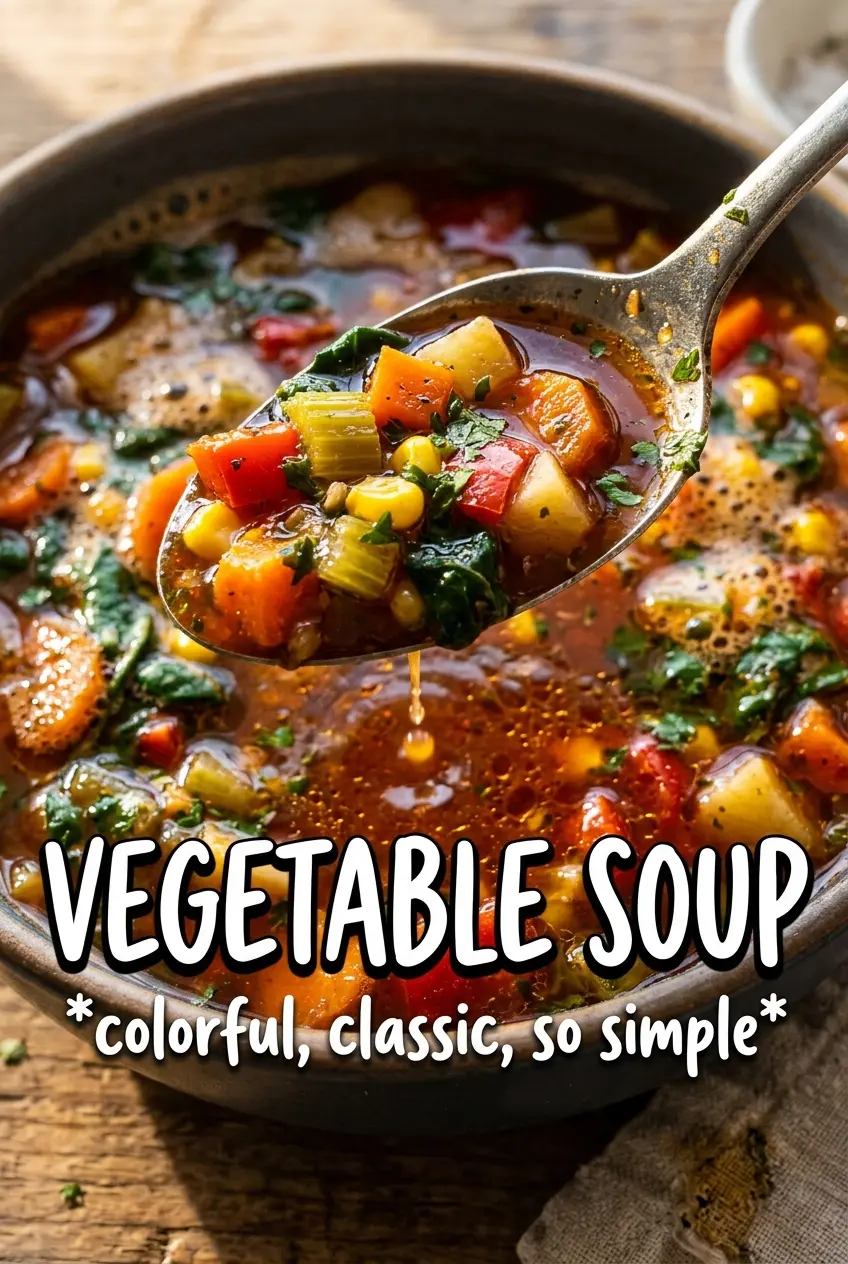
Vegetable Soup
Ingredients
Equipment
Method
- Heat 2 tablespoons olive oil in a large pot over medium heat, then sauté onion, carrots, and celery for 5 minutes until slightly softened and fragrant (visual cue: glossy, lightly browned edges on the onion).
- Add minced garlic and cook for 1 minute, stirring constantly, until fragrant (visual cue: garlic becomes aromatic without browning).
- Add vegetable broth, diced tomatoes, potatoes, dried thyme, dried parsley, and bay leaf, then bring the mixture to a boil (visual cue: steady bubbling across the surface).
- Reduce heat and simmer for 15 minutes (visual cue: gentle bubbling, potatoes starting to soften).
- Add green beans and simmer for 8 minutes until potatoes and beans are tender (visual cue: green beans brighten and potatoes pierce easily).
- Stir in frozen corn and frozen peas, then cook for 3 more minutes (visual cue: peas turn bright green and corn heats through).
- Remove the bay leaf, then season with salt and pepper to taste (visual cue: broth tastes balanced and the vegetables are fully seasoned).
- Garnish with fresh parsley and serve hot (visual cue: fresh green flecks on top of the golden broth).