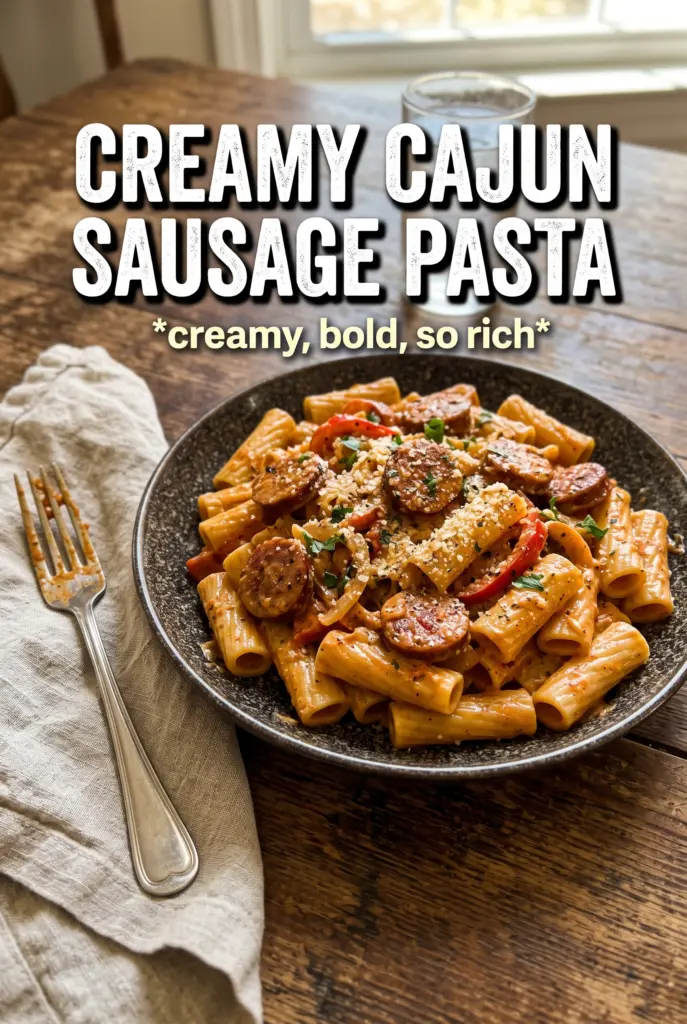
Creamey Cajun sausage pasta lands on the table with the kind of sauce that clings to every ridge of penne and coats the sausage in a glossy, orange-red finish. The heat is there, but it doesn’t bulldoze the dish. What you taste first is the savory sausage, then the sweet peppers and onions, then the creamy Cajun sauce settling into everything underneath.
What makes this version work is the order. Browning the sausage first leaves behind seasoned bits in the pan, and that means the sauce starts with flavor instead of trying to build it from scratch. The cream goes in after the broth has had a chance to loosen those browned bits, so the sauce thickens smoothly instead of turning greasy or flat. A little pasta water at the end gives the sauce the slack it needs to coat the pasta instead of sitting underneath it.
Below, I’ll show you the small timing details that keep the sauce silky, how to keep the Cajun seasoning from tasting raw, and the one swap I use when I want a little more heat without changing the whole dish.
The sauce turned out silky and coated the penne instead of pooling at the bottom, and the sausage stayed browned even after tossing it back in. I used a little extra pasta water like you suggested and it made all the difference.
Pin this creamy Cajun sausage pasta for the nights when you want a one-pan sauce that stays silky, clings to the penne, and comes together fast.
The Reason Cream Sauce Stays Smooth Instead of Turning Heavy
The biggest mistake in Cajun pasta is rushing the dairy. If the cream goes in before the broth has loosened the browned bits in the pan, the sauce can taste one-note and sit on top of the pasta instead of wrapping around it. Here, the broth does the first job, and the cream comes in once the pan has already given up its flavor.
That order matters because Cajun seasoning can get harsh if it cooks too long in a dry skillet. A short toast in the onion-and-pepper mixture wakes it up without burning the paprika. Then the sauce gets a few minutes to simmer gently, which is enough time for it to thicken without reducing to paste.
- Browned sausage gives you the savory base and the fond that makes the sauce taste cooked, not assembled.
- Chicken broth loosens the pan and carries the seasoning before the cream goes in.
- Heavy cream gives the sauce body; lower-fat dairy can split more easily and won’t coat the pasta the same way.
- Reserved pasta water is the insurance policy. Its starch helps the sauce cling and keeps it from tightening up as it sits.
What Each Ingredient Is Actually Doing in the Pan
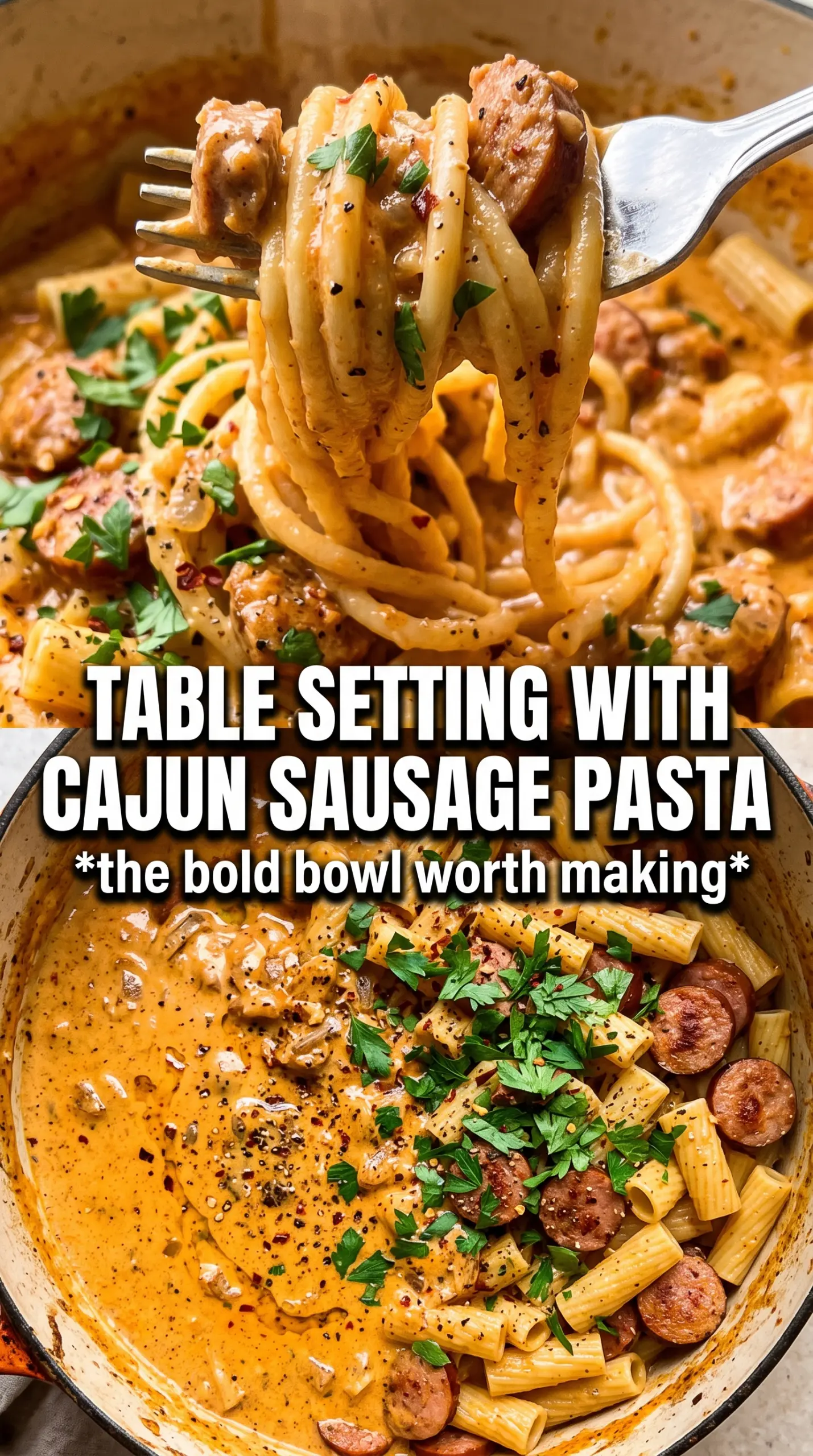
- Andouille or smoked sausage brings the main savory punch. Andouille gives you more spice, while smoked sausage is milder and a little sweeter. Either one works, but slice it thick enough that it stays meaty after tossing.
- Penne is a good fit because the sauce slips into the tubes and catches on the edges. Short pasta with ridges works better here than long noodles.
- Red and green bell peppers add sweetness and color that balance the Cajun heat. If one color is all you have, use it; the dish still works, but you lose a little contrast.
- Heavy cream and parmesan build the sauce. The cream brings richness, and the parmesan helps thicken it and sharpen the flavor. Grate the cheese yourself if you can, since pre-shredded parmesan can make the sauce feel grainy.
- Cajun seasoning is where the character comes from, so taste the blend before you dump in extra salt. Some brands are saltier than others, and that’s usually what throws the dish off.
Building the Sauce Before the Pasta Goes In
Getting the Sausage Browned
Start by browning the sausage in butter over medium-high heat until the edges are deeply colored and the pan has browned bits stuck to the bottom. Don’t stir constantly; let the slices sit long enough to pick up real color. If the skillet looks dry before the sausage finishes, add a little more butter, not oil, so the sauce keeps that rounded finish. Pull the sausage out once it’s browned, even if it isn’t fully heated through, because it finishes in the sauce.
Softening the Vegetables and Waking Up the Seasoning
Add the onion and bell peppers to the same skillet and cook them until they’re softened and a little glossy, about 4 to 5 minutes. You want the onion to lose its sharp edge, but not collapse into mush. Stir in the garlic and Cajun seasoning for about 2 minutes, just long enough for the garlic to smell sweet and the seasoning to bloom. If the garlic starts to brown hard, the heat is too high and the sauce will taste bitter.
Letting the Cream Thicken Gently
Pour in the broth first, scrape the skillet clean, then add the cream and let the sauce simmer until it lightly coats a spoon. Keep the heat at a gentle simmer, not a hard boil, or the sauce can separate at the edges. This is the point where patience pays off: a few extra minutes on low heat give you a sauce that clings instead of looking thin and slippery. Once the parmesan goes in, the sauce should look glossy and slightly thicker than you want, since the pasta will tighten it up.
Tossing Everything Together at the End
Add the drained pasta and a splash of reserved pasta water, then toss until every piece is coated. The sauce should look fluid at first, then settle into a creamy sheen as the starch from the pasta water helps it grab hold. Return the sausage and toss just until heated through. Finish with green onions and parsley after the heat is off so they stay fresh and bright instead of turning dull.
How to Adapt This for a Lighter Meal or a Bigger Crowd
Make It Gluten-Free Without Losing the Creamy Finish
Use your favorite gluten-free penne and cook it just to al dente, since GF pasta softens fast once it hits the sauce. Keep the reserved pasta water, because the starch still helps the sauce cling even when the pasta itself is different. The texture will be a little more delicate, but the sauce still comes together the same way.
Use Chicken Sausage for a Milder Plate
Chicken sausage gives you a lighter, cleaner finish, but it won’t leave as much fond in the pan as andouille or smoked sausage. If you go this route, lean on the Cajun seasoning and parmesan a little more to keep the sauce full-bodied. It’s a good swap when you want the same structure with less richness.
Add Shrimp for a Bigger Cajun-Style Dinner
If you want to stretch the dish or make it feel more like a full Cajun seafood supper, add peeled shrimp at the very end and cook just until pink. Shrimp cooks fast and turns rubbery if it sits in the sauce too long, so fold it in after the pasta is coated. This version is especially good if you want something that feels a little more special without adding much work.
Storage and Reheating
- Refrigerator: Store leftovers in an airtight container for up to 4 days. The sauce thickens as it chills, and the pasta will absorb some of it.
- Freezer: It freezes, but the cream sauce may lose some silkiness after thawing. If you freeze it, cool it completely first and pack it tightly for up to 2 months.
- Reheating: Warm it gently on the stovetop over low heat with a splash of broth or milk until the sauce loosens again. The common mistake is blasting it in the microwave, which can make the cream separate and the pasta turn chewy.