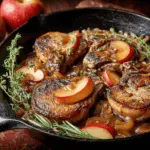
Golden chicken thighs tucked into a pale Riesling cream sauce earn their place on the dinner table fast. The skin stays crisp enough to give you that first satisfying bite, while the sauce turns silky and fragrant with shallots, mushrooms, Dijon, and tarragon. It feels a little elegant, but it still cooks in one skillet and lands on the plate in about half an hour.
The key here is giving the chicken time to brown deeply before anything wet goes into the pan. That crust does more than look good; it leaves behind the savory base that keeps the sauce from tasting flat. Riesling brings a gentle fruitiness and enough acidity to keep the cream from feeling heavy, and the mushrooms pick up all of it as they soften in the pan.
Below, I’ll show you how to keep the sauce glossy instead of dull, which substitutions still make sense, and how to handle the heat so the cream stays smooth. If you’ve ever had a wine sauce turn thin or muddy, this method fixes both problems.
The sauce reduced into the prettiest silky layer, and the tarragon with the Riesling tasted like something I’d order at a restaurant. My chicken thighs stayed juicy and the mushrooms picked up every bit of flavor.
Save this creamy Chicken Riesling for the night you want a one-skillet dinner with a glossy wine sauce and tender braised chicken thighs.
The Part That Keeps the Cream Sauce from Breaking
Riesling chicken can go wrong when the wine is rushed or the cream goes in before the pan has a chance to collect those browned bits. The wine needs a few minutes on its own first, not because it has to cook forever, but because it needs to reduce enough to lose the sharp alcohol edge and leave behind the bright, fruity depth that makes this dish taste balanced.
Another place people lose the sauce is high heat after the cream is added. Once the broth and cream go in, keep the simmer gentle. A hard boil can make the dairy taste greasy or separate at the edges, especially if the pan is crowded with chicken and mushrooms. Low, steady heat gives you a sauce that clings to the spoon instead of turning watery.
- Bone-in, skin-on chicken thighs — These stay juicy through the simmer and give you the best browning. Boneless thighs work in a pinch, but they cook faster and won’t give the sauce quite the same depth.
- Riesling — Choose a dry or off-dry bottle you’d actually drink. A very sweet wine makes the sauce cloying, while a dry Riesling keeps it fragrant and bright.
- Cremini mushrooms — They bring the earthy base that makes the sauce feel complete. White mushrooms will work, but cremini have more body and hold up better in the skillet.
- Dijon mustard — It doesn’t make the sauce taste mustardy. It sharpens the cream and helps the wine reduction taste rounded instead of flat.
- Tarragon — Fresh tarragon has the cleanest anise note here. If you only have dried, use less; too much dried tarragon can take over the whole pan.
What Each Ingredient Is Actually Doing in This Recipe

- Primary ingredient (the star) — Quality matters most. Choose the best you can find.
- Cooking medium (oil, butter, or broth) — This carries flavors and prevents dryness.
- Seasonings (salt, pepper, spices, herbs) — Layer flavors so nothing overpowers. Build depth gradually.
- Aromatics (garlic, onion, herbs) — Cook with fat to bloom flavors. Become the foundation.
- Supporting ingredients — Complement the main ingredient without overpowering it.
- Sauce or liquid (if applicable) — Brings flavors together. Balance richness with acid.
- Acid (lemon, vinegar, wine, or other) — Brightens and prevents flat-tasting results.
- Final finish (garnish, glaze, or sauce) — Prevents one-dimensional taste and adds visual appeal.
Building the Skillet in the Right Order
Getting the Chicken Skin Deeply Golden
Season the thighs before they hit the pan, then place them skin-side down in hot oil and leave them alone until the skin releases cleanly. That usually takes 7 to 8 minutes, and the color should be deep golden, not pale blond. If the chicken sticks, it isn’t ready yet. Pull it too early and you lose the browning that gives the sauce its backbone.
Cooking the Mushrooms Until They Give Up Their Water
After the chicken comes out, the mushrooms and shallots need time to cook until the pan looks glossy and almost dry again. At first they’ll release liquid, then the liquid will evaporate and the edges will start taking on color. That second stage is the one that matters. If you add the garlic too soon, it can burn before the mushrooms are finished.
Reducing the Wine Before the Cream Goes In
Pour in the Riesling and let it bubble for about 3 minutes. You want the smell to shift from sharp and boozy to soft and winey. That reduction concentrates the flavor and keeps the finished sauce from tasting thin. Once the wine has settled down, add the cream, broth, tarragon, and Dijon, then keep the heat low so the sauce stays smooth.
Finishing the Sauce to a Gloss
Return the chicken skin-side up and simmer gently until it reaches 165°F. The skin won’t stay crackling-crisp under the sauce, but it should still look golden and intact. When the chicken is done, pull it out and swirl in the butter off the heat. That last step gives the sauce a sheen and a rounder finish, and it’s the difference between a good pan sauce and one that looks restaurant-worthy.
Three Useful Ways to Adjust Creamy Chicken Riesling
Make it dairy-free
Use full-fat coconut cream instead of heavy cream and finish with a small knob of dairy-free butter if you have it. The sauce will still be rich, but it will taste a little less classic and a little more rounded and sweet, so keep the wine on the drier side.
Swap in boneless chicken thighs or breasts
Boneless thighs work well and shave off a few minutes of cooking time. Breasts can be used, but they’re less forgiving; take them out as soon as they hit temperature so they don’t dry out while the sauce finishes.
Use another dry white wine
Pinot Grigio or Sauvignon Blanc will work if Riesling isn’t in the house. You’ll lose a little of the gentle floral sweetness that makes this dish distinctive, but the sauce will still reduce beautifully and stay bright.
Make it gluten-free without changing the method
This recipe is naturally gluten-free as written if your chicken broth is certified gluten-free. The sauce thickens from reduction and cream, not flour, which keeps the texture silky instead of pasty.
Storage and Reheating
- Refrigerator: Store leftovers for up to 3 days. The sauce will thicken as it chills, which is normal.
- Freezer: I don’t recommend freezing this one. Cream sauces can separate when thawed, and the chicken skin loses its texture.
- Reheating: Warm gently in a covered skillet over low heat with a splash of broth or water. Don’t boil it, or the sauce can split and the chicken can dry out before the center is hot.