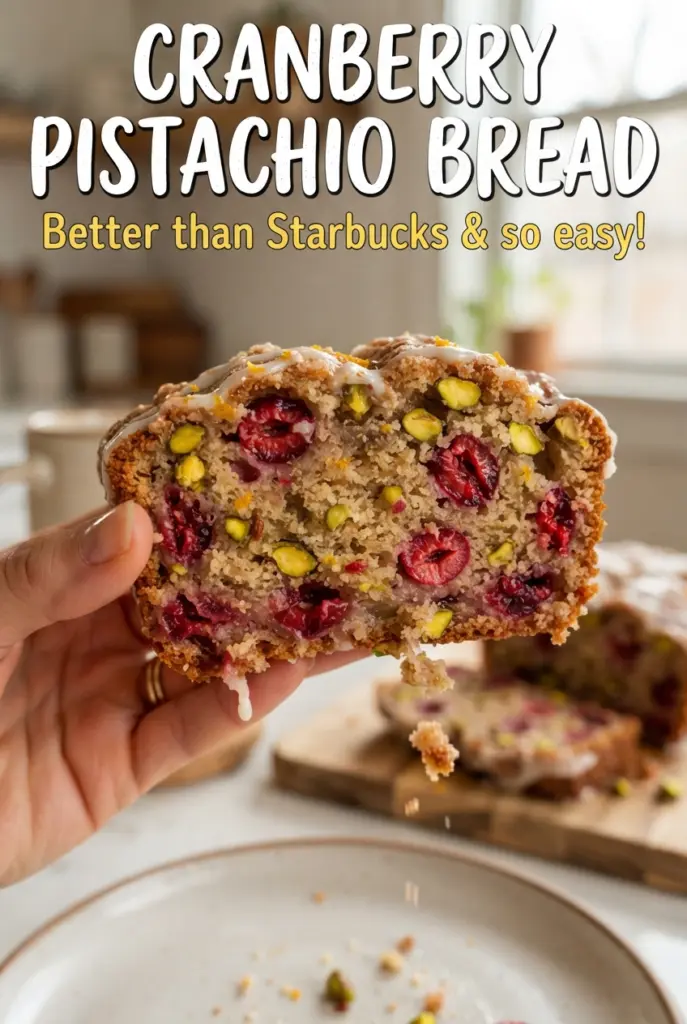
Cranberry pistachio bread bakes up with a tender, tight crumb, bright orange perfume, and little bursts of tart fruit in every slice. The pistachios bring a buttery crunch that keeps each bite interesting, while the orange glaze on top adds just enough sweetness to pull everything together. It’s the kind of loaf that disappears fast whether you serve it for breakfast, tuck it into an afternoon coffee break, or set it out after dinner.
What makes this version work is the balance. The sugar gets rubbed with orange zest first, which pulls the oils from the zest into the batter instead of leaving that citrus note sitting on the surface. Yogurt or sour cream keeps the crumb soft and gives the baking soda something to react with, while the melted butter makes mixing simple and keeps the texture rich without turning heavy.
Below, I’ve included the timing cues that matter most, plus the small details that keep the cranberries from sinking and the loaf from turning dry at the edges.
The loaf came out incredibly tender and the cranberries stayed evenly distributed instead of sinking. I loved the orange glaze with the pistachios on top — it tasted like a bakery loaf, and it sliced cleanly the next day.
Save this cranberry pistachio bread for the next time you want a soft citrus loaf with tart berries and a glossy orange drizzle.
The Part That Keeps the Loaf Tender Instead of Dense
Quick breads often go wrong for one simple reason: the batter gets overmixed after the flour goes in. Once flour hydrates, mixing too long develops gluten and gives you a loaf that slices like cake but eats like a rubbery brick. This batter should look a little rough when it hits the pan. That’s the right moment to stop.
The other thing that matters here is the balance between acid and lift. Yogurt or sour cream works with the baking soda to create a lighter crumb, while the baking powder carries the loaf upward in the oven. If your bread ever comes out heavy in the middle, it’s usually because the batter was too warm, too wet, or mixed until completely smooth.
- Orange zest — Rubbing it into the sugar pulls out the citrus oils and spreads that flavor through the whole loaf. Don’t skip that step; tossing zest straight into the bowl gives you a weaker result.
- Yogurt or sour cream — Either one adds moisture and tang. Sour cream makes the crumb a little richer, while plain yogurt keeps it a touch lighter.
- Fresh or frozen cranberries — Both work well. If using frozen berries, fold them in straight from the freezer so they don’t bleed too much color into the batter.
- Pistachios — The chopped nuts need to be shelled and fairly small so they distribute through the loaf instead of sinking. Save a handful for the top if you want extra crunch.
What Each Ingredient Is Actually Doing in This Recipe
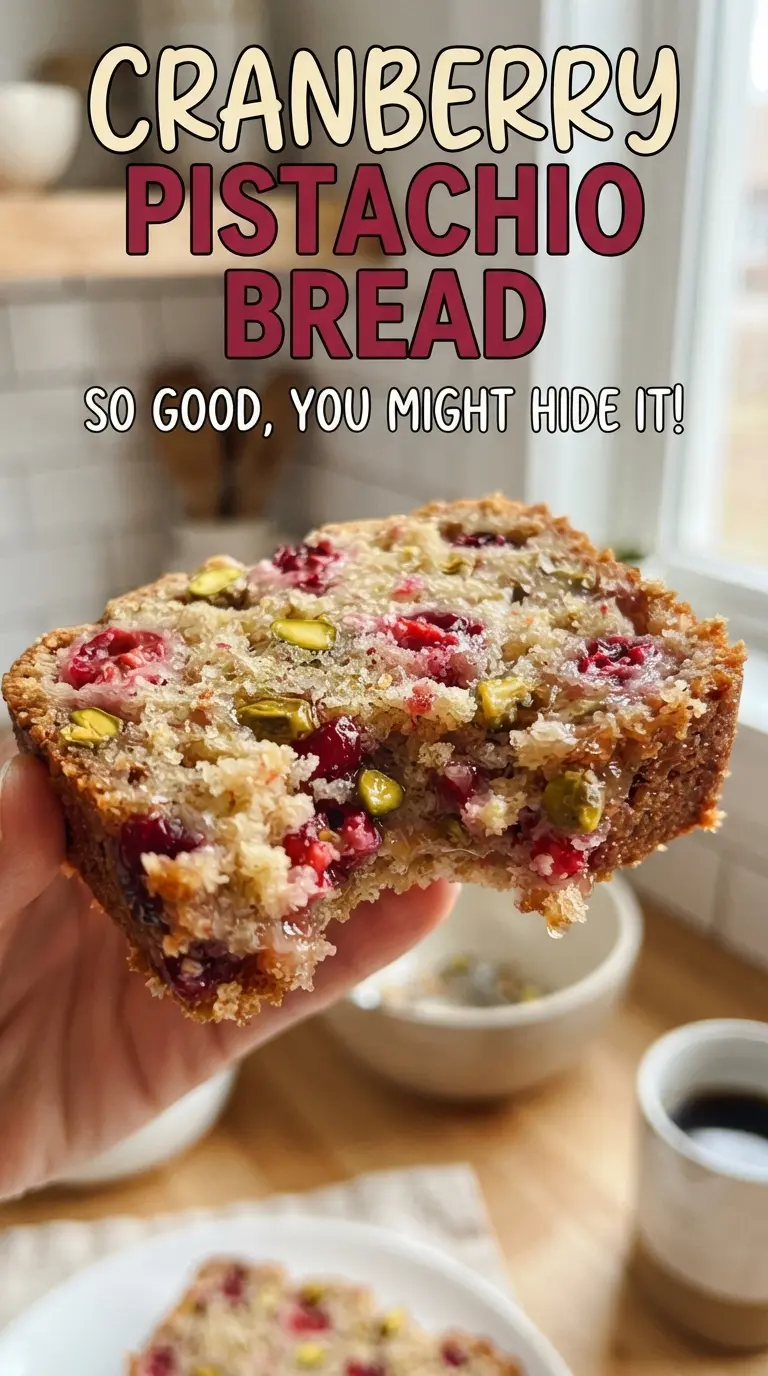
- Primary ingredient (the star) — Quality matters most. Choose the best you can find.
- Cooking medium (oil, butter, or broth) — This carries flavors and prevents dryness.
- Seasonings (salt, pepper, spices, herbs) — Layer flavors so nothing overpowers. Build depth gradually.
- Aromatics (garlic, onion, herbs) — Cook with fat to bloom flavors. Become the foundation.
- Supporting ingredients — Complement the main ingredient without overpowering it.
- Sauce or liquid (if applicable) — Brings flavors together. Balance richness with acid.
- Acid (lemon, vinegar, wine, or other) — Brightens and prevents flat-tasting results.
- Final finish (garnish, glaze, or sauce) — Prevents one-dimensional taste and adds visual appeal.
Building the Batter So the Cranberries Stay Put
Starting with the Citrus Sugar
Rub the sugar and orange zest together until the sugar looks slightly damp and smells like orange peel. That little step is where the flavor starts, and it’s stronger than adding zest later. Whisk in the eggs, yogurt, melted butter, orange juice, and vanilla until the mixture looks smooth and glossy. If the butter is hot enough to cook the eggs, the batter can turn streaky, so let it cool just until warm.
Bringing in the Dry Ingredients
Whisk the flour, baking powder, baking soda, and salt in a separate bowl, then fold it into the wet mixture only until you stop seeing dry flour. A few streaks are fine at this point because they disappear as you add the fruit. Overmixing is the fastest way to make the loaf tough. The batter should be thick, spoonable, and slightly lumpy.
Folding and Baking the Loaf
Fold in the cranberries and half of the pistachios, then spread the batter into a greased and lined 9×5-inch pan. The top can look uneven; it levels out in the oven. Bake until the top is set, deeply golden, and a toothpick comes out clean or with just a few moist crumbs. If the center still looks wet while the edges are dark, tent the pan loosely with foil and keep baking until the middle catches up.
The Glaze and Final Crunch
Let the loaf cool completely before whisking together the powdered sugar and orange juice. If you glaze it while it’s warm, the icing slides off and disappears into the crumb. Drizzle it over the top, then finish with the remaining pistachios so they stick to the glaze instead of falling off the sides.
How to Change the Loaf Without Losing the Texture
Dairy-Free Version
Use a thick unsweetened dairy-free yogurt and swap the butter for melted coconut oil or a neutral oil. Coconut oil gives a little more richness, while neutral oil keeps the orange flavor more prominent. The crumb stays tender, though the loaf may brown a touch faster.
Gluten-Free Adaptation
Use a 1:1 gluten-free baking blend that already includes xanthan gum. The texture will be a little more delicate, but the loaf still slices cleanly once fully cooled. Let it rest in the pan for about 15 minutes before turning it out so it doesn’t break.
Swap the Fruit
Dried cranberries work in a pinch if that’s what you have, but they give a sweeter, less juicy bite. If using them, soak them in a spoonful of orange juice for 10 minutes first so they soften and taste more like the fresh version.
Storage and Reheating
- Refrigerator: Store tightly wrapped for up to 5 days. The crumb stays moist, though the glaze will soften a little after the first day.
- Freezer: Freezes well. Wrap the cooled loaf or individual slices in plastic, then foil, and freeze for up to 3 months. Leave the glaze off until after thawing if you want the best finish.
- Reheating: Warm slices in the microwave for 10 to 15 seconds or toast them lightly from thawed. Don’t overheat them or the crumb turns dry and the pistachios lose their crunch.
Answers to the Questions Worth Asking
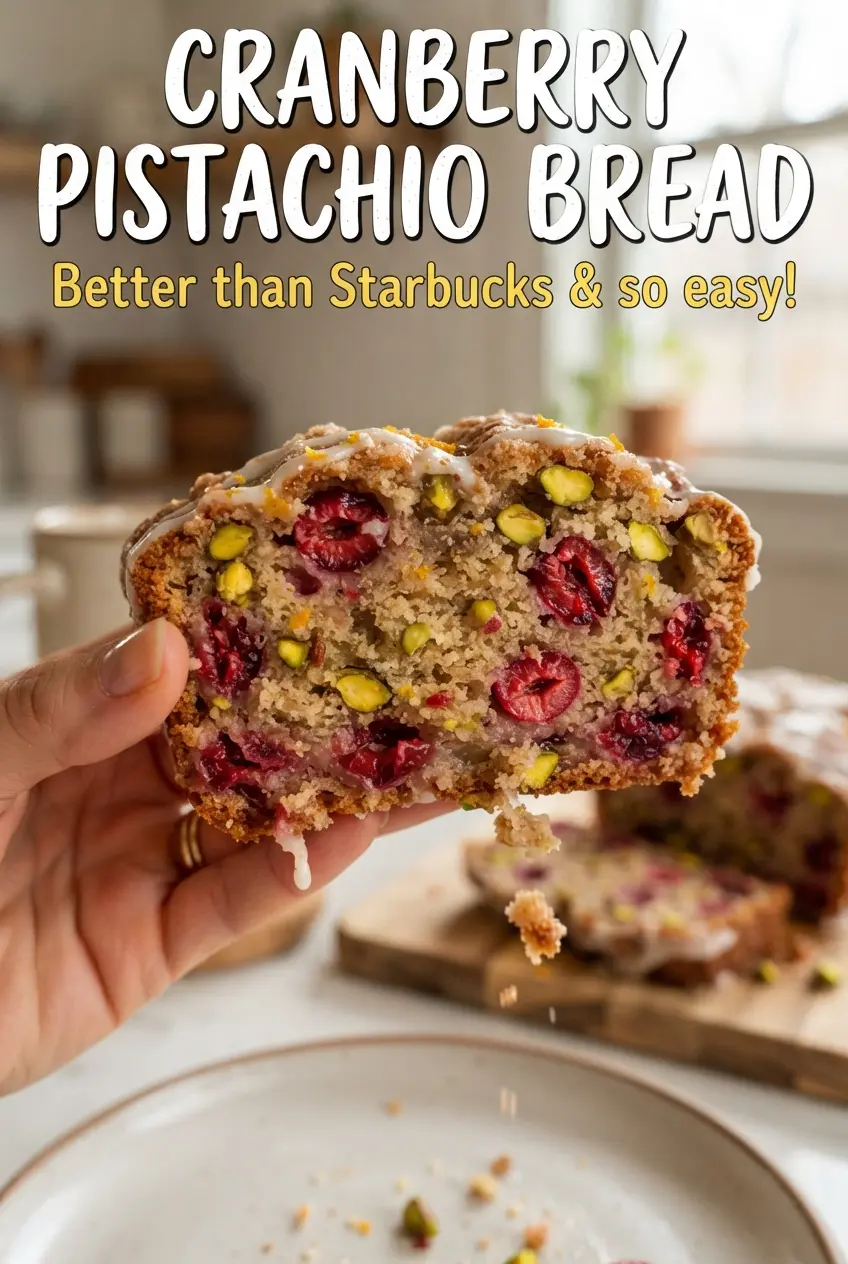
Cranberry Pistachio Bread
Ingredients
Equipment
Method
- Preheat oven to 350F and grease and line a 9x5-inch loaf pan, then set it aside for filling.
- Rub sugar and orange zest together, then whisk in eggs, yogurt, melted butter, orange juice, and vanilla until smooth.
- Whisk all-purpose flour, baking powder, baking soda, and salt together, then fold into the wet mixture just until combined, keeping the batter thick.
- Fold in cranberries and 1/2 cup pistachios, spread the batter into the pan, and tap the pan lightly to level the top.
- Bake at 350F for 55-60 minutes, until a toothpick comes out clean when inserted in the center.
- Cool the loaf completely, then whisk powdered sugar and 2 tablespoons orange juice until smooth.
- Drizzle the glaze over the loaf and sprinkle with the remaining pistachios for a visible crunchy finish.