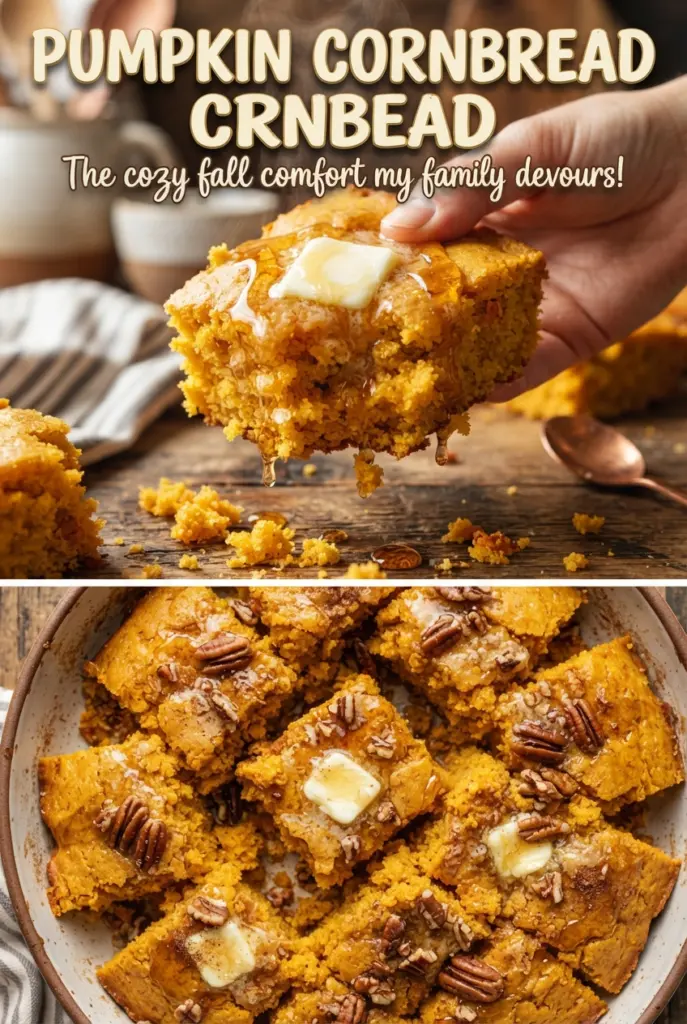
Golden pumpkin cornbread lands with a tender crumb, a little sweetness, and the kind of edges that turn crisp in the pan while the center stays soft. The pumpkin doesn’t make it taste like pie; it gives the bread a deeper color, a moist bite, and a subtle earthy note that works especially well with butter or maple butter. Baked in a hot skillet or an 8×8 pan, it comes out sturdy enough to slice cleanly but still soft enough to pull apart while it’s warm.
What makes this version work is the balance. Cornmeal gives it that classic grainy cornbread texture, while enough flour keeps it from becoming dry or sandy. Pumpkin puree adds moisture, but the buttermilk and melted butter keep the crumb tender instead of heavy. The maple syrup doesn’t turn it into dessert; it rounds out the pumpkin and brown sugar so the flavor reads warm and balanced, not flat.
Below, you’ll find the exact cue for knowing when to pull it from the oven and a few smart swaps if you want a sweeter loaf, a dairy-free version, or a pan of cornbread that reheats well for the next day.
The edges got beautifully crisp in my cast iron, and the center stayed moist without being gummy. I served it with maple butter, and it was gone before dinner even hit the table.
Like this pumpkin cornbread? Save it for the days when you want a golden, maple-kissed side with crisp edges and a soft, tender middle.
The Trick to Keeping Pumpkin Cornbread Tender, Not Dense
Pumpkin puree adds moisture, but it also adds weight. If you overmix or overload the batter with extra flour, the crumb turns tight and a little gummy instead of light and sliceable. The goal here is a batter that still looks a bit rough when it goes into the pan. That unfinished look is what keeps the final texture soft.
The other place people go wrong is baking it until the top looks done but the center is still wet. Cornbread needs heat long enough to set the middle, especially when pumpkin is in the mix. Pull it when the top is golden and a toothpick comes out clean or with a few moist crumbs, not raw batter.
What Each Ingredient Is Actually Doing in This Bread
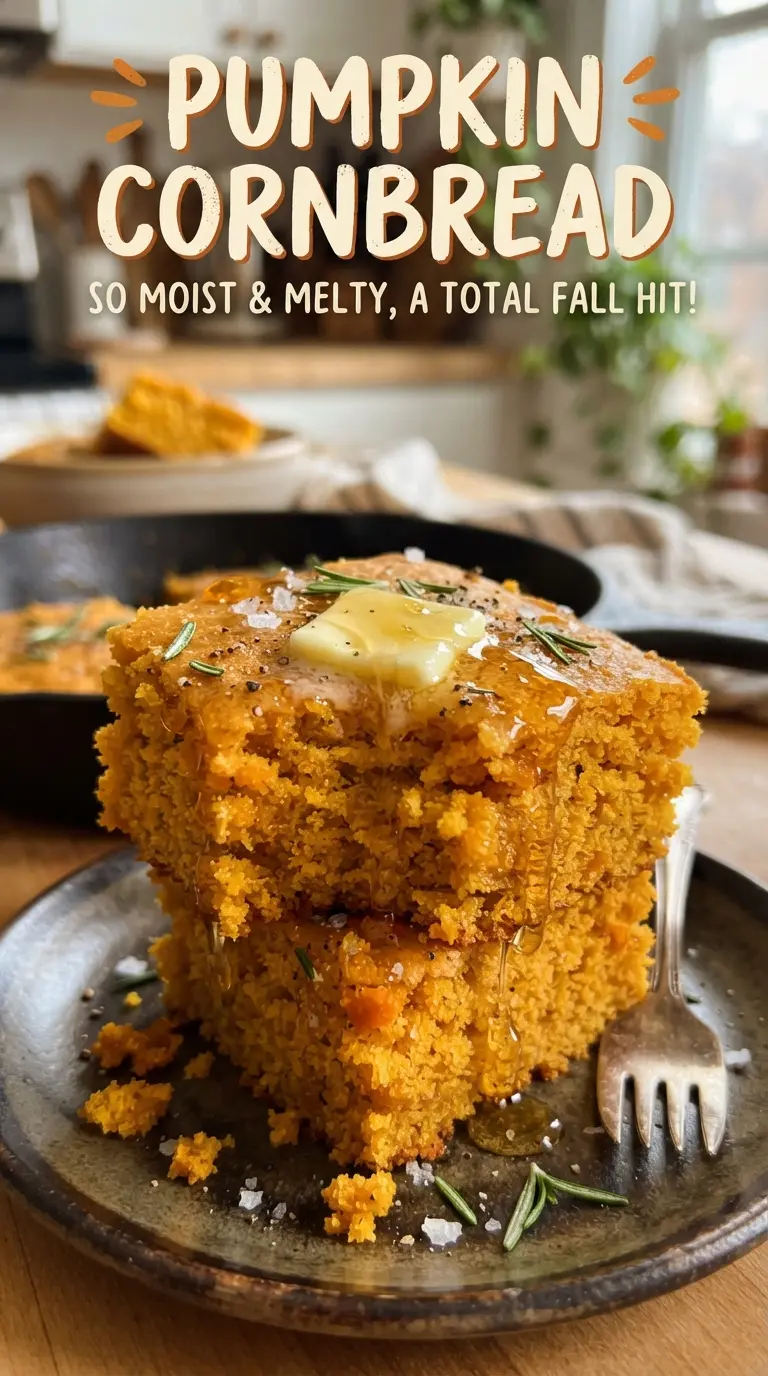
- Cornmeal — This gives the bread its classic cornbread texture and that gentle bite you don’t get from flour alone. Medium-grind cornmeal works best here because it adds texture without making the crumb feel gritty.
- All-purpose flour — The flour keeps the cornbread from falling apart and balances the coarse cornmeal. Swap in a cup-for-cup gluten-free blend if needed, but the texture will be a little more delicate and less structured.
- Pumpkin puree — Use pure pumpkin, not pumpkin pie filling. Pie filling has sugar and spices already mixed in, which throws off both the texture and the seasoning.
- Buttermilk — The acidity helps the baking powder work and keeps the crumb tender. If you don’t have it, stir 3/4 cup milk with 2 teaspoons lemon juice or vinegar and let it sit for 5 minutes before using.
- Brown sugar and maple syrup — These add warmth and help the bread bake up with a soft, lightly caramelized edge. You can reduce the maple syrup a touch if you want it less sweet, but don’t cut both sweeteners too aggressively or the pumpkin can taste flat.
- Melted butter — Butter adds richness and helps create those crisp edges in the pan. Oil will keep it moist, but it won’t give you the same flavor or browned finish.
Mix the Batter Fast, Bake It Hot, and Stop Before It Drys Out
Start with the dry bowl
Whisk the cornmeal, flour, brown sugar, baking powder, salt, and pumpkin pie spice until the mixture looks even. That step matters more than it sounds because the spice and leavening need to be distributed before the wet ingredients go in. If you see streaks of spice or little pockets of baking powder, the rise and flavor will be uneven.
Build the wet mixture separately
Whisk the pumpkin puree, eggs, buttermilk, melted butter, and maple syrup until smooth and glossy. The butter should be melted, not hot enough to cook the eggs. If the mixture looks a little broken, that’s fine; once it hits the dry ingredients, it will come together.
Stop stirring as soon as the flour disappears
Pour the wet ingredients into the dry and stir just until no dry patches remain. A few lumps are better than an overworked batter, because extra stirring develops toughness in the flour and makes cornbread heavy. Spread it into the prepared pan right away so the baking powder doesn’t lose strength while it sits.
Bake for color, then check the center
Bake at 400F until the top is golden and a toothpick inserted in the center comes out clean, usually 22 to 25 minutes. In a cast iron skillet, the edges will brown a little faster and may pull slightly from the sides when it’s ready. If the top browns too quickly, the cornbread is probably still underbaked in the middle, so trust the toothpick more than the color alone.
How to Adapt This Pumpkin Cornbread for a Sweeter Loaf, a Different Pan, or No Dairy
Dairy-free version
Swap the buttermilk for unsweetened almond milk or oat milk mixed with 2 teaspoons lemon juice, and use melted coconut oil or a neutral oil instead of butter. The bread will still bake up tender, but you lose the buttery flavor and the crust won’t brown quite as deeply.
Skillet cornbread with crisper edges
Heat the cast iron skillet in the oven while it preheats, then carefully add the batter to the hot pan. That jump-starts the crust and gives you darker, more caramelized edges, but you need to work quickly so the pan doesn’t cool before the batter goes in.
Less sweet, more savory
Cut the brown sugar to 2 tablespoons and leave the maple syrup in place. That keeps the pumpkin from tasting flat while shifting the bread closer to a side dish than a snack cake. It pairs especially well with chili, soup, or roast chicken.
Storage and Reheating
- Refrigerator: Store in an airtight container for up to 4 days. The crumb firms up a little in the fridge, but the flavor holds up well.
- Freezer: Freeze slices tightly wrapped for up to 2 months. Thaw at room temperature or in the fridge before reheating.
- Reheating: Warm slices in a 300F oven for 8 to 10 minutes or toast them lightly. Microwaving works in a pinch, but it softens the edges and can make the crumb feel damp.
Answers to the Questions Worth Asking About Pumpkin Cornbread
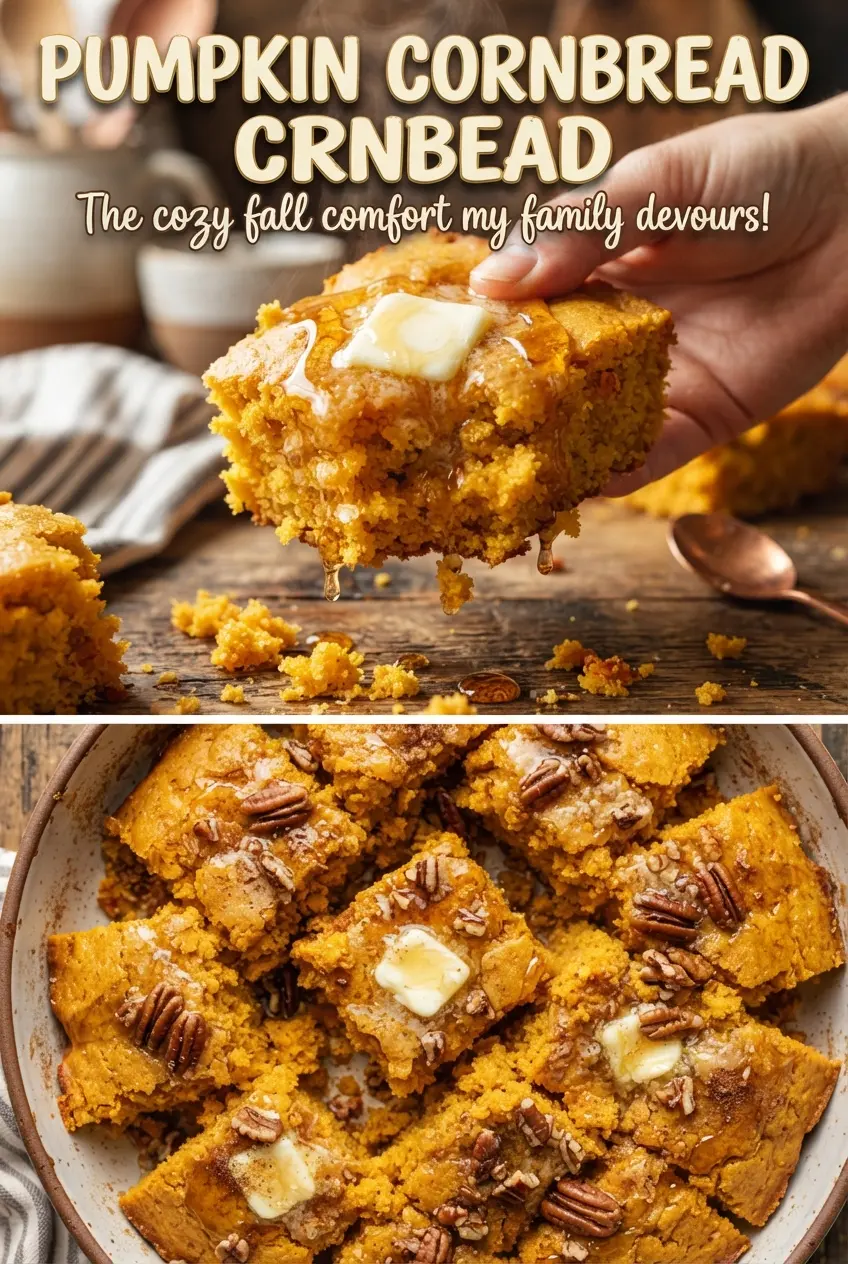
Pumpkin Cornbread
Ingredients
Equipment
Method
- Preheat oven to 400F and grease an 8x8-inch pan or 10-inch cast iron skillet so the cornbread releases cleanly.
- Whisk yellow cornmeal, all-purpose flour, brown sugar, baking powder, salt, and pumpkin pie spice in a bowl until evenly combined.
- Whisk pumpkin puree, large eggs, buttermilk, butter, melted, and maple syrup until smooth and cohesive.
- Stir the wet ingredients into the dry ingredients just until combined, stopping as soon as no dry streaks remain.
- Spread the batter into the prepared pan and smooth the top for even baking.
- Bake for 22-25 minutes at 400F until golden and a toothpick comes out clean, then serve warm with butter.