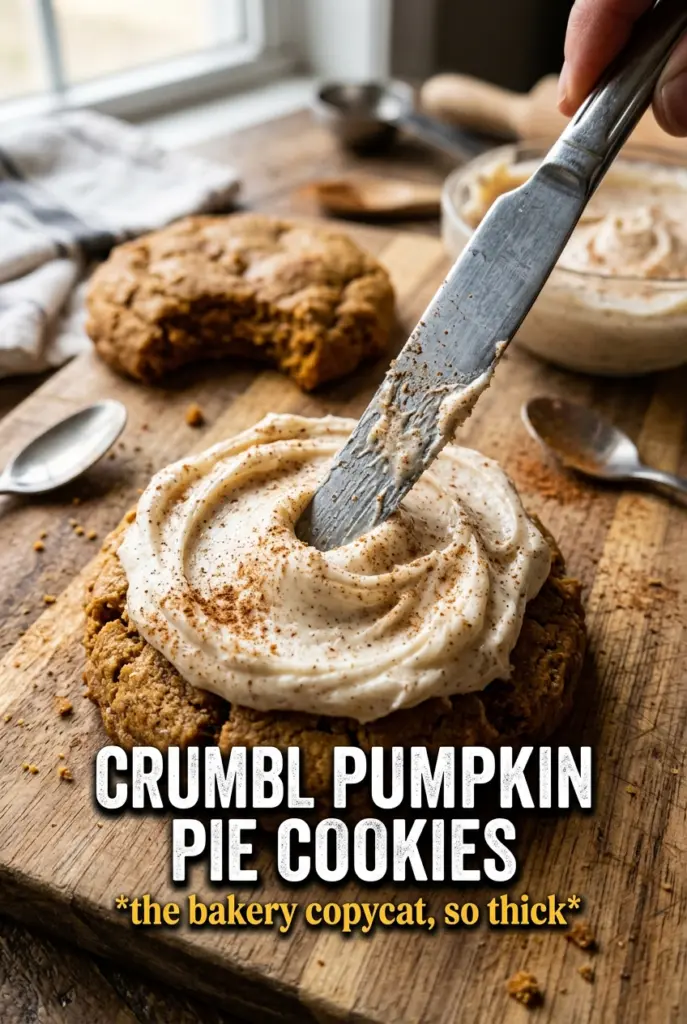
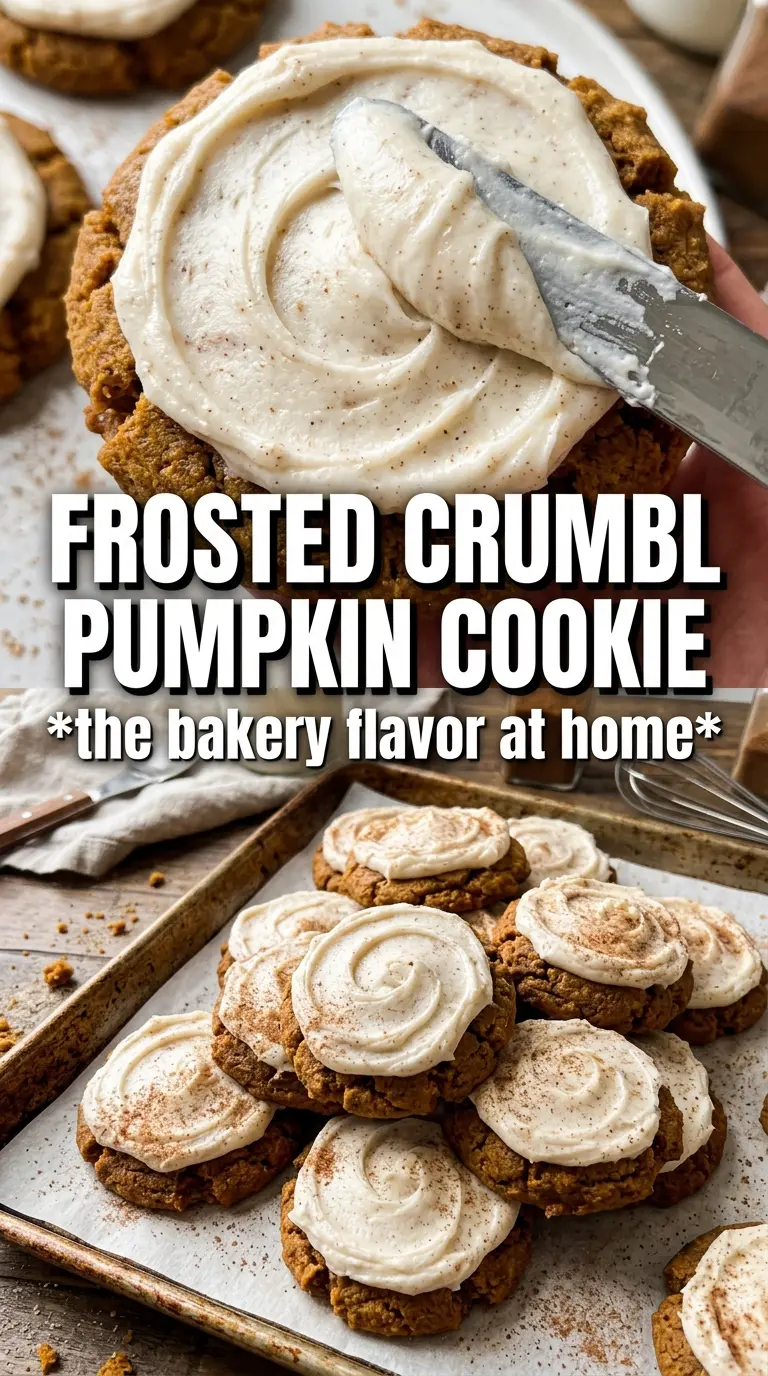
These Crumbl pumpkin pie cookies bake up thick, soft, and bakery-style with a chewy sugar-cookie base that holds a tall swirl of cream cheese frosting. The pumpkin flavor stays warm and cozy without turning the dough cakey, and the cinnamon dusting on top gives each cookie that finished, just-baked look that makes people reach for a second one before they’ve even finished the first.
What makes this version work is the way the pumpkin gets blotted dry before it ever touches the bowl. That small step keeps the dough from going slack and helps the cookies stay puffy instead of spreading into flat disks. The butter and sugars are beaten until fluffy, which gives the cookies lift, and the bake stops while the centers still look a little soft so they stay tender after cooling.
Below, I’ve added the few details that matter most: how to keep the dough from getting too wet, why the frosting pipes best when everything is properly softened, and a couple of ways to adapt these if you want a different finish.
The pumpkin flavor came through without making the cookies cakey, and the centers stayed soft even after cooling. That cream cheese frosting swirl was spot on.
Save these thick Crumbl Pumpkin Pie Cookies for the days when you want a soft pumpkin cookie with a tall cream cheese frosting swirl.
The Trick to Keeping These Pumpkin Cookies Thick Instead of Puffy-Cakey
The biggest risk with pumpkin cookies is too much moisture. Pumpkin puree brings great flavor, but it also brings water, and that extra liquid is what turns a thick cookie into a soft, cake-like round that spreads less but eats like muffin tops. Blotting the pumpkin dry gives you the flavor without the heavy texture, so the dough behaves more like a bakery sugar cookie than a quick bread.
The other thing that matters here is when you stop baking. The edges should be set and the centers should still look a little underdone when they come out. That carryover heat finishes the middle as the cookies cool, and it keeps the texture soft instead of dry. If you wait until the centers look fully baked in the oven, they’ll go firm once cooled.
- Blotted pumpkin puree — This is the difference between a thick cookie and a cakey one. Press the pumpkin between paper towels until it looks almost pasty, not wet.
- Butter and sugars beaten fluffy — This adds air and helps the cookies rise without leaning on extra liquid.
- Pumpkin pie spice — It gives the dough that warm bakery flavor. If yours is old, it’ll taste flat, so use a fresh jar if you can.
What Each Ingredient Is Actually Doing in the Dough and Frosting
- All-purpose flour — This gives the cookie its structure and bakery-style thickness. Too little and the cookies spread; too much and they turn dry, so measure carefully.
- Brown sugar — A small amount brings moisture and a deeper caramel note that plays well with pumpkin. You can’t swap it for more white sugar without losing some softness.
- Unsalted butter — Softened butter creams into the sugars and gives the base richness. Salted butter works in a pinch, but you’ll want to reduce the added salt a little.
- Cream cheese — This is what gives the frosting its tang and that thick, pipeable body. Full-fat cream cheese works best; reduced-fat versions can turn loose.
- Powdered sugar — It sweetens and stabilizes the frosting. If the frosting feels too soft, add a spoonful or two more until it holds a clean swirl.
- Cinnamon — The dusting on top matters more than it looks. It sharpens the pumpkin spice and makes the cookies smell as good as they taste.
Building the Cookies So They Bake Up Soft in the Center
Start With Dry Pumpkin
Blot the pumpkin puree well before anything else. Put it on a few layers of paper towel and press until the excess moisture is gone, then measure the amount you need. If you skip this, the dough will feel sticky and the cookies will spread less evenly in the oven.
Cream the Base Until It Looks Light
Beat the butter, granulated sugar, brown sugar, and pumpkin until the mixture looks fluffy and lighter in color. That step builds the structure that keeps these cookies thick. Once the egg and vanilla go in, the mixture may look a little curdled for a moment; that’s normal as long as it comes together before the dry ingredients are added.
Fold the Flour In Just Until Combined
Add the flour mixture and stop mixing as soon as no dry streaks remain. Overmixing tightens the dough and gives you a tougher cookie. The dough should be soft but scoopable, and if it feels sticky, chill it briefly rather than adding extra flour.
Bake for Set Edges and Soft Centers
Scoop large balls of dough and press them slightly flat so they bake into that classic oversized cookie shape. Pull them when the edges are set and the middles still look soft and pale. Let them cool completely on the pan or a rack before frosting, or the cream cheese topping will slide right off.
Pipe the Frosting After the Cookies Cool
Beat the frosting until smooth and thick enough to hold a swirl. If it’s too warm, it will smear instead of pipe. Spoon or pipe a generous spiral onto each cooled cookie, then finish with a light dusting of cinnamon and, if you want the full bakery look, one pecan on top.
How to Adapt These Cookies for Different Needs Without Losing the Thick Texture
Gluten-Free Version
Use a cup-for-cup gluten-free flour blend that includes xanthan gum. The cookies will still be thick, but the crumb may be a touch more tender and less chewy than the original. Chill the dough for 20 to 30 minutes if it feels soft after mixing.
Less Sweet, More Spice
Cut the granulated sugar by 2 to 3 tablespoons and add an extra 1/2 teaspoon pumpkin pie spice plus a pinch more cinnamon. The cookies will taste a little less like a copycat bakery cookie and a little more like a spiced pumpkin sugar cookie.
No Piping Bag Needed
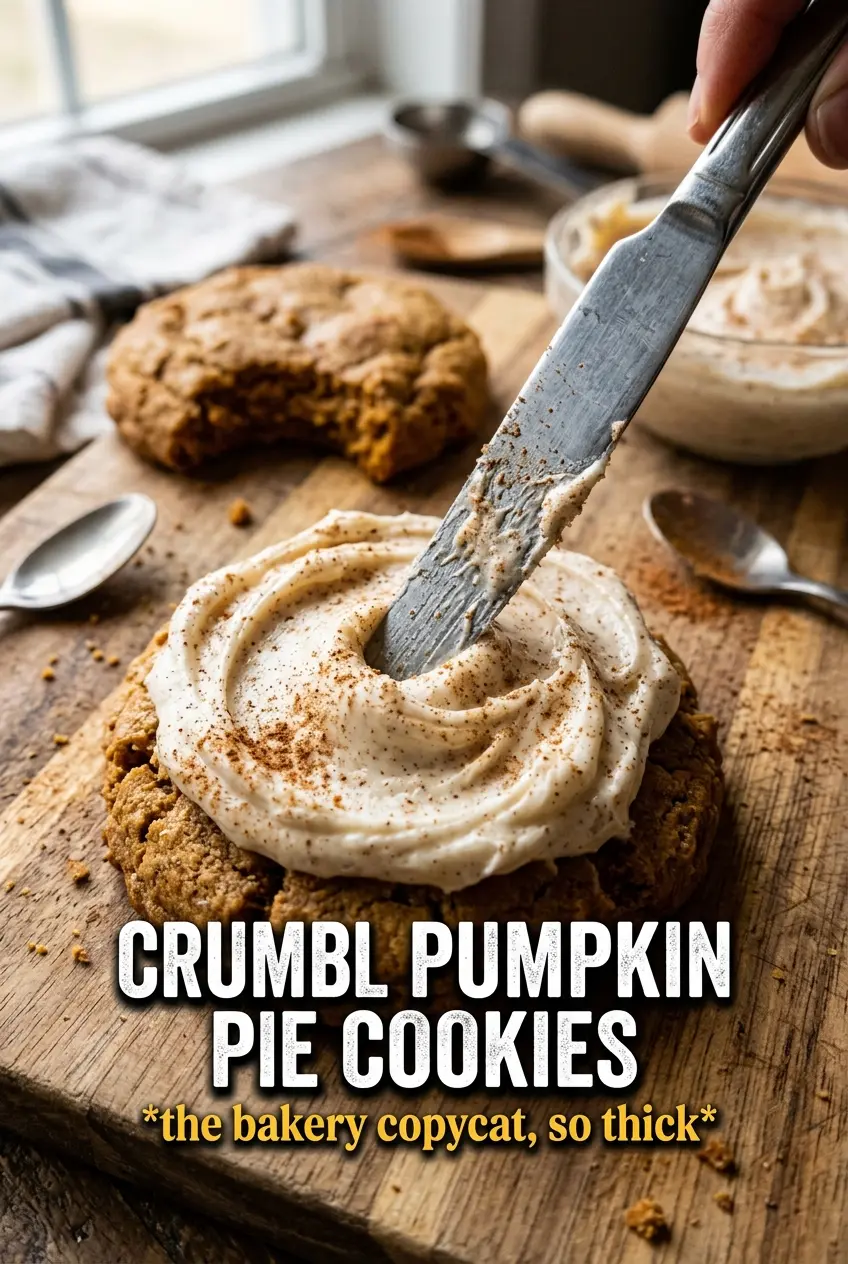
Spread the frosting with a spoon or small offset spatula instead of piping it. The look will be more casual, but the flavor stays the same, and it’s an easy way to finish a batch fast when you’re baking for a crowd.
Storage and Reheating
- Refrigerator: Store frosted cookies in an airtight container for up to 4 days. The frosting stays best chilled, but the cookie base softens a little more by day two.
- Freezer: Freeze the baked cookies unfrosted for up to 2 months. Wrap them well so they don’t pick up freezer odors, then thaw at room temperature before frosting.
- Reheating: These are best served at room temperature, not warm. If you want to take the chill off, let them sit out for 20 to 30 minutes so the frosting stays neat instead of melting.
Questions I Get Asked About This Recipe
Crumbl Pumpkin Pie Cookies
Ingredients
Equipment
Method
- Preheat oven to 350F and line baking sheets with parchment for easy release.
- Blot the pumpkin puree dry thoroughly, then beat the softened butter, granulated sugar, brown sugar, and pumpkin until fluffy.
- Add the egg and vanilla extract, mixing until fully incorporated.
- Whisk the all-purpose flour, baking powder, baking soda, salt, and pumpkin pie spice, then fold into the butter mixture until no dry streaks remain.
- Scoop dough into large 3-tablespoon balls and press slightly flat on the parchment-lined sheets.
- Bake 13-14 minutes at 350F until the edges are set but the centers still look soft.
- Cool completely before frosting so the topping stays creamy and won’t melt.
- Beat the cream cheese, softened butter, powdered sugar, vanilla, and cinnamon until smooth.
- Pipe a generous swirl of frosting onto each cooled cookie.
- Dust lightly with cinnamon for a classic pumpkin pie look.