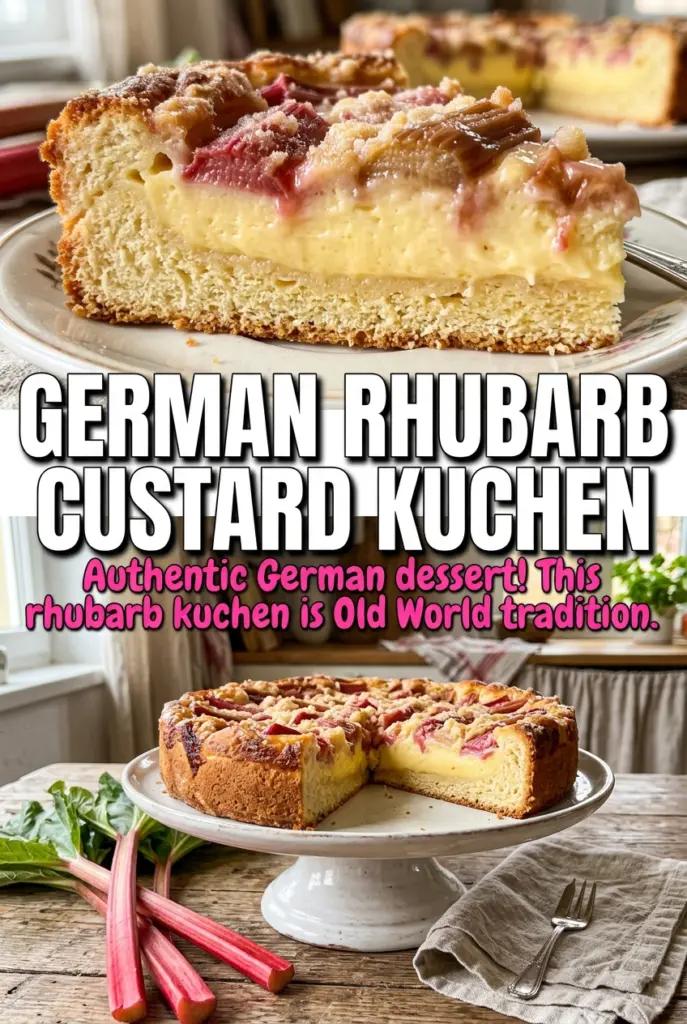
Rhubarb Custard Kuchen comes out with the kind of contrast that keeps people coming back for a second slice: a tender, lightly sweet yeast crust, tart rhubarb that softens into the custard, and a top that bakes into a pale golden set with just enough wobble left in the center when it leaves the oven. It eats like something between coffee cake and pie, which is exactly why it feels special without being fussy.
The trick is in the structure. The dough needs a short rise, but it also needs enough strength to hold a generous layer of fruit and custard without turning soggy. The custard is thickened with eggs and a little flour, which gives it more stability than a plain baked cream filling and helps it slice cleanly once cooled. The rhubarb goes in raw, and that matters — it softens in the oven while still keeping its bright, tangy bite.
Below, I’ve included the details that matter most: how to keep the custard from slipping under the fruit, why the dough doesn’t need a long proof, and what to expect as the kuchen cools. If you’ve ever had a custard bake look done on top but still slump in the middle, this version is built to avoid that problem.
The custard set up beautifully and the rhubarb stayed bright instead of turning mushy. I let it cool all the way and the slices came out clean, which never happens with the recipe I used before.
Rhubarb Custard Kuchen stays tender, tangy, and sliceable — save it for the dessert nights when you want a bakery-style pan cake with a custard finish.
The Custard Needs the Fruit to Sit Still
The biggest mistake with kuchen like this is rushing the assembly. If the dough is too warm, too soft, or too thin in the pan, the custard can sink unevenly and puddle around the fruit instead of setting into a clean layer. A firm, evenly pressed base gives the filling something to rest on, and the short second rest keeps the dough from fighting back when you press it into the pan.
Rhubarb gives off moisture as it bakes, which is part of why this recipe uses flour in the custard. That extra starch helps catch the juices before they turn the top watery. The result is a filling that bakes into a soft slice rather than a spoonable custard that collapses when cut.
- Pressing the dough into the pan — Don’t stretch it thin at the corners. An even thickness matters more than covering every inch perfectly on the first pass.
- Raw rhubarb — Fresh rhubarb softens inside the custard and keeps its sharp edge. Frozen rhubarb can work, but it needs to be thawed and drained first or the filling loosens too much.
- Flour in the custard — This isn’t there for flavor. It gives the custard enough body to slice cleanly once cooled.
What the Dough, Custard, and Rhubarb Each Do Here
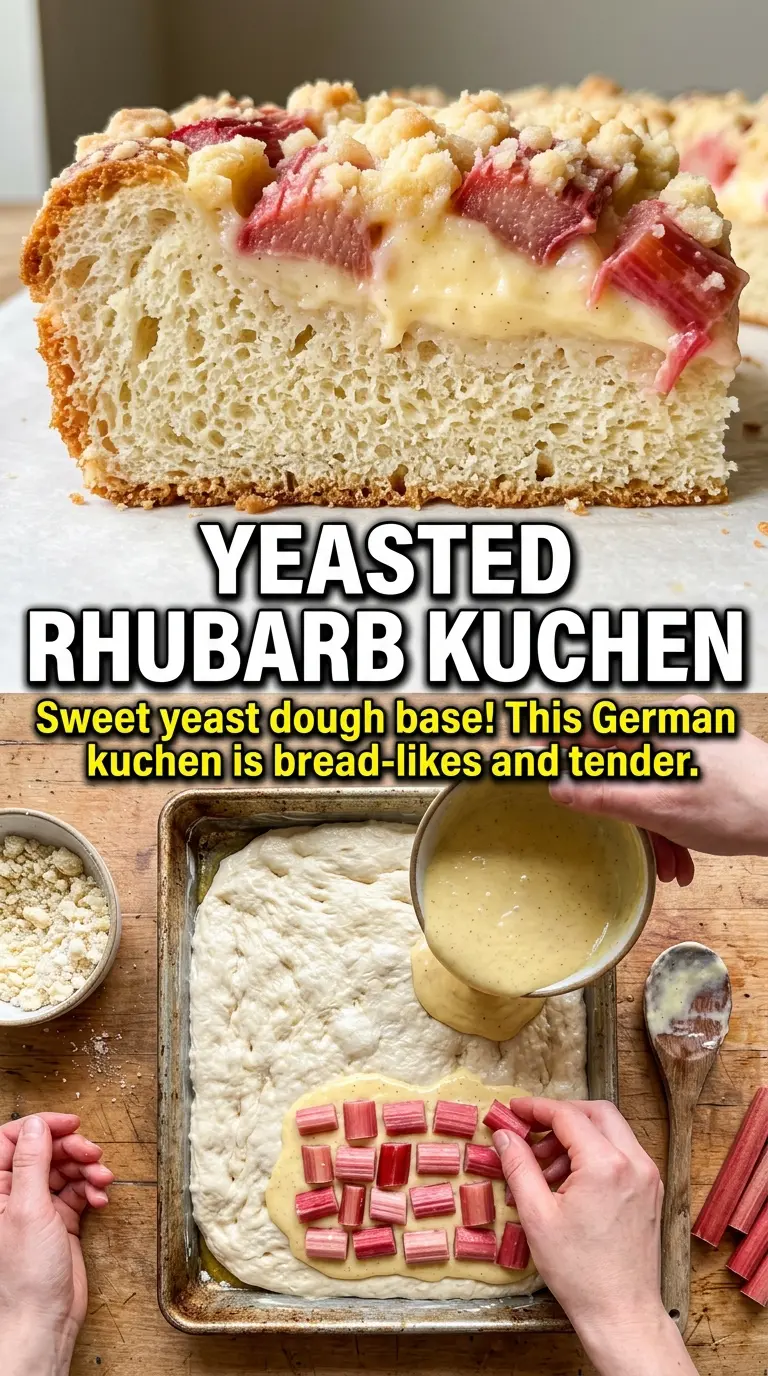
- Active dry yeast — This gives the base its lifted, bready texture. Instant yeast can work in a pinch, but active dry gives a little more of that old-fashioned kuchen feel when it proofs properly.
- Milk and butter — These soften the dough and keep it tender under the custard. Use real butter here; margarine changes the flavor and the crust doesn’t bake up as nicely.
- Heavy cream — This is what makes the custard rich enough to feel like dessert instead of a pudding topping. Half-and-half will work, but the filling will be a little looser and less plush.
- Fresh rhubarb — Quality matters because rhubarb is the loudest flavor in the pan. Look for stalks that are firm and crisp; dull or limp stalks will bake up stringy and muted.
How to Build the Layers Without Ending Up With a Watery Center
Starting the Yeast Base
Dissolve the yeast in warm water first and give it the full five minutes to wake up. When it looks foamy, stir in the milk, sugar, butter, egg, and salt, then add the flour gradually until the dough comes together. It should feel soft and slightly tacky, not sticky enough to cling to every finger. If the dough feels stiff right away, the finished crust bakes up dense instead of tender.
Pressing and Preparing the Pan
After the short rise, press the dough into a greased 9×13-inch pan in an even layer. Don’t chase perfection on the first push; let the dough relax for a minute if it springs back, then finish pressing it out. Scatter the rhubarb over the surface in an even layer so the custard can flow around it. Big clumps of fruit create wet pockets that take longer to set.
Making the Custard Set Properly
Whisk the eggs, cream, sugar, flour, and vanilla until smooth and pour it over the rhubarb right away. The flour needs to be fully dissolved or you’ll get pale lumps in the finished custard. Bake until the top is lightly golden and the center has a gentle set; it should no longer look sloshy, but a slight wobble in the middle is fine because it finishes setting as it cools. Cutting it early is the fastest way to get a messy slice.
Cooling for Clean Slices
Let the kuchen cool completely before cutting. That cooling time isn’t optional if you want neat squares, because the custard tightens as it loses heat. If you serve it warm, it will taste good but it won’t hold together the same way. A fully cooled pan gives you the best balance of tender crust, soft fruit, and creamy filling.
How to Adapt This Kuchen When You Need a Different Pan or a Lighter Finish
Make It Gluten-Free
Use a 1:1 gluten-free baking blend in place of the flour in both the dough and the custard. The dough will be a little less elastic, so press it gently instead of kneading it hard. The custard still sets well, but the base won’t have quite the same chewy bakery texture.
Swap in Other Tart Fruit
Strawberries, raspberries, or a mix of berries can replace part of the rhubarb, but the pan will bake up sweeter and a little juicier. If you use softer fruit, cut it large and keep the layer even so the custard doesn’t sink through the gaps. The flavor shifts from sharp and old-fashioned to softer and more jammy.
Use a Different Dairy Base
You can replace the heavy cream with evaporated milk for a lighter custard. It still bakes into a sliceable filling, though it won’t taste as rich. I wouldn’t use skim milk here; the custard becomes thin and loses the creamy finish that makes this dessert work.
Storage and Reheating
- Refrigerator: Store covered for up to 4 days. The custard firms up in the fridge, and the crust softens a little under the filling.
- Freezer: It freezes better after baking and cooling, but the custard texture changes a bit once thawed. Wrap slices tightly and freeze for up to 2 months.
- Reheating: Warm individual slices in a low oven or let them sit at room temperature. Microwave heat makes the custard weep and can turn the crust rubbery.
Questions I Get Asked About This Recipe
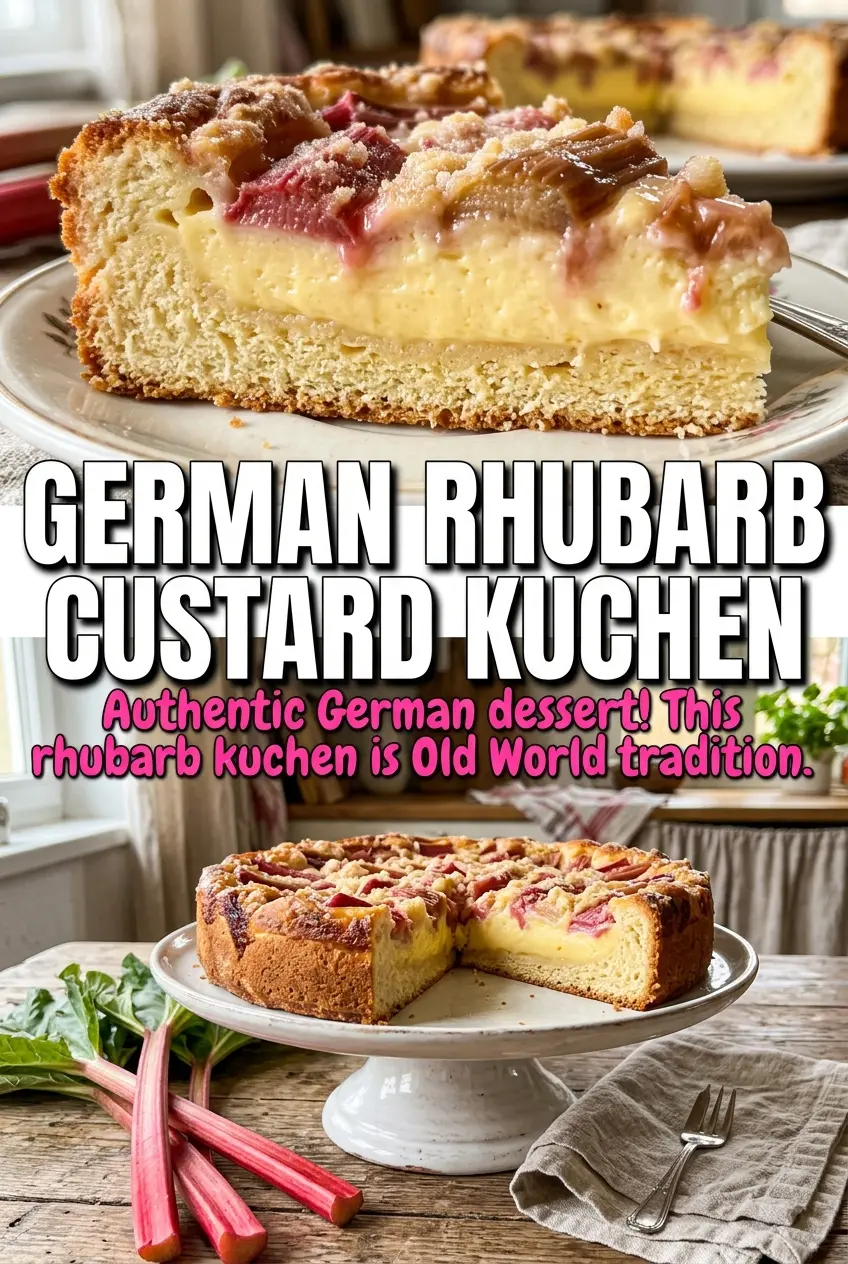
Rhubarb Custard Kuchen
Ingredients
Equipment
Method
- Dissolve the active dry yeast in warm water and let it sit for 5 minutes, until foamy. Mix in the warm milk, sugar, melted butter, egg, and salt to form a wet base.
- Gradually add all-purpose flour and knead until smooth. Let the dough rise for 30 minutes, until puffy and slightly expanded (warm room temperature).
- Press the dough into a greased 9x13-inch pan and arrange the rhubarb pieces on top. Make an even layer so the custard sets across the surface.
- Whisk together eggs, heavy cream, sugar, all-purpose flour, and vanilla extract until smooth. Pour the custard over the rhubarb so it mostly covers the fruit.
- Bake at 350°F for 50-55 minutes, until the custard is set and golden on top. If the center still jiggles, bake 3-5 minutes more and recheck.
- Cool completely before cutting and serving, so the custard fully firms up. Let it rest about 1 hour total for rising and cooling.