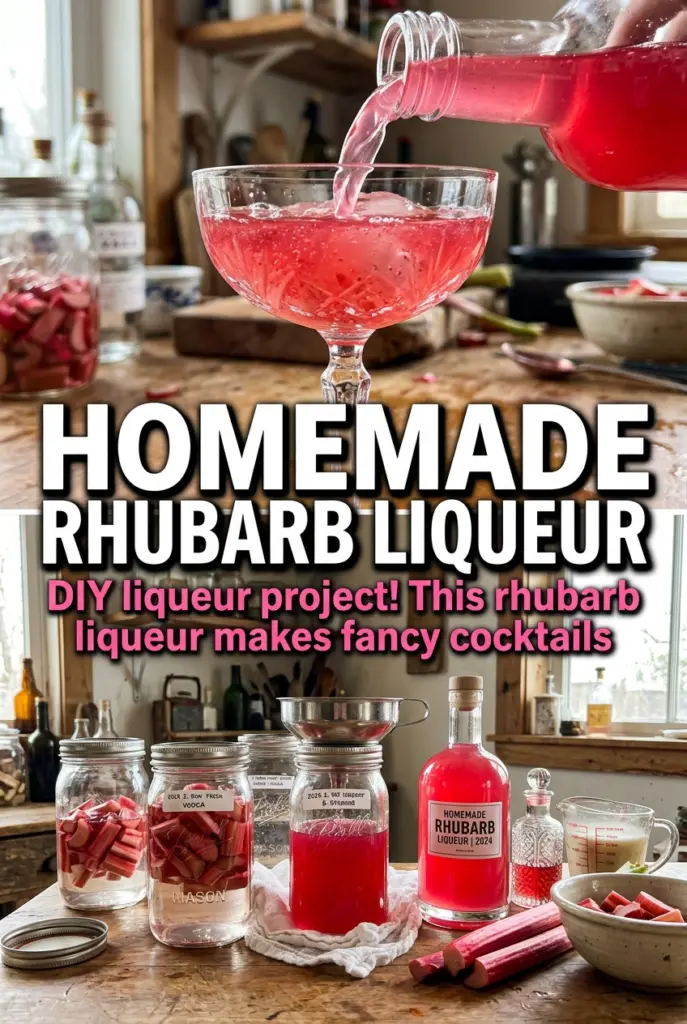
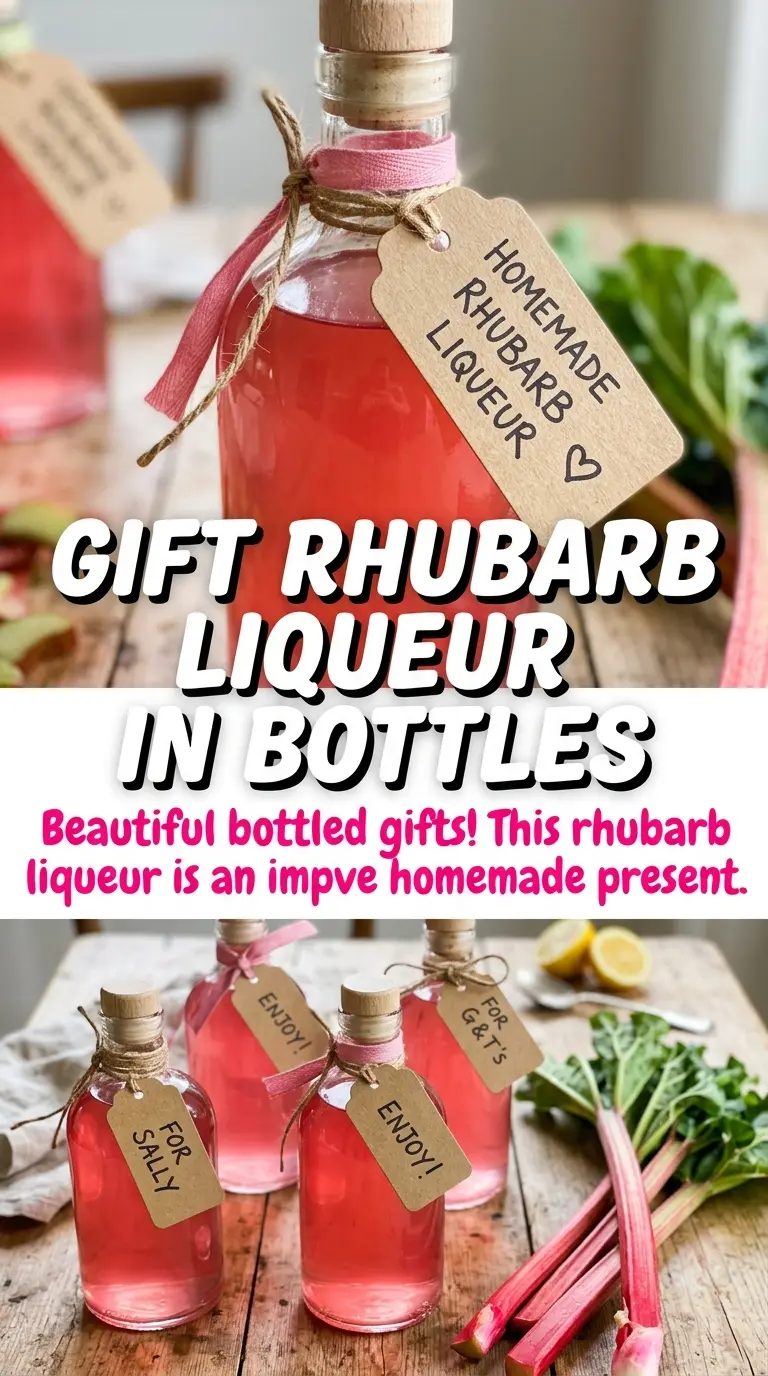
Rhubarb liqueur comes out pink, bright, and quietly luxurious, with that unmistakable sweet-tart edge rhubarb is known for. The vanilla softens the sharpness just enough, and the lemon zest lifts the whole bottle so it tastes fresh instead of syrupy. After the second week of resting, it pours beautifully over ice and makes a cocktail base that feels a lot more special than the effort it takes to make.
The trick is starting with a cold infusion in vodka before the sugar goes in. Rhubarb gives up color and flavor quickly, but it also turns muddy if you rush it with heat from the start. A week of steeping builds the backbone, then the cooled simple syrup balances it without flattening the fruit. The result is a liqueur that stays vibrant and tastes like rhubarb, not candy.
The rhubarb flavor came through so clearly, and the vanilla made it taste smooth instead of harsh. I strained it after the week and the color was gorgeous — my bottle looked like something from a fancy shop.
Like this rhubarb liqueur? Save it to Pinterest for a sweet-tart bottle you can sip over ice or mix into cocktails.
The Part Most Rhubarb Liqueurs Get Wrong: Overcooking the Fruit
Rhubarb doesn’t need long simmering to give up flavor, and it definitely doesn’t benefit from being boiled hard with sugar from the beginning. That’s where a lot of homemade versions go flat or gray. The cold vodka infusion pulls out color and rhubarb character first, while the syrup comes in later to round it out without stripping the fresh edge.
The other detail that matters is patience between the two resting periods. If you strain too early, the flavor tastes thin and the color looks weak. If you bottle the liqueur before the syrup is fully cool, condensation can haze the final drink and dull the finish.
What the Vanilla Bean and Lemon Zest Are Doing Here
- Rhubarb — Fresh stalks give the liqueur its color, tartness, and the clean fruit note that makes this taste like rhubarb instead of generic berry syrup. Trim away the leaves completely; only the stalks belong in the jar.
- Vodka — A neutral spirit lets the rhubarb and vanilla stay in front. Use a decent, clean-tasting vodka, but save the expensive bottle for drinking neat; the fruit and sugar are doing the main work here.
- Sugar — The sugar doesn’t just sweeten. It carries the fruit flavor and gives the liqueur its smooth, pourable body. If you reduce it much, the finished liqueur turns sharp and thin.
- Vanilla bean — A split bean adds depth that extract can’t match. Extract will work in a pinch, but the bean gives a rounder, softer aroma that blends into the rhubarb instead of sitting on top of it.
- Lemon zest — The zest brightens the bottle and keeps the rhubarb from tasting heavy after aging. Zest only the yellow skin; the white pith brings bitterness that shows up after the liqueur rests.
How to Build the Infusion and Finish the Bottle Without Clouding It
Starting the Cold Infusion
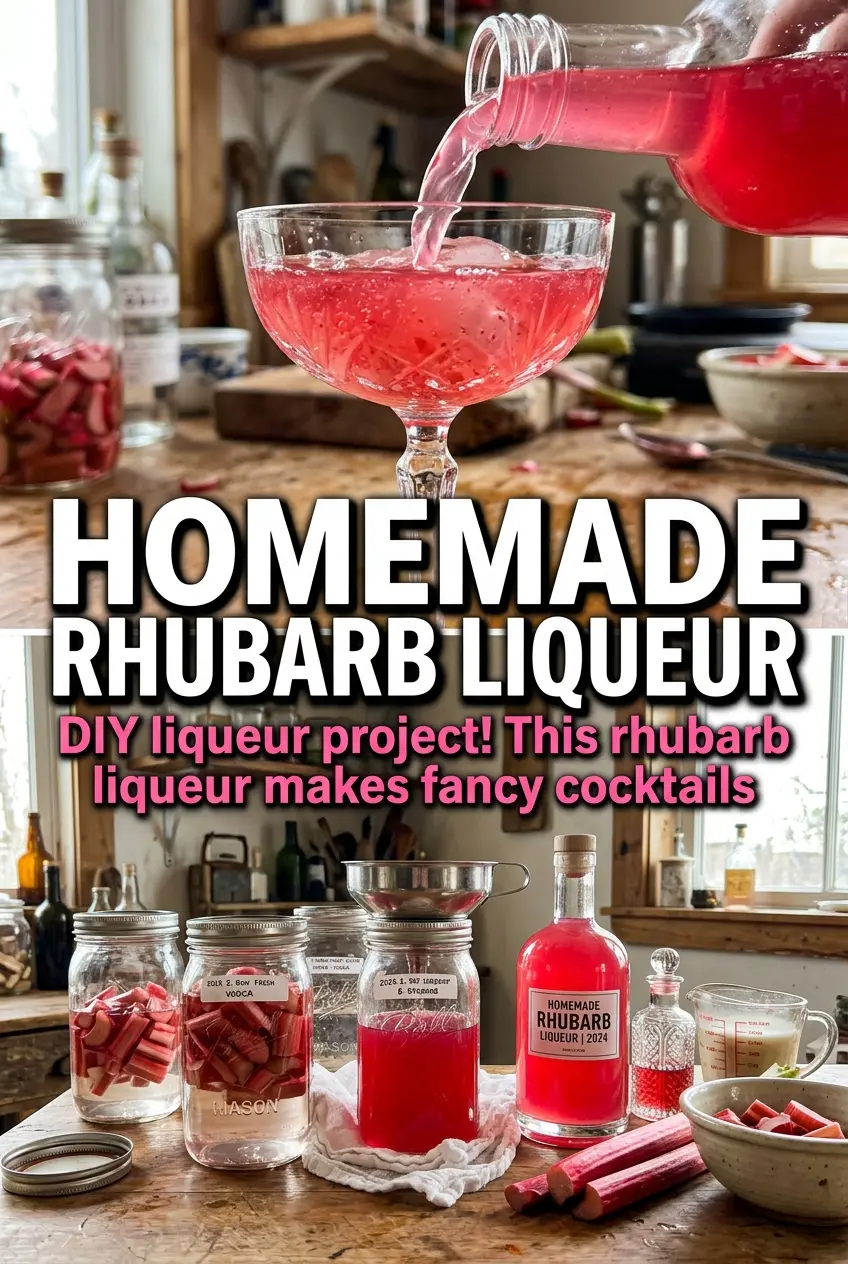
Combine the chopped rhubarb, vodka, vanilla bean, and lemon zest in a large glass jar and seal it tightly. The jar should stay in a cool, dark place for a week, and a daily shake helps the vodka move around the fruit instead of leaving dry pockets at the top. By the end of the week, the liquid should be deeply pink and smell fragrant, tangy, and slightly vanilla-sweet.
Cooking the Syrup
Bring the sugar and water to a boil just until the sugar dissolves. You’re not making caramel here, and you don’t want to reduce the syrup much at all. Turn off the heat as soon as it looks clear, then let it cool completely before anything goes near the infused rhubarb mixture. If the syrup is still warm, it can dull the brightness and make the final bottle taste cooked.
Straining and Bottling
Strain the rhubarb mixture through a fine mesh strainer into the cooled syrup and stir until everything is combined. Don’t press the fruit hard through the strainer, or the liqueur can turn cloudy and slightly gritty. Bottle it, then let it rest for another week so the flavors settle into one another and the alcohol edge softens.
Make It Less Sweet and More Botanical
Cut the sugar slightly, but only by a small amount. That gives you a sharper, more aperitif-style liqueur, though it also shortens the shelf life and makes the rhubarb taste a little more angular.
Swap the Vodka for White Rum
White rum adds a faint molasses note that makes the liqueur feel rounder and warmer. It changes the profile enough that the rhubarb tastes less crisp, but it works well if you want something softer in cocktails.
Make It Alcohol-Free for Drinks and Desserts
Use the same rhubarb, sugar, water, vanilla, and lemon, then simmer gently and strain for a syrup instead of a liqueur. You’ll lose the boozy depth and the long shelf life, but you’ll keep the color and the flavor for pancakes, soda, or nonalcoholic spritzes.
Storage and Reheating
- Refrigerator: Store the liqueur in a sealed bottle in the fridge for up to 6 months. The flavor can deepen a little over time, and a slight natural haze is normal.
- Freezer: Don’t freeze it. The alcohol content keeps it stable in the refrigerator, and freezing can dull the aroma and make the texture less smooth.
- Reheating: No reheating is needed. Serve it chilled, over ice, or mixed into cocktails; warming it would push the alcohol forward and flatten the rhubarb.
Questions I Get Asked About This Recipe
Rhubarb Liqueur
Ingredients
Equipment
Method
- Combine the chopped fresh rhubarb and vodka in a large glass jar, then add the split vanilla bean and lemon zest. Make sure the rhubarb is fully submerged so the pink tint develops evenly.
- Seal the jar and let it infuse in a cool, dark place for 1 week, shaking daily. Keep it away from light and heat so the flavor stays bright and sweet-tart.
- Combine the sugar and water in a saucepan and bring to a boil, stirring until the sugar dissolves. Boil just until dissolved, then stop heating.
- Let the simple syrup cool completely. Cooling prevents cloudiness and helps the finished liqueur stay clear.
- Strain the rhubarb mixture through a fine mesh strainer into the cooled syrup. Press gently so the liquid passes through without muddy pulp.
- Stir to combine, then bottle the liqueur. Shake the bottle briefly to unify the color and flavor.
- Let the liqueur age for another week before serving. This resting period rounds out the vanilla and rhubarb edges for a smoother digestif.
- Store the bottled liqueur in the refrigerator and use within 6 months in cocktails or as a digestif. Serve over ice in small glasses for a pink-tinted, sweet-tart sip.