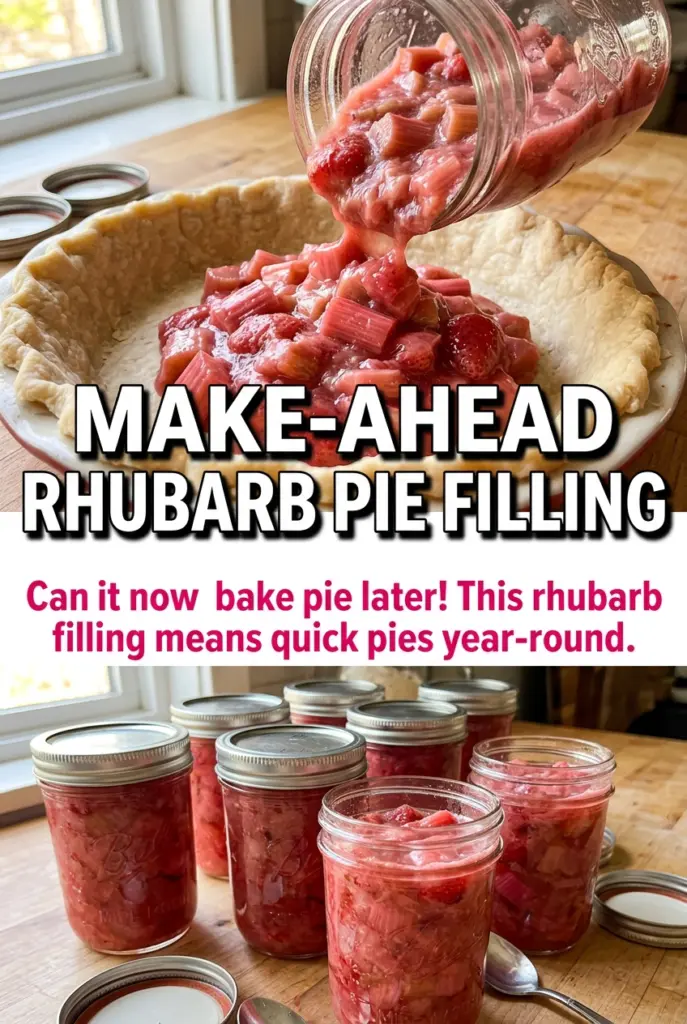
Thick rhubarb pie filling that stays spoonable, glossy, and ready for a crust is one of the best things to put up when rhubarb is coming in fast. This version holds its shape instead of turning watery in the jar, so when you open it later you’re not starting from scratch with a pot of runny fruit and crossed fingers.
The trick is the combination of early sugar maceration and a properly cooked thickener. Letting the rhubarb sit with the sugar pulls out enough juice to help the filling come together, and the Clear Jel goes in as a slurry so it disperses smoothly before the mixture hits a full boil. That boiling step matters; it activates the thickener and gives you the body you need for pie filling that pours cleanly and bakes up with a proper slice.
Below, I’ve included the little details that keep the filling from clumping, thinning out, or scorching on the bottom of the pot, plus a few ways to use it if pie isn’t the only thing on your mind.
The filling thickened up beautifully and stayed glossy after canning. I used it for a pie the next day and it baked into neat slices instead of running all over the pan.
Save this canned rhubarb pie filling for the day you want a homemade pie starting from a jar instead of from scratch.
The Part Where Rhubarb Stops Being Watery
Rhubarb gives off a lot of liquid once the sugar hits it, and that’s the point. If you rush past that step, the filling can end up thin on the stovetop and even thinner after processing. The brief rest lets the sugar draw out juice so the fruit softens a little before it gets thickened, which helps the filling cook more evenly and keeps the pieces from breaking down into mush.
The other mistake people make is adding the thickener too early or too aggressively. Clear Jel needs to be mixed with cold water first so it disperses cleanly; if it goes into the pot dry or in a lump, you’ll get clumps that never fully disappear. You also want a full boil after the thickener goes in, because that’s what turns the mixture from cloudy liquid into a pie filling that will hold up in the jar and in the oven.
What the Clear Jel Is Doing That Flour Never Could
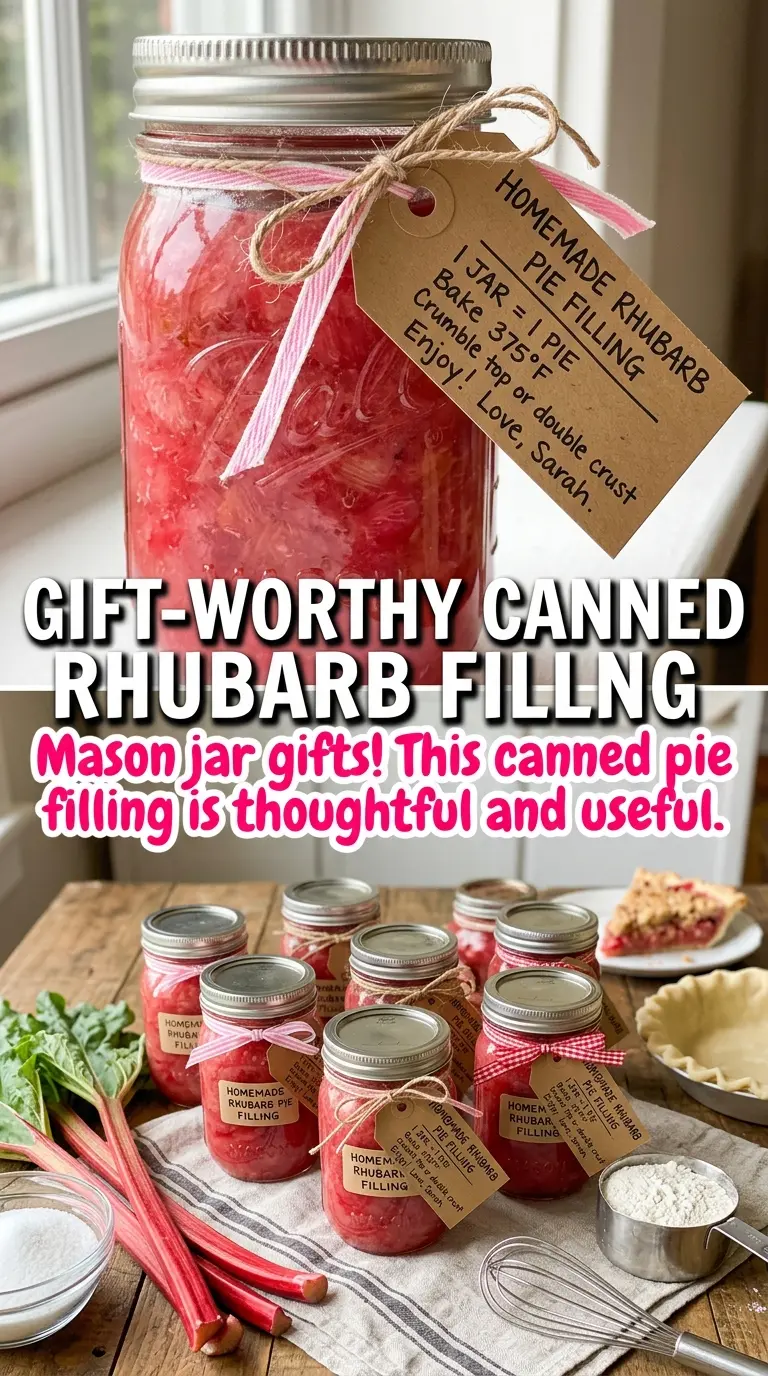
- Clear Jel — This is the thickener that gives you a canned pie filling with a smooth, dependable set. Regular flour turns cloudy and can leave a pasty texture after canning. If you’re freezing the filling instead of water-bath canning it, cornstarch can stand in, but it won’t hold up the same way on the shelf.
- Rhubarb — Fresh rhubarb is worth using here because its tartness is the whole point of the filling. Cut it into 1/2-inch pieces so it softens without dissolving completely; smaller pieces can go soft too fast and make the jars look more like sauce than pie filling.
- Lemon juice — This brightens the flavor and helps keep the filling tasting lively after processing. It also gives you the acidity needed for safe canning, so don’t trim it back.
- Pink food coloring — Totally optional, but it does restore the color rhubarb often loses as it cooks. If your rhubarb is already a deep red variety, you may not need it at all.
Getting the Filling Thick, Glossy, and Jar-Ready
Drawing Out the Juice
Start by tossing the cut rhubarb with the sugar and letting it sit for 30 minutes. The fruit will slump and a syrup will collect in the pot, which is exactly what you want. Stir once or twice during the rest so the sugar doesn’t sit dry on top. If you skip this, the rhubarb can scorch before it has a chance to release enough liquid.
Cooking the Fruit Base
Bring the rhubarb and sugar to a boil over medium heat, stirring often and scraping the bottom well. You’re looking for a hot, bubbling mixture with no dry pockets of sugar. This is not the time to walk away; rhubarb and sugar can stick fast, and once the bottom scorches, that flavor goes through the whole batch.
Thickening Without Lumps
Whisk the Clear Jel with the cold water until smooth, then add the extra water and lemon juice to the pot before slowly stirring in the slurry. Keep the heat steady and stir constantly as the filling thickens. It will look loose at first, then suddenly start to turn glossy and heavy. Once it comes to a full boil, let that boil happen long enough to finish activating the thickener, or the filling can thin out later in storage.
Jarring and Processing
Ladle the hot filling into sterilized quart jars, leaving 1 inch of headspace. Wipe the rims carefully so the lids seal cleanly, then process in a boiling water bath for 30 minutes. The jars should come out with a sealed lid and a filling that looks set but still pourable. If the headspace is too tight, the filling can push out during processing and keep the jars from sealing.
Make It Sweeter or Sharper
If your rhubarb is especially tart, you can keep the sugar as written for a classic pie filling, or shave back a small amount if you like a sharper edge. Don’t reduce it too far, though; the sugar isn’t only for sweetness, it also helps the texture and the finished body of the filling.
Frozen Filling Instead of Canned
For freezer storage, use cornstarch in place of Clear Jel and skip the water-bath canning step. The texture will be a little softer after thawing, but it still bakes well in pies and crisps. Freeze in airtight containers with room for expansion so the filling doesn’t crack the container or push syrup into the lid.
Lower-Sugar Version
This recipe depends on sugar for both flavor and texture, so a major reduction changes the result. If you want a lighter-sweet filling, cut a modest amount and keep the rest of the method the same, but expect a tarter, looser filling that tastes more like stewed rhubarb than classic pie filling.
Storage and Reheating
- Refrigerator: Once opened, keep the jars refrigerated and use within 5 to 7 days. The filling may tighten a little as it chills.
- Freezer: Uncanned filling freezes well for up to 6 months. Use freezer-safe containers and leave headspace for expansion.
- Reheating: Warm gently in a saucepan over low heat or spoon straight into a pie crust if the recipe calls for it. High heat can loosen the set and cause the bottom to scorch before the center warms through.
The Questions That Come Up Once the Jars Are Cooling
Canning Rhubarb Pie Filling
Ingredients
Equipment
Method
- Place the fresh rhubarb in a large pot and sprinkle with sugar, then let it sit for 30 minutes to release juices. You should see syrupy liquid forming at the bottom of the pot.
- Bring the rhubarb and sugar to a boil over medium heat, stirring frequently. Look for active boiling bubbles that cover the surface.
- Mix Clear Jel with 1 cup cold water to make a slurry. Stir until it looks smooth with no dry lumps.
- Add the remaining 1 cup water and lemon juice to the rhubarb, then slowly stir in the Clear Jel slurry. The mixture will loosen at first before starting to thicken.
- Cook, stirring constantly, until the mixture thickens and comes to a boil. The filling should visibly cling to a spoon when you lift it.
- Add pink food coloring if desired, then stir to evenly distribute. The color should look uniform throughout the pot.
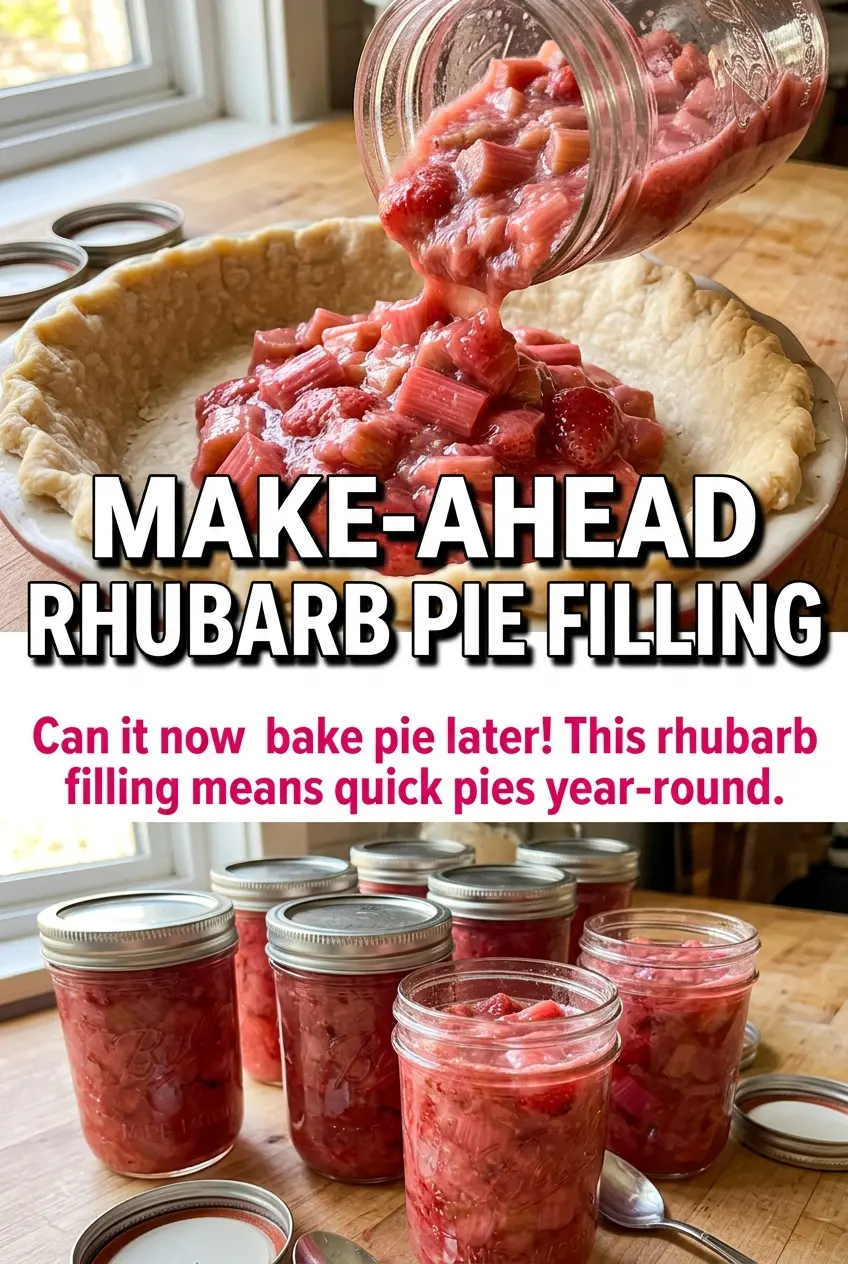
- Ladle the hot filling into sterilized quart jars, leaving 1-inch headspace. The jar rims should stay clean for proper sealing.
- Process the jars in a boiling water bath for 30 minutes. You should see a steady boil and bubbles around the jars during processing.