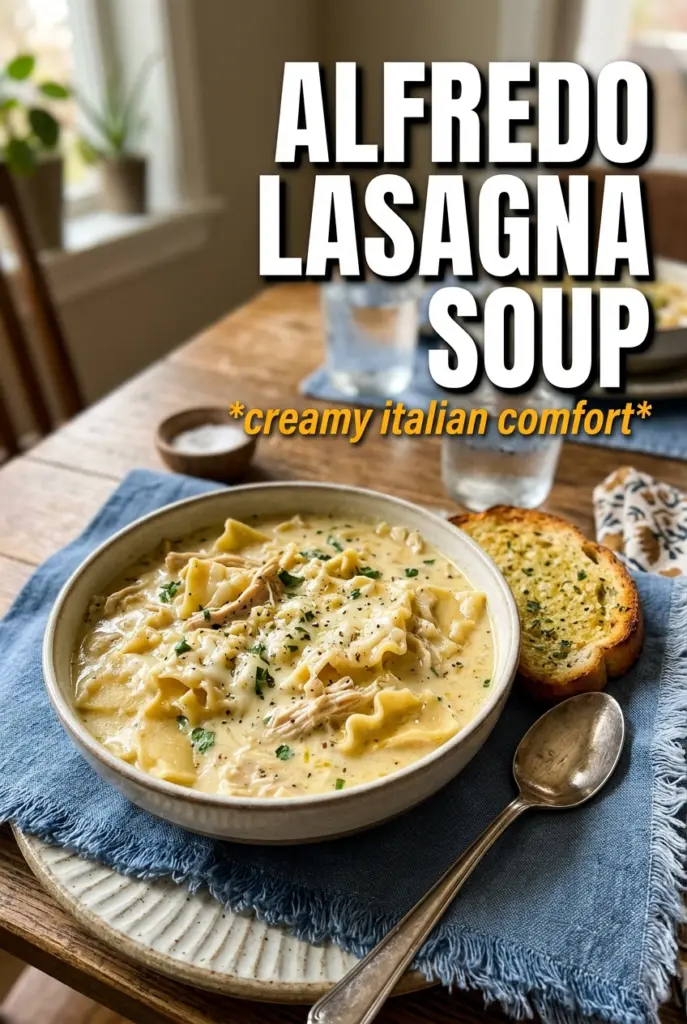
Alfredo lasagna soup has that creamy, spoon-coating comfort people expect from Alfredo, but it eats like a full bowl of lasagna without the layering or the bake time. The broth turns silky from a butter-flour base, the parmesan melts into the cream without tasting heavy, and the broken noodles give you the chewy, satisfying bite that makes the whole pot feel hearty instead of blandly rich. It’s the kind of dinner that disappears fast because every spoonful hits with chicken, pasta, and a little tang from the ricotta finish.
What makes this version work is the order. The chicken browns first, so the pot starts with flavor before the onions and garlic ever go in. Then the flour gets cooked briefly in butter, which keeps the soup from tasting pasty and helps the dairy stay smooth. I also add the parmesan off the heat at the end. That keeps the cheese from turning grainy, which is the fastest way to ruin a cream soup like this.
Below, I’ll walk through the part that matters most: how to keep the Alfredo base creamy, how to keep the noodles from going soft too soon, and what to change if you want to stretch it with extra vegetables or make it gluten-free.
The broth stayed silky the whole time and the parmesan melted in without getting grainy. I topped each bowl with the ricotta swirl and my husband said it tasted like lasagna and Alfredo had a very good dinner together.
Save this Alfredo lasagna soup for the nights when you want creamy chicken pasta comfort with a ricotta finish and one pot to wash.
The Part That Keeps Alfredo Soup Creamy Instead of Broken
Most cream soups go wrong in one of two places: the flour never gets cooked, or the cheese goes in over heat that’s too high. This soup avoids both problems by building the base in stages. The butter and flour need that minute together to lose the raw edge, and the dairy gets added gradually so the mixture stays smooth instead of turning lumpy at the bottom of the pot.
The other mistake is rushing the finish. Parmesan and cream cheese should go in after the pot comes off the burner, or at least with the heat turned very low. That matters because both cheeses thicken beautifully when the liquid is hot, but not boiling. If the soup ever looks grainy, the heat was the problem, not the cheese.
What the Chicken, Cream, and Cheese Are Each Doing Here

- Chicken breast — Diced chicken breast gives this soup body and makes it eat like a meal. Boneless thighs work too if you want a deeper, richer flavor, but they’ll make the broth taste a little heavier. Browning the chicken before it simmers matters more than the cut itself.
- Heavy cream and whole milk — The cream brings the Alfredo feel, while the milk keeps the soup from becoming cloying. I wouldn’t swap both for half-and-half if you want the same silky texture; the soup needs enough fat to carry the parmesan without thinning out. If you only have half-and-half, use it for the cream and keep the milk as written.
- Freshly grated parmesan — Freshly grated parmesan melts cleanly. Pre-shredded cheese often has anti-caking agents that can make the broth feel slightly sandy. If you’re going to spend money on one ingredient here, make it this one.
- Cream cheese — This is the quiet stabilizer. It helps the soup stay glossy and gives the broth that spoon-hugging finish without adding a strong tang. Soften it first so it melts quickly and doesn’t leave little white bits behind.
- Ricotta dollop — The ricotta-parmesan topping gives each bowl a lasagna-like finish and a cool creamy contrast. Stir in a little parsley and a pinch of salt so it tastes seasoned, not plain. If you skip it, the soup is still good, but you lose the part that makes it feel like lasagna soup instead of just chicken Alfredo soup.
Building the Pot in the Right Order
Brown the Chicken First
Season the chicken with salt and pepper, then cook it in the butter until the pieces pick up real color on the outside. You’re not trying to cook it through completely here; you just want a little browning on the bottom of the pot and a head start on flavor. If the pan looks dry before the chicken browns, the heat is too low and the chicken will steam instead of sear.
Cook the Flour Until It Smells Nutty
After the onion and garlic soften, whisk the flour into the butter and vegetables and let it cook for about a minute. The mixture should look paste-like and smell a little toasty, not raw. If you skip this step or rush it, the soup can taste floury and the broth won’t thicken evenly.
Add the Dairy Slowly, Then Let the Noodles Drink
Pour in the broth, cream, and milk gradually while stirring, then bring the soup to a gentle simmer before adding the broken lasagna noodles. A hard boil will make the dairy more likely to separate and can overcook the noodles before the center softens. Simmer until the noodles are tender with a little bite left; they’ll keep softening after you return the chicken and finish the soup.
Finish Off the Heat
Once the chicken goes back in, pull the pot off the burner before stirring in the parmesan and cream cheese. That’s the moment that keeps the texture glossy instead of grainy. Season at the end with white pepper and salt, then serve right away with the ricotta dollop on top so the cheese stays creamy against the hot soup.
Three Good Ways to Adjust This Bowl Without Losing What Makes It Work
Gluten-Free Version
Use a 1:1 gluten-free flour blend for the roux and swap in gluten-free lasagna noodles. The texture stays close to the original as long as you simmer the noodles gently and don’t let them overcook. Gluten-free pasta can soften fast, so start checking it a couple minutes early.
Dairy-Light, Not Dairy-Free
You can replace the whole milk with additional broth and use half-and-half instead of heavy cream, but the soup will be a little less plush. Keep the parmesan and cream cheese in place or the base loses the Alfredo character. This version still tastes creamy, just a touch lighter and less rich.
Add Spinach or Mushrooms
Wilt in a few handfuls of spinach at the very end or sauté sliced mushrooms with the onion. Mushrooms deepen the savory flavor, while spinach adds color without changing the texture much. Don’t add watery vegetables too early or they’ll dilute the broth and mute the parmesan.
Storage and Reheating
- Refrigerator: Store for up to 4 days. The noodles will keep absorbing broth, so the soup thickens as it sits.
- Freezer: It freezes, but the dairy can separate a little after thawing. If you plan to freeze it, undercook the noodles slightly and expect a softer texture when reheated.
- Reheating: Rewarm gently on the stove over low heat with a splash of broth or milk. Don’t boil it, or the cream can split and the noodles can turn mushy.
Questions I Get Asked About This Recipe
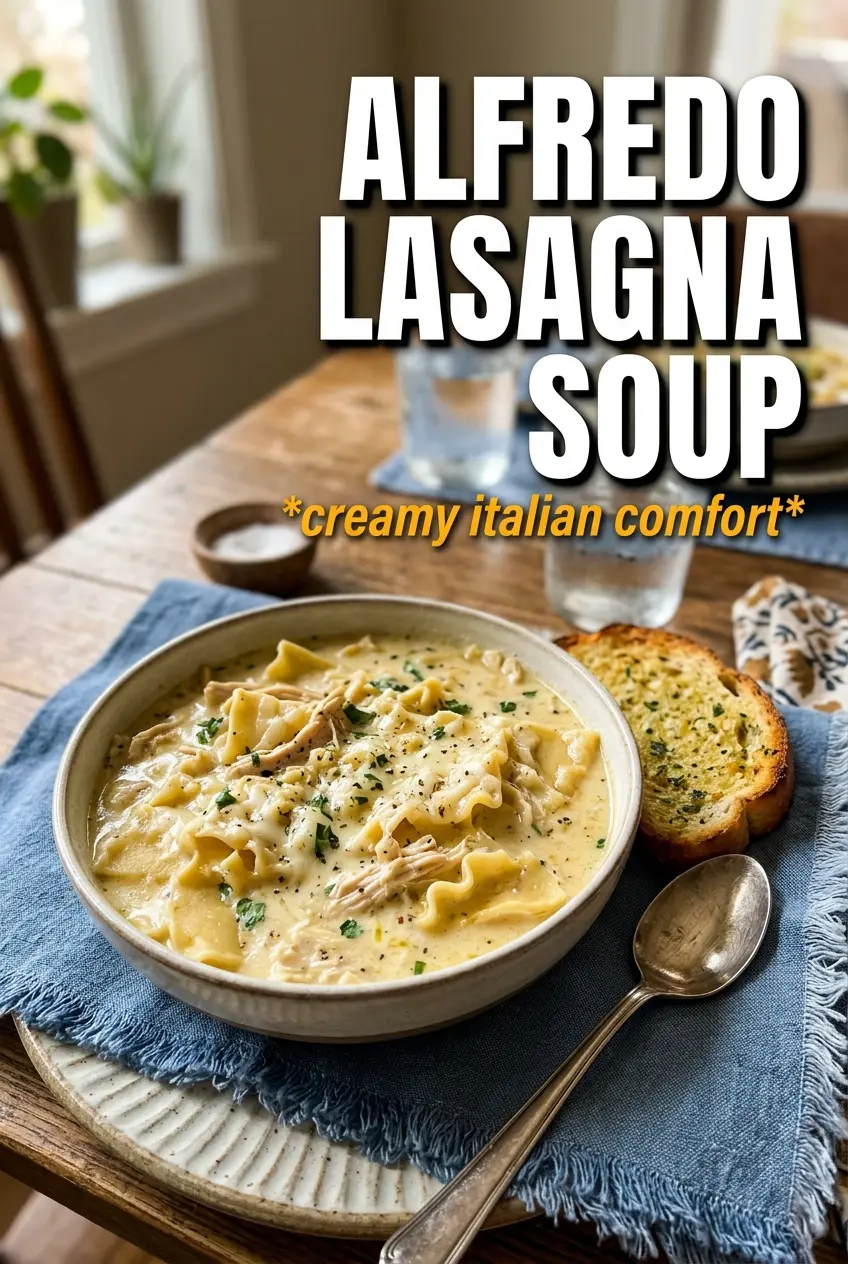
Alfredo Lasagna Soup
Ingredients
Equipment
Method
- Season the chicken with salt and white pepper, then brown in butter in a large pot for 4-5 minutes until golden. Remove the chicken to a plate.
- Sauté the onion in the same pot for 3 minutes, then add the minced garlic and cook for 1 minute until fragrant. Stir to prevent browning.
- Whisk in the flour and cook for 1 minute to remove the raw flour taste. Keep stirring until it looks lightly smooth.
- Gradually add the broth, cream, and milk, stirring as you pour. Mix in garlic powder and nutmeg so the seasoning disperses evenly.
- Bring the mixture to a simmer, then add the broken lasagna noodles. Reduce heat to maintain a gentle simmer.
- Cook for 10-12 minutes, stirring occasionally, until the noodles are tender. Return the browned chicken to the pot during the final minutes.
- Remove from the heat, then stir in the parmesan and softened cream cheese until smooth. The broth should look thick and creamy.
- Taste and season with additional salt and white pepper as needed. Serve hot with a ricotta dollop topped with parsley.