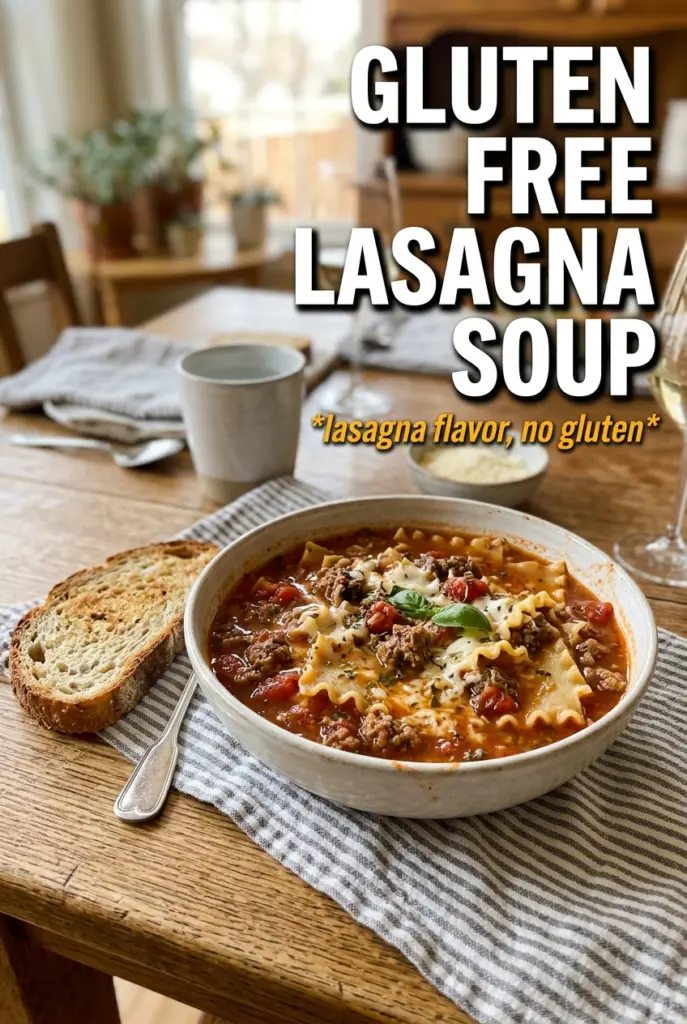
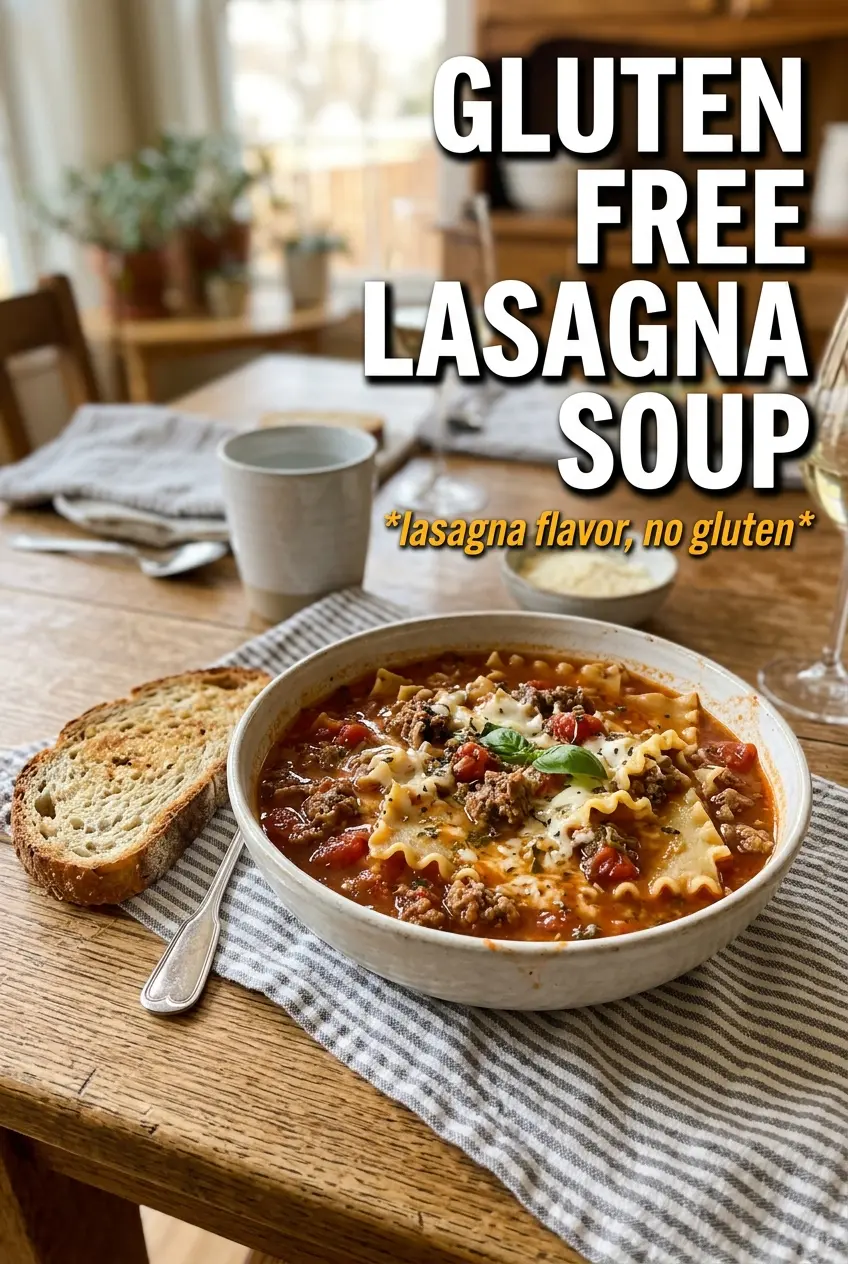
Rich tomato broth, tender gluten-free pasta, and that creamy ricotta-mozzarella spoonful on top make this gluten free lasagna soup taste like a full lasagna dinner without the layering, baking, or waiting. The broth turns hearty from browned Italian sausage and a little tomato paste, while the pasta gives it the comfort-food body that makes each bowl feel substantial instead of brothy.
The key is building flavor in stages. Browning the sausage first gives you a savory base, and cooking the tomato paste before the liquids takes the edge off the acidity while deepening the color. Gluten-free pasta needs a gentle simmer and just enough time to turn tender without going mushy, which is why this version keeps the cooking straightforward and doesn’t overcomplicate the pot.
Below you’ll find the small details that keep the broth balanced, the pasta from falling apart, and the cheese topping creamy instead of clumpy. It’s the kind of soup that rewards a good stir right before serving.
The broth had that rich lasagna flavor, and the gluten-free noodles stayed tender instead of turning to mush. I loved how the ricotta and mozzarella melted into the center and made each bowl taste like the real thing.
Save this gluten free lasagna soup for the nights when you want cheesy, sausage-studded comfort without boiling a whole pan of lasagna.
The Broth Needs a Head Start Before the Pasta Goes In
With soup like this, the biggest mistake is rushing the liquid and pasta together before the tomato base has any depth. If you dump everything in at once, the broth tastes flat and the gluten-free noodles soak up the wrong kind of flavor. Browning the sausage first, then cooking the onion and tomato paste in the same pot, gives the soup a more layered, lasagna-like taste.
The tomato paste matters more than people think. Let it cook for a minute or two until it darkens slightly and starts sticking to the pot in places. That step pushes it from sharp to savory, and it gives the broth the kind of body that holds up once the pasta goes in.
What Each Ingredient Is Actually Doing in This Bowl

- Italian sausage — This is the main source of savory depth, and the rendered fat helps start the onion base. Hot or mild both work; hot sausage gives the soup more heat without needing extra red pepper. If you use turkey sausage, add a little olive oil in the pot because it releases less fat.
- Crushed tomatoes and diced tomatoes — The crushed tomatoes build a thick, spoonable broth, while the diced tomatoes leave a few firmer tomato pieces that keep the soup from eating like marinara. Use good canned tomatoes here if you can. The difference shows up in the final broth.
- Gluten-free pasta — Brown rice lasagna noodles or GF penne both work, but they need close attention because they soften faster than regular wheat pasta and can break down if overcooked. Break lasagna sheets into rough pieces for the most lasagna-like texture. If your pasta tends to get sticky, stir the pot often once it goes in.
- Ricotta, mozzarella, and parmesan — This trio is what gives the soup its lasagna finish. Ricotta keeps the topping creamy, mozzarella melts into long strands, and parmesan adds salt and sharpness. Stir in a little basil right before serving so the cheese tastes fresh instead of heavy.
Building the Soup in the Right Order So the Pasta Stays Tender
Brown the sausage first
Cook the sausage until it’s deeply browned, not just no longer pink. Those browned bits at the bottom of the pot are flavor, and they dissolve into the broth once the onions go in. If there’s a lot of grease left, drain some off, but leave enough to cook the onion without sticking.
Wake up the tomato paste
Add the onion to the same pot and cook until it’s softened and translucent, then stir in the garlic for just a minute. Tomato paste goes in next and should cook until it darkens slightly and smells sweet instead of sharp. If it starts to scorch, the heat is too high, so lower it before adding the liquids.
Simmer before adding the pasta
Once the broth and tomatoes are in, bring everything to a real simmer so the flavors meld before the pasta shows up. The soup should smell savory and tomato-rich, not thin or watery. Add the gluten-free pasta only when the broth is seasoned and hot, then keep the simmer gentle so the noodles cook evenly and don’t break apart.
Finish with the cheese dollop
Mix the ricotta, mozzarella, parmesan, and basil in a bowl until it looks thick and spoonable. A generous scoop on hot soup softens into creamy ribbons, but it shouldn’t disappear completely into the broth. If you want that classic lasagna look, add the cheese right before serving so it melts on top instead of blending all the way through.
How to Adjust This Soup for Different Eaters and Different Nights
Make It Dairy-Free Without Losing the Creamy Finish
Skip the ricotta-mozzarella topping and use a dairy-free ricotta or a thick cashew cream instead. The soup itself is still rich from the sausage and tomato base, so you’re mainly replacing the finishing texture, not the whole dish. Add extra basil and a little nutritional yeast if you want more of that savory cheese note.
Use Turkey Sausage for a Lighter Bowl
Turkey sausage works well, but the soup will taste a little leaner, so don’t skip the tomato paste step. Add a teaspoon of olive oil when you cook the onion to replace some of the missing fat. The result is still hearty, just a touch less rich.
Swap the Pasta Shape for What You Have
GF penne, rotini, or broken lasagna sheets all work, but smaller shapes absorb broth faster. If you use a short pasta, start checking it a minute or two early so it doesn’t go soft. The soup still reads like lasagna either way because the broth and cheese carry the flavor.
Storage and Reheating
- Refrigerator: Store for up to 4 days. The pasta will keep soaking up broth, so expect a thicker soup on day two.
- Freezer: Freeze the soup base without the pasta and cheese topping for best results. Gluten-free pasta can turn soft after thawing, so add fresh pasta when reheating if you want the best texture.
- Reheating: Warm gently on the stove over medium-low heat with a splash of broth or water. If you boil it hard, the pasta can get mushy and the dairy topping may separate.
Questions I Get Asked About This Recipe
Gluten Free Lasagna Soup
Ingredients
Equipment
Method
- In a large Dutch oven, brown the Italian sausage over medium-high heat until no longer pink. Drain excess fat and set the sausage aside so it doesn’t add grease to the soup.
- Sauté the diced onion in the same pot for 4 minutes until softened. Add the minced garlic and cook for 1 minute, stirring so it becomes fragrant.
- Stir in the tomato paste and cook for 1-2 minutes to deepen the flavor. Scrape up browned bits from the bottom of the pot as you stir.
- Add the crushed tomatoes, diced tomatoes, chicken broth, Italian seasoning, dried basil, and red pepper flakes. Bring the mixture to a boil over high heat, then reduce to maintain a steady simmer.
- Add the gluten-free pasta and return the sausage to the pot. Simmer for 8-12 minutes (or per the pasta package instructions) until the pasta is tender.
- Season with salt and pepper to taste. Stir well and simmer 1 additional minute so the seasoning disperses.
- Mix ricotta, shredded mozzarella, parmesan, and fresh basil until evenly combined. Spoon a generous dollop into each bowl so it melts into the hot soup.