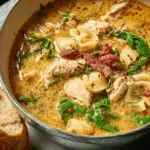
Golden turmeric chicken soup earns its place in the rotation because it tastes like comfort with a little backbone. The broth turns vivid yellow, the chicken stays tender enough to shred with a fork, and the ginger, lemon, and black pepper keep every spoonful bright instead of flat. It’s the kind of bowl that feels calming without tasting cautious.
What makes this version work is the order of operations. The chicken simmers right in the seasoned broth so it picks up flavor instead of getting added bland at the end, and the turmeric gets a full chance to bloom with the aromatics before the liquid goes in. Black pepper matters here, not just for flavor but because turmeric needs it to do its job. A small splash of apple cider vinegar and lemon juice at the end wakes everything up after the noodles soften the broth.
Below, I’ve included the one timing detail that keeps the noodles from turning mushy and the swaps I’d use when I want this bowl a little lighter, richer, or gluten-free.
The broth turned that gorgeous gold color and the ginger-lemon finish kept it from tasting heavy. I followed the noodle timing exactly and they stayed tender instead of bloated, which is usually where my chicken soup goes wrong.
Save this turmeric chicken soup for the nights when you want a bright golden broth, tender shredded chicken, and a lemony finish that keeps every bowl lively.
The Part That Keeps the Broth Bright Instead of Muddy
The biggest mistake in turmeric chicken soup is treating the spices like background noise. Turmeric needs company, and black pepper is the part that makes its curcumin more available. If you skip the pepper, you lose more than flavor — you lose the reason this soup is called anti-inflammatory in the first place.
The second place people go wrong is letting the noodles overcook in the pot. Once they swell, they keep drinking broth even after the heat is off, and suddenly the soup goes from brothy to starchy and thick. Add them late, pull the pot as soon as they’re tender, and the texture stays clean.
- Turmeric — Use a fresh, fragrant jar if you can. Old turmeric turns dull and dusty, and the soup loses that deep golden color and sharp earthy note.
- Black pepper — Don’t treat this as a garnish ingredient. It does real work here, both in flavor and in helping turmeric behave the way you want it to.
- Bone broth — This gives the soup body without needing cream. A good broth tastes savory on its own; a weak one will make the whole pot taste thin no matter how much seasoning you add.
- Apple cider vinegar and lemon juice — These are finishers, not flavor afterthoughts. They cut through the richness and pull the broth back into balance after the noodles go in.
What Each Ingredient Is Actually Doing in This Recipe

- Primary ingredient (the star) — Quality matters most. Choose the best you can find.
- Cooking medium (oil, butter, or broth) — This carries flavors and prevents dryness.
- Seasonings (salt, pepper, spices, herbs) — Layer flavors so nothing overpowers. Build depth gradually.
- Aromatics (garlic, onion, herbs) — Cook with fat to bloom flavors. Become the foundation.
- Supporting ingredients — Complement the main ingredient without overpowering it.
- Sauce or liquid (if applicable) — Brings flavors together. Balance richness with acid.
- Acid (lemon, vinegar, wine, or other) — Brightens and prevents flat-tasting results.
- Final finish (garnish, glaze, or sauce) — Prevents one-dimensional taste and adds visual appeal.
What Happens in the Pot, Minute by Minute
Building the Aromatic Base
Start with the onion, carrot, celery, garlic, ginger, turmeric, black pepper, thyme, cinnamon, and cayenne in the broth with the chicken. As the pot heats, the kitchen should smell warm and a little peppery, not harsh. If the garlic starts to taste bitter, the heat was too high; keep it at a steady simmer, not a boil. That gentle bubbling is what gives the chicken time to cook through without turning stringy.
Shredding at the Right Moment
Pull the chicken once it’s cooked through and shreds easily with two forks. If it resists, it needs a few more minutes in the broth, not a hard boil. Shred it while it’s still warm, then return it to the pot so the meat can soak up some of the turmeric broth before the noodles go in. This is the point where the soup starts tasting rounded instead of just seasoned.
Cooking the Noodles Without Losing the Broth
Add the noodles only after the chicken is back in the pot. Keep the simmer gentle and watch the texture closely, because the difference between tender and mushy is only a minute or two. Egg noodles soften faster and give the broth a silkier feel; rice noodles keep it a little lighter. Once they’re tender, stop the cooking process right away by moving on to the final additions.
Finishing With Acid and Salt
Stir in the lemon juice, honey, and apple cider vinegar after the noodles are done. Acid brightens the turmeric and keeps the soup from tasting heavy, while the honey smooths the sharp edges without making it sweet. Season with salt at the very end, after everything else is in the pot, because broth strength and noodle type can change how much you actually need. Finish with parsley and extra lemon at the table.
How to Adapt This Soup Without Losing What Makes It Good
Make It Gluten-Free With Rice Noodles
Swap the egg noodles for rice noodles and cook them just until tender, since they can go from supple to soft fast. The soup stays just as comforting, but the broth will feel a little cleaner and less silky. If you’re using very thin rice noodles, turn off the heat and let them finish in the hot broth for the last minute.
Make It Dairy-Free as Written
This soup already skips dairy, so the main thing is resisting the urge to add cream at the end. The broth gets its body from the chicken, noodles, and long simmered vegetables, and cream would mute the ginger, turmeric, and lemon that make this bowl taste fresh.
Use Chicken Thighs for a Richer Broth
Chicken thighs bring more richness and stay tender even if they simmer a little longer. They also add a deeper savory note, which works well with the turmeric and ginger. The soup will look slightly less lean and a little more opaque, but the flavor payoff is worth it.
Turn It Into a Bigger-Batch Meal
Double everything except the noodles, then cook the noodles separately if you’re serving it over more than a day or two. That keeps the broth from turning thick and starchy in storage. Stir in fresh noodles to each bowl when reheating if you want the best texture.
Storage and Reheating
- Refrigerator: Store for up to 4 days. The noodles will keep absorbing broth, so the soup gets thicker by day two.
- Freezer: Freeze the soup without the noodles for the best texture. Add freshly cooked noodles after thawing and reheating.
- Reheating: Warm it gently over medium-low heat until steaming, not boiling. If it’s been in the fridge, add a splash of broth or water because the noodles and vegetables will have tightened up the liquid.