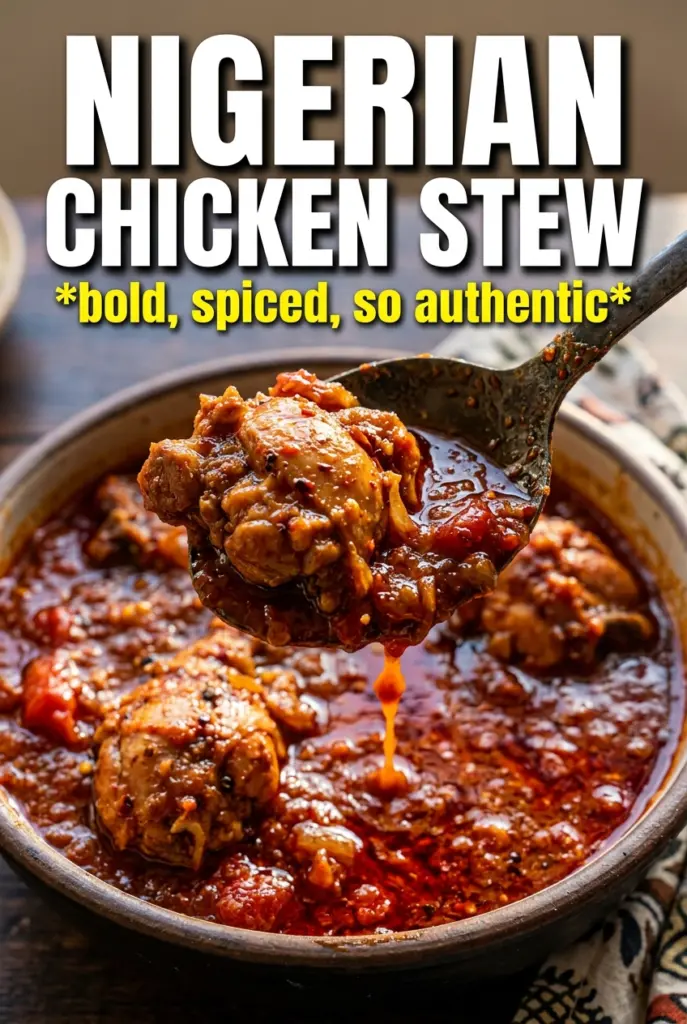
Deep orange-red Nigerian chicken stew is the kind of pot that changes the mood of dinner the second it hits the table. The sauce turns glossy and concentrated, the chicken takes on that slow-cooked peppery richness, and every spoonful lands with enough heat, sweetness, and savoriness to keep you going back for more. Served over steamed rice, it’s the sort of meal that feels generous without needing a long list of extras.
What makes this version work is the patience with the pepper base. The blended tomatoes, red bell peppers, onions, and scotch bonnet need time in the pot until the raw sharpness cooks off and the oil separates on top. That step is what gives the stew its deep color and that cooked-down flavor Nigerian stew is known for. The chicken goes in after it has already been browned or baked, so it holds its shape and finishes in the sauce instead of falling apart.
Below, I’ve laid out the part that matters most: how to get the stew dark, not watery, and how to keep the heat balanced so the pepper flavor stays lively instead of overwhelming.
The pepper sauce cooked down exactly like it should, and once I saw the oil floating on top I knew I was on the right track. The chicken stayed juicy and the flavor was even better the next day over rice.
Save this Nigerian Chicken Stew for the nights when you want a deeply cooked tomato-pepper sauce with golden chicken and rice.
The Reason the Pepper Sauce Has to Cook Down Before the Chicken Goes In
Most weak chicken stews start with a sauce that tastes fresh, sharp, and unfinished. That happens when the tomato and pepper blend only gets heated through instead of properly cooked. For Nigerian chicken stew, the blend needs enough time in the pot for the water to evaporate, the acidity to mellow, and the oil to separate and rise to the top. That’s the point where the sauce stops tasting blended and starts tasting like stew.
The other trap is crowding the pot with chicken too early. If you simmer raw chicken in the sauce from the start, the pot releases too much moisture and pulls the whole dish backward. Browning or oven-baking the chicken first gives it color, keeps the texture intact, and lets the stew stay bold and concentrated instead of thin.
What Each Ingredient Is Actually Doing in This Stew
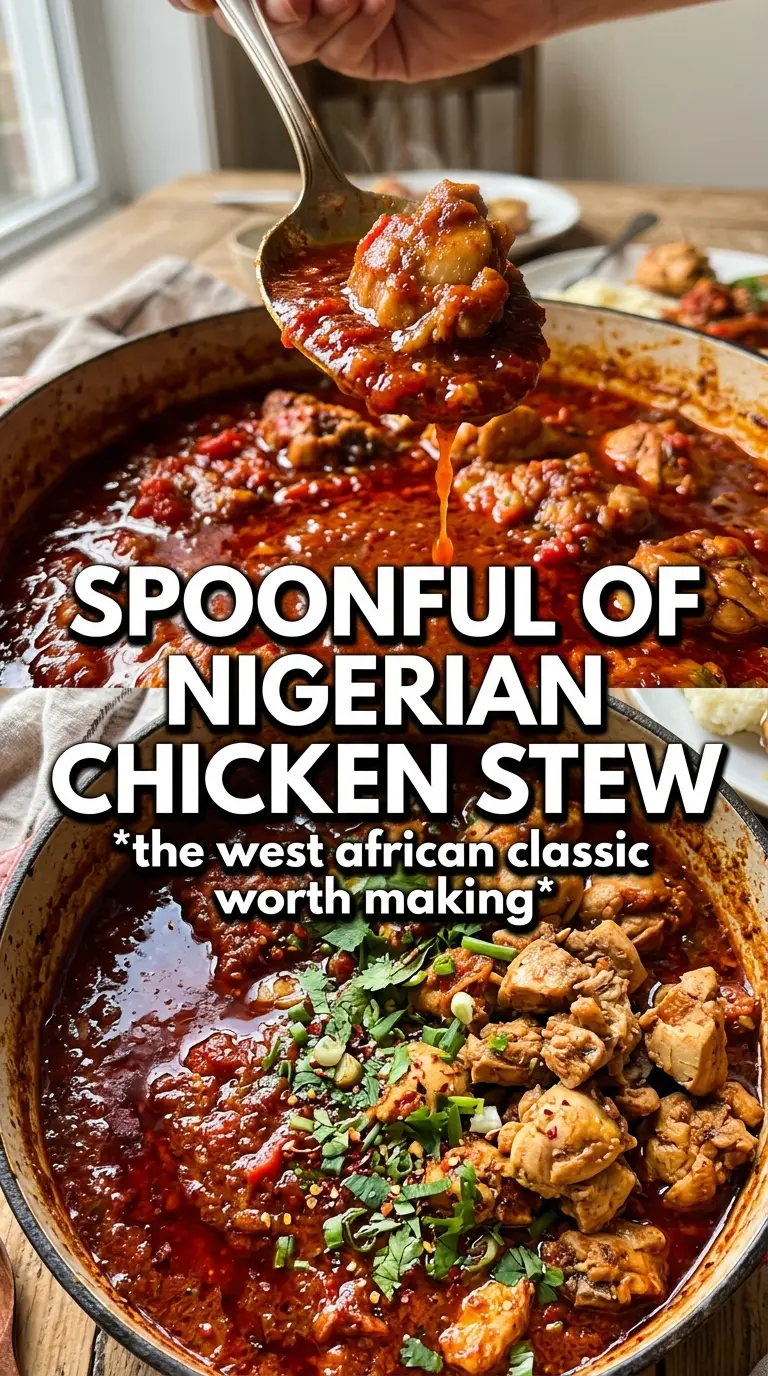
- Chicken pieces with bone-in — Bone-in chicken gives the stew more flavor and stays juicier during the final simmer. Thighs and drumsticks are the easiest pieces to work with here because they forgive a little extra cooking time.
- Plum tomatoes — These bring body and sweetness, but they need to be fully cooked down or the stew tastes tinny and sharp. If your tomatoes are very acidic, the long fry helps more than adding sugar ever will.
- Red bell peppers — They add color and a round sweetness that balances the heat from the scotch bonnet. Don’t swap these for green peppers unless you want a more bitter, less classic result.
- Scotch bonnet or habanero — This is the heat source, and it matters because the stew should taste peppery, not just hot. Start with one if you’re cautious; you can always increase the heat the next time.
- Onion — Part of it goes into the marinade for deeper flavor in the chicken, and the rest goes into the pepper blend for sweetness and balance. That split is small, but it helps the stew taste layered instead of one-note.
- Vegetable oil — The oil does more than stop sticking. It helps fry the blended sauce properly and gives you that glossy finish when the stew is done. Lighter neutral oil works best; a strongly flavored oil gets in the way.
- Thyme and curry powder — These give the chicken a warm, savory base before it ever hits the pot. Use fresh spices if you can, because old curry powder goes flat fast.
- Bouillon — This adds the salty, savory backbone that keeps the sauce tasting complete. If you use stock powder, cut back on added salt until the end so the stew doesn’t turn overly salty while it reduces.
Building the Stew So It Turns Dark, Glossy, and Rich
Marinating the Chicken First
Rub the chicken with the grated onion, thyme, curry powder, bouillon, salt, and pepper, then let it sit for about 30 minutes. That short rest gives the seasoning time to penetrate the surface instead of sitting on top of the sauce later. If the marinade looks wet from the onion, that’s fine — the moisture helps the spices cling. The only mistake here is skipping the rest and wondering why the chicken tastes seasoned outside but bland underneath.
Getting the Chicken Golden
Fry the chicken in batches or oven-bake it until the outside is golden and the meat is mostly cooked through. You want color, not a fully finished bird, because the stew will finish the job later. If you crowd the pan, the chicken steams and loses that browned flavor that gives the final dish depth. Set it aside once it has structure and visible color.
Cooking the Pepper Base Until the Oil Rises
Blend the tomatoes, red bell peppers, scotch bonnet, and remaining onion until smooth, then fry that puree in hot oil over medium-high heat. Stir often at first, then more frequently as it thickens and starts to sputter. At the beginning it will look loose and bright; later it will darken, pull away from the pot, and leave small pools of red oil on top. That’s your cue that the raw taste is gone and the sauce is ready for chicken.
Finishing the Stew Without Breaking the Sauce
Add the fried chicken and let it simmer in the sauce for 15 to 20 minutes so the flavor settles into the meat. Keep the heat at a gentle simmer, not a hard boil, or the oil can separate too aggressively and the chicken can toughen. Taste at the end and adjust salt only after the sauce has reduced, because reduction concentrates seasoning faster than you think. Serve it hot over steamed rice while the sauce is still glossy.
How to Adjust Nigerian Chicken Stew for Your Heat Level, Pantry, and Schedule
Milder Stew with the Same Deep Color
Use one scotch bonnet instead of two, or remove the seeds before blending. You’ll keep the pepper flavor and color, but the finished stew will lean more savory than fiery. This is the best move if you’re serving a mixed crowd and want people to keep going back for seconds.
Oven-Baked Chicken for a Lighter Finish
Bake the seasoned chicken until the skin picks up color and the juices run clear at the surface, then finish it in the stew. You’ll use less oil than deep frying, and the sauce still gets that rich chicken flavor from the final simmer. The texture is a little less crisp, but the stew stays full-bodied.
Gluten-Free and Naturally Dairy-Free
This stew is naturally gluten-free and dairy-free as written, as long as your bouillon or stock powder doesn’t contain hidden wheat ingredients. That makes it an easy main dish to serve with rice without changing the cooking method at all. The only thing to watch is seasoning salt, since some bouillon brands are much saltier than others.
Storage and Reheating
- Refrigerator: Store for up to 4 days. The flavor gets deeper by day two, and the sauce thickens as it chills.
- Freezer: It freezes well for up to 2 months. Cool completely first, then pack the stew without the rice so the sauce keeps its texture.
- Reheating: Reheat gently on the stove over low heat with a splash of water if needed. The common mistake is boiling it hard, which can dry out the chicken and make the oil separate too much.
Answers to the Questions Worth Asking
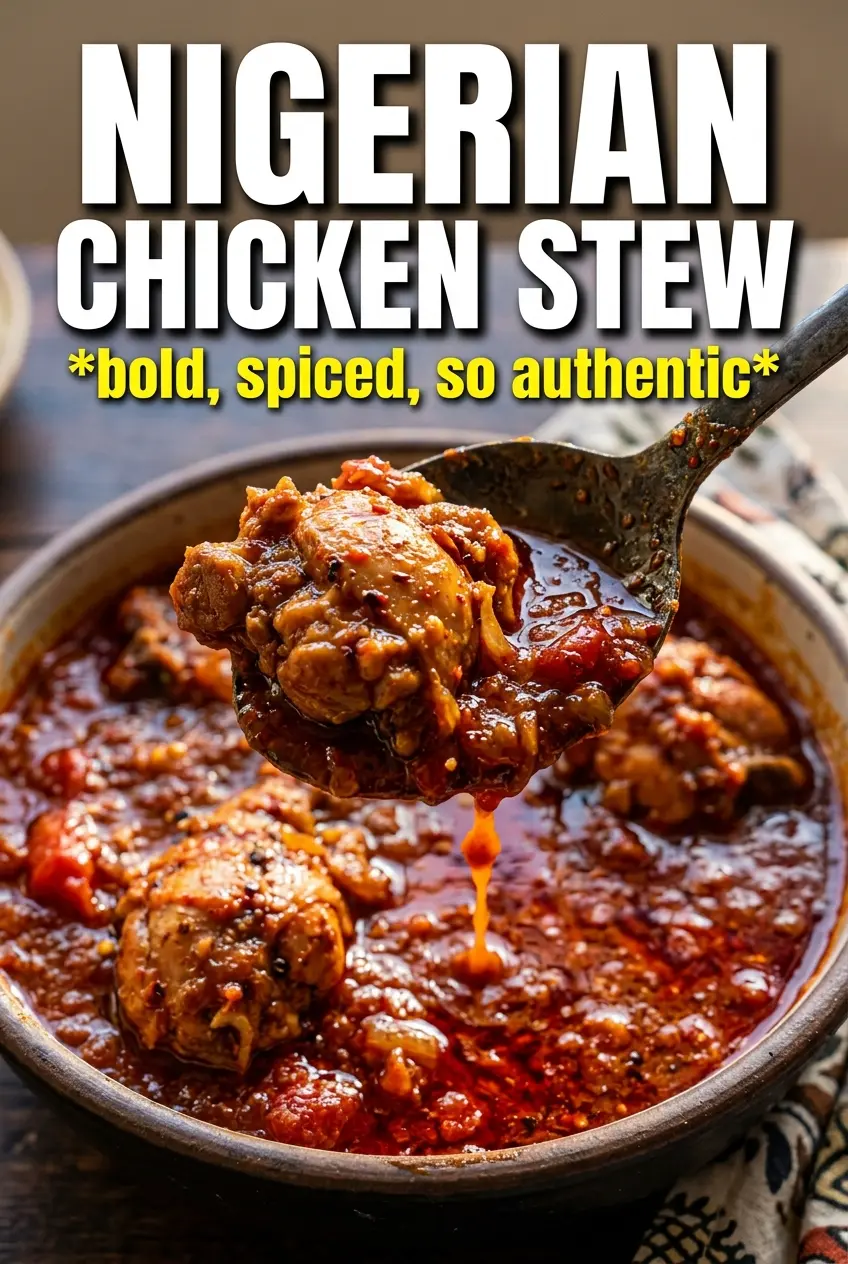
Nigerian Chicken Stew
Ingredients
Equipment
Method
- Grate half of the onion and rub it over the chicken with thyme, curry powder, bouillon, salt, and pepper, then cover and marinate for 30 minutes.
- While marinating, preheat your oven to 425°F if baking the chicken (or prep for frying).
- Fry or oven-bake the chicken at 425°F until golden and mostly cooked through, then set aside.
- Blend the plum tomatoes, red bell peppers, scotch bonnet or habanero peppers, and the remaining onion until completely smooth.
- Heat 1/2 cup of the vegetable oil in a large pot over medium-high heat, then carefully fry the blended pepper sauce for 30-40 minutes, stirring frequently.
- Keep frying until the sauce is deeply cooked and darkened and the oil floats on top, then stir in the garlic and cook for 1-2 minutes.
- Add the fried chicken to the pot, coat it thoroughly in the sauce, and simmer for 15-20 minutes.
- Taste and adjust seasoning with salt and pepper, then serve hot over steamed rice and top with fresh parsley.