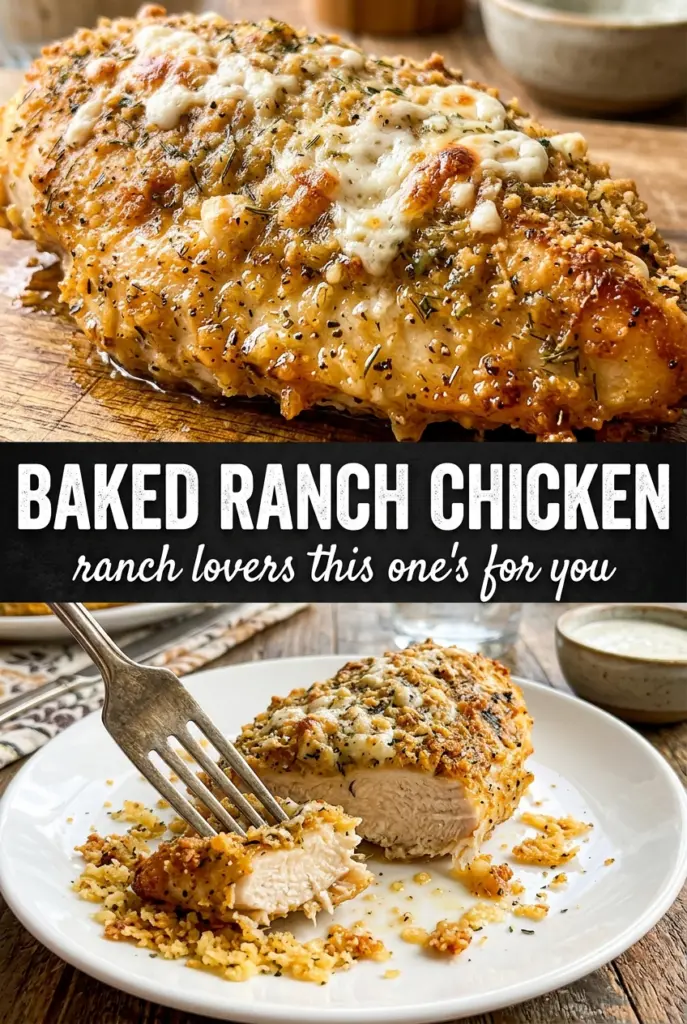
Golden ranch chicken with a crackly Parmesan crust is the kind of dinner that disappears fast because it hits every note at once: juicy chicken, a deeply seasoned topping, and a browned finish that tastes like it came from far more effort than it did. The mayonnaise might sound like a shortcut ingredient, but it’s the reason the crust clings to the chicken and stays moist underneath while the top turns crisp and bronzed in the oven.
Freshly grated Parmesan matters here because it melts and browns better than the shelf-stable kind, and panko gives the crust actual crunch instead of a sandy coating. The ranch seasoning brings salt, herbs, and tang in one move, so the topping tastes built rather than dumped on. Keep the chicken breasts even in thickness if you can; that small step keeps the edges from drying out before the center reaches temperature.
Below, I’ve included the little details that keep this from turning soggy, plus a few smart variations if you want to change the crust or work with what’s already in the pantry.
The crust turned out crunchy on top but the chicken stayed juicy underneath, and the ranch flavor was there in every bite without being too salty. I used a meat thermometer and pulled it right at 165, which kept the coating from drying out.
Crispy Parmesan ranch chicken like this belongs on your dinner rotation for the nights when you want big flavor and a crunchy crust with almost no cleanup.
The Trick to Keeping Ranch Chicken Crunchy Instead of Soggy
The coating on baked ranch chicken fails in one of two ways: it either slides off the chicken, or it turns soft before dinner hits the table. The fix is the mayonnaise layer. It works like glue, but it also protects the chicken so the surface can brown before the meat dries out. If you use too little, the crumbs won’t cling. If you use too much, the topping turns heavy instead of crisp.
The second mistake is using chicken breasts that are wildly uneven in thickness. A thick end and a thin end do not finish at the same time, which means one side gets dry while the other is still catching up. Pound the breasts lightly or slice larger ones into more even portions. That small bit of prep does more for the final texture than any extra seasoning ever will.
- Press the topping on firmly so it actually bonds to the mayonnaise layer.
- Use panko for the best crunch. Regular breadcrumbs bake up softer.
- Pull the chicken when it reaches 165°F in the thickest part. Waiting past that point dries out the meat fast.
- Let it rest for a few minutes before serving so the juices settle instead of running out onto the plate.
What Each Ingredient Is Actually Doing in This Dish
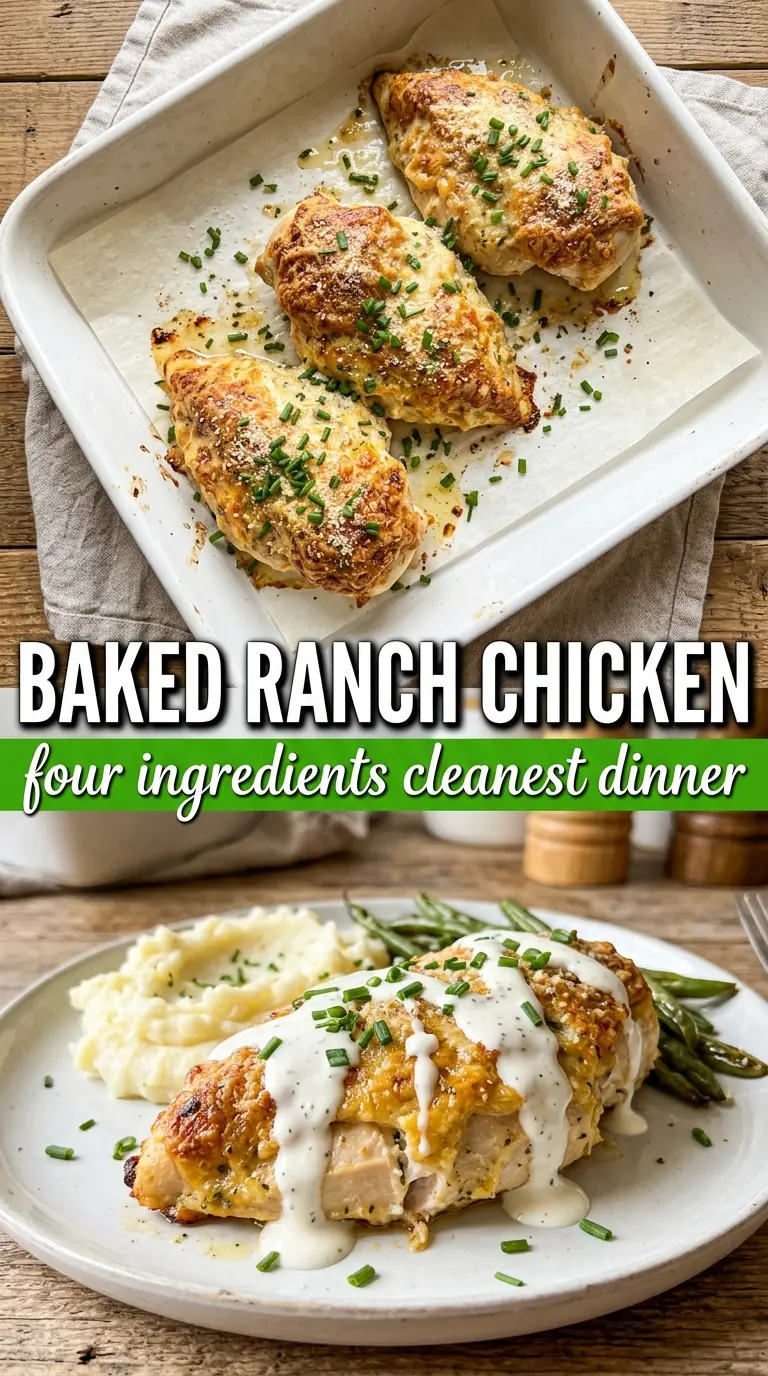
- Boneless skinless chicken breasts — They’re the blank canvas here, but they need even thickness so the coating bakes through at the same rate. If your breasts are especially large, split them horizontally or pound them to a steadier shape.
- Mayonnaise — This is what keeps the topping attached and the chicken juicy. Sour cream can work in a pinch, but it won’t brown the same way and the crust won’t be quite as rich.
- Ranch seasoning mix — This gives you the herb, onion, garlic, and tangy base in one packet. Homemade ranch seasoning works too if you have it, but use one that’s salt-forward enough to stand up to the chicken and cheese.
- Freshly grated Parmesan — Fresh grating matters because it melts and browns into the crust instead of staying dusty and dry. The pre-shredded kind can work, but it usually won’t give you the same clean crunch.
- Panko breadcrumbs — Panko is what makes the top crackle. If you only have standard breadcrumbs, the texture will be tighter and less airy, so the crust won’t feel as crisp.
- Garlic powder and smoked paprika — These deepen the topping so it tastes roasted instead of just salty. The paprika adds color as well as a subtle smoky edge that plays well with the ranch.
How to Build the Coating So the Top Browns and the Chicken Stays Juicy
Set Up the Pan First
Preheat the oven to 400°F and grease the baking dish before you touch the chicken. The oven needs to be fully hot when the dish goes in, or the coating sits too long before it starts to set. A lightly greased dish also keeps the bottom from sticking while still letting the chicken sit in direct contact with the heat. That contact helps the underside cook through without steaming.
Season the Chicken, Then Add the Binder
Lay the chicken breasts in a single layer and season them lightly with salt and pepper. The ranch seasoning and Parmesan bring plenty of salt, so this first layer should stay restrained. Mix the mayonnaise and ranch seasoning until smooth, then spread it over the top of each breast in a thick, even layer. If the coating looks streaky or thin, the crumbs won’t have enough to grip.
Press on the Crust, Don’t Sprinkle It
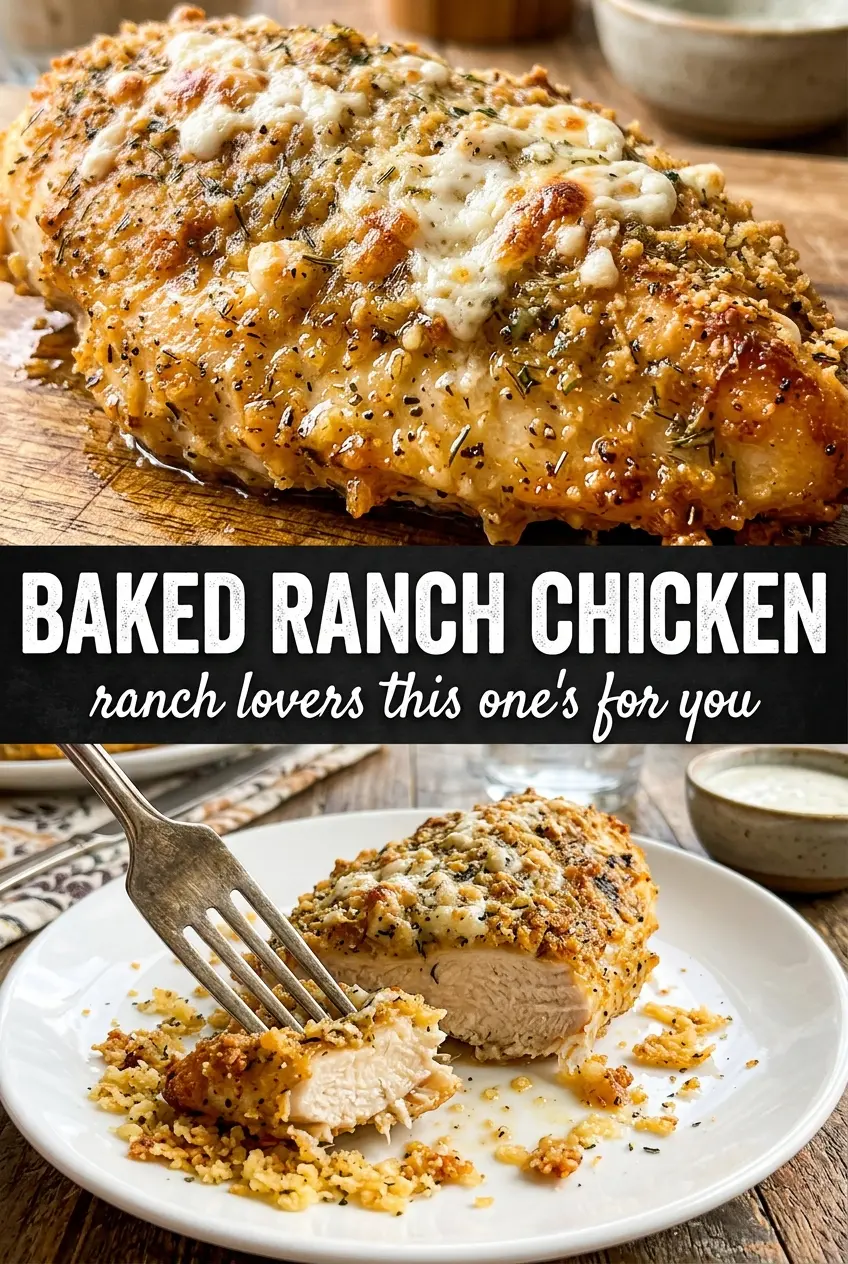
Mix the Parmesan, panko, garlic powder, and smoked paprika in a separate bowl, then press that mixture onto the mayonnaise layer. Pressing matters. If you just scatter it on top, it bakes loose and falls off when you slice the chicken. You want a packed crust that looks rough and craggy before it goes into the oven.
Bake Until the Top Is Deeply Bronzed
Bake for 22 to 25 minutes, depending on the thickness of the chicken breasts. The crust should turn a deep golden color and look crisp at the edges, while the chicken reaches 165°F in the center. If the topping is browning too fast before the chicken is done, move the dish one rack lower in the oven rather than dropping the temperature. Finish with chives or parsley and serve it right away so the crust stays at its best.
Three Ways to Make This Ranch Chicken Fit What You’ve Got
Gluten-Free Crust
Swap the panko for certified gluten-free breadcrumbs or crushed gluten-free crackers. You’ll still get a crisp top, though the texture may be a little denser and more sandy than classic panko. Keep the topping layer thin and even so it bakes cleanly instead of clumping.
Dairy-Free Version
Use a dairy-free mayo and swap the Parmesan for a dairy-free Parmesan-style topping or finely ground seasoned breadcrumbs. The flavor will be less sharp and nutty, but the ranch seasoning still carries the dish. Watch the salt level closely, since some dairy-free cheese substitutes are already heavily seasoned.
Chicken Thighs Instead of Breasts
Boneless skinless thighs work well if you want a juicier result with a little more richness. They usually need a few extra minutes in the oven, and the coating can brown a little faster because of the higher fat content. Check them with a thermometer so the crust doesn’t overbake while you’re waiting for the center to finish.
Extra Herb Finish
If you want a fresher finish, add chopped parsley or chives right after baking and serve with lemon wedges. The acid lifts the richness of the mayonnaise and Parmesan without changing the crust itself. This is the easiest way to make the dish taste brighter without touching the core recipe.
Storage and Reheating
- Refrigerator: Store leftovers in an airtight container for up to 3 days. The crust softens a bit, but the flavor holds well.
- Freezer: It freezes, though the topping won’t stay crisp. Wrap portions tightly and freeze for up to 2 months, then thaw overnight in the fridge before reheating.
- Reheating: Reheat in a 350°F oven or air fryer until warmed through. The microwave will make the crust limp, which is the most common mistake with this dish.
Answers to the Questions Worth Asking
Baked Ranch Chicken
Ingredients
Equipment
Method
- Preheat the oven to 400°F and grease a baking dish so the chicken releases easily and browns well.
- Season the chicken lightly with salt and pepper, then place the breasts in the prepared dish in a single layer.
- Mix the mayonnaise with the ranch seasoning until combined, then spread generously over the top of each chicken breast so it fully coats the surface.
- Combine the Parmesan, panko breadcrumbs, garlic powder, and smoked paprika, then press the mixture over the mayonnaise-coated chicken to create an even crunchy layer.
- Bake for 22-25 minutes at 400°F until the crust is golden and bronzed and the topping looks crackled.
- Check that the internal temperature reaches 165°F, using the thickest part of a breast as the guide for doneness.
- Garnish with fresh chives or parsley and serve immediately for best crunch.