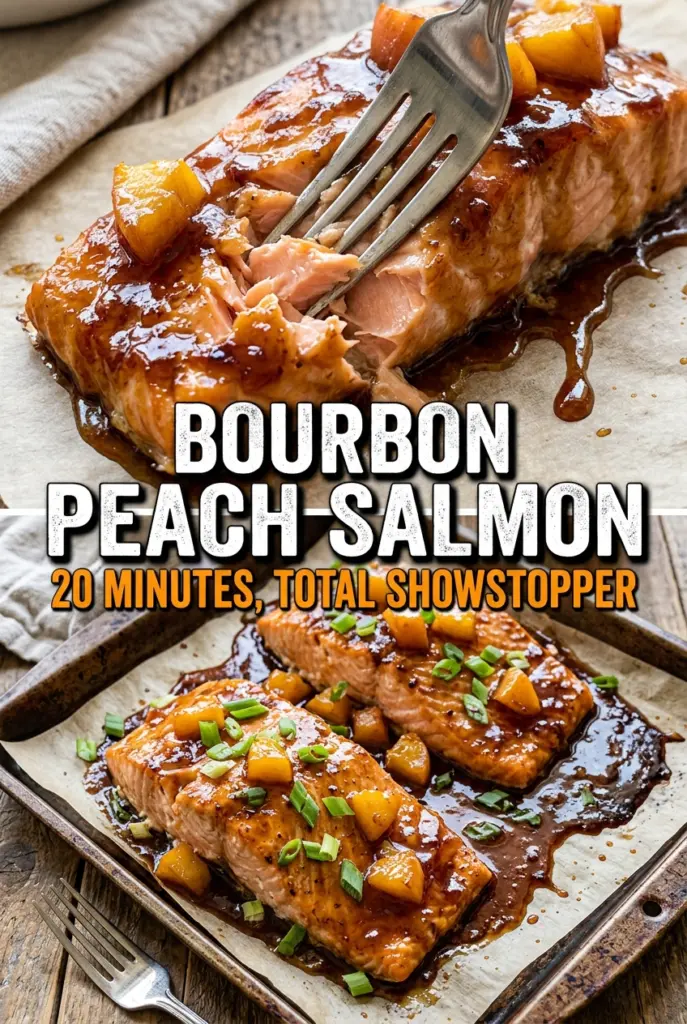
Bourbon peach salmon lands on the plate with a glossy, sweet-savory glaze that clings to the fish instead of sliding off, and that matters more than people think. The salmon stays plush in the center while the surface caramelizes into something sticky, golden, and a little smoky from the bourbon. Fresh peach gives the glaze a round, bright fruitiness that keeps the whole dish from tasting heavy.
The trick is building the glaze until it’s reduced enough to coat a spoon before it ever touches the salmon. A thinner sauce will pool in the pan, while a properly simmered glaze turns lacquer-like as it hits the heat of the fish and oven. Marinating the salmon in part of the glaze adds flavor, but the real payoff comes from brushing on the reserved glaze near the end so it cooks onto the surface instead of burning in the skillet.
Below, you’ll find the small details that keep the glaze smooth, the salmon moist, and the final finish glossy. I’ve also included a few smart swaps and the storage notes you’ll want if you end up with leftovers.
The glaze reduced down beautifully and stayed on the salmon instead of running all over the pan. I was nervous about the bourbon, but it mellowed out and left this gorgeous caramelized finish.
Save this bourbon peach salmon for the night you want a sticky peach glaze and perfectly seared salmon in one skillet.
The Part That Keeps the Glaze From Turning Thin and Sticky in the Wrong Way
The biggest mistake with a peach glaze is stopping too early. Fruit puree starts watery, bourbon adds even more liquid, and honey can’t save a sauce that hasn’t reduced enough. You want a glaze that looks glossy and slightly syrupy in the pan before it ever goes near the salmon, because that thickness is what helps it cling during the final bake.
Marinating the fish in half the glaze gives the salmon a head start, but don’t leave it in much longer than 30 minutes. Peach puree is acidic enough to start softening the surface if it sits too long, and salmon doesn’t need a long soak to pick up flavor. Save the reserved glaze for brushing on after the sear; that keeps the sugars from scorching in the skillet and gives you the best lacquered finish.
What Each Ingredient Is Actually Doing in This Dish
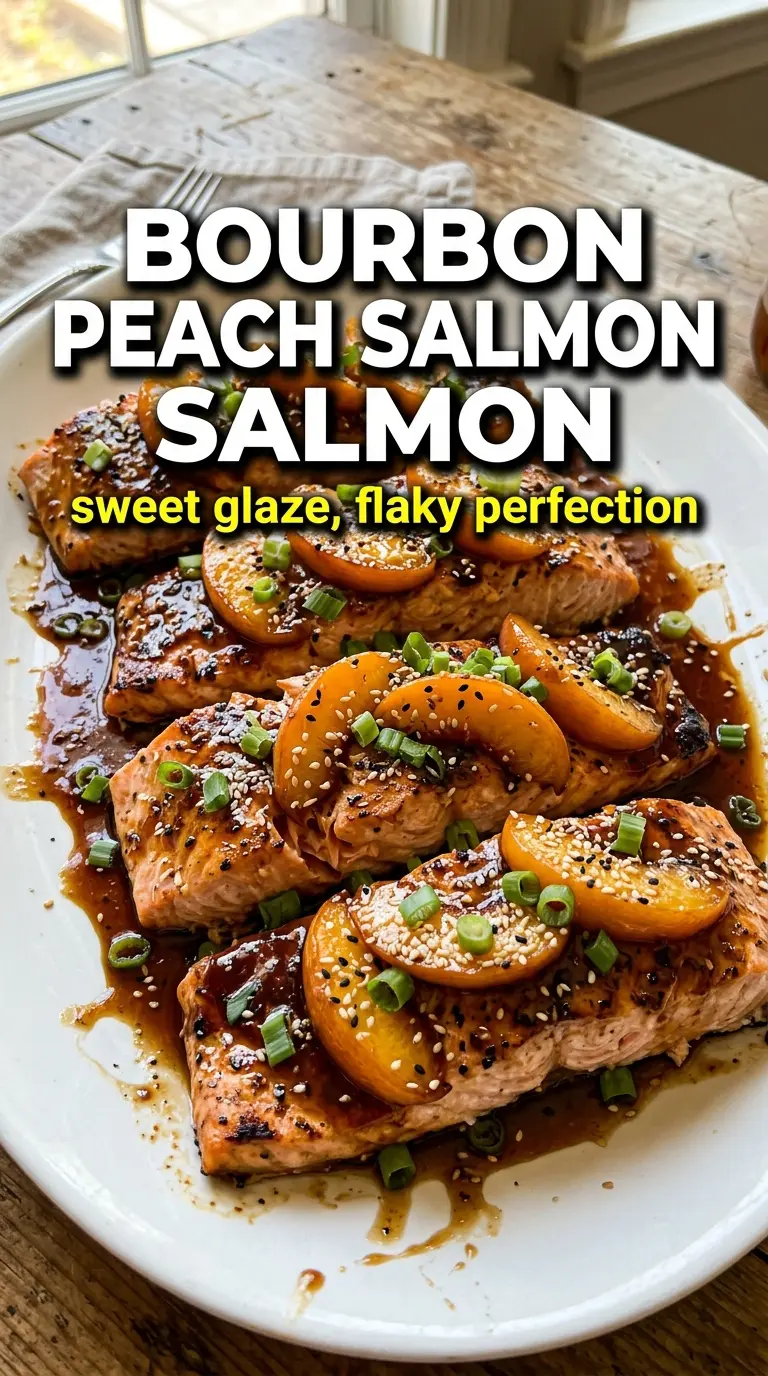
- Salmon fillets — Skin-on fillets hold together better in the skillet and finish with a cleaner sear. If you use skinless salmon, handle it gently and shorten the stovetop time because it will cook faster and is easier to overdo.
- Ripe peaches — Fresh, ripe peaches make the glaze taste bright and round instead of canned and flat. If the peaches aren’t sweet enough, the sauce tastes sharp; if they’re overripe, puree them and strain if needed for a smoother glaze.
- Bourbon — This adds depth and a warm edge that makes the peach taste more complex, not boozy. Let it simmer long enough for the alcohol to cook off and the flavor to mellow before it touches the fish.
- Honey and brown sugar — These two ingredients help the glaze thicken and caramelize on the salmon. Honey gives shine, while brown sugar adds that deeper caramel note you’d miss if you used only one sweetener.
- Soy sauce, garlic, and ginger — Soy sauce balances the sweetness, garlic adds savory backbone, and ginger keeps the glaze from tasting one-note. If you need a gluten-free version, use tamari in place of soy sauce and keep everything else the same.
Searing First, Baking Second, and Why That Order Matters
Reducing the Peach Bourbon Glaze
Set the saucepan over medium heat and simmer the peach puree, bourbon, honey, soy sauce, brown sugar, garlic, and ginger until the mixture thickens and the bubbles slow down a little. You’re looking for a glaze that coats the back of a spoon and leaves a clear trail when you drag your finger through it. If it still looks loose and watery, keep cooking; if you rush this part, the glaze slides off the salmon instead of clinging.
Marinating Without Softening the Fish Too Much
Season the salmon with salt and pepper, then let it sit in half the glaze for 30 minutes in the refrigerator. That’s long enough for the surface to pick up flavor but short enough to keep the texture firm. Pull the salmon out and let excess glaze drip off before it hits the pan, because too much marinade can steam the fish and slow down browning.
Getting the Sear Before the Oven Finish
Heat the olive oil in an oven-safe skillet over medium-high heat until it shimmers, then place the salmon skin-side up for the first sear. This lets the flesh side build a light crust before the flip, which helps the fish hold together when you turn it. If the skillet isn’t hot enough, the salmon sticks and the glaze won’t caramelize properly; if it’s smoking hard, lower the heat so the sugars don’t scorch.
Finishing with the Reserved Glaze
After you flip the salmon, brush on the remaining glaze and move the skillet to the oven. The glaze should darken a shade or two and turn glossy while the salmon finishes to just opaque in the center. Start checking a minute or two early if your fillets are thinner, because salmon can go from silky to dry fast once it gets past that tender middle.
Make It a Little Spicier
Add a pinch of red pepper flakes or a small spoonful of minced fresh chili to the glaze. The heat cuts through the sweetness and makes the bourbon taste deeper without changing the texture of the sauce.
Gluten-Free Version
Swap the soy sauce for tamari or coconut aminos. Tamari gives the closest savory balance, while coconut aminos will taste a little sweeter and softer, so you may want to add a small extra splash of salt.
Dairy-Free and Naturally Light
This recipe is already dairy-free, and that’s part of why the glaze stays clean and bright instead of heavy. Serve it with rice, roasted potatoes, or a simple green vegetable so the sauce has something neutral to soak into.
Using Frozen Peaches
Frozen peaches work if fresh ones aren’t in season. Thaw them first and puree off any extra liquid, or the glaze may need a few extra minutes to reduce to the right consistency.
Storage and Reheating
- Refrigerator: Store leftovers in an airtight container for up to 2 days. The glaze will thicken as it chills, and the salmon will firm up a bit.
- Freezer: I don’t recommend freezing the cooked salmon with glaze, since the texture gets dry and the sauce can turn grainy after thawing.
- Reheating: Warm gently in a covered skillet over low heat with a splash of water, or use a 275F oven until just heated through. High heat is the mistake here; it overcooks the fish before the glaze loosens back up.
Questions I Get Asked About This Recipe
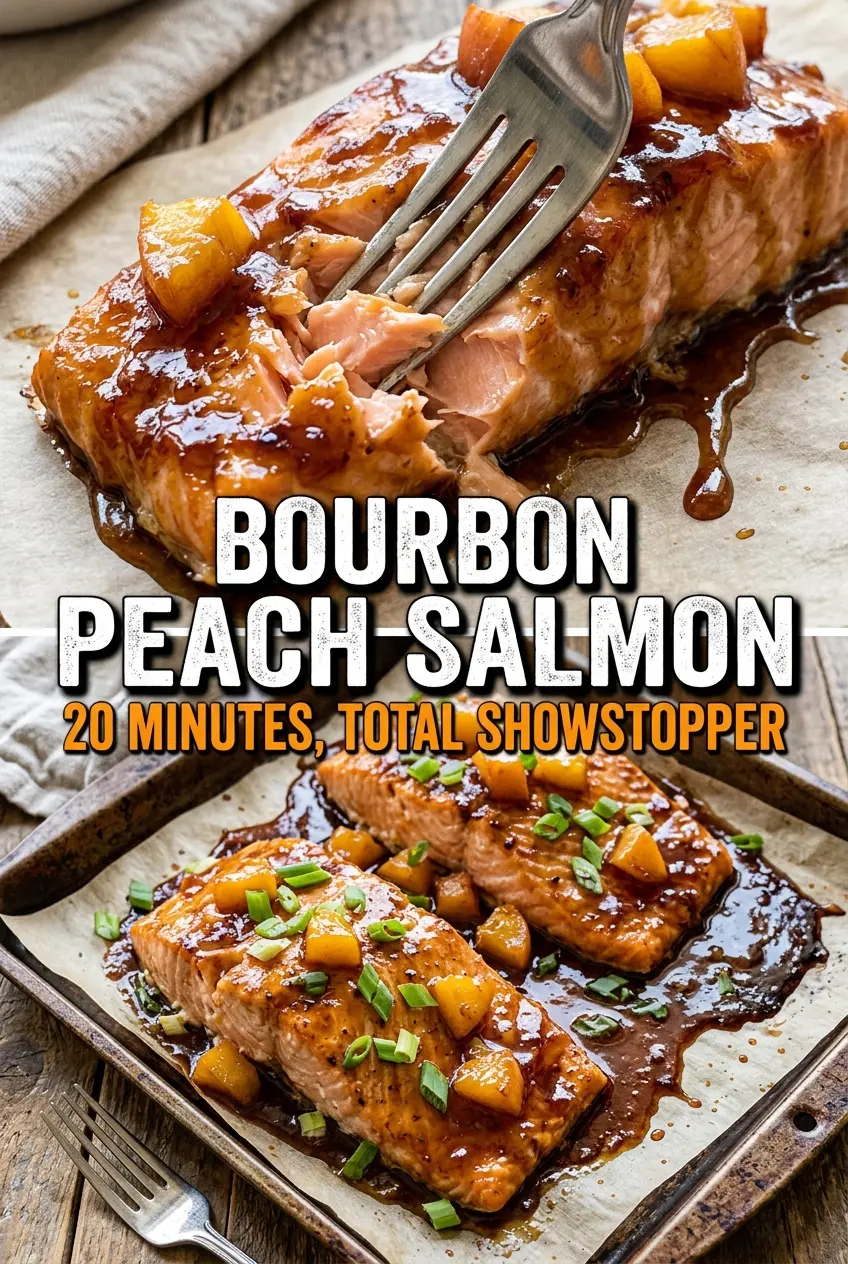
Bourbon Peach Salmon
Ingredients
Equipment
Method
- Combine peach puree, bourbon, honey, soy sauce, brown sugar, garlic, and ginger in a saucepan over medium heat, stirring until fully blended and glossy-looking. Simmer for 5-8 minutes, until thick enough to lightly coat a spoon, and then remove from heat.
- Season the salmon fillets with salt and pepper, then place them in a bowl or dish and pour on half the glaze so the surface is covered. Refrigerate for 30 minutes so the glaze starts to cling to the fish.
- Heat the olive oil in an oven-safe skillet over medium-high heat until shimmering, indicating it’s hot enough for searing. Lay the salmon in skin-side up and sear for 3-4 minutes until the skin is golden.
- Flip the salmon and immediately cook briefly, then brush generously with the remaining glaze so the surface lacquer shines as it hits the pan.
- Transfer the skillet to a 400°F oven and bake for 8-10 minutes until the salmon is cooked through and the glaze looks caramelized and darker at the edges.
- Plate the salmon and drizzle extra warm bourbon peach glaze over the top, letting it run slightly into the golden edges for a glossy finish.