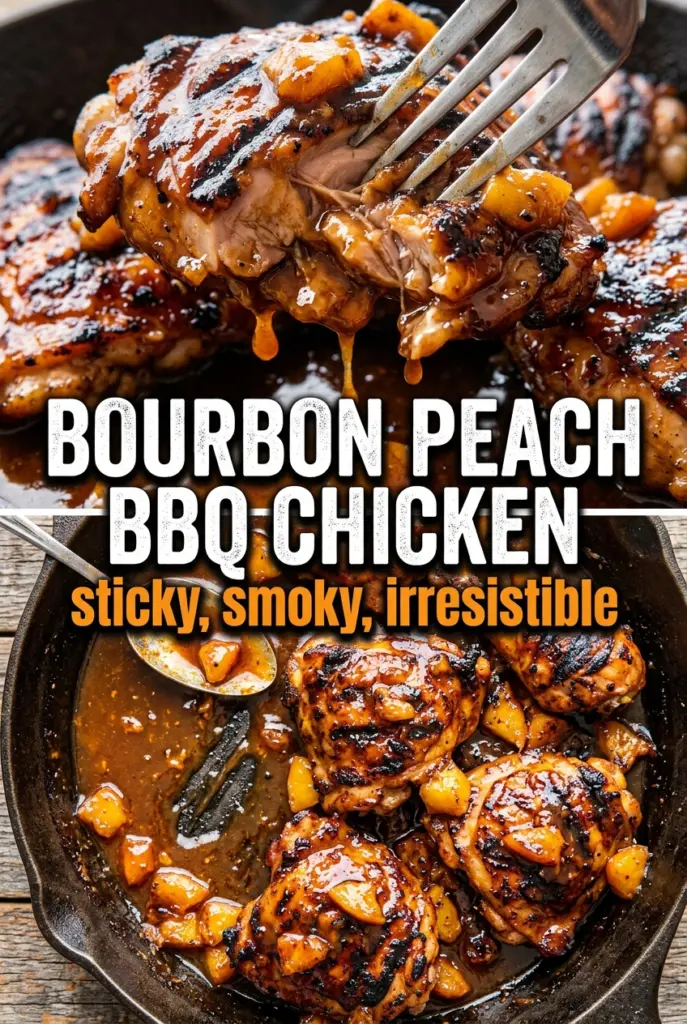
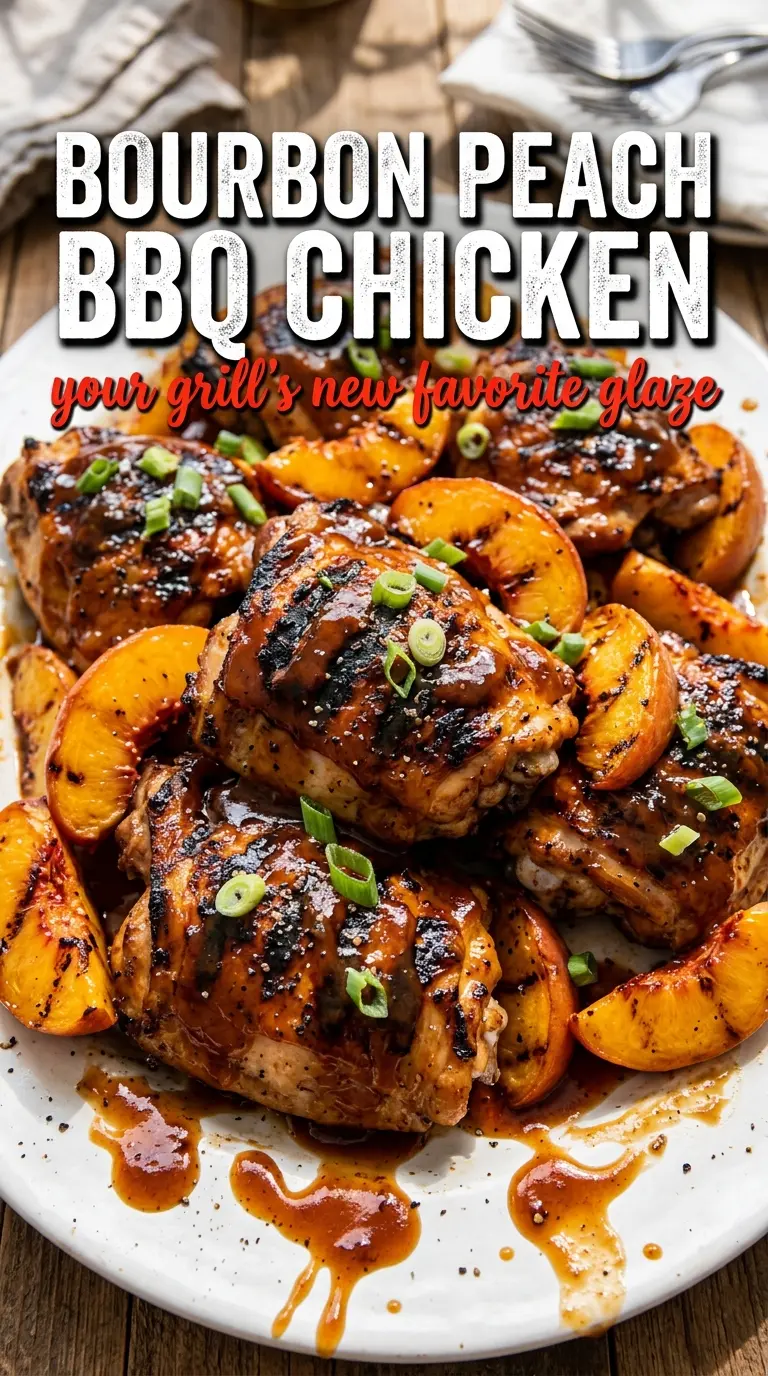
Charred chicken thighs with a bourbon-peach glaze hit that sweet spot between sticky, smoky, and bright. The sauce clings to the skin, turns glossy over the heat, and picks up just enough caramelized edge on the grill to taste like it spent hours working for you, even though the whole thing comes together fast.
What makes this version worth keeping is the way the peaches are cooked down before blending. That step gives the sauce body and a natural fruit sweetness that balances the bourbon and vinegar, instead of leaving you with a thin barbecue sauce that slides right off the chicken. Marinating the chicken in a portion of the sauce also seasons it from the inside, so every bite tastes like more than just the glaze on top.
Below, I’ve included the part that matters most: how to get the sauce thick enough to baste without burning, plus the small grill cues that tell you when the chicken is ready for the final coat.
The glaze thickened up beautifully and didn’t run off the chicken once it hit the grill. I followed the timing exactly, and the skin got that sticky, caramelized finish without burning.
Save this bourbon peach BBQ chicken for the nights when you want sticky grilled thighs with a smoky peach glaze and almost no cleanup.
The Reason This Glaze Sticks Instead of Sliding Off
The difference here is thickness before the chicken ever hits the grill. A sauce made from peaches, ketchup, bourbon, and brown sugar can taste great in the pan and still fail on the grill if it’s left loose, because thin glaze burns before it has time to lacquer the chicken. Reducing it until the peaches break down, then blending and cooking it a little longer, gives you a sauce that coats the back of a spoon and clings in a thin, even layer.
Marinating the chicken in part of that sauce does two jobs. It seasons the meat and gives the surface a head start on flavor, but it also means you’re not putting every drop of your finished sauce in contact with raw chicken. That keeps the reserved sauce clean for basting at the end, where the sugars can caramelize without any food-safety worries.
- Bone-in, skin-on chicken thighs — These hold up to the grill better than breasts and stay juicy while the glaze caramelizes. Boneless pieces cook faster, but they dry out sooner and don’t give you the same crisp, browned skin.
- Ripe peaches — Use peaches that smell fragrant and give a little when pressed. If they’re under-ripe, the sauce tastes flat and needs more sugar to compensate.
- Bourbon — Bourbon gives the sauce warmth and depth. A splash of whiskey can stand in, but skip anything too harsh or smoky unless you want that flavor to take over.
- Apple cider vinegar — This keeps the sauce from turning sugary and heavy. If you swap in white vinegar, use a little less because it’s sharper.
What Each Ingredient Is Actually Doing in This Recipe
- Primary ingredient (the star) — Quality matters most. Choose the best you can find.
- Cooking medium (oil, butter, or broth) — This carries flavors and prevents dryness.
- Seasonings (salt, pepper, spices, herbs) — Layer flavors so nothing overpowers. Build depth gradually.
- Aromatics (garlic, onion, herbs) — Cook with fat to bloom flavors. Become the foundation.
- Supporting ingredients — Complement the main ingredient without overpowering it.
- Sauce or liquid (if applicable) — Brings flavors together. Balance richness with acid.
- Acid (lemon, vinegar, wine, or other) — Brightens and prevents flat-tasting results.
- Final finish (garnish, glaze, or sauce) — Prevents one-dimensional taste and adds visual appeal.
Building the Peach Bourbon Sauce Without Burning the Sugar
Cook the Peaches Until They Collapse
Combine the peaches, bourbon, ketchup, brown sugar, vinegar, Worcestershire, garlic, smoked paprika, and cayenne in a saucepan over medium heat. Let it simmer for about 15 minutes, stirring now and then, until the peaches lose their shape and the sauce looks glossy and slightly foamy around the edges. If the heat is too high, the sugar catches on the bottom before the peaches soften, and that burnt note will carry through the whole batch.
Blend for Body, Then Thicken Again
Once the peaches have broken down, blend the sauce until smooth. Put it back on the heat and simmer for another 5 minutes, just until it feels thicker and more velvety. You’re not looking for paste, but you do want enough body that it drips slowly from a spoon instead of running like juice. That’s the point where it will glaze the chicken instead of disappearing into the grill grates.
Marinate, Grill, and Save the Clean Sauce for Basting
Season the chicken with salt and pepper, then marinate it in half a cup of the sauce for 30 minutes. Keep the rest separate for basting later. Grill over medium-high heat for 20 to 25 minutes, turning occasionally, until the chicken reaches 165°F in the thickest part. In the last 5 minutes, brush on the reserved sauce in a few thin layers. If you start too early, the sugars darken before the chicken is cooked through, which is how you end up with a bitter glaze and pale meat.
Let the Glaze Set Before Serving
Rest the chicken for 5 minutes after it comes off the grill. That short rest lets the juices settle back into the meat and gives the glaze a moment to firm up on the skin. If you slice too soon, the sauce runs all over the plate and the meat loses the texture you worked for.
How to Adapt This for Different Grills, Heat Levels, and Diet Needs
Use Chicken Breasts Instead of Thighs
Breasts work, but they need gentler heat and a shorter cook time. Grill them until just cooked through, then glaze at the very end so the lean meat doesn’t dry out before the sauce sets. You’ll lose a little richness, but the peach-bourbon glaze still carries the dish.
Make It Gluten-Free
Use a gluten-free Worcestershire sauce and check your ketchup label. The rest of the recipe is naturally gluten-free, so this swap is mostly about choosing the right bottle. The flavor stays the same, and the sauce still reduces into that sticky, lacquered finish.
Dial Back the Heat
Skip the cayenne or cut it to a pinch if you want the peach flavor to stay front and center. The sauce will be sweeter and rounder, with less back-of-the-throat heat. I like the original amount because it keeps the glaze from tasting like dessert, but this version is easy to soften.
Storage and Reheating
- Refrigerator: Store leftovers in an airtight container for up to 4 days. The glaze will thicken as it chills.
- Freezer: The cooked chicken freezes well for up to 2 months, though the skin won’t stay crisp. Freeze with a little extra sauce in a separate container if you can.
- Reheating: Warm covered in a 325°F oven until heated through, or reheat gently in a skillet with a splash of water or extra sauce. High heat dries out the chicken and turns the glaze tacky in the wrong way.
Questions I Get Asked About This Recipe
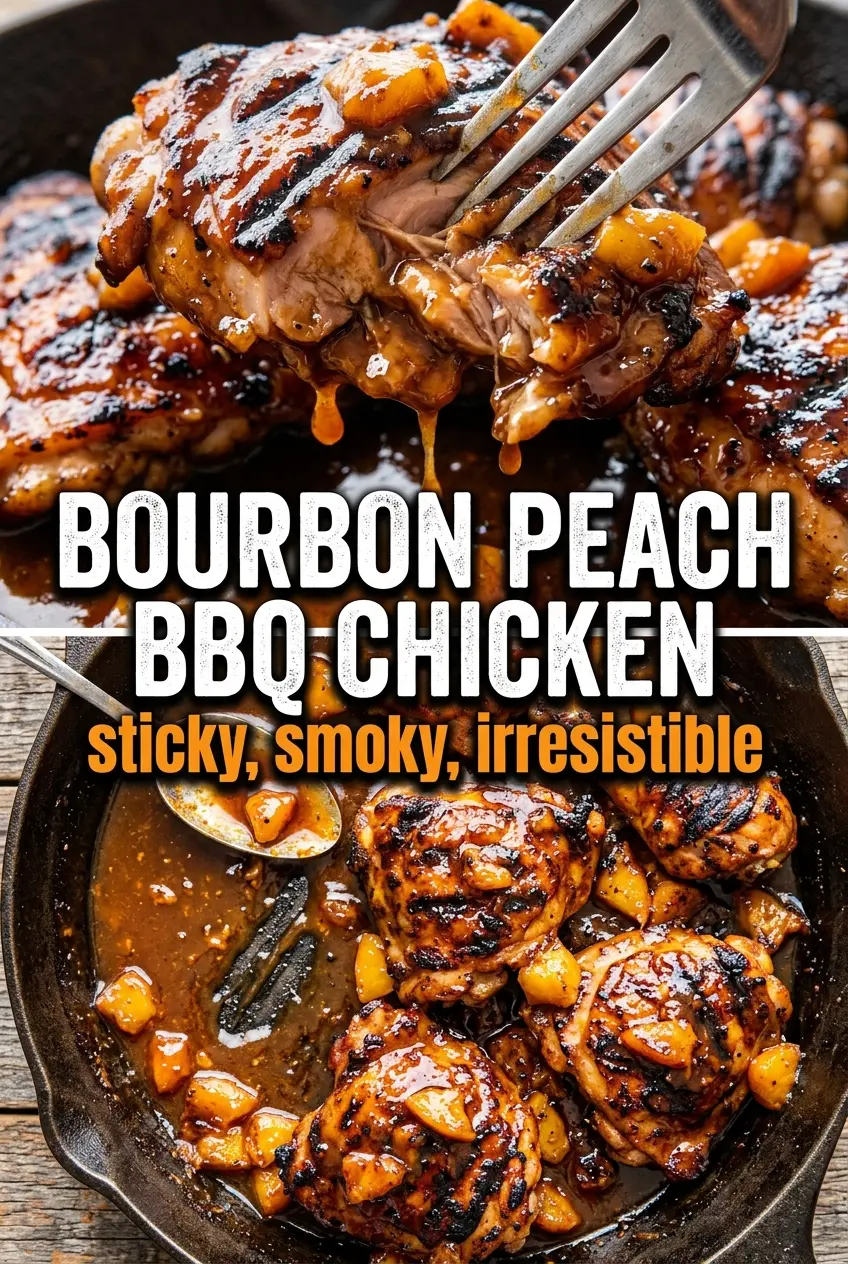
Bourbon Peach BBQ Chicken
Ingredients
Equipment
Method
- Combine peaches, bourbon, ketchup, brown sugar, apple cider vinegar, Worcestershire sauce, garlic, smoked paprika, and cayenne in a saucepan over medium heat. Simmer for 15 minutes, stirring occasionally, until the peaches break down and the mixture looks thickened.
- Blend the sauce until smooth, then return it to the saucepan and simmer for 5 more minutes. The sauce should look glossy and noticeably thicker with a spoon-coating texture.
- Season the chicken thighs with salt and pepper. Make sure both sides are evenly coated for balanced flavor.
- Marinate the chicken in 1/2 cup of the bourbon peach BBQ sauce for 30 minutes. Cover and let it rest so the sauce clings and deepens the color.
- Preheat the grill to medium-high heat. Wait until the grates are hot enough to produce immediate grill marks.
- Grill the marinated chicken for 20-25 minutes, turning occasionally, until cooked through to 165F internal temperature. Look for browned, charred edges and crisping skin as it cooks.
- Baste generously with the remaining bourbon peach sauce during the last 5 minutes of cooking. Keep basting so the glaze caramelizes and forms a thick, glossy coating.
- Rest the chicken for 5 minutes before serving. Spoon extra sauce on the side so it stays glossy and the juices settle.