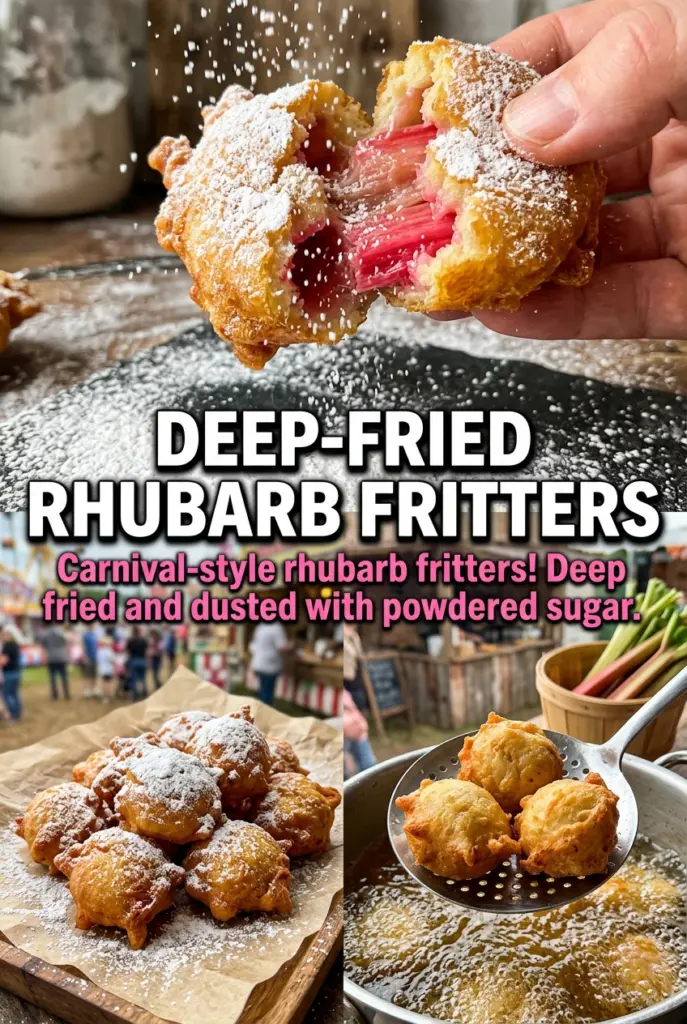
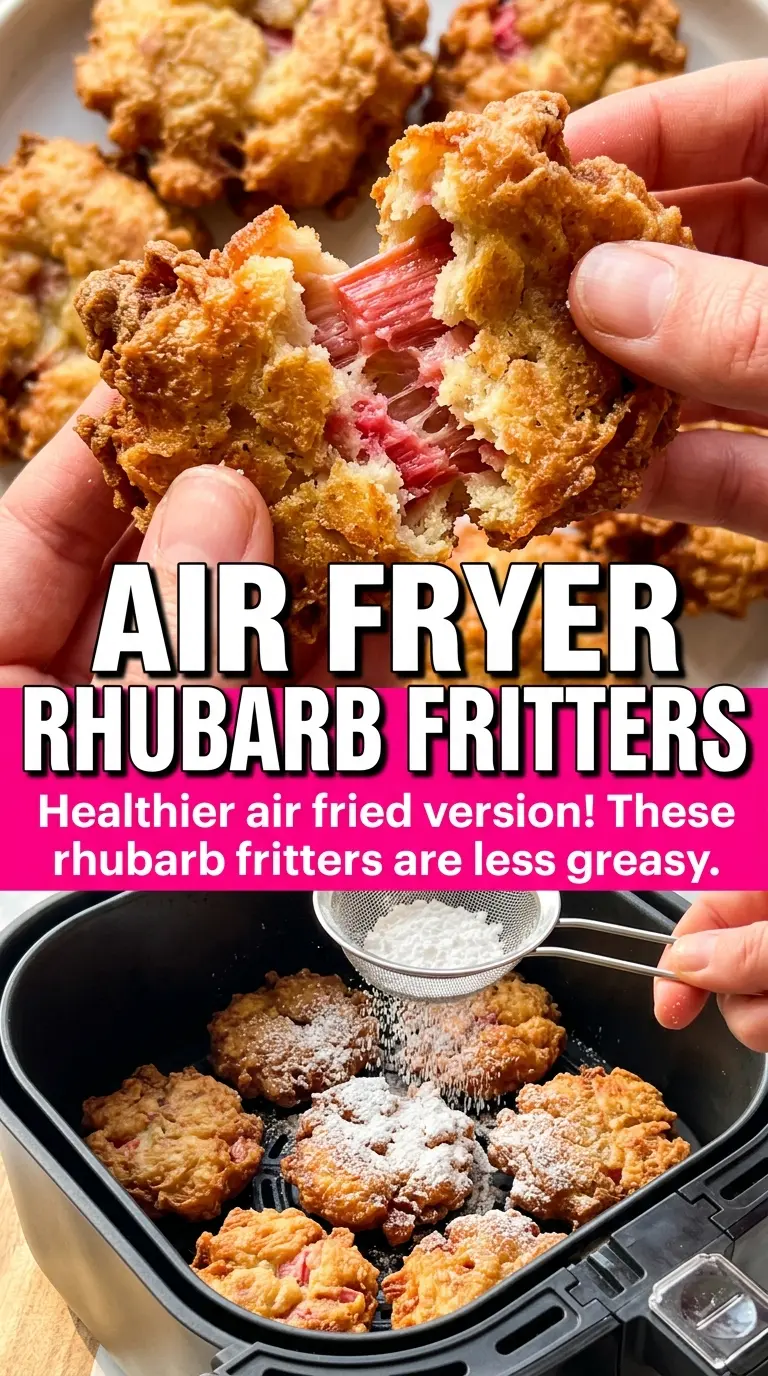
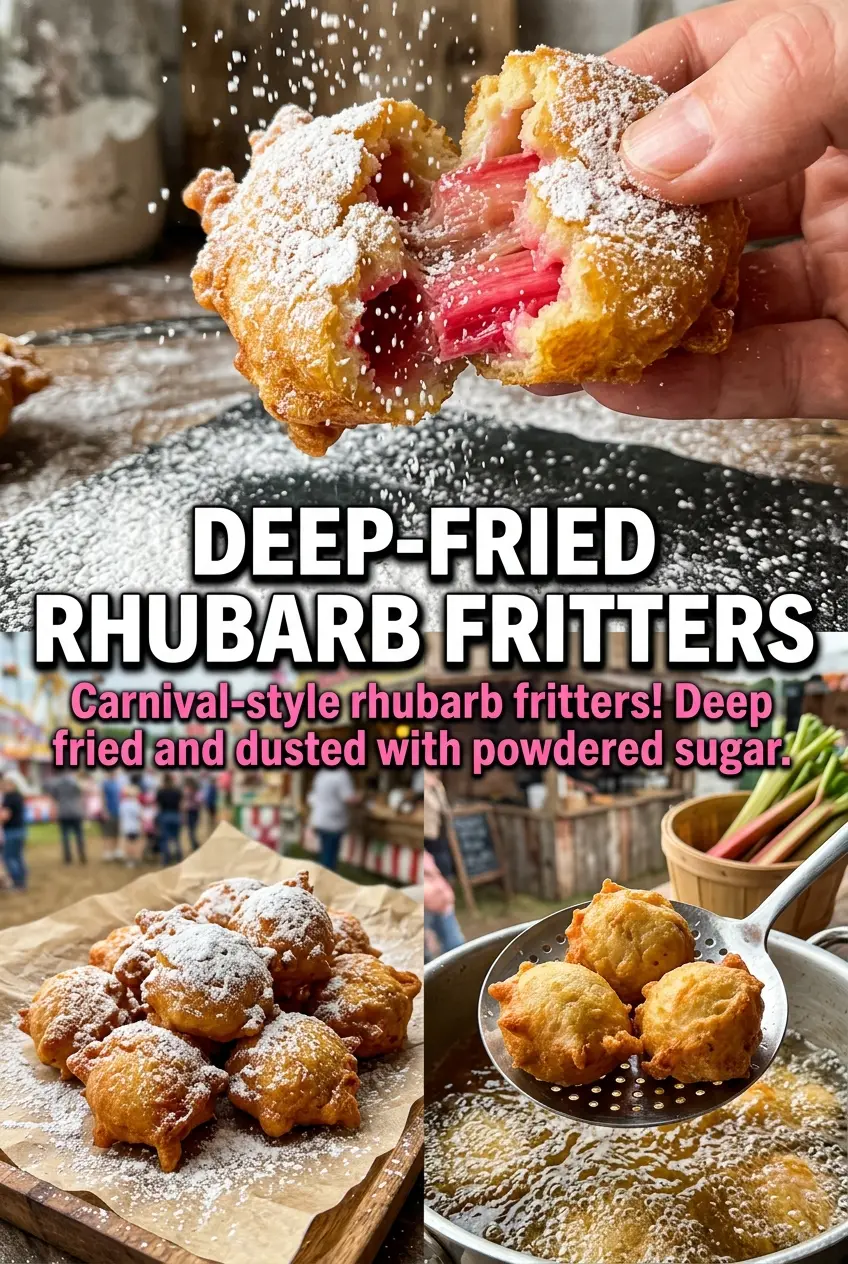
Crispy on the outside, tender in the middle, and dotted with tart little bits of rhubarb, these fritters land somewhere between breakfast treat and dessert in the best possible way. The cinnamon sugar clings to the hot crust, and the rhubarb softens just enough in the fryer to turn sharp and juicy into bright little pockets of flavor. They’re the kind of fritter that disappear while you’re still standing at the stove.
What makes this batch work is the balance. The batter stays thick enough to hold the rhubarb in place, but not so heavy that the fritters turn doughy. Fresh rhubarb is the piece that gives the whole thing its character; once it hits the hot oil, it turns mellow without losing that clean tart edge. A quick fry at the right temperature keeps the outside crisp before the inside can soak up too much oil.
Below, I’ve included the small details that matter here: how to keep the batter from getting tough, how to tell when the oil is ready without guessing, and what to do if your rhubarb is extra juicy. If you’ve ever had fritters come out greasy or flat, the process notes will help fix that.
The fritters browned evenly and stayed crisp for hours, and the little bites of rhubarb were still bright instead of mushy. I followed the oil temperature exactly and they came out perfect.
Crispy rhubarb fritters with cinnamon sugar are the kind you’ll want to eat warm, right after frying, while the crust is still shattering a little under your fingers.
The Oil Temperature Is What Keeps These Fritters Crisp Instead of Greasy
Rhubarb fritters live or die by the heat of the oil. If the oil is too cool, the batter sits there and drinks it up before the outside can set, which leaves you with heavy, blotchy fritters instead of a crisp shell. At 375°F, the batter firms quickly, browns in a controlled way, and gives the rhubarb enough time to soften without turning the whole batch soggy.
The other trap is overcrowding the pot. Even a few extra fritters will drop the oil temperature fast, especially because this batter is fairly cool going in. Fry in small batches and let the oil come back up between rounds. That one habit does more for texture than almost anything else in the recipe.
What Each Ingredient Is Actually Doing in These Rhubarb Fritters
- All-purpose flour — This gives the fritters their structure. Bread flour would make them a little chewy; cake flour would make them too fragile for frying.
- Baking powder — This is what gives the batter lift and keeps the centers from turning dense. Don’t swap it for baking soda unless you also add an acid, which this batter doesn’t need.
- Fresh rhubarb — Fresh is worth using here because it holds its shape and keeps that tart bite. Frozen rhubarb brings extra water, which makes the batter looser and the fritters more likely to spit in the oil.
- Butter and milk — The butter adds richness and helps the crust brown, while the milk loosens the batter just enough to spoon. Whole milk gives the best texture, but 2% works if that’s what you have.
- Cinnamon sugar — Coat the fritters while they’re still hot so the sugar melts onto the surface instead of sliding off. If you wait too long, the crust dries and the coating won’t cling evenly.
Frying the Batter So the Centers Stay Tender
Mix the batter just until it comes together
Whisk the dry ingredients first, then stir in the eggs, milk, and melted butter only until the flour disappears. A few streaks are fine before the rhubarb goes in. If you beat the batter hard, the gluten tightens up and the fritters turn bready instead of light. Fold in the rhubarb at the end so it stays evenly distributed without getting crushed.
Watch for the batter to puff and set in the oil
Drop rounded tablespoons into the hot oil and give them a little space. They should start bubbling immediately and float up as the bottoms set. If they sink and sit there, the oil is not hot enough yet. If they brown too fast before the centers cook through, the heat is too high and needs to come down a notch.
Drain fast, then coat while the crust is still warm
Pull the fritters when they’re deep golden on both sides and transfer them to paper towels for just a moment. The goal is to get rid of excess oil without letting the crust go cold. Toss them in cinnamon sugar right away so the heat softens the sugar just enough to stick. That quick coating is what gives you that bakery-style finish instead of a dry dusting on top.
How to Adapt These Rhubarb Fritters Without Losing the Good Part
Make Them Dairy-Free
Swap the milk for an unsweetened non-dairy milk and use melted dairy-free butter or neutral oil in place of the butter. The fritters will still brown well, though the flavor will be a little less rich and the crumb slightly less tender.
Use Strawberries for a Sweeter Twist
Replace up to half the rhubarb with finely diced strawberries if you want a softer, sweeter fritter. Strawberries release more juice, so keep the pieces small and expect a slightly softer interior.
Make Them Gluten-Free
Use a 1:1 gluten-free all-purpose flour blend that includes xanthan gum. The batter may thicken a little faster than regular flour, so fry a test fritter first and loosen with a splash of milk only if needed.
Storage and Reheating
- Refrigerator: Store leftovers in an airtight container for up to 2 days. The coating softens a bit, but the flavor stays good.
- Freezer: Freeze in a single layer, then transfer to a bag for up to 1 month. They freeze better uncoated, so wait to add cinnamon sugar until after reheating if possible.
- Reheating: Warm in a 375°F oven or air fryer until the crust crisps again. Skip the microwave; it turns the fritters soft and steamy.
Questions I Get Asked About This Recipe
Rhubarb Fritters
Ingredients
Equipment
Method
- Whisk together all-purpose flour, sugar, baking powder, salt, and cinnamon in a mixing bowl until evenly combined and no lumps remain.
- In a second bowl, beat eggs, milk, and melted butter until smooth and glossy.
- Pour the wet ingredients into the dry ingredients and stir until just combined, then fold in fresh rhubarb, finely diced so pieces stay visible.
- Heat 2 inches of vegetable oil in a deep Dutch oven to 375°F, letting it come back to temperature between batches if needed.
- Drop batter by rounded tablespoons into the hot oil and fry for 2-3 minutes per side until deep golden and the fritters look set.
- Drain the rhubarb fritters on paper towels for a moment, then immediately toss in cinnamon sugar while still warm to help it adhere.
- Serve the rhubarb fritters warm for the crispiest texture right after frying.