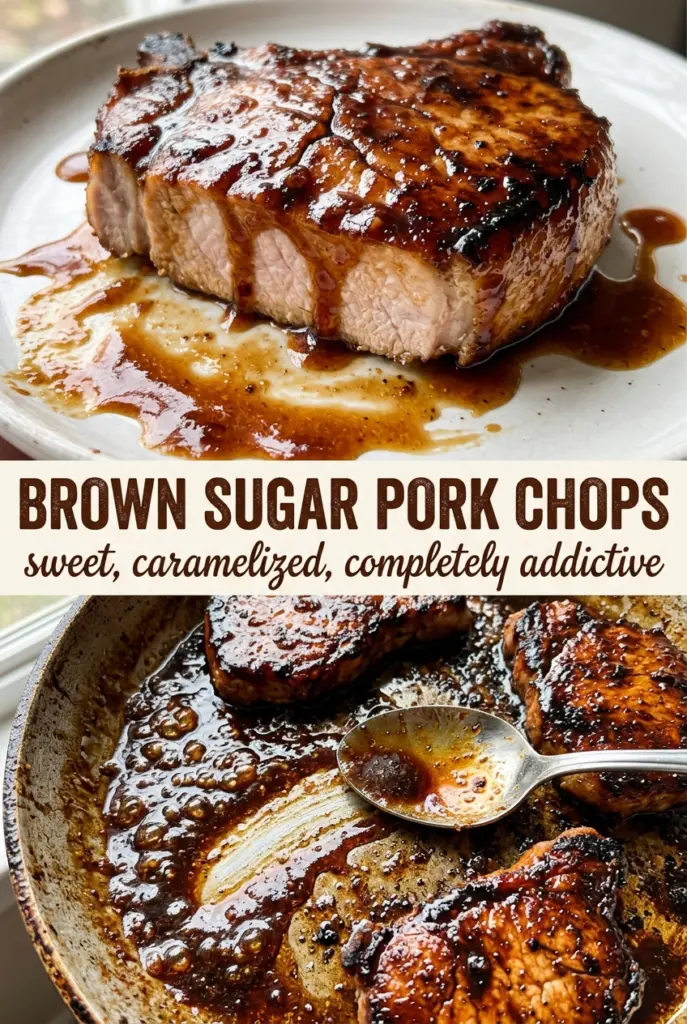
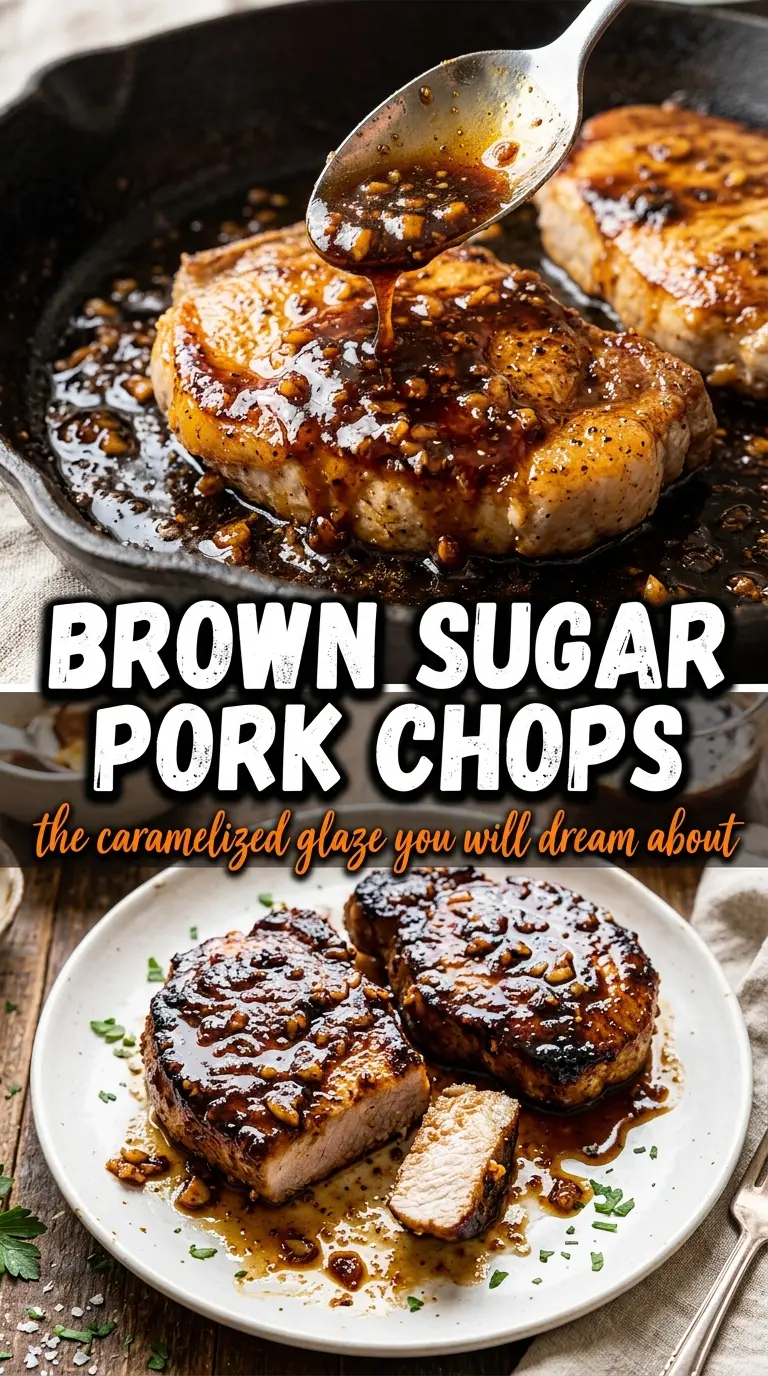
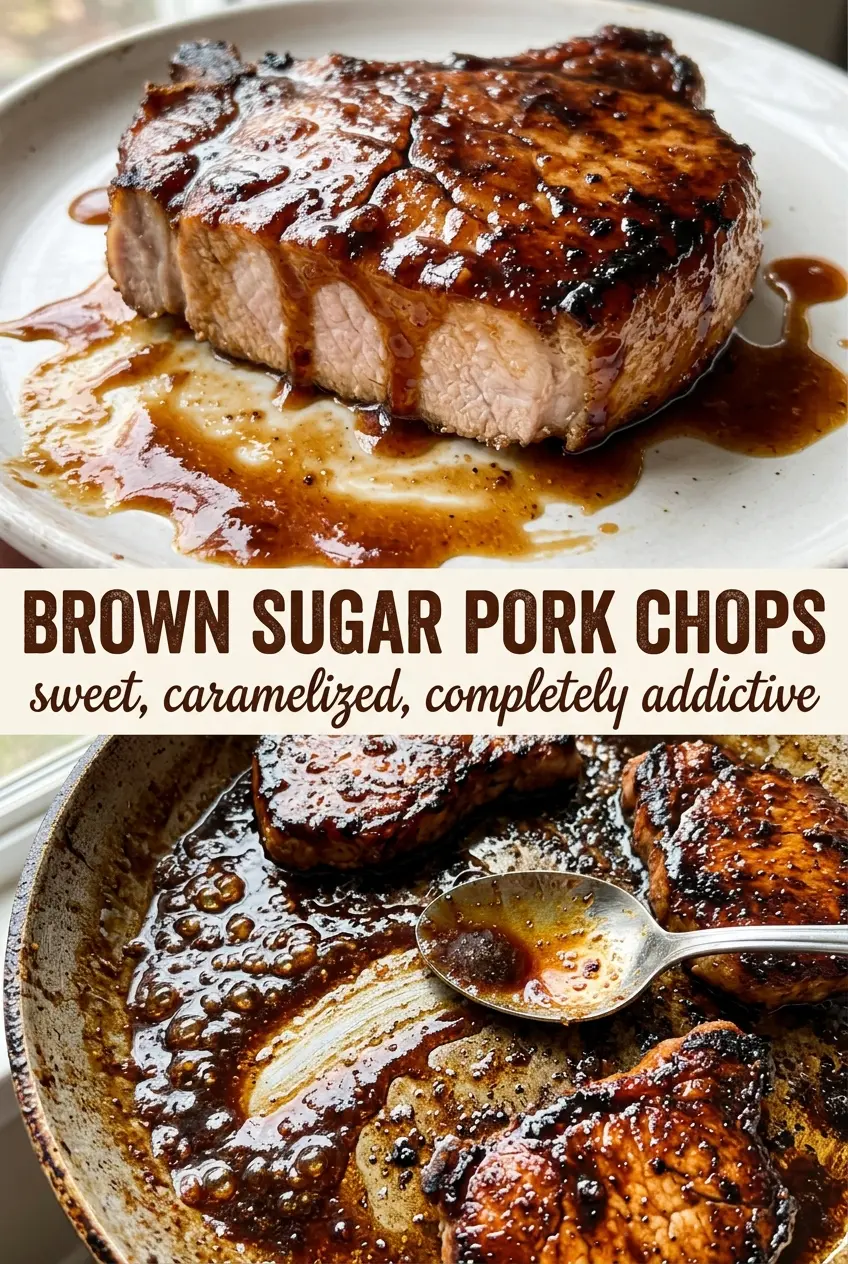
Pork chops with a crackling brown sugar crust hit that sweet-savory line that keeps people coming back for another bite. The outside turns glossy and caramelized in the skillet, while the center stays juicy if you don’t rush the sear or overcook the middle. It’s the kind of dinner that tastes like you put in far more effort than you actually did.
What makes this version work is the balance in the rub. The brown sugar melts into a sticky glaze, the smoked paprika adds depth, and a little cayenne keeps the sweetness from flattening out. Drying the chops first matters more than most people think; moisture on the surface turns the sugar rub into paste instead of giving you that deep caramelized crust.
Below, I’ll walk through the exact timing that gets you a browned crust without drying out the pork, plus the small finishing step that makes the pan sauce worth drizzling over everything.
The brown sugar crust turned out sticky and caramelized, and the pork stayed juicy at 145°F exactly. My husband kept saying the pan sauce was the best part.
These brown sugar pork chops get that sticky caramelized crust you’ll want to make again for a fast skillet dinner.
The Brown Sugar Rub Needs Dry Pork, Not Damp Pork
If the chops go into the pan with moisture on the surface, the sugar melts before it has a chance to caramelize. That’s how you end up with a gray, sticky coating instead of a deep browned crust. Patting the pork dry gives the rub direct contact with the meat and lets the sugar and spices toast in the hot oil instead of steaming.
Thickness matters here too. Boneless chops that are about 1 inch thick give you enough time to build color on the outside without racing past 145°F in the center. Thinner chops can work, but they need a shorter sear and a closer eye, or they’ll dry out before the sugar finishes browning.
- Brown sugar — This is what creates the lacquered crust. Packed sugar gives you the right amount of coverage without the rub falling off in the pan.
- Smoked paprika — It adds a darker, woodsy note that keeps the glaze from tasting flat. Regular paprika works in a pinch, but you lose some depth.
- Cayenne — You only need enough to sharpen the sweetness. If you want a gentler finish, cut it back to a pinch rather than omitting it completely.
- Olive oil and butter — The oil gives you the high-heat sear, then the butter helps the caramelized bits turn into a quick pan sauce for basting. Use the butter at the end so it doesn’t burn before the chops are done.
What Each Ingredient Is Actually Doing in This Pork Dish
- Pork (cut properly for the method) — Pat dry so it browns instead of steams. Even thickness ensures uniform cooking.
- Oil or butter (the browning medium) — High-heat oil essential for proper searing. Creates pan flavor.
- Seasonings (salt, pepper, spices) — Build flavor boldly. Pork carries the entire profile.
- Aromatics (garlic, onion, ginger) — Cook with fat to bloom flavors. Become foundation of dish.
- Sauce or liquid (the moisture keeper) — Keeps lean pork from drying. Balance richness with acid.
- Vegetables (if using) — Layer by cooking time so everything finishes together. Hard vegetables first.
- Acid (vinegar, wine, citrus) — Brightens sauce and prevents heavy flavor. Add near end.
- Proper doneness (145°F, slightly pink center) — Pork is safe at this temp and stays juicy. Higher temps dry it out.
Getting the Crust Without Overcooking the Center
Coat the Chops So the Sugar Sticks Evenly
Mix the rub first so every spice is distributed before it hits the meat. Press it onto both sides of the pork chops instead of dusting it lightly over the top; that contact helps the sugar melt into a real crust. If there are bare patches, those spots will stay pale and won’t pick up the same flavor.
Sear Without Moving the Pan
Heat the oil until it shimmers, then lay the chops in and leave them alone for the first 4 minutes. If you move them too soon, the sugar tears off and sticks to the skillet instead of staying on the meat. You want to hear a steady sizzle and see the edges darken to a deep amber before you flip.
Finish With Butter and a Quick Baste
Once the first side is caramelized, add the butter and flip the chops. Spoon the melted butter over the pork as it finishes cooking, which keeps the surface glossy and helps dissolve the browned bits from the pan. Pull the chops when the internal temperature reaches 145°F, then rest them for 3 minutes so the juices settle back into the meat instead of running out onto the cutting board.
Three Ways to Make These Pork Chops Fit the Night You’re Having
Make Them Less Spicy
Cut the cayenne in half or leave it out if you want the brown sugar to lead the flavor. The chops will still caramelize beautifully, but the finish will lean sweeter and softer instead of having that little kick at the end.
Gluten-Free and Naturally Simple
This recipe is already gluten-free as written, so you don’t need any special swaps. Just check that your smoked paprika and spices are certified if you’re cooking for someone with a serious sensitivity.
Use Bone-In Chops Instead
Bone-in chops work well, but they usually need a few extra minutes on the second side. Keep the heat at medium-high and use the thermometer instead of the clock, since the bone slows down cooking and the sugar can brown faster than the center cooks.
Add a Citrus Finish
The lemon wedges aren’t decoration. A squeeze at the table cuts the sweetness and wakes up the pan juices, which is what keeps the dish from tasting heavy.
Storage and Reheating
- Refrigerator: Store leftovers in an airtight container for up to 3 days. The crust softens a bit, but the flavor stays strong.
- Freezer: These pork chops freeze fairly well for up to 2 months, though the glaze loses some of its crisp edge. Wrap tightly and thaw overnight in the fridge before reheating.
- Reheating: Warm them gently in a covered skillet over low heat with a splash of water or broth. High heat will dry out the pork fast and can scorch the sugar coating before the center is hot.
Answers to the Questions Worth Asking
Brown Sugar Pork Chops
Ingredients
Equipment
Method
- In a small bowl, mix brown sugar, garlic powder, smoked paprika, cayenne, salt, and black pepper.
- Pat pork chops dry, then coat both sides thoroughly with the brown sugar rub.
- Heat olive oil in a cast iron skillet over medium-high heat, then sear the pork chops for 4 minutes without touching until caramelized on the first side.
- Flip the pork chops carefully and sear for 4 minutes while melting brown sugar into a glossy pan sauce.
- Add butter and cook for 1–0 minutes, basting with the caramelized pan sauce until the internal temperature reaches 145°F.
- Rest the pork chops for 3 minutes so the juices settle and the crust stays slightly crackled.
- Serve with lemon wedges and drizzle any pan sauce over the top.