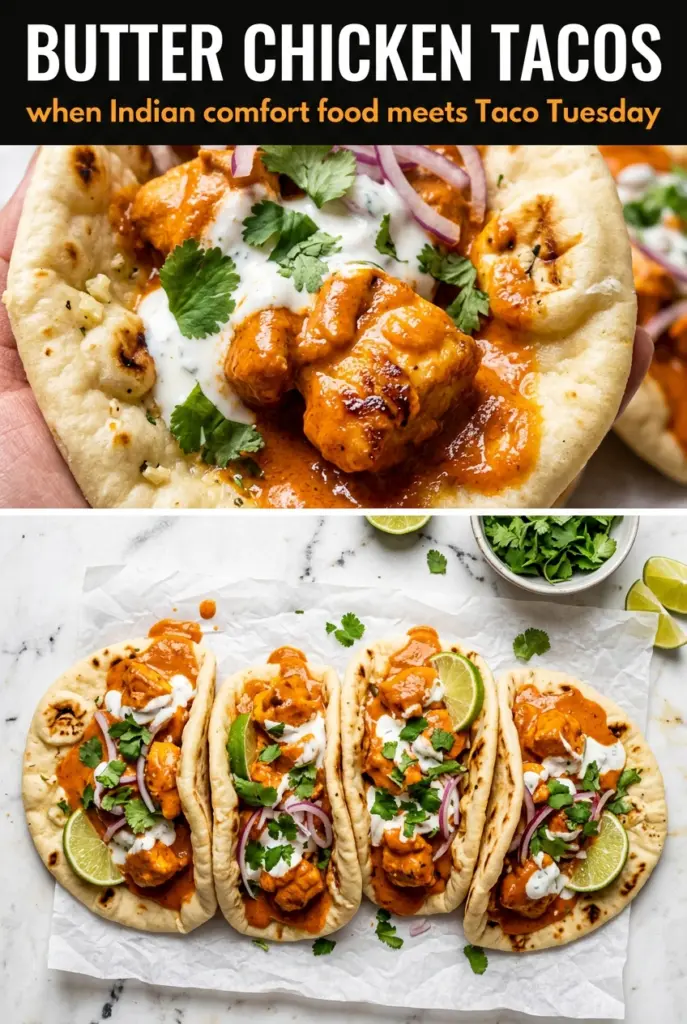
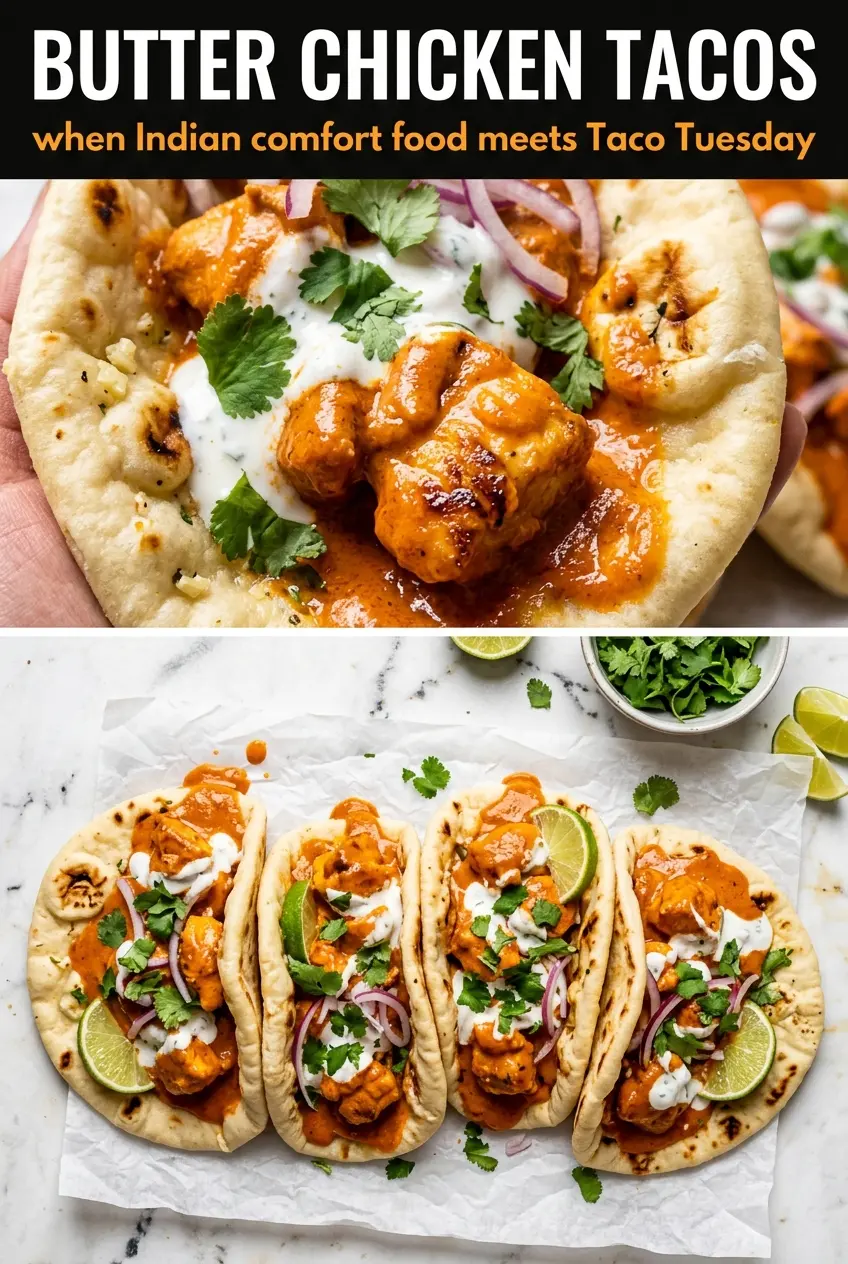
Butter chicken tacos land in that sweet spot where dinner feels a little more exciting without asking for extra work. The chicken stays tender, the sauce turns glossy and creamy, and the warm tortillas catch every bit of the spiced tomato-butter filling. Cilantro and lime cut through the richness, so each bite stays bright instead of heavy.
What makes this version work is the way the sauce builds in layers. The onion, garlic, and ginger cook first, which gives the spices a better base than tossing everything in at once. The tomato paste deepens the sauce quickly, and the cream goes in at the end so it stays smooth instead of getting grainy or dull. Thigh meat helps here, too, because it stays juicy while the sauce simmers.
Below, you’ll find the small details that keep the sauce creamy, the chicken tender, and the tacos easy to assemble. There’s also a few practical swaps if you need to adjust the heat, the richness, or the tortilla choice.
The sauce turned silky and clung to the chicken instead of pooling in the skillet. I added the lime at the end like suggested, and it made the tacos taste bright without overpowering the spices.
Save these butter chicken tacos for the nights when you want creamy spiced chicken tucked into warm tortillas with a bright lime finish.
The Trick to Keeping Butter Chicken Rich Instead of Heavy
The biggest mistake with butter chicken-style sauces is rushing the cream or letting the spices fry too hard. If the pan is too hot when the tomatoes and cream go in, the sauce can turn sharp, greasy, or slightly split. A gentler simmer keeps the tomatoes sweet and lets the sauce thicken evenly around the chicken.
Another thing worth watching is the chicken itself. Thighs stay forgiving during the simmer, which matters because taco filling needs to be saucy enough to spoon but not so loose that it slides out of the tortilla. Cook the chicken just until it loses its pink center, then let the sauce finish the job.
- Cook the onions until soft, not browned — soft onions melt into the sauce and give you a smoother base. Browning here adds a deeper note, but it can also make the final filling taste heavier than you want for tacos.
- Add the cream off the hottest part of the burner — this keeps it silky and prevents curdling. Cream doesn’t need a boil; it needs a few minutes of heat and stirring.
- Let the sauce reduce before filling tortillas — if it looks a little loose in the pan, it will still cling better after a minute or two off the heat. A filling that is too wet will tear tortillas and make the tacos collapse.
What Each Ingredient Is Doing in These Tacos
- Chicken thighs — Thighs bring the juiciness that holds up during simmering. Chicken breast works in a pinch, but it dries out faster and needs a shorter cook time.
- Butter — This gives the sauce its round, glossy finish and carries the spices. If you use less, the sauce will taste flatter and less like classic butter chicken.
- Ginger paste and garlic — These are not background notes here. They build the savory base that keeps the tomatoes from tasting one-dimensional, and fresh ginger is the best substitute if you grate it finely.
- Tomato paste plus diced tomatoes — The paste gives depth fast, while the diced tomatoes keep the filling spoonable. If you only have crushed tomatoes, use them, but expect a smoother, less chunky sauce.
- Garam masala, cumin, and paprika — This trio gives the dish its warm spice and color. Garam masala matters most, so if you are missing one spice, keep that one and reduce the others before the filling starts tasting dusty.
- Heavy cream — This is what makes the sauce lush enough for tacos instead of just spiced tomato chicken. Half-and-half can work, but the sauce will be thinner and a little less rich.
- Flour tortillas — Soft flour tortillas hold the creamy filling better than corn tortillas here. If you want corn, warm them well and double them up so they don’t crack under the sauce.
Building the Sauce So It Stays Creamy in a Taco Shell
Softening the Onion Base
Start with the butter and onion, and let the onion cook until it turns translucent and sweet. That step takes the edge off the raw onion and gives the sauce a smoother backbone. If the onions start browning hard, lower the heat; burnt bits will show up in the finished sauce and fight the creaminess you’re after.
Waking Up the Garlic, Ginger, and Spices
Stir in the garlic and ginger for about a minute, just until fragrant, then add the spices with the tomato paste. This short cook time takes the raw edge off the spices and helps the tomato paste darken slightly, which deepens the flavor fast. If the pan seems dry, the butter already there should be enough; if the garlic starts to brown too fast, the heat is too high.
Simmering the Chicken Through
Add the chicken and let it cook in the tomato mixture until it loses its pinkness and picks up the sauce. You want a lively simmer, not a hard boil. If the liquid disappears before the chicken is done, add a splash of water to keep the pan from scorching; dry heat will toughen the meat and leave bitter bits stuck to the skillet.
Finishing With Cream
Once the chicken is cooked through, pour in the cream and keep the heat low for just a few minutes. The sauce should look silky and coat the back of a spoon without turning glossy in an oily way. If it looks separated, pull the pan off the burner and stir until it comes back together before filling the tortillas.
Make It Lighter Without Losing the Sauce
Swap the heavy cream for full-fat coconut milk if you want a dairy-free version. The sauce will taste a little more tropical and less buttery, but it still turns creamy and coats the chicken well. Use the thick part from the top of the can for the richest result.
Turning Up the Heat
Add a pinch of cayenne or a chopped green chile with the garlic if you want the filling to bite back a little. That extra heat works best when the tacos are served with plenty of lime, which keeps the richness from feeling too heavy.
Using Corn Tortillas Instead
Corn tortillas bring a more traditional taco flavor, but they need extra care because the creamy filling can tear them faster. Warm them in a dry skillet, stack two together for each taco, and fill them right before serving so they stay flexible.
Leftovers That Taste Better the Next Day
Storage and Reheating
- Refrigerator: Store the filling in an airtight container for up to 4 days. The sauce thickens as it chills, which actually helps it cling to tortillas later.
- Freezer: Freeze the chicken and sauce together for up to 2 months. Thaw overnight in the refrigerator before reheating so the cream doesn’t seize up from a sudden temperature shock.
- Reheating: Warm gently in a skillet over low heat with a splash of water or cream. High heat is the fastest way to break the sauce and dry out the chicken, so keep it slow and stir often.
Answers to the Questions Worth Asking
Butter Chicken Tacos
Ingredients
Equipment
Method
- Melt the butter in a large skillet over medium heat, then sauté the diced onion until softened, about 4-6 minutes, until glossy and translucent. Add the minced garlic and ginger paste and cook for 1 minute, stirring constantly until fragrant.
- Add the cubed chicken and cook until golden on all sides, about 8-10 minutes total, turning pieces as they brown. Stir in the tomato paste, diced tomatoes, garam masala, cumin, and paprika and mix until the spices coat the chicken.
- Simmer the mixture for 12-15 minutes, stirring occasionally, until the chicken is cooked through and the liquid reduces slightly. Stir in the heavy cream and simmer for 2-3 minutes until the sauce looks creamy and thick, then season with salt and pepper to taste.
- Warm the flour tortillas until pliable, about 30-60 seconds per side in a dry skillet or microwave, until they feel soft and flexible. Fill each tortilla with the butter chicken and spoon sauce over the top, then garnish with fresh cilantro and serve with lime wedges.