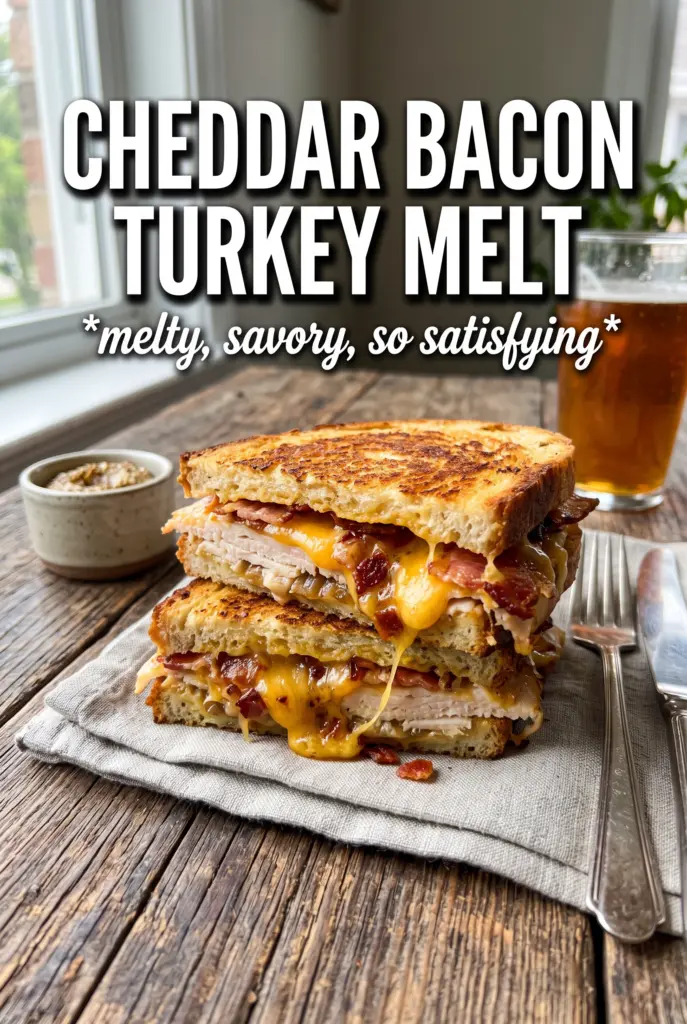
Golden sourdough, sharp cheddar, smoky bacon, and sliced turkey hit the skillet together and turn into the kind of sandwich that actually eats like a meal. The bread gets deeply crisp while the cheese melts into the gaps around the bacon, so every bite has crunch, salt, and just enough tang from the mustard to keep it from feeling heavy.
What makes this version work is the split spread. Dijon on one side gives the turkey and cheddar a little bite, while mayonnaise on the other side helps the inside stay creamy and browned without soaking the bread. Thick-cut bacon matters here because thin strips disappear once the sandwich is pressed; you want enough texture to stand up to the cheese.
Below, I’ve included the little details that keep the sourdough crisp, the cheese fully melted, and the sandwich from sliding apart when you add the greens and tomato at the end.
The sourdough turned out crisp and buttery, and the cheddar melted cleanly around the bacon instead of oozing out everywhere. I added the tomato and arugula at the end like you suggested, and the sandwich stayed hot without getting soggy.
Save this cheddar and bacon turkey melt for the kind of lunch that needs crisp sourdough, melted cheddar, and no soggy bread.
The Part That Keeps the Bread Crisp Instead of Soggy
The biggest mistake with a hot turkey melt is loading it like a cold sandwich and expecting the skillet to save it. It won’t. If the fillings are wet or piled too loosely, the steam softens the sourdough before the cheese has time to glue everything together. The fix here is deliberate layering: butter on the outside for browning, Dijon against the turkey for flavor, mayonnaise on the other half for moisture control and even color in the pan.
Cooking over medium heat matters more than most people think. Too hot, and the bread darkens before the cheddar melts through. Too low, and the bacon and turkey warm up but never give you that clean, crisp finish. The sandwich is done when the bread is a deep golden brown and the cheese starts to creep out the edges in soft, melted lines.
What Each Ingredient Is Actually Doing in This Melt
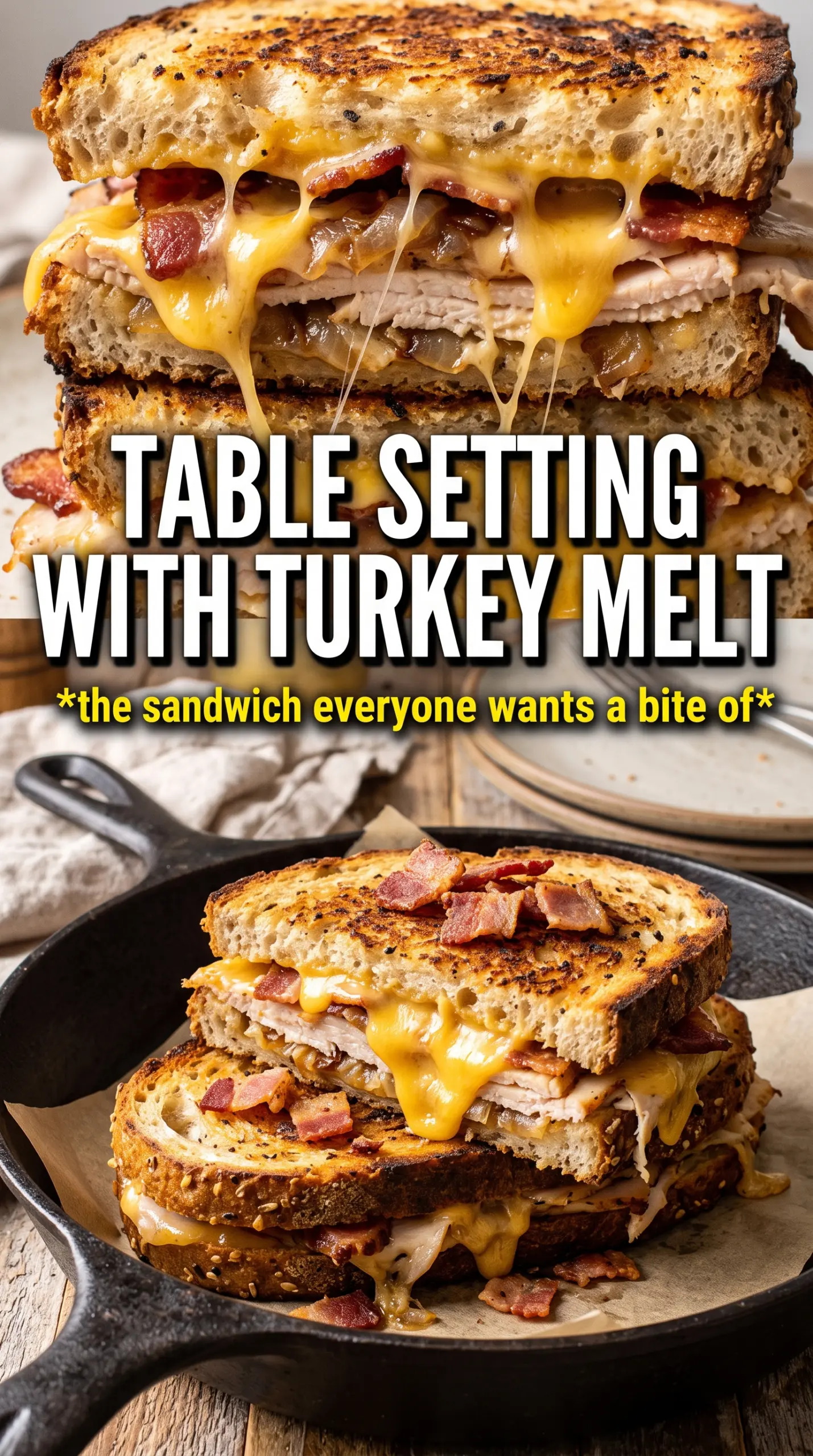
- Sourdough bread — This gives you the sturdy, tangy base that can stand up to melted cheese and bacon without collapsing. A soft sandwich bread turns flimsy fast. Day-old sourdough works beautifully because it toasts with more structure.
- Sharp cheddar — Sharp cheddar brings the best melt-to-flavor ratio here. Mild cheddar tastes flat, and pre-shredded cheese won’t melt as smoothly because of the anti-caking coating. Slice it yourself if you can.
- Thick-cut bacon — This adds crunch and a smoky saltiness that defines the sandwich. Thin bacon gets lost under the cheese. Cook it until crisp enough to hold its shape, then drain it well so it doesn’t leak grease into the bread.
- Dijon mustard and mayonnaise — Dijon cuts through the richness, while mayonnaise helps the outside brown evenly and adds a little insulation between the bread and the hot pan. If you swap in plain mustard, the flavor gets sharper and less rounded.
- Arugula and tomato — Add these after cooking, not before. The peppery greens and juicy tomato brighten the sandwich, but if they hit the skillet they’ll steam the bread and water down the filling.
How to Build the Sandwich So the Cheese Melts Before the Bread Burns
Getting the Bacon Ready First
Cook the bacon until it’s fully crisp and drain it well on paper towels. If it’s even a little limp, it won’t give you the crunch that keeps this sandwich interesting. Let it sit for a minute or two before building so the heat doesn’t start softening the buttered bread.
Setting Up the Bread and Spreads
Butter one side of every slice, then flip and spread Dijon on half and mayonnaise on the other half. The butter needs to sit on the outside of the sandwich so it can toast directly in the skillet. Keep the spreads on the inner sides thin and even; thick globs make the sandwich slippery and can push the layers apart when you press it.
Layering for a Clean Melt
Build the filling on the Dijon side with turkey, bacon, and cheddar, then cap it with the mayonnaise-spread slice, butter side facing out. Put the cheese against the warm fillings, not against the bread, so it starts melting faster once the sandwich hits the pan. If the cheese is buried too close to the outside, the bread can brown before the center softens.
Finishing in the Skillet
Cook over medium heat for 3 to 4 minutes per side, pressing lightly if needed so the whole surface makes contact with the pan. You’re looking for a deep golden crust and cheese that has melted all the way through, not just on the edges. If the bread is getting too dark before the cheese melts, lower the heat and give it another minute; rushing this part is how people end up with a burnt shell and cold center.
Open the sandwich, tuck in the arugula and tomato, then press it back together and serve right away. That last step keeps the greens fresh and the bread crisp instead of trapping extra moisture inside.
Ways to Change It Without Losing What Makes It Good
Make It Gluten-Free with the Right Bread
Use a sturdy gluten-free sandwich bread that can handle buttering and pan-toasting without crumbling. The texture won’t be quite as chewy as sourdough, so choose one with enough structure to hold the bacon and cheese without falling apart.
Swap the Turkey for Leftover Chicken or Ham
Thin-sliced leftover chicken works well if it’s already seasoned, and ham makes the sandwich saltier and a little richer. Both swaps keep the same structure, but ham pushes the sandwich closer to a classic diner melt while chicken keeps it lighter.
Use Swiss or Provolone for a Milder Melt
If you want less sharpness, swap the cheddar for provolone or Swiss. You’ll lose some of the bite that cheddar gives, but the melt becomes smoother and a little more mellow. I like this when the bacon is especially salty.
Storage and Reheating
- Refrigerator: Store cooked sandwiches wrapped tightly for up to 2 days. The bread will soften a little, especially once the tomato and greens are added.
- Freezer: I don’t recommend freezing the finished sandwich with the fresh vegetables in it. You can freeze the bacon and turkey separately, but the bread and tomato won’t hold up well after thawing.
- Reheating: Reheat in a skillet over low to medium-low heat until the bread crisps back up and the center is hot. The mistake to avoid is microwaving it, which turns the sourdough rubbery and leaves the cheese greasy instead of melty.