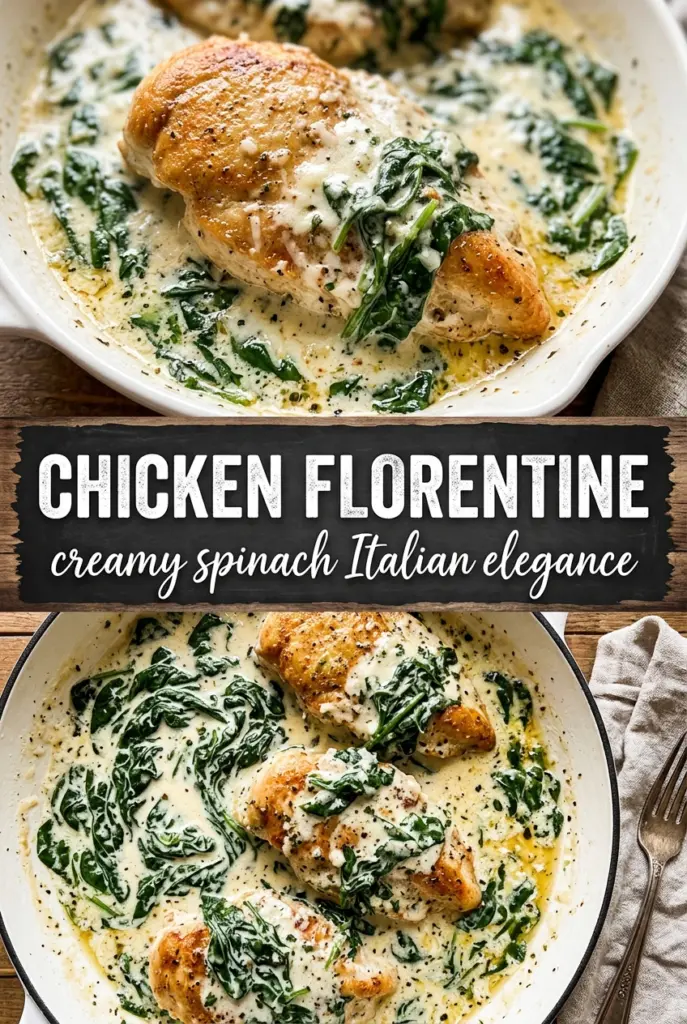
Golden seared chicken breasts in a silky cream sauce with spinach are the kind of dinner that looks polished without asking for much more than one skillet and a little attention at the stove. Chicken Florentine earns its place in the rotation because the sauce stays light enough to spoon over pasta or rice, but still tastes rich from the white wine, Parmesan, and just enough lemon to keep it from feeling heavy.
The key is building the sauce in the same pan you used for the chicken. Those browned bits on the bottom are where the flavor lives, and the wine lifts them cleanly into the cream. The spinach goes in at the end so it stays bright and tender instead of collapsing into something muddy, and the Parmesan is added off the hottest part of the flame so the sauce turns glossy instead of grainy.
Below you’ll find the exact points where this recipe can go sideways — and how to keep it moving in the right direction. If you’ve ever had cream sauce split or chicken turn dry before the sauce was finished, this version gives you a better path through both problems.
The sauce thickened up beautifully and stayed silky when I added the Parmesan off the heat. I served it over angel hair, and even my picky eater went back for seconds.
Save this Chicken Florentine for the nights when you want a restaurant-style skillet dinner with a lemony Parmesan cream sauce.
The Chicken Turns Dry When the Sauce Isn’t Ready Yet
Chicken Florentine gets difficult when people treat the chicken and sauce like separate jobs. The chicken needs to be cooked through, but not cooked until it shrinks and tightens. A quick sear over medium-high heat gives you color and enough fond in the pan to start the sauce, then the chicken comes out while the cream base is built. That way, the meat finishes gently in the sauce instead of overcooking while you wait for it to thicken.
The other common failure is a sauce that turns flat or chalky. That usually happens when the Parmesan goes into a boiling cream mixture or when the pan is too hot after the wine reduces. Let the sauce settle into a steady simmer, then add the cheese and stir until it melts smoothly. The lemon goes in last for brightness, not long before it won’t taste fresh.
What Each Ingredient Is Doing in This Dish
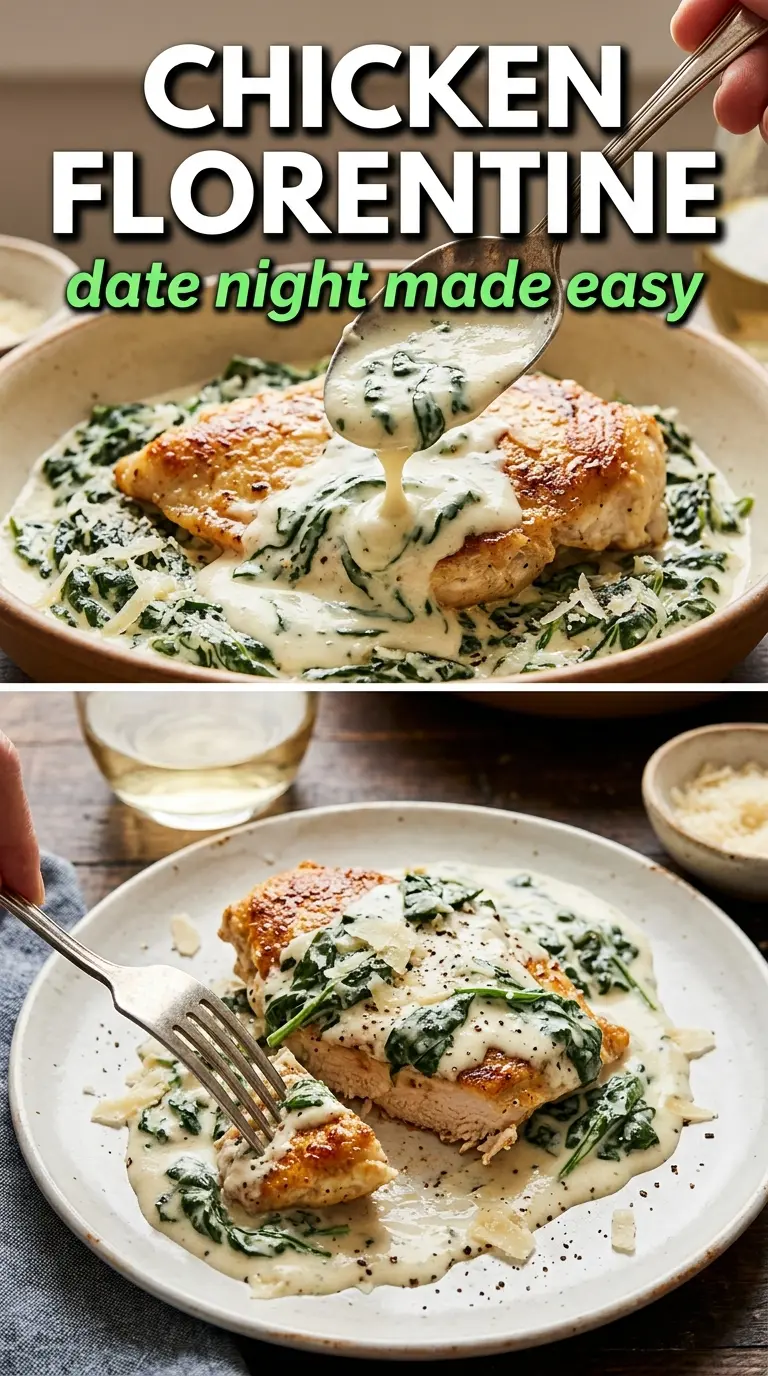
- Chicken breasts — Boneless, skinless breasts work best here because they sear fast and slice cleanly. If yours are thick on one end, pound them to even thickness so they cook at the same pace and don’t dry out before the centers hit 165°F.
- Dry white wine — This isn’t just for depth; it deglazes the pan and pulls the browned bits into the sauce. Use something you’d drink, because a harsh wine tastes harsher once it reduces.
- Heavy cream — This gives the sauce its body and helps it stay smooth after the Parmesan goes in. Half-and-half can work in a pinch, but the sauce will be thinner and more likely to break if it gets too hot.
- Parmesan — Grate it fresh if you can. Pre-shredded cheese often has anti-caking agents that keep it from melting as cleanly, which is how you end up with a grainy sauce.
- Baby spinach — Fresh spinach wilts in seconds and gives the sauce that Florentine look and texture. Mature spinach works too, but strip the stems and expect a slightly tougher bite.
- Lemon juice and zest — These keep the cream sauce from tasting heavy. The zest gives a cleaner lemon note than juice alone, so don’t skip it if you want the sauce to taste bright instead of just acidic.
How to Build the Sauce So It Stays Silky
Searing the Chicken First
Season the chicken generously before it hits the pan. You want a deep golden crust on the outside and no raw sheen left on the surface when it comes time to remove it. If the pan starts smoking hard, the heat is too high and the seasoning will scorch before the chicken browns properly. Give each side about 5 to 6 minutes and lift the chicken only when it releases easily.
Using the Same Pan for the Base
Don’t wash the skillet after the chicken comes out. Add the garlic to the leftover oil and fond, stir for about 30 seconds, then pour in the wine to loosen everything from the bottom. If the garlic browns hard before the wine goes in, it turns bitter fast, so keep it moving and deglaze as soon as you smell it bloom.
Finishing the Cream and Spinach
Let the wine reduce before the cream and broth go in, then simmer just until the sauce starts to nap the spoon. Stir in the Parmesan off the hottest part of the burner so it melts into the cream instead of clumping. The spinach should wilt in the last minute or two, turning dark green and tender while still holding shape. Return the chicken to the skillet, spoon the sauce over the top, and let it warm through before serving.
Three Good Ways to Adjust Chicken Florentine
Dairy-Free Version
Use unsweetened coconut cream or a plain dairy-free cooking cream in place of heavy cream, then skip the Parmesan or use a dairy-free Parmesan-style alternative. The sauce won’t taste exactly the same, but it will still turn rich and spoonable if you keep the heat low and don’t rush the reduction.
Gluten-Free Serving Option
The chicken Florentine itself is naturally gluten-free, so the main thing to watch is what you serve underneath it. Spoon it over rice, mashed potatoes, or certified gluten-free pasta, and the sauce will cling just as well without changing the method.
Making It with Chicken Thighs
Boneless, skinless thighs add a little more richness and stay juicier if you prefer dark meat. They may need a few extra minutes in the skillet, but the sauce works the same way. Watch for a deep browned crust before flipping so the thighs don’t steam in their own fat.
Storage and Reheating
- Refrigerator: Store in an airtight container for up to 3 days. The sauce will thicken as it chills, and the spinach will soften a little more.
- Freezer: It freezes, but cream sauces can separate when thawed, so the texture won’t be as smooth. If you do freeze it, cool completely first and thaw slowly in the refrigerator.
- Reheating: Warm it gently in a skillet over low heat with a splash of broth or cream. High heat is the fastest way to break the sauce and dry out the chicken.
Answers to the Questions Worth Asking
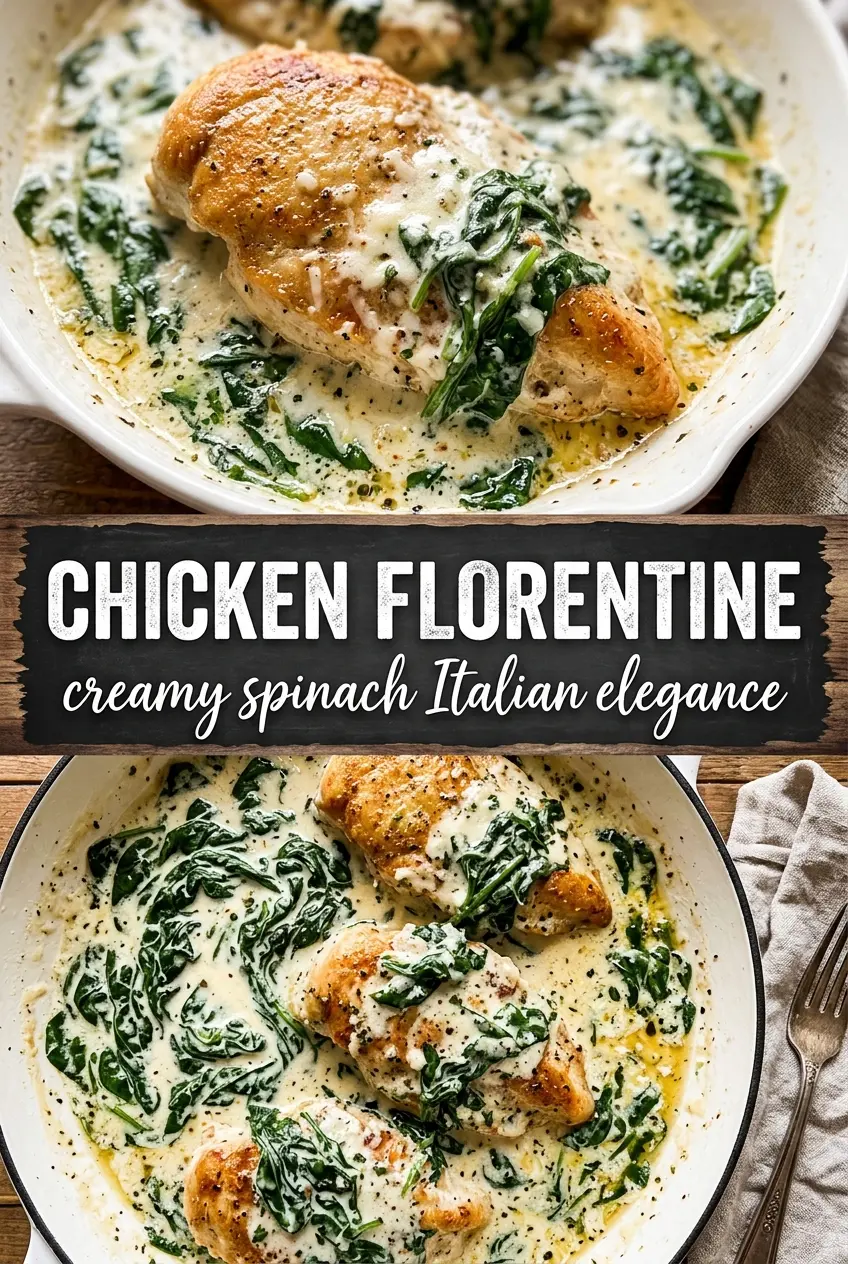
Chicken Florentine
Ingredients
Equipment
Method
- Season the chicken breasts generously on both sides with salt, pepper, garlic powder, and Italian seasoning.
- Heat olive oil in a large skillet over medium-high heat, then sear the chicken for 5-6 minutes per side until golden and cooked through to 165°F; remove to a plate.
- Reduce heat slightly and cook the minced garlic in the same pan for 30 seconds, stirring until fragrant.
- Pour in the dry white wine, scraping up browned bits from the pan, then simmer for 2 minutes.
- Add the heavy cream and chicken broth, then simmer for 4-5 minutes until slightly thickened and glossy.
- Stir in the Parmesan cheese, lemon juice, and lemon zest until the sauce turns smooth.
- Add the fresh baby spinach and stir until wilted, with dark green leaves disappearing into the pale sauce.
- Return the chicken to the pan and spoon the sauce over each breast to coat the tops.
- Garnish with fresh parsley and lemon slices, then serve over pasta or rice.