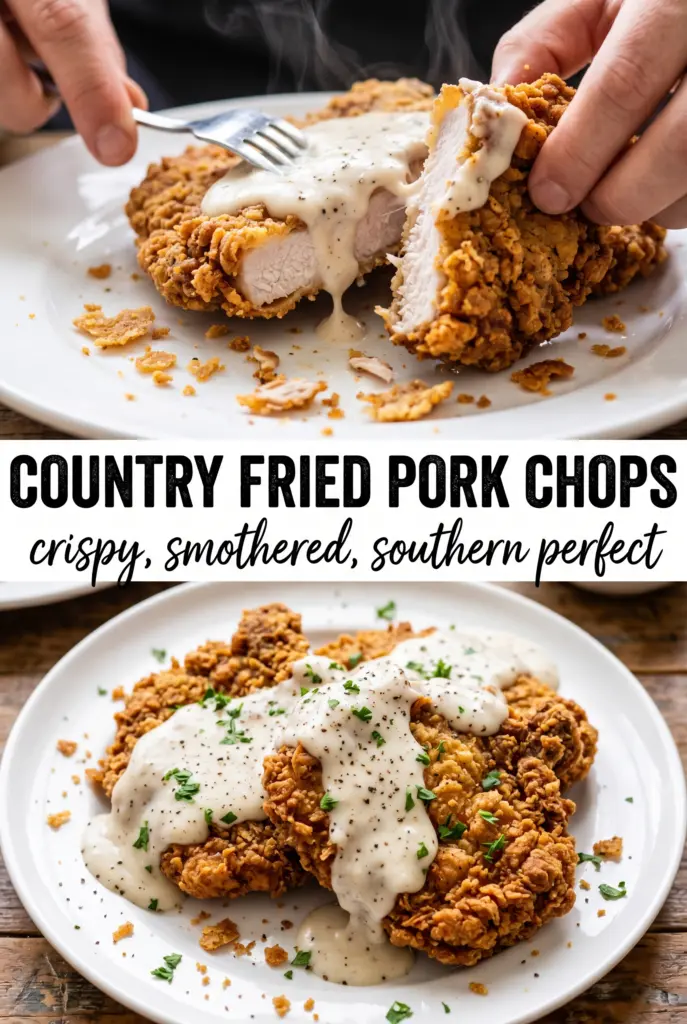
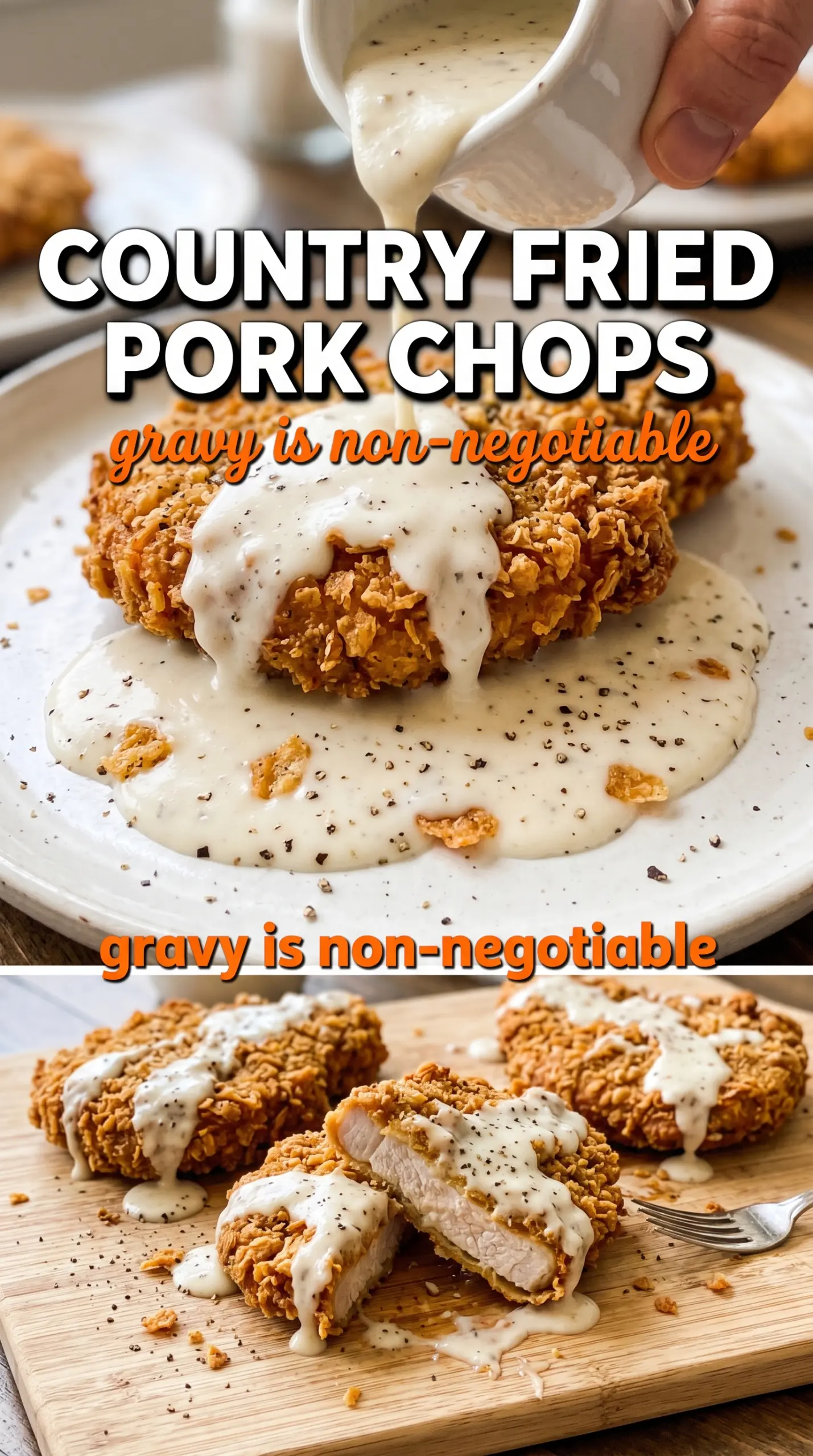
Country fried pork chops come out best when the crust is loud, craggy, and sealed tight around juicy meat. The breading should crack when you cut into it, and the white gravy should slide over the top without turning the coating soggy in the first minute. That balance is what keeps this dish in regular rotation instead of drifting into just another breaded pork chop dinner.
The trick is the mix of flour and cornmeal. Flour gives the coating body and helps it cling, while cornmeal adds that gritty, shattering texture that makes each bite taste fried instead of just breaded. The other detail that matters is the pork chop itself: thin-cut chops cook fast enough that the crust gets deeply golden before the meat dries out. A quick buttermilk-and-egg dip also helps the coating grab on evenly, so you don’t end up with bare spots after frying.
Below, you’ll find the small timing choices that keep the breading crisp, plus the way I build the white gravy from the drippings so it tastes like it belongs on the plate instead of being an afterthought.
The crust stayed crunchy even after I spooned on the gravy, and the cornmeal gave it a texture my family noticed right away. I used thin chops like you said and they cooked through fast without drying out.
Love the crunch and classic white gravy in these country fried pork chops? Save this one for the nights when you want a crispy Southern dinner that eats like comfort food done right.
The Crust Needs Heat, Not Patience
The biggest mistake with country fried pork chops is treating the breading like it needs a long, slow fry. It doesn’t. Thin chops, a well-seasoned coating, and hot oil are what give you that deep golden crust before the pork overcooks. If the oil is too cool, the breading drinks it up and turns greasy. If it’s too hot, the outside darkens before the center is done.
Pressing the flour mixture onto the chops matters more than people think. The egg and buttermilk give the coating something sticky to hold onto, but the firm press is what turns a loose dusting into a crust that stays put in the skillet. Let the coated chops sit for a few minutes before they hit the pan. That short rest helps the breading hydrate just enough to cling without going past the point where it turns gummy.
- Thin-cut pork chops — Half-inch chops cook quickly and stay juicy under a crisp coating. Thicker chops need a lower oven finish, which changes the texture of the breading.
- Cornmeal — This is what gives the crust its rough, crunchy edge. If you leave it out, you’ll still get a fried chop, but not that distinctive country-style bite.
- Buttermilk — The slight tang helps the coating taste seasoned all the way through. Regular milk works in a pinch, but it won’t grip quite as well or bring the same subtle sharpness.
- Drippings for the gravy — Those browned bits and fat left in the pan are the backbone of the white gravy. If you use straight butter instead, the gravy still works, but it loses that fried-chop depth.
What Each Ingredient Is Actually Doing in This Pork Dish
- Pork (cut properly for the method) — Pat dry so it browns instead of steams. Even thickness ensures uniform cooking.
- Oil or butter (the browning medium) — High-heat oil essential for proper searing. Creates pan flavor.
- Seasonings (salt, pepper, spices) — Build flavor boldly. Pork carries the entire profile.
- Aromatics (garlic, onion, ginger) — Cook with fat to bloom flavors. Become foundation of dish.
- Sauce or liquid (the moisture keeper) — Keeps lean pork from drying. Balance richness with acid.
- Vegetables (if using) — Layer by cooking time so everything finishes together. Hard vegetables first.
- Acid (vinegar, wine, citrus) — Brightens sauce and prevents heavy flavor. Add near end.
- Proper doneness (145°F, slightly pink center) — Pork is safe at this temp and stays juicy. Higher temps dry it out.
Frying the Chops Before the Gravy Ever Starts
Seasoning the Coating
Mix the flour, cornmeal, garlic powder, smoked paprika, onion powder, salt, and pepper in a shallow dish so the seasoning is evenly spread through the breading. That matters because the crust is doing nearly all the flavor work here. If the seasoning clumps, you end up with some bites that taste flat and others that go too far. The coating should look sandy and evenly speckled before the chops go in.
Coating and Pressing
Whisk the eggs and buttermilk in a second dish, then dip each chop so it’s fully wet before pressing it into the flour mixture. Use your fingers to pack the coating on both sides and into the edges. The goal is a thick, rough layer, not a thin dusting. If the breading falls off later, it usually means the chop was shaken too clean after the first dip or wasn’t pressed firmly enough.
Frying to a Deep Gold
Heat about 1/2 inch of oil in a skillet over medium-high heat until it shimmers and a pinch of flour sizzles right away. Fry the chops for 3 to 4 minutes per side, depending on thickness, until the crust is a deep golden brown and the meat reaches doneness. If the chops brown too fast, lower the heat; if they sit pale in the oil, raise it a notch. Drain them on paper towels, but don’t stack them while they’re hot or the steam will soften the crust.
Building the White Gravy
Pour off the pan fat until you have about 3 tablespoons left, then whisk in the flour and cook it for a minute so the raw taste goes away. Slowly whisk in the milk, and keep the heat at medium so the gravy thickens without scorching on the bottom. It should go from thin and milky to smooth and spoonable. If it turns lumpy, the milk went in too fast; keep whisking and let it simmer gently until the lumps cook out.
Three Ways to Keep the Same Comfort, With Small Changes
Gluten-Free Country Fried Pork Chops
Use a gluten-free all-purpose flour blend for the breading and gravy, and keep the cornmeal in the mix for texture. The crust will still turn crisp, though it may look a little less evenly blond than the wheat version. Let the gravy simmer long enough for the starch to fully thicken so it doesn’t taste chalky.
Dairy-Free Version
Swap the buttermilk for unsweetened non-dairy milk mixed with a teaspoon of vinegar, and use a dairy-free milk for the gravy. You’ll lose a little richness, but the tang and the flour-cornmeal crust still carry the dish well. If the dairy-free milk is thin, simmer the gravy an extra minute or two so it reaches the right body.
Spicier Southern Fry
Add cayenne or a pinch of hot paprika to the breading if you want more heat without changing the structure of the crust. The peppery finish cuts nicely through the white gravy. Don’t go heavy-handed or the spice will overpower the pork instead of supporting it.
Storage and Reheating
- Refrigerator: Store the chops and gravy separately for up to 3 days. The crust softens in the fridge, but the flavor stays good.
- Freezer: The fried chops freeze better than the gravy. Wrap them well and freeze for up to 2 months; the gravy can turn grainy after thawing.
- Reheating: Reheat the chops on a wire rack in a 375°F oven until hot and crisp again. Warm the gravy slowly on the stove with a splash of milk, whisking often so it doesn’t scorch or split.
Questions I Get Asked About This Recipe
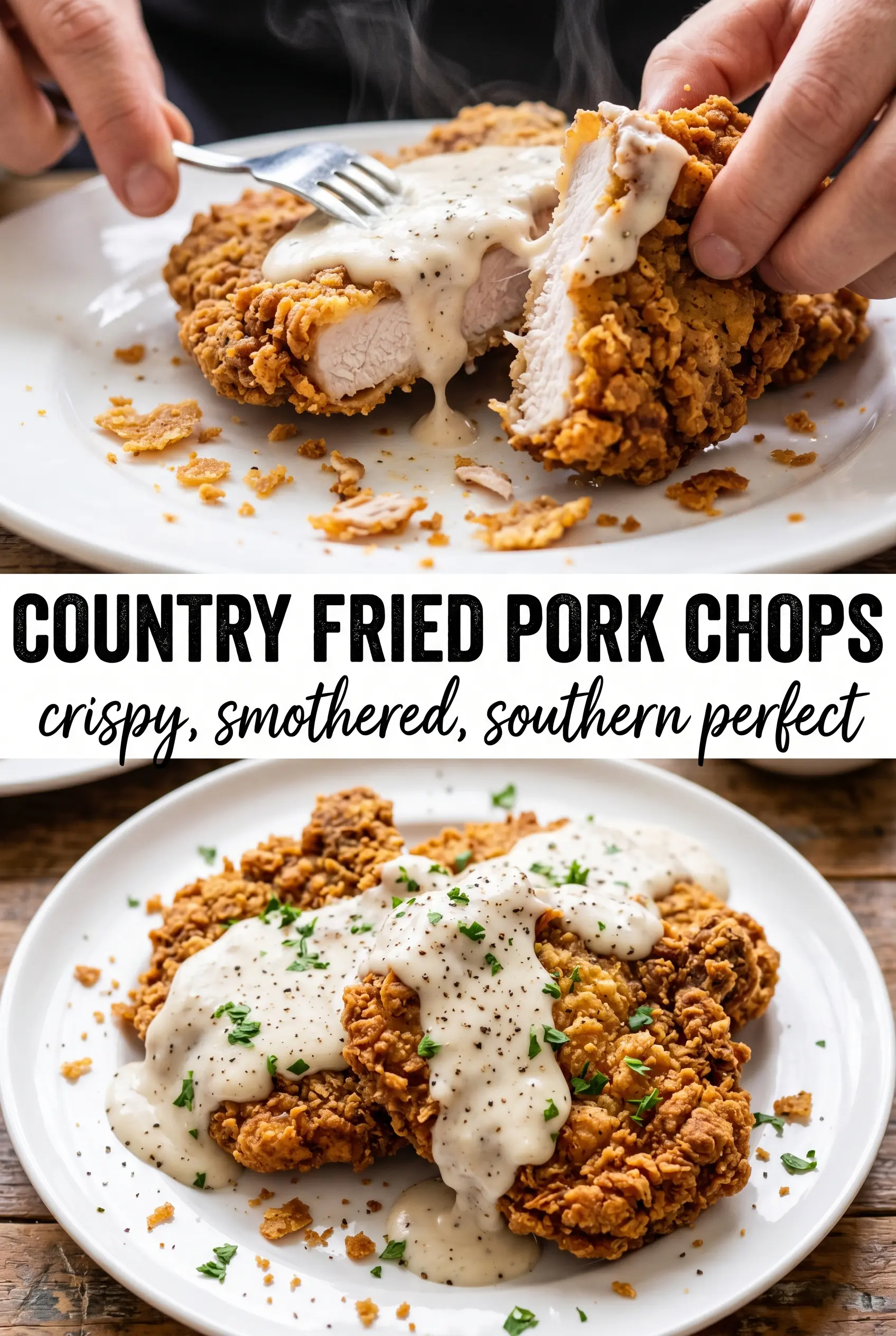
Country Fried Pork Chops
Ingredients
Equipment
Method
- Mix the flour, cornmeal, garlic powder, smoked paprika, onion powder, salt, and pepper in a shallow dish until evenly combined.
- Whisk the eggs with buttermilk in a second shallow dish until smooth.
- Dip each pork chop into the egg mixture, then coat thoroughly in the seasoned flour and press firmly so the crust sticks.
- Heat 1/2 inch of oil in a skillet over medium-high heat until hot.
- Fry the chops 3–4 minutes per side until deep golden and cooked through, then transfer to paper towels to drain.
- After frying, reserve 3 tablespoons of drippings in the skillet for the gravy.
- Whisk the flour into the drippings over medium heat for 1 minute to cook the flour.
- Slowly whisk in the milk and bring to a simmer, cooking until thick, then season with salt and pepper.
- Serve the white gravy over the chops.