Golden chicken with peaches hits the table with the kind of sweet-savory balance that keeps a skillet dinner from feeling routine. The chicken stays juicy, the peaches soften just enough to turn glossy, and the honey-mustard sauce pulls everything together without drowning the pan. It’s the sort of meal that looks a little special but still lands comfortably on a weeknight.
What makes this version work is the order of operations. Searing the chicken first builds flavor in the pan, then the peaches go in just long enough to loosen and perfume the sauce without collapsing into jam. The honey and Dijon give the sauce body and brightness, while a final swirl of butter smooths out the edges and makes the whole skillet look finished.
Below, you’ll find the small details that keep the chicken tender, the peaches intact, and the sauce glossy instead of watery. If peaches have ever turned mushy on you in a savory dish, the process notes here will help.
The sauce thickened right in the skillet and the peaches stayed in slices instead of turning to mush. I served it over rice and my husband asked if we could put it on the regular rotation.
Save this chicken with peaches skillet for a glossy honey-mustard sauce and tender peach slices that don’t fall apart.
The Trick to Keeping the Peaches From Turning to Jam
The biggest mistake in a dish like this is treating the peaches like a sauce ingredient instead of a fruit that still needs shape. They only need a short cook after the garlic goes in, just long enough to start softening and release a little juice. That gives the sauce peach flavor without sacrificing the slices.
The other key is searing the chicken before the fruit ever touches the skillet. If the pan starts with peaches, they throw off liquid too early and you lose the browned bits that make the sauce taste like something more than sweet glaze. The sear gives you the backbone; the peaches finish it.
- Chicken breasts — Pounding them to even thickness matters more than the exact size. Uneven chicken cooks at different speeds, and the thin end dries out before the thicker part is done.
- Ripe peaches — You want peaches that give slightly at the stem end but still slice cleanly. Overripe fruit collapses fast and makes the skillet loose instead of glossy.
- Dijon mustard — Dijon is doing more than adding tang. It helps the honey and broth emulsify into a sauce that clings to the chicken instead of running off the pan.
- Butter — Stir it in at the end, off the hottest part of the heat. That last swirl smooths the sauce and gives it shine; if it goes in too early, it can separate.
What Each Ingredient Is Actually Doing in the Skillet
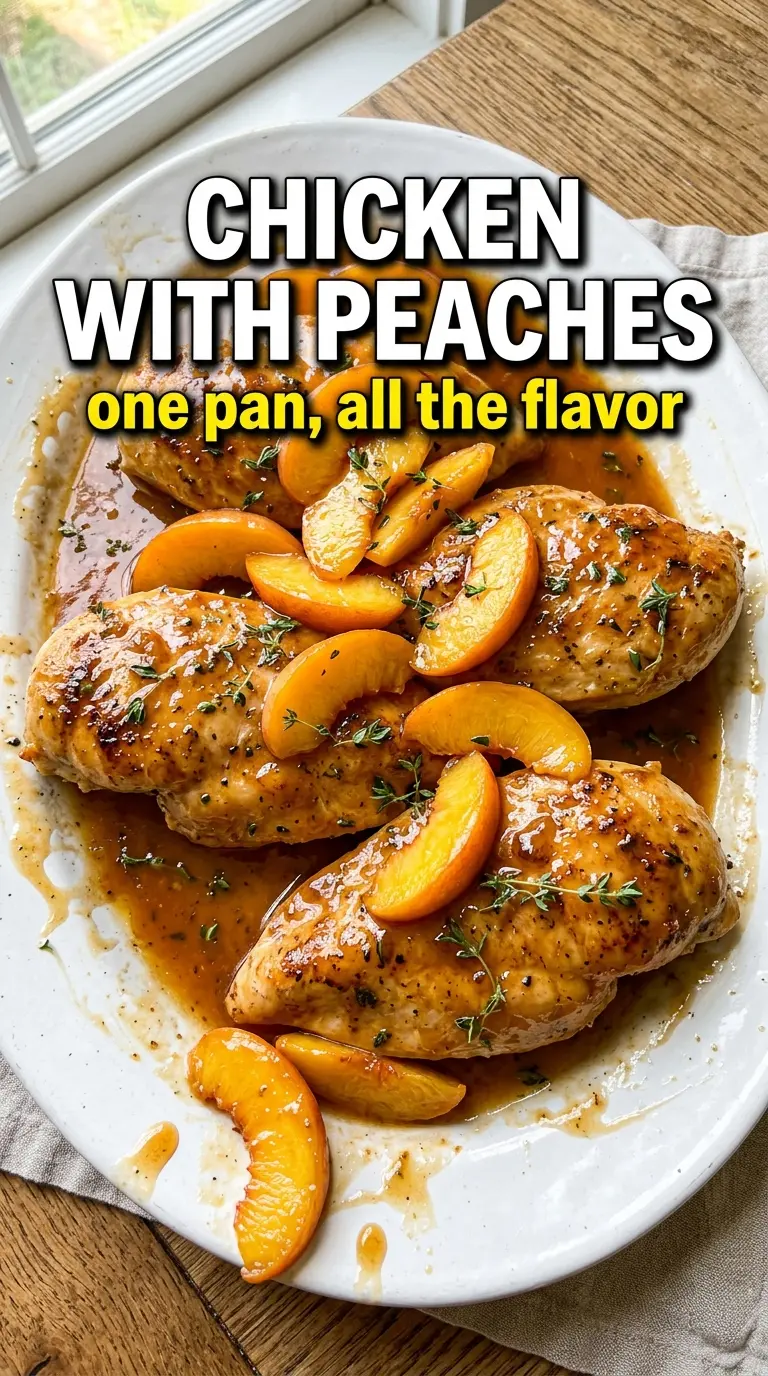
- Boneless skinless chicken breasts — These give you a clean, lean base that takes on the peach sauce well. If they’re pounded to an even thickness, they stay juicy and sear evenly.
- Peaches — Fresh peaches bring both sweetness and a little acidity. Canned peaches work in a pinch, but they soften faster and the sauce won’t have the same fresh bite.
- Honey — Honey gives the sauce body and a round sweetness that plain sugar can’t quite match. It also helps the glaze look lacquered when it reduces with the broth.
- Dijon mustard — This keeps the sauce from tasting flat. If you swap in yellow mustard, the sauce will taste sharper and less balanced; use Dijon if you can.
- Chicken broth — Broth adds savory depth and gives the honey and peach juices something to reduce into. Low-sodium broth is the best choice here so the sauce doesn’t get salty as it thickens.
- Fresh thyme — Thyme is the herb that belongs here. It cuts through the sweetness and makes the whole dish taste finished instead of dessert-adjacent.
Getting the Sear, Sauce, and Finish Right
Build the Browning First
Season the chicken on both sides, then get it into a hot skillet with the olive oil. You want a deep golden crust before you turn it, not pale chicken that just steamed in the pan. If the chicken sticks when you try to move it, leave it alone a little longer; once it sears properly, it releases more easily.
Cook the Peaches Briefly, Not Completely
After the chicken comes out, add the garlic for about 30 seconds, just until it smells fragrant, then stir in the peaches. They should soften at the edges and start giving up juice, but they shouldn’t lose all structure. If they cook too long, the sauce turns cloudy and the fruit disappears.
Reduce the Sauce Until It Clings
Whisk the honey, Dijon, and broth together, then pour it into the skillet and let it bubble for a few minutes. You’re waiting for the liquid to coat a spoon lightly and gather around the peaches instead of looking thin and watery. If the heat is too low, nothing reduces; if it’s too high, the honey can take over and taste heavy.
Finish With Butter and Return the Chicken
Swirl in the butter once the sauce has thickened, then put the chicken back in the pan and spoon the sauce over the top. The butter adds gloss, and the final toss in the skillet lets the chicken pick up the peach sauce without overcooking. Serve it right away while the sauce is still silky and the peaches are holding their shape.
How to Adapt Chicken with Peaches Without Losing the Point
Make It Dairy-Free
Leave out the butter and finish the sauce with an extra teaspoon of olive oil instead. You’ll lose a little richness and shine, but the glaze will still cling well if you reduce it properly.
Use Chicken Thighs Instead
Boneless skinless thighs work beautifully here and give you a juicier result with a little more forgiveness on the stove. They usually need a few extra minutes to cook through, but they hold up well against the sweet sauce.
Turn It Into a Gluten-Free Dinner
This recipe is naturally gluten-free as written as long as your chicken broth and mustard are certified gluten-free. That’s the kind of detail that matters here, because the sauce is only as clean as the ingredients you pour into it.
Swap the Herbs
Thyme is the best fit, but basil or tarragon can work if that’s what you have. Basil pushes the dish sweeter and softer, while tarragon adds a light anise note that makes the peaches taste sharper.
Storage and Reheating
- Refrigerator: Store leftovers in an airtight container for up to 3 days. The peaches will soften a bit more, but the flavor stays good.
- Freezer: You can freeze it, but the peach texture gets much softer after thawing. If you do freeze it, cool completely, pack it tightly, and thaw overnight in the refrigerator.
- Reheating: Warm it gently in a covered skillet over low heat with a splash of broth. High heat will dry out the chicken and make the sauce separate.
Questions I Get Asked About This Recipe

Chicken with Peaches
Ingredients
Equipment
Method
- Season the chicken breasts with salt and pepper on both sides.
- Heat the olive oil in a large skillet over medium-high heat and sear the chicken for 4-5 minutes per side until golden and cooked through, then remove and set aside.
- In the same skillet, sauté the garlic for 30 seconds, then add the peach slices and cook 2 minutes until slightly softened.
- Whisk the honey, Dijon, and chicken broth together, pour into the skillet, and cook 3-4 minutes until the sauce thickens.
- Swirl in the butter until the sauce looks glossy.
- Return the chicken to the pan, spoon the sauce over the top, garnish with fresh thyme, and serve.