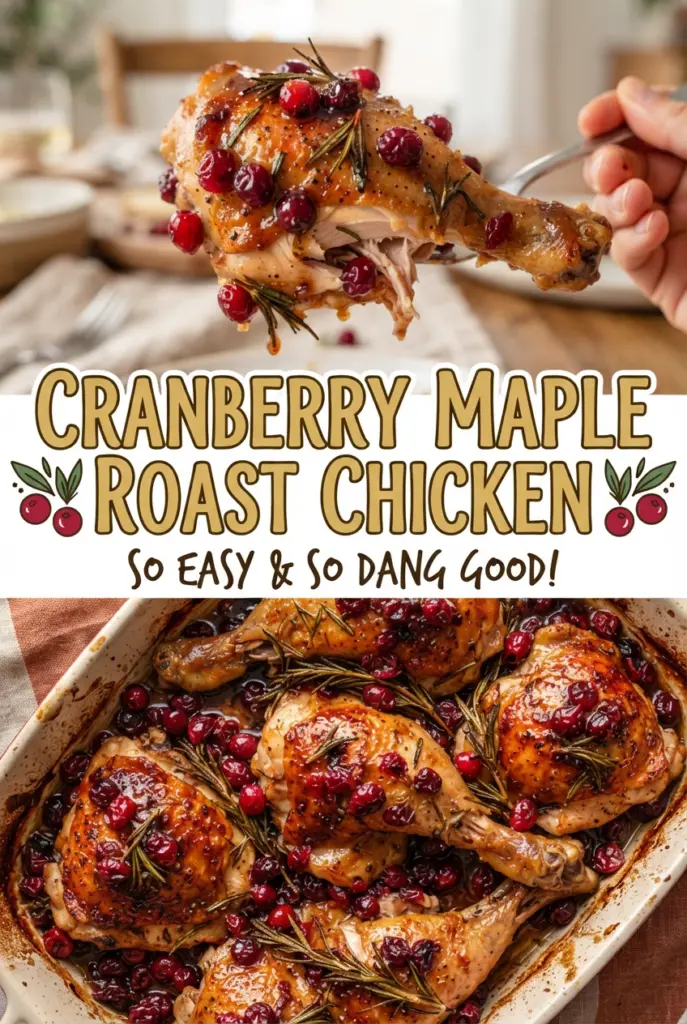
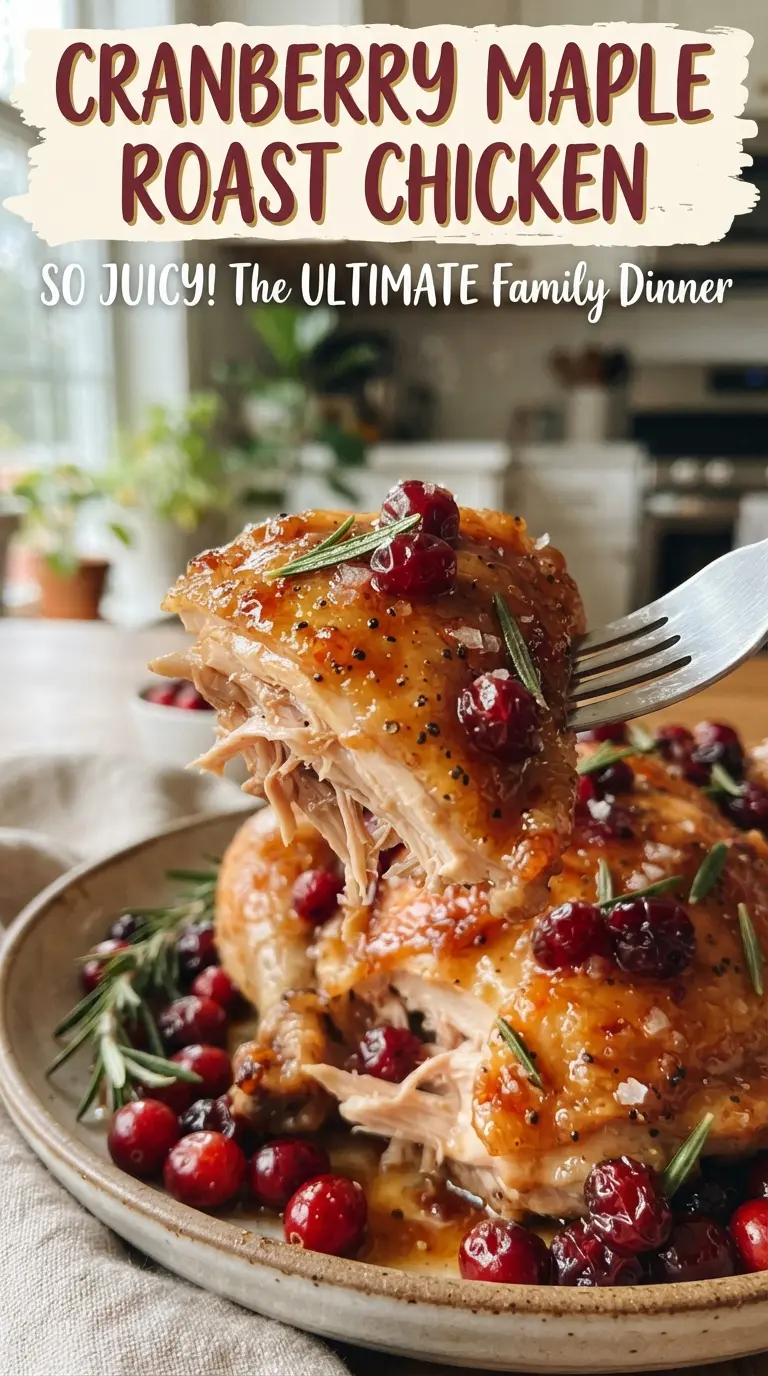
Golden roast chicken gets a sharp, glossy finish here from maple, Dijon, and cranberries, and that combination does something plain pan juices never manage. The skin turns lacquered and bronzed while the fruit collapses into a tangy sauce that cuts through the richness of the bird. It looks polished enough for company, but it still eats like the kind of Sunday dinner people lean into with both hands.
The key is building layers of flavor before the chicken ever goes into the oven. Butter mixed with rosemary slips under the skin so the meat stays fragrant and the breast doesn’t dry out, while orange and garlic perfume the cavity from the inside. The maple-Dijon glaze goes on late enough to shine instead of burn, and the cranberries break down in the pan just enough to thicken the sauce without turning it jammy.
Below you’ll find the timing that keeps the bird juicy, the small details that help the skin roast up properly, and a few useful swaps if you need to work with what’s in the kitchen.
The glaze turned sticky and the cranberries burst right in the pan sauce instead of drying out. I brushed it on twice like the recipe said, and the skin came out shiny and crisp.
Cranberry Maple Roast Chicken turns out glossy, juicy, and tangy-sweet — save it for a roast that finishes with a real pan sauce.
The Glaze Goes on Late for a Reason
Maple syrup can burn before a whole chicken is fully cooked, which is why the glaze doesn’t go on until the second half of roasting. That first stretch in the oven is about rendering the skin and building browning from the chicken itself. Once the bird is already well on its way, the maple and Dijon can cling to the surface and turn into a sticky sheen instead of a scorched crust.
The cranberries need the same timing. Added too early, they collapse into bitterness and disappear. Added later, they burst just enough to thicken the pan juices and give the sauce a bright edge that keeps the whole dish from tasting heavy.
What the Butter, Citrus, and Mustard Are Each Doing
- Chicken — A 5-pound bird gives you enough roasting time for the skin to crisp before the meat dries out. Smaller chickens cook faster and can brown too hard before the glaze thickens.
- Butter and rosemary — Softened butter is the fat that carries the herb flavor under the skin. Olive oil works in a pinch, but it won’t give you the same roundness or the same slightly velvety finish on the meat.
- Orange and garlic — These perfume the cavity as the chicken roasts, and the garlic softens enough to squeeze into the pan sauce later if you want extra depth. Don’t skip the orange; the acidity keeps the glaze from tasting one-note.
- Maple syrup and Dijon — This is the balance point. Maple gives shine and sweetness, while Dijon keeps the glaze sharp enough to cut through the richness of the bird. Honey can replace maple, but it browns faster and tastes a little rounder, less woodsy.
- Cranberries and broth — The berries burst into the drippings and the broth gives the pan enough liquid to loosen into spoonable sauce. If you use frozen cranberries, add them straight from the freezer and expect them to take a minute longer to pop.
Roasting the Bird, Building the Sauce, and Finishing the Skin
Seasoning Under the Skin
Pat the chicken dry first. Moisture on the skin is the enemy of browning, and a dry surface is what helps the fat in the butter work for you. Rub the salt and pepper all over, then gently loosen the skin over the breast and thighs and spread the rosemary butter underneath as evenly as you can. If the butter sits only on top, you’ll smell the herbs, but you won’t taste them in the meat.
The First Roast
Set the chicken over the onion wedges and tuck the orange and garlic into the cavity. That keeps the bird lifted slightly and lets heat move around it instead of trapping steam underneath. Roast at 425°F for 50 minutes, until the skin is taking on real color and the pan drippings are starting to brown. If the skin is still pale at this point, your oven may run cool and the glaze won’t have the same impact later.
Glazing and Pan Sauce
Whisk the maple syrup and Dijon together before brushing it on. The mustard helps the syrup stay emulsified instead of sliding off the skin. Add the cranberries and broth to the pan, then return the chicken to the oven for the final roast. Brush on the remaining glaze once more near the end; that second coat gives you the sticky finish without flooding the skin early.
Resting Before Carving
Pull the chicken when the thigh reads 165°F and let it rest for 15 minutes. That pause matters more than people think, because the juices settle back into the meat instead of running onto the board. Spoon the cranberry pan sauce over the carved chicken right at the end so the crisp skin still has a chance to stay crisp.
How to Adjust This Roast Chicken Without Losing the Point
Make It Dairy-Free
Swap the butter for olive oil or a plant-based butter that behaves well under heat. You’ll lose a little of the rounded richness that butter gives the meat, but the rosemary, orange, and glaze still carry the dish. Keep the oil under the skin thin and even so it doesn’t pool in one spot.
Use Bone-In Pieces Instead of a Whole Chicken
Bone-in thighs or drumsticks work well if you want faster cooking or smaller portions. Start checking earlier, since pieces will finish sooner and the glaze can darken faster on exposed skin. Keep the cranberry-broth mixture in the pan so you still get that sauce at the end.
Swap the Maple Syrup
Honey works if that’s what you have, but it caramelizes faster and tastes a little more floral. Use the same amount, then watch the skin closely during the final roast so the sugars don’t darken too quickly. If you want the flavor to stay closer to maple, add a teaspoon of brown sugar to the Dijon instead of increasing the honey.
Storage and Reheating
- Refrigerator: Store leftovers in an airtight container for up to 3 days. The skin will soften, but the meat stays flavorful.
- Freezer: The carved chicken freezes well for up to 2 months, though the cranberry sauce may loosen after thawing. Freeze the meat and sauce separately if you can.
- Reheating: Reheat covered in a 325°F oven with a spoonful of broth or pan juices until warmed through. Microwaving works in a pinch, but it softens the skin completely and can dry out the breast if you heat it too long.
Answers to the Questions Worth Asking
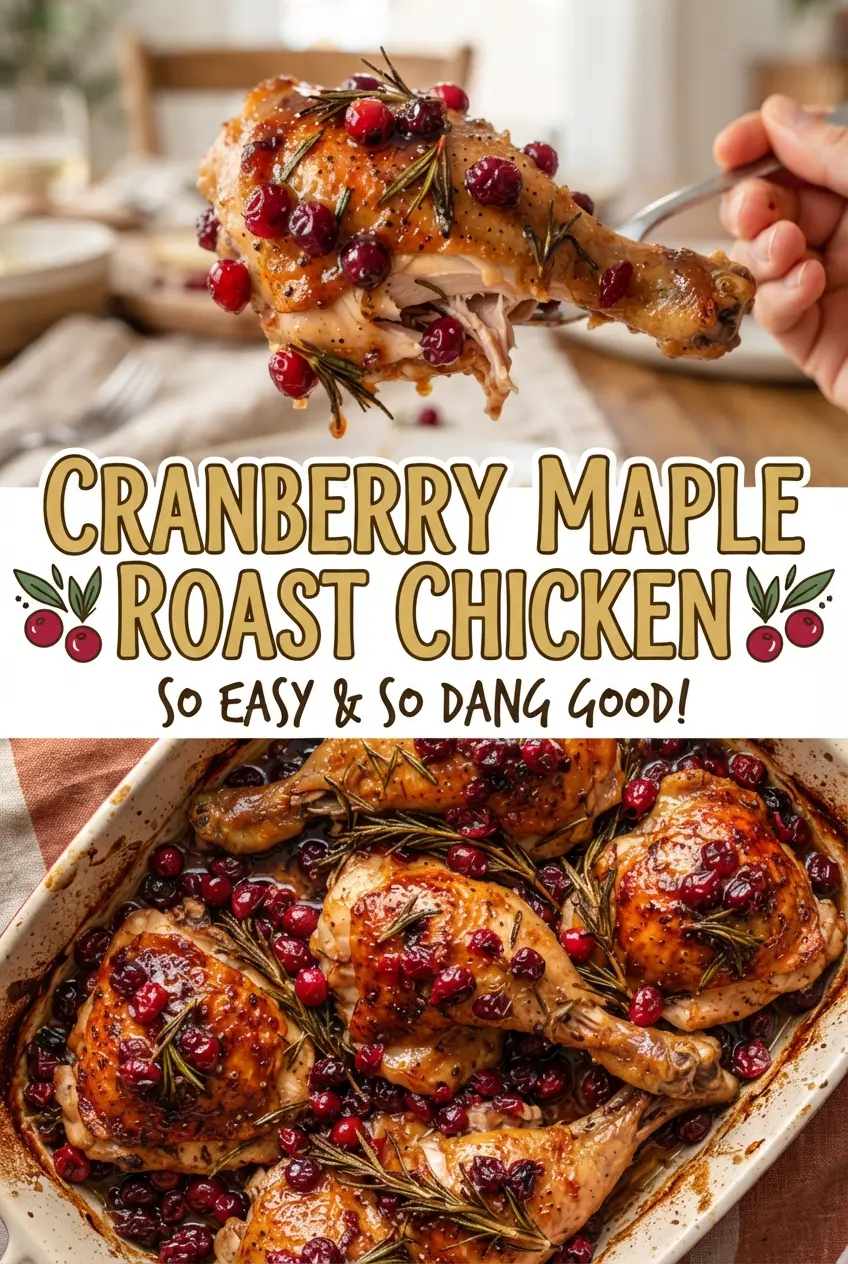
Cranberry Maple Roast Chicken
Ingredients
Equipment
Method
- Preheat oven to 425F, and set out a roasting pan lined on a sheet pan if needed for easy handling. Make sure the oven is fully heated so the skin starts lacquered right away.
- Season the whole chicken inside and out with salt and black pepper. Rub the softened butter mixed with chopped rosemary under and over the skin so it coats evenly.
- Stuff the chicken cavity with orange halves and garlic, then place the chicken in a roasting pan and tuck red onion wedges around it. Arrange the bird so the onions aren’t buried under it for better roasting.
- Roast for 50 minutes at 425F, leaving the chicken uncovered. Visual cue: the skin should look deeply golden and beginning to crisp.
- Whisk maple syrup and Dijon mustard, then brush half of the glaze over the chicken. Keep the remaining glaze for later basting.
- Add fresh cranberries and chicken broth to the pan around the chicken. Visual cue: liquid should pool in the pan edges and cranberries should start turning glossy as they warm.
- Roast 25 to 30 minutes more at 425F, brushing with the remaining glaze partway through. Cook until the thigh reaches 165F, with a browned, lacquered surface.
- Rest the chicken for 15 minutes before carving. Visual cue: juices will settle, and the pan sauce will thicken slightly.
- Carve the chicken and spoon the cranberry pan sauce over the top. Serve immediately while the glaze is still glossy.