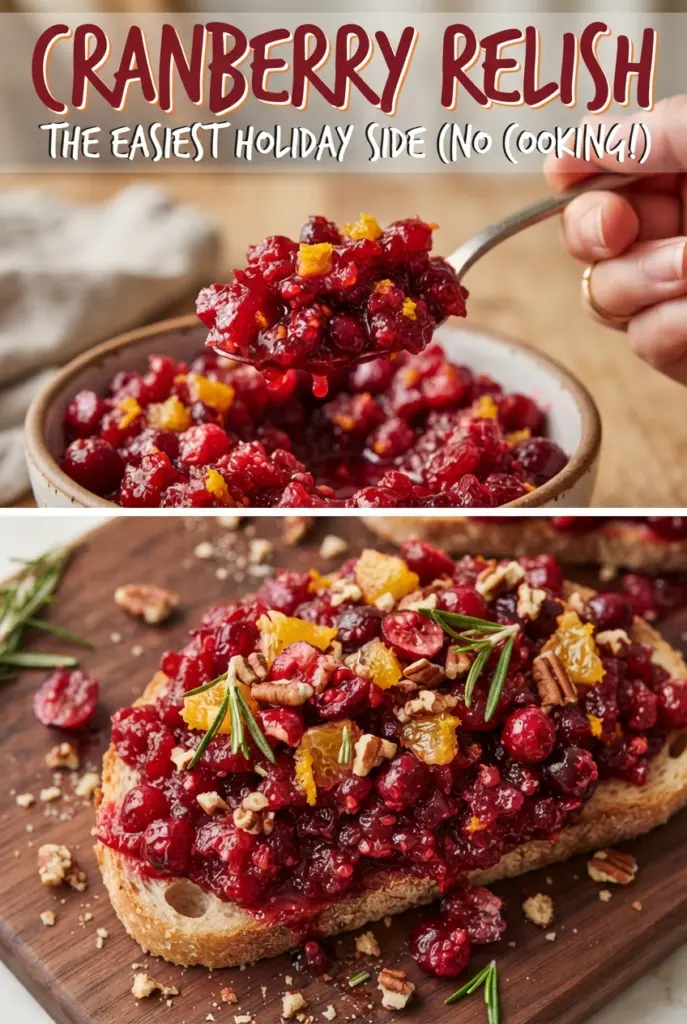
Cranberry relish wakes up a plate in a way cooked cranberry sauce never quite does. It stays bright, crunchy, and sharp at the edges, with enough sugar to round things out without muting that fresh cranberry bite. The orange peel brings a bitter-citrus note that keeps the whole bowl from tasting flat, and the apple softens the texture just enough to make each spoonful feel balanced instead of all acid and no relief.
The food processor does the heavy lifting here, but the order matters. Cranberries get chopped first so they hold some structure, while the orange and apple are pulsed finer so their juices help the sugar dissolve during the chill time. That resting period is what turns a pile of chopped fruit into something cohesive. If you rush it, the sugar stays gritty and the flavors taste separate. Give it the full chill and it settles into a glossy, spoonable relish that tastes brighter the next day.
Below you’ll find the small details that make this version worth keeping around: how fine to chop the fruit, when to add the pecans so they stay crisp, and what to do if your relish turns out a little too tart.
I loved the texture here — chopping the cranberries separately kept it chunky, and after an overnight chill the sugar was completely dissolved. The orange peel made it taste fresh instead of just sweet.
Save this chunky cranberry relish for the holiday table — bright citrus, crisp apple, and that overnight chill make it taste fresher than the canned stuff.
The Trick to Keeping Cranberry Relish Chunky Instead of Turning It Watery
The difference between crisp cranberry relish and a loose fruit puree comes down to how hard you pulse each ingredient. Cranberries should be chopped in short bursts until they’re broken down but still visible. If you let the processor run, they turn mushy and release too much juice, which makes the finished relish thin and muddy instead of bright and textured.
The orange and apple play a different role. They need to be chopped a little finer because their juice helps dissolve the sugar and coat the cranberries during the chill. The sugar won’t fully disappear right away, and that’s normal. The resting time is doing the work here, pulling moisture from the fruit and smoothing out the sharp edges.
What the Orange, Apple, and Pecans Are Really Doing Here
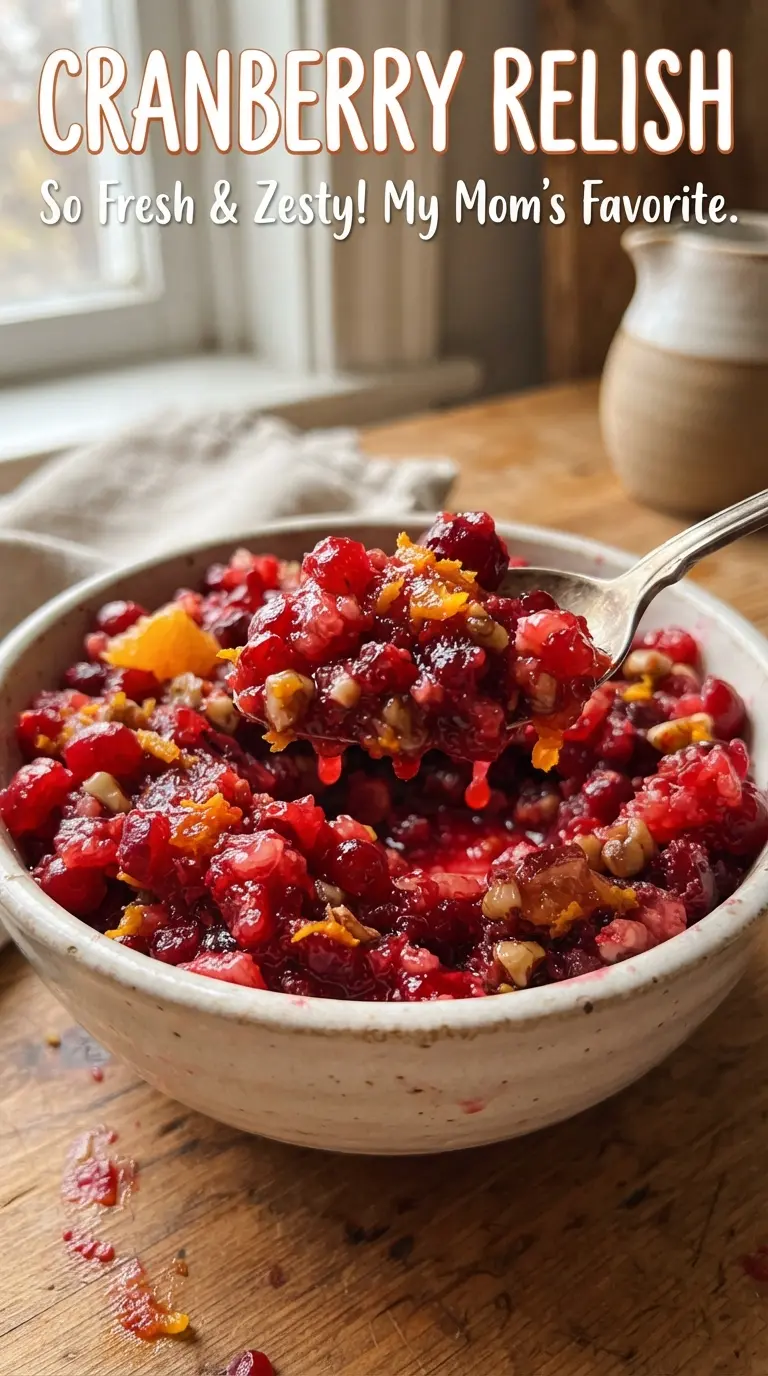
- Fresh cranberries — These bring the tart, snappy backbone that defines the relish. Frozen cranberries work if they’re thawed and drained first, but fresh berries hold their texture better and give you a cleaner, brighter finish.
- Unpeeled orange — The peel adds bitterness and perfume that you don’t get from juice alone. Seed it well, or the relish can turn bitter in an unpleasant way. A small navel orange is the safest choice because it has good sweetness and not much pith.
- Apple — This softens the sharp cranberry flavor and adds body without making the mixture heavy. A crisp apple like Granny Smith gives more tartness, while a sweeter apple makes the relish rounder and less sharp.
- Sugar — This isn’t just for sweetness; it draws out juice and helps the chopped fruit settle into a glossy, spoonable mixture. If you cut the sugar too much, the relish can taste aggressively tart even after chilling.
- Pecans — Optional, but useful if you want contrast. Add them at the end so they keep their crunch; if they sit overnight, they soften and lose the point of being there.
How to Build the Relish So the Flavor Settles Instead of Staying Harsh
Chopping the Cranberries First
Pulse the cranberries in short bursts until they’re coarsely chopped, then stop. You want obvious pieces, not a paste. If the berries start looking glossy and wet, you’ve gone too far and the relish will lose its pop. Transfer them to a bowl right away so they don’t keep breaking down in the processor.
Finely Breaking Down the Orange and Apple
Pulse the orange chunks and chopped apple until they’re finely chopped, almost like a rough mince. That finer texture helps them melt into the cranberries during the chill and gives the sugar more surface area to work on. If you leave them too chunky, the relish tastes patchy, with some bites sweet and others harshly tart.
Letting the Sugar Do Its Work
Stir everything together, cover the bowl, and chill it for at least 4 hours, though overnight is better. The sugar needs time to dissolve and the fruit needs time to soften just enough to marry without losing structure. If the mixture still looks dry after chilling, give it another stir and another hour. The glossy, spoonable texture develops late.
Adding the Pecans at the End
Fold in the pecans right before serving so they stay crisp. If they go in early, they absorb moisture and turn soft, which flattens the texture. This last-minute addition keeps the relish lively and gives each bite a clean crunch against the tart fruit.
Make it sharper and more tart
Use a tart apple like Granny Smith and reduce the sugar by a few tablespoons. The relish will stay brighter and less sweet, which works well beside rich meats or salty cheeses. Don’t cut the sugar too aggressively, though, or the texture won’t settle as smoothly.
Make it nut-free
Skip the pecans entirely and serve the relish as a clean, bright fruit condiment. You’ll lose the crunch, but the flavor stays intact, and the relish actually feels a little lighter on the plate.
Lower-sugar version
You can reduce the sugar, but expect a firmer, more tart relish with a less glossy finish. For the best balance, cut it a little at a time and taste after chilling, since the sweetness reads stronger once the fruit juices release.
Storage and Reheating
- Refrigerator: Store covered for up to 5 days. The flavor gets deeper after a day, and the texture loosens slightly as the fruit continues to macerate.
- Freezer: It freezes well for about 1 month, but the apple softens after thawing. Freeze in a sealed container and thaw overnight in the refrigerator.
- Reheating: No reheating needed. Serve it chilled or cool from the refrigerator. If it seems too loose after thawing, drain off a little excess liquid and stir before serving.
Answers to the Questions Worth Asking
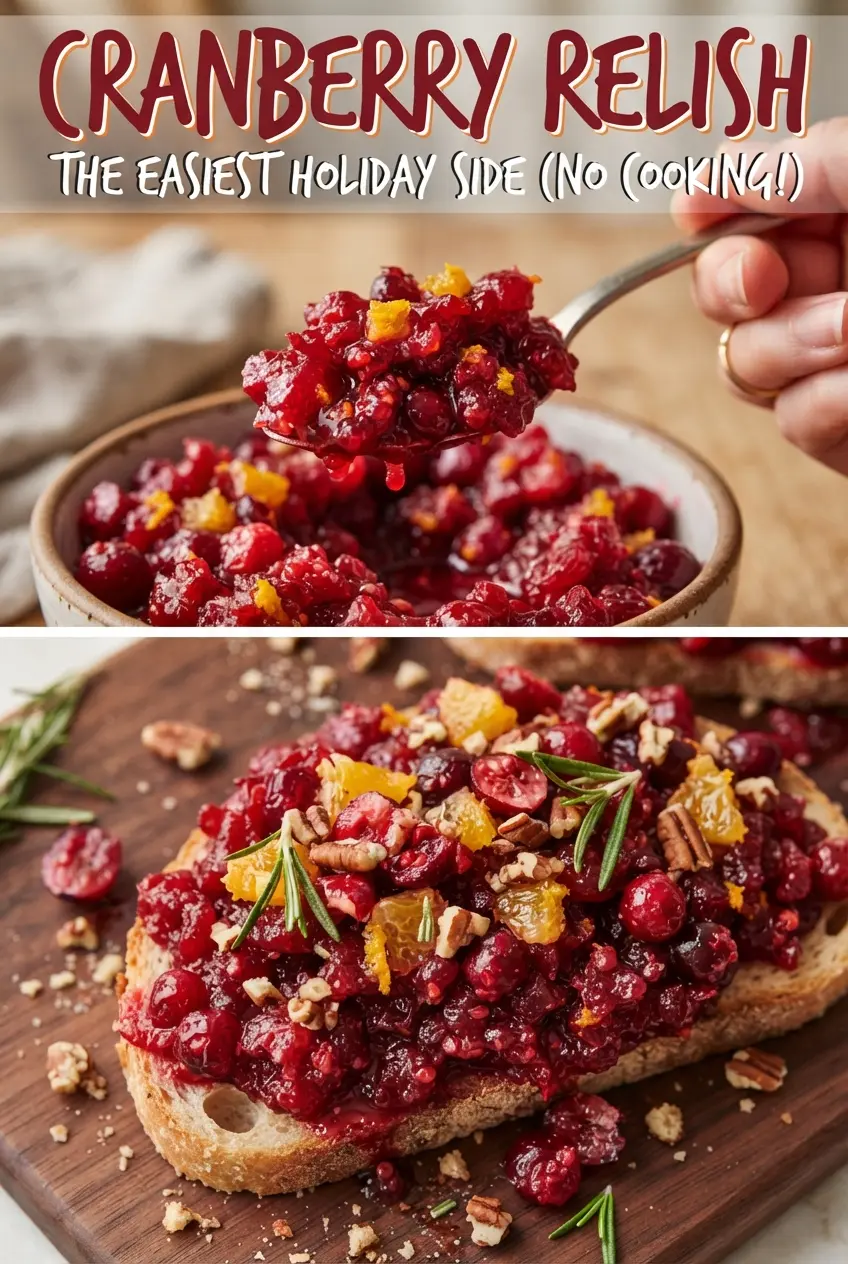
Cranberry Relish
Ingredients
Equipment
Method
- Pulse fresh cranberries in a food processor until coarsely chopped, then transfer to a bowl. Stop when you still see chunky pieces rather than a puree.
- Pulse the orange and apple in the food processor until finely chopped. Scrape down as needed so the pieces are evenly small.
- Stir the finely chopped orange, apple, and sugar into the coarsely chopped cranberries until evenly distributed. The mixture should look glossy and speckled.
- Cover and chill at 4°C or colder for at least 4 hours or overnight so the sugar dissolves and the flavors meld. Look for a thicker, more unified relish after chilling.
- Stir in the chopped pecans just before serving. Use a visible mix-in so you get crunchy flecks in every spoonful.