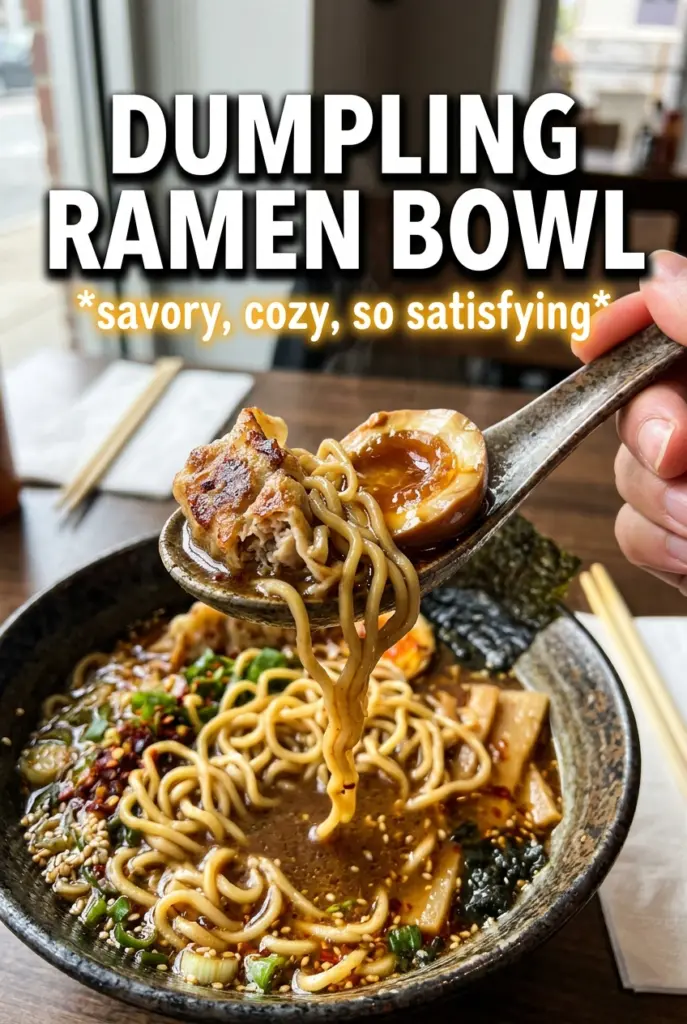
Dumpling ramen bowl has the kind of comfort that lands fast and eats like a full meal. The broth turns savory and a little glossy from miso and sesame oil, the dumplings stay tender, and the ramen noodles soak up just enough of that broth without going limp. Add a jammy egg, sweet corn, and crisp-tender bok choy, and every spoonful gives you a mix of soft, chewy, rich, and bright.
What makes this version work is keeping the broth light but layered. White miso goes in after the broth comes to a simmer, not before, so it dissolves cleanly and keeps its gentle depth. Cooking the noodles separately also matters; if they sit in the pot with the broth, they steal all the liquid and turn the whole bowl cloudy and heavy. The dumplings cook right in the broth, which saves a pan and lets their seasoning drift into the soup in the best way.
Below you’ll find the timing that keeps the eggs set with a soft center, the one step that keeps ramen noodles springy, and a few easy swaps if you want to make it with what’s already in your freezer.
The broth had that deep savory taste and the dumplings stayed juicy instead of getting mushy. Cooking the noodles separately kept everything springy, and the soft-boiled eggs were perfect at 7 minutes.
Save this dumpling ramen bowl for the nights when you want fast comfort with miso broth, springy noodles, and a jammy egg.
The Broth Needs a Light Hand, Not a Heavy Boil
The most common mistake with a bowl like this is treating the broth like it needs to cook down hard. It doesn’t. Miso gets dull and grainy if it boils aggressively, and sesame oil loses its clean nutty edge. A gentle simmer keeps the broth clear, savory, and balanced, which matters because this soup depends on a clean base more than a thick one.
Another place people go wrong is overcooking the dumplings. Frozen dumplings need enough time to heat through, but once they’re fully cooked, they only need a minute or two more before the wrappers start to soften too much. Keep the broth at a steady simmer and stop as soon as the dumplings float and feel plump.
- White miso — This gives the broth its round, mellow depth. Red miso works too, but it brings a stronger, saltier edge, so use a little less and taste before adding more soy sauce.
- Mirin — A small amount smooths out the salt and gives the broth a subtle sweetness. If you skip it, the soup can taste flatter and more one-note.
- Sesame oil — Add it with the broth seasonings so the aroma spreads through the whole pot. Toasted sesame oil is the right choice here; plain sesame oil won’t give you the same finish.
- Frozen dumplings — Straight from the freezer is the move. Thawing them first can make the wrappers sticky and fragile before they ever hit the broth.
What Each Ingredient Is Doing in the Bowl
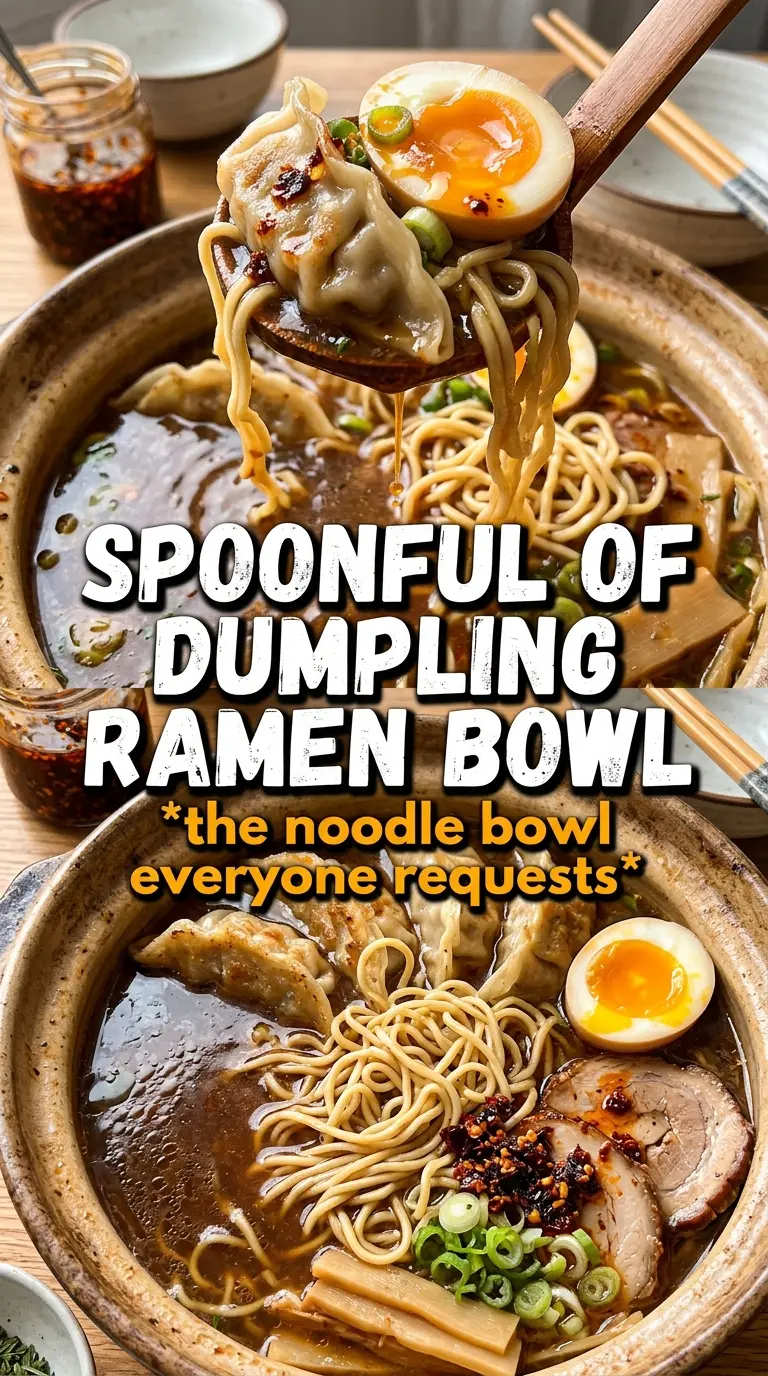
- Chicken broth — This is the backbone of the bowl. Use a broth you’d actually drink on its own, because the miso and soy only build on what’s already there.
- Bok choy — It adds freshness and a little crunch. Chop it into halves or large pieces so it holds its shape instead of disappearing into the broth.
- Corn — The sweet pops matter here because they keep the bowl from tasting all savory all the time. Frozen corn works perfectly, and you don’t need to thaw it first.
- Ramen noodles — Fresh noodles give the best springy texture. If you use dried instant ramen, discard the seasoning packet and undercook the noodles by about 30 seconds so they stay firm in the hot broth.
- Soft-boiled eggs — The jammy yolk turns into part of the sauce once it breaks into the broth. Seven minutes is the sweet spot for a set white and a still-runny center.
Building the Bowl Without Losing the Noodle Texture
Start with the seasoned broth
Bring the broth to a simmer first, then whisk in the miso until it disappears completely. Soy sauce, mirin, and sesame oil go in at this stage so the broth tastes rounded before anything else gets added. If the miso clumps, the broth wasn’t hot enough to dissolve it, but if it boils hard, the flavor gets blunt, so stay in that gentle simmer zone.
Cook the dumplings until they’re plump
Add the frozen dumplings straight to the broth and let them simmer until they’re heated through and floating. You’re looking for wrappers that look tender and slightly translucent at the edges, not torn or swollen. If the pot is at a rolling boil, the wrappers can split and leak into the broth.
Wilt the bok choy at the end
Bok choy only needs a couple of minutes. Add it after the dumplings are cooked so it stays bright and crisp-tender instead of turning olive and limp. The stalks should lose their raw edge, but the leaves should still look fresh when you ladle everything into the bowls.
Assemble the bowls fast
Cook the ramen noodles separately, drain them well, and divide them between bowls before adding the broth. This keeps the noodles springy and stops them from drinking up all the liquid while they sit. Top each bowl with egg, corn, green onions, nori, sesame seeds, and a final drizzle of chili oil right before serving.
Ways to Adapt This Bowl Without Losing the Point
Make it vegetarian with vegetable broth and veggie dumplings
Swap in vegetable broth and frozen vegetable dumplings, then keep the miso, soy, and sesame oil the same. You’ll lose a little richness from the chicken broth, so taste the finished broth and add a touch more miso if it needs depth.
Go gluten-free with tamari and GF dumplings
Use gluten-free tamari in place of soy sauce and choose dumplings and noodles that are labeled gluten-free. Rice ramen or rice noodles will change the chew a bit, but the broth still carries the same savory, sesame-miso balance.
Make it extra hearty with mushrooms and spinach
Add sliced mushrooms with the dumplings and stir in spinach during the last minute of cooking. Mushrooms deepen the broth, while spinach softens instantly and gives the bowl a little more body without changing the cooking method.
Storage and Reheating
- Refrigerator: Store the broth, dumplings, noodles, and toppings separately for up to 3 days. The noodles soften fast if they sit in the broth.
- Freezer: Freeze the broth and dumplings together if needed, but freeze the noodles separately only if they’re uncooked. Cooked noodles don’t thaw back with a good texture.
- Reheating: Warm the broth and dumplings gently on the stove until hot, then add freshly cooked noodles and toppings. Don’t boil the broth hard during reheating or the dumplings can break apart.
Answers to the Questions Worth Asking
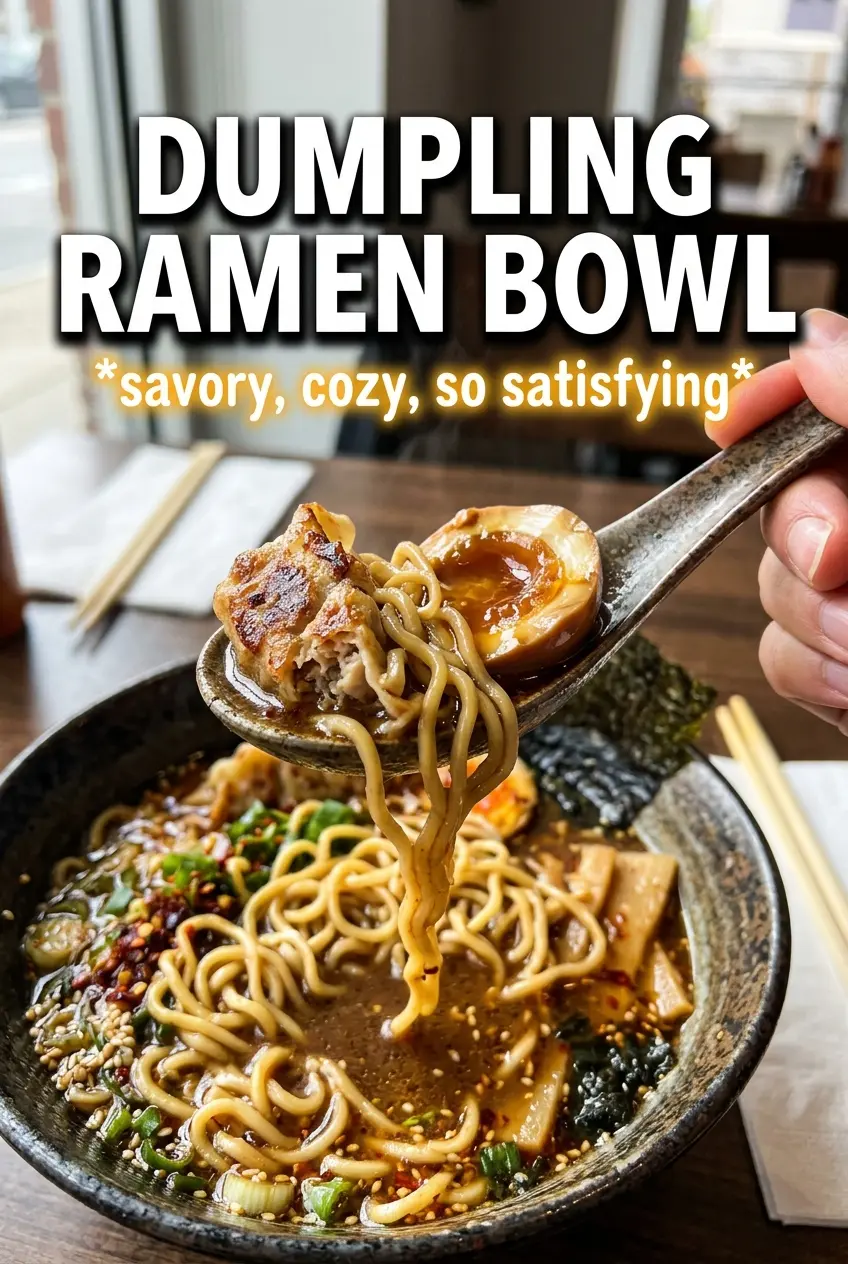
Dumpling Ramen Bowl
Ingredients
Equipment
Method
- Bring the chicken broth to a simmer in a Dutch oven over medium heat, then whisk in the white miso paste, soy sauce, mirin, and sesame oil until smooth.
- Keep the broth at a steady simmer so it stays hot for cooking and ladling into bowls.
- Add the frozen dumplings to the simmering broth and cook for 5-7 minutes until cooked through, stirring once halfway.
- Add the bok choy and cook for 2-3 minutes until wilted.
- Cook the fresh ramen noodles separately according to package instructions until tender, then drain.
- Divide the drained ramen noodles between 4 bowls.
- Ladle the hot broth, dumplings, and bok choy over the noodles in each bowl.
- Top each bowl with a halved soft-boiled egg, corn, and sliced green onions.
- Finish each bowl with nori, sesame seeds, and chili oil.