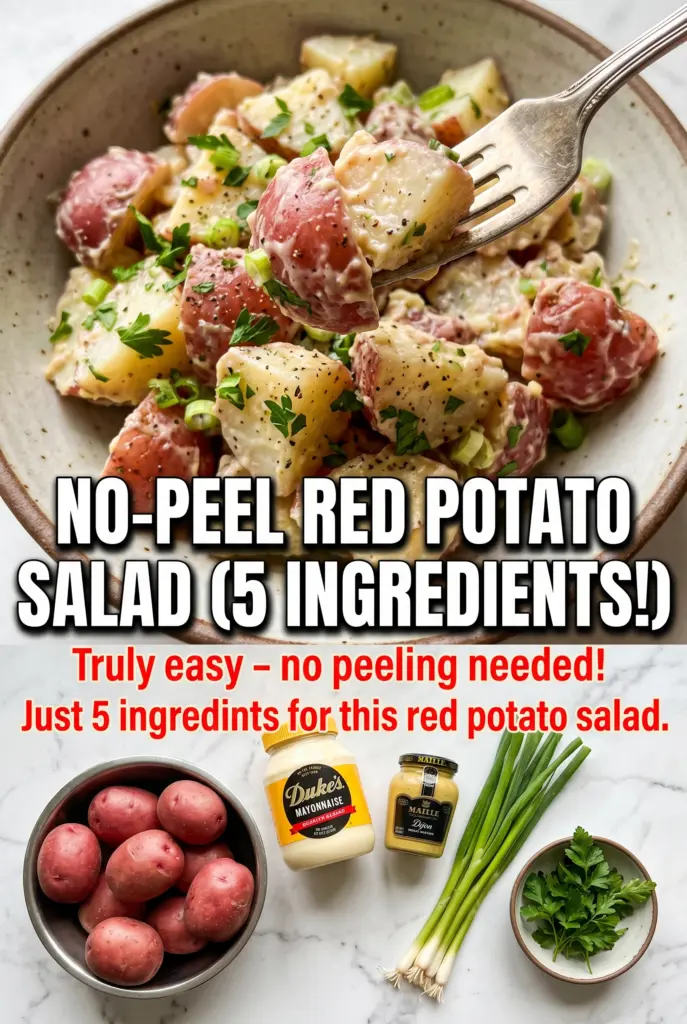
Red skinned potato salad earns its place at the table because it stays creamy without turning heavy, and the potatoes keep just enough shape to hold the dressing instead of collapsing into a mash. The skin-on cubes give each bite a little more texture, which matters here — this isn’t the kind of salad that should feel bland or overly smooth.
The trick is starting the potatoes in well-salted water and stopping the cook when they’re tender but still intact. Red potatoes hold their structure better than russets, and that means the dressing can cling to the outside while the inside stays soft. A little Dijon and vinegar wake up the mayonnaise so the salad tastes balanced instead of flat.
Below you’ll find the timing that keeps the potatoes from getting watery, plus the small adjustments I use when I want the salad a little tangier or need to make it ahead for a crowd.
The potatoes held their shape after chilling and the dressing coated every piece without getting greasy. I added the parsley at the end and it stayed bright all the way to dinner.
Save this creamy red skinned potato salad for cookouts, potlucks, and the kind of make-ahead side dish that tastes even better after it chills.
The Trick Most Potato Salads Miss: Dressing Warm Potatoes Without Breaking Them
Potato salad gets weird when the potatoes are either too hot or too cold at the wrong moment. If they go into the dressing steaming, the mayo can loosen too much and slide off instead of coating. If they cool completely before seasoning, the potatoes taste flat in the middle and the salad needs more salt than you’d expect. The sweet spot is warm enough to absorb flavor, cool enough to keep the dressing stable.
Red potatoes help because they stay waxy and firm after cooking. That skin-on structure is the difference between a bowl of clean cubes and a bowl of potato paste. Cut the potatoes into even pieces so they finish at the same time; uneven chunks lead to some pieces breaking apart while others stay underdone.
What Each Ingredient Is Actually Doing In This Salad
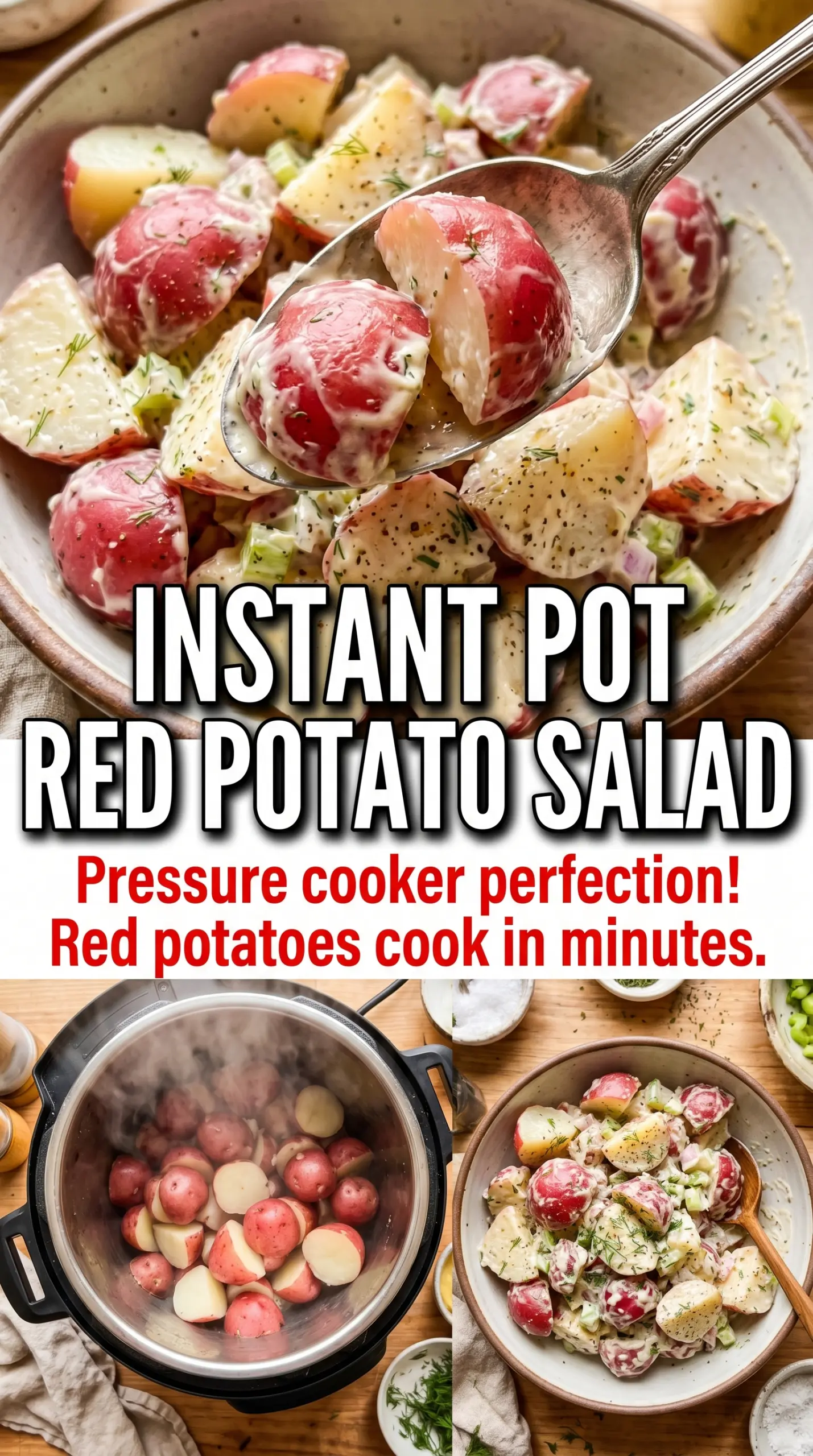
- Red potatoes — These are the backbone of the salad. Their thin skins and waxy flesh hold up after boiling and chilling, which gives you a salad with real texture instead of mush.
- Mayonnaise — This brings the creamy body. Use a brand you already like eating straight from the jar, because there isn’t anywhere for a bad mayo flavor to hide.
- Dijon mustard — Dijon adds sharpness and helps the dressing taste seasoned from the inside out. Yellow mustard works in a pinch, but the flavor is softer and less balanced.
- White wine vinegar — This brightens the dressing and keeps the mayo from tasting heavy. If you only have apple cider vinegar, use a little less since it reads a touch sweeter.
- Celery, green onions, and parsley — These give the salad crunch, bite, and freshness. The parsley matters more than it looks on paper; it keeps the bowl from feeling like all starch and cream.
Boil, Dress, Chill: The Order That Keeps the Salad Creamy
Cooking the Potatoes Evenly
Start the cubed potatoes in cold, salted water and bring them up together. That gives the centers time to cook before the outside turns ragged. Drain them when a knife slips in easily but the pieces still hold their edges. If they start falling apart in the pot, they’re overcooked and the salad will turn dense once you stir in the dressing.
Mixing the Dressing Before the Potatoes Cool
Stir the mayonnaise, Dijon, vinegar, salt, and pepper in a large bowl before the potatoes are fully cool. The dressing should taste a little stronger than you want in the finished salad because the potatoes will mellow it out. If it tastes flat now, it will taste flatter later. This is the point where people under-season, then wonder why the salad needs so much extra salt at the table.
Folding Everything Together
Add the potatoes, celery, green onions, and parsley, then toss gently until every piece is coated. Don’t stir hard or the edges of the potatoes will break down and thicken the bowl into a paste. A wide spatula or big spoon works better than a whisk. Once the dressing looks evenly distributed, stop mixing.
Chilling for the Right Texture
Cover the salad and chill it for at least 2 hours. That resting time lets the potatoes finish absorbing seasoning and helps the dressing settle into a creamy, cohesive texture. If you serve it immediately, the mayo can taste loose and the flavors won’t have had time to come together. Give it one last taste before serving and add a pinch more salt if it needs it.
Three Small Changes That Still Keep This Potato Salad Working
Dairy-Free Version That Keeps the Same Creamy Finish
This recipe is already dairy-free as written if your mayonnaise is dairy-free, which most standard brands are. Check the label if you need to avoid dairy strictly. The texture stays the same because the creaminess comes from the mayo, not from any milk or sour cream.
Swap In Sour Cream for a Tangier Bowl
Replace up to half the mayonnaise with sour cream if you want a sharper, lighter-tasting salad. The result is less rich and a little looser, so it’s a good move when you’re serving heavier barbecue mains. Don’t swap all of it or the dressing turns thin and loses the cling that makes potato salad satisfying.
Make It Ahead Without Losing Texture
This salad is a good make-ahead side because the potatoes actually improve after a chill. For the best texture, add the parsley right before serving if you want it extra bright, and hold back a spoonful of dressing to refresh the bowl after refrigeration. The potatoes will absorb some of the moisture overnight, so that extra spoonful helps bring the salad back to life.
Add Eggs for a More Classic Deli-Style Salad
Chopped hard-boiled eggs make the salad richer and more filling, and they fit naturally with the creamy dressing. Fold them in at the end so they don’t break up too much. The flavor becomes a little more old-school and the texture softer, which works well if you want this to eat like a full picnic salad instead of a crisp side.
Storage and Reheating
- Refrigerator: Store covered for up to 4 days. The salad thickens as it chills, and the potatoes soak up some of the dressing.
- Freezer: Don’t freeze it. Mayonnaise and cooked potatoes both change texture badly after thawing, and the salad turns watery and grainy.
- Reheating: This salad is meant to be served cold, not reheated. If it tightens up in the fridge, let it sit at room temperature for 15 to 20 minutes and stir in a spoonful of mayo or a splash of vinegar to loosen it.
Answers to the Questions Worth Asking
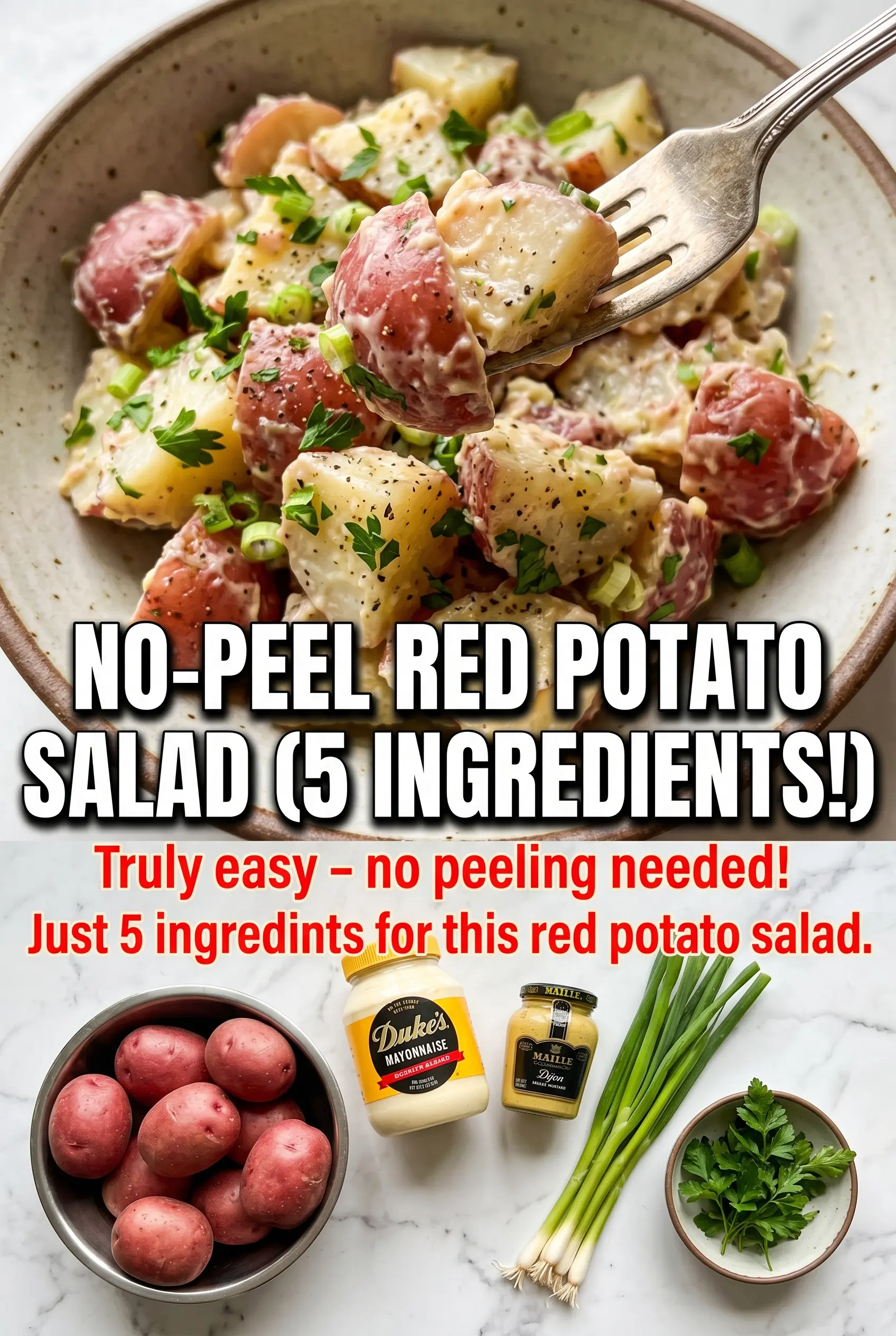
Easy Red Skinned Potato Salad
Ingredients
Equipment
Method
- Boil the red potatoes in a large pot of water over high heat until tender, 12-18 minutes. Visual cue: a fork should slide in easily with no hard center.
- Drain the potatoes and let them cool until warm or room temperature. Visual cue: the cubes look glossy but no longer steaming heavily.
- Whisk together mayonnaise, Dijon mustard, and white wine vinegar in a bowl. Visual cue: the mixture becomes smooth and thick.
- Season the dressing with salt and pepper to taste. Visual cue: the dressing looks evenly speckled.
- Combine the cooled potatoes with the diced celery, sliced green onions, and chopped parsley. Visual cue: the herbs and vegetables are distributed across the potato cubes.
- Pour the dressing over the potato mixture and toss well until every cube is coated. Visual cue: the salad looks creamy with no dry potatoes visible.
- Refrigerate the potato salad for 2 hours before serving. Visual cue: it thickens slightly and looks set around the potato cubes.