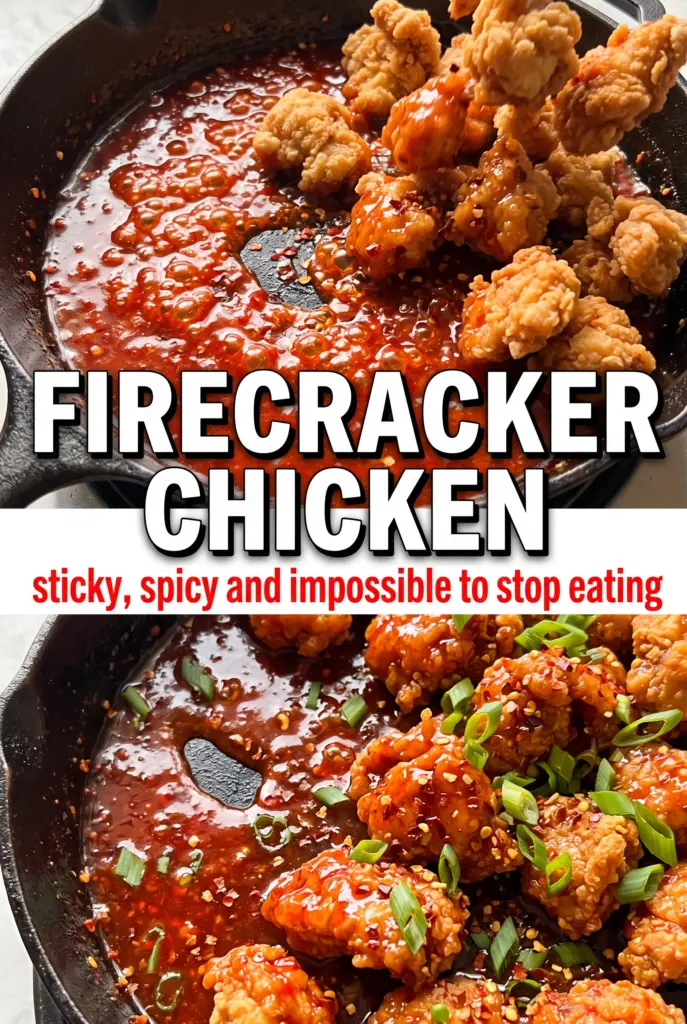
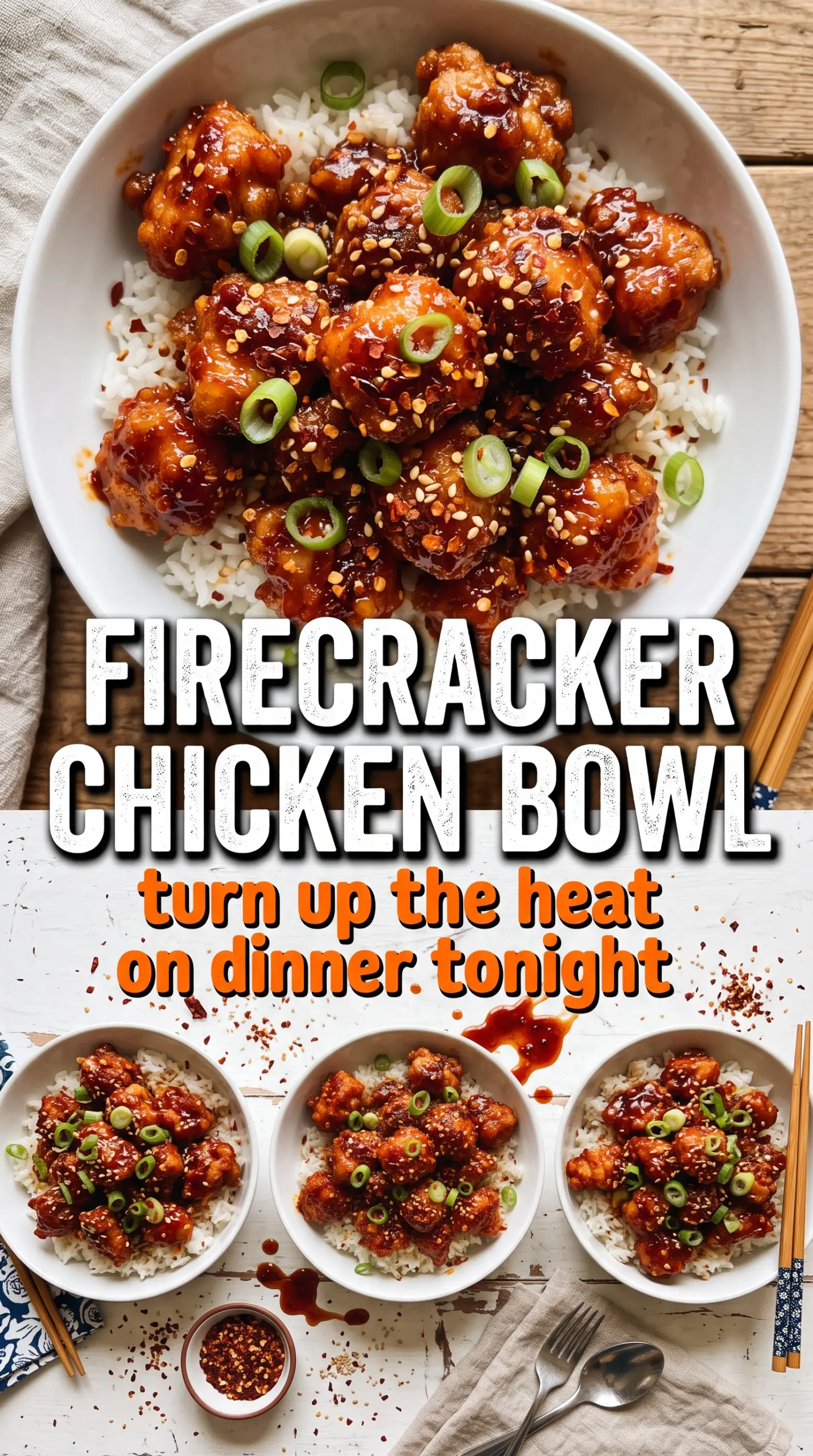
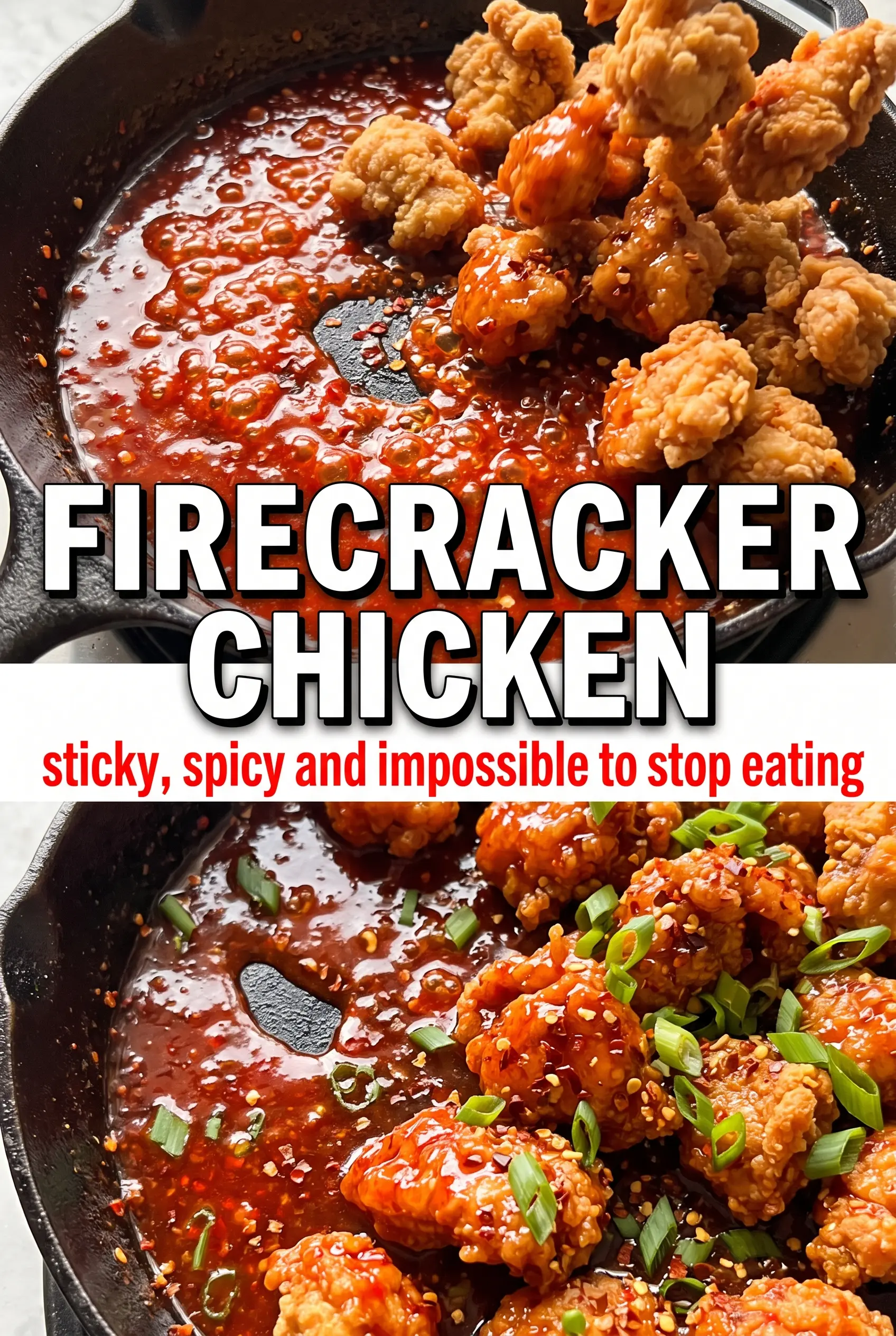
Crispy firecracker chicken hits the plate with a sticky, glossy coating that clings to every bite instead of sliding off into a puddle. The chicken stays tender inside, the crust stays shattery around the edges, and the sauce brings that sweet-heat balance that keeps you reaching for another piece. It eats like takeout, but the texture is better because the chicken gets fried before it ever meets the sauce.
The trick is in the double coating and the quick sauce. Cornstarch helps the chicken crisp, flour gives it structure, and the short fry time keeps the pieces juicy. The sauce uses butter, brown sugar, hot sauce, and a little vinegar, which means it thickens fast without tasting flat or syrupy. A short return to the pan after tossing gives you that lacquered finish that makes firecracker chicken worth making at home.
Below, I’ve included the small details that matter here: how to keep the crust crisp, what to do if your sauce gets too sharp, and a few swaps for making it work with what’s already in your kitchen.
The sauce thickened up beautifully and the chicken stayed crisp even after tossing it in. I served it over rice and my husband went back for seconds before I even sat down.
Keep this firecracker chicken handy for the nights when you want crispy chicken bites in a sticky sweet-heat sauce without ordering takeout.
The Crisp Coating Has to Happen Before the Sauce
This dish falls apart when the chicken goes soggy before it meets the pan. The coating needs to set in hot oil first, which gives you a dry, crisp shell that can take the sauce without turning limp. If the oil is too cool, the flour mixture absorbs it and the crust tastes greasy instead of light and crunchy.
The other mistake is crowding the pan. Too many pieces at once drop the oil temperature fast, and that’s when the coating starts steaming. Fry in batches and pull the chicken when it’s deep golden and the center is cooked through; the pieces will finish their last minute of caramelizing once the sauce hits.
What Each Ingredient Is Actually Doing in Firecracker Chicken
- Chicken breasts — Bite-sized pieces cook quickly and stay tender if you stop as soon as they’re cooked through. Thighs work too, but they’ll give you a richer, softer bite and won’t stay quite as crisp after saucing.
- Cornstarch and flour — This combo is what gives the crust its crunch and a little staying power. Cornstarch alone can feel fragile; flour alone browns, but it doesn’t give the same crisp shell. If you only have flour, the coating will still work, just expect a less shattery finish.
- Hot sauce, brown sugar, butter, and vinegar — This is the sauce’s backbone. The hot sauce brings heat and tang, the brown sugar gives the sticky glaze, the butter rounds everything out, and the vinegar keeps it from tasting heavy. Skip the vinegar and the sauce gets flat fast.
- Red pepper flakes — These add a sharper, more visible heat that lingers on the tongue. Start with the smaller amount if you want a sweeter sauce, then push it higher if you like the burn to show up after the first bite.
- Soy sauce — Just a little gives the glaze depth and keeps the sweetness from taking over. Use low-sodium if that’s what you keep around; the sauce still tastes balanced.
Getting the Chicken Crisp, the Sauce Glossy, and the Finish Sticky
Coating the Chicken Evenly
Toss the chicken pieces until every surface looks lightly dusted, not caked. You want a thin, even coating that turns crisp in the oil, not a heavy shell that tastes doughy in the middle. If the pieces clump together, shake off the excess and separate them before they hit the pan.
Frying to a Deep Golden Color
Heat the oil to 375°F and keep the pieces moving just enough so they don’t stick. The coating should turn a rich golden color and feel set before you pull it. If the outside browns too fast while the inside is still raw, the oil is too hot; if it looks pale after several minutes, the oil is too cool.
Building the Firecracker Sauce
Combine the sauce ingredients over medium heat and stir until the butter melts and the sugar dissolves. The sauce should look smooth, shiny, and slightly thickened, with tiny bubbles around the edges. If it looks separated or oily, lower the heat and keep stirring until it comes back together.
Coating and Caramelizing
Toss the fried chicken in the sauce until every piece is lacquered, then return it to the pan for a minute or two. That short second cook is what makes the glaze cling instead of pooling in the bottom of the bowl. Leave it too long and the crust softens; pull it as soon as the sauce looks tight and glossy.
Make It with Chicken Thighs
Boneless thighs give you a juicier, richer bite and hold up nicely in the sauce. They brown a little slower than breasts, so give them an extra minute or two in the oil and cut them into similar-sized pieces so they finish at the same time.
Gluten-Free Firecracker Chicken
Swap the all-purpose flour for a gluten-free flour blend and use tamari instead of soy sauce. The crust still fries up crisp, though it may be a little more delicate, so handle the chicken gently when tossing it in the sauce.
Less Heat, Same Sticky Glaze
Cut the red pepper flakes in half and use a milder hot sauce if you want the sweetness to lead. The sauce will still caramelize and cling the same way; you’re just dialing back the burn without losing the signature sticky finish.
Storage and Reheating
- Refrigerator: Store leftovers in an airtight container for up to 3 days. The coating softens, but the flavor stays bold.
- Freezer: You can freeze the cooked chicken before saucing, but I don’t recommend freezing the finished dish. The glaze turns sticky in a bad way and the crust loses its crunch.
- Reheating: Reheat the chicken in a 375°F oven or air fryer until hot and crisp again, then warm the sauce separately and toss it together at the end. Microwaving sends the coating straight to soggy.
Answers to the Questions Worth Asking
Firecracker Chicken
Ingredients
Equipment
Method
- Toss the chicken with cornstarch, flour, salt, pepper, and garlic powder until every piece is coated.
- Let the coated chicken rest for 20 minutes to lightly hydrate the coating before frying.
- Heat vegetable oil in a cast iron skillet to 375°F, then fry the chicken in about 1/2 inch of oil.
- Fry for 3-4 minutes per side until the bites are golden and cooked through, then drain.
- Combine hot sauce, brown sugar, butter, apple cider vinegar, soy sauce, garlic powder, and red pepper flakes in a saucepan over medium heat.
- Stir until the butter melts and the sauce becomes smooth and glossy, about 2-3 minutes.
- Toss the crispy chicken in the firecracker sauce until fully coated, using a glossy sticky layer as a visual cue.
- Return the coated chicken to the pan for 1-2 minutes to caramelize lightly.
- Serve over steamed rice and top with sesame seeds and sliced green onions.