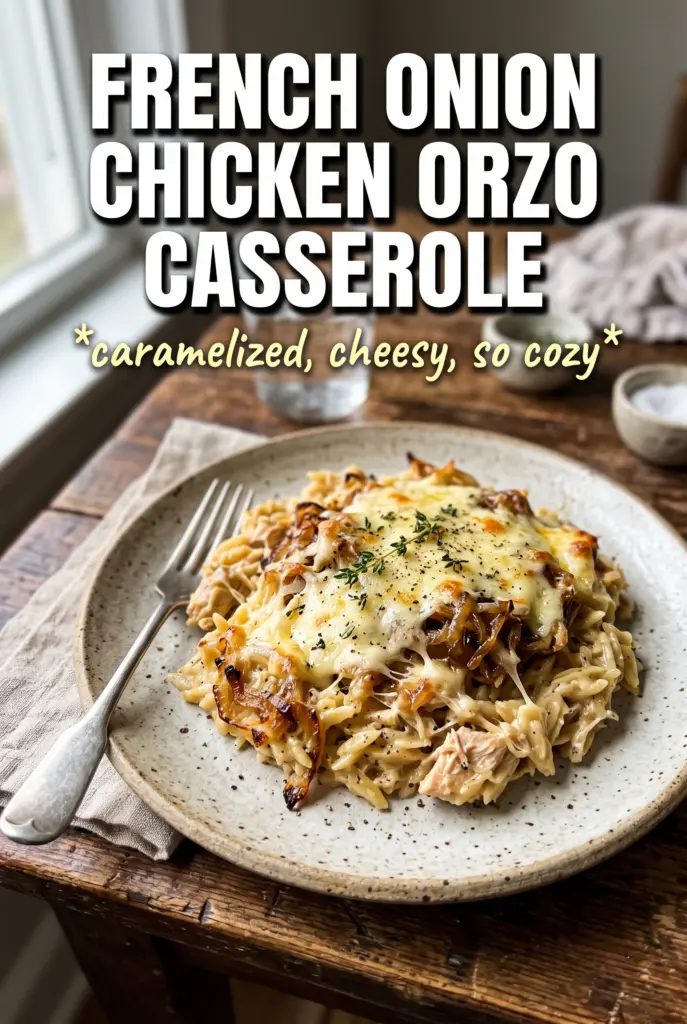
Deeply caramelized onions and a bubbling Gruyere cap turn this French Onion Chicken Orzo Casserole into the kind of skillet dinner people keep thinking about after the plates are cleared. The orzo cooks right in the broth, so it picks up every bit of onion sweetness and chicken richness instead of tasting like a separate pasta tossed into sauce at the end. What you get is creamy, savory, and sturdy enough to scoop cleanly, with a crust on top that cracks a little under the spoon.
The key here is patience with the onions. If they stay pale, the whole dish tastes flat; if you rush them, you miss the deep French onion flavor that makes this casserole stand out. The wine goes in after the garlic and thyme have had a minute to wake up, and the cream cheese gets stirred in off a hard boil so the sauce stays smooth instead of grainy.
Below, I’ve included the exact cues I watch for at each stage, plus a few smart swaps and storage notes for the nights when you want dinner to do a little more work for you.
The onions took their time, but they were worth it. The sauce turned out creamy without being heavy, and the Gruyere browned into the kind of crust that had everyone scraping the corners of the baking dish.
Save this French Onion Chicken Orzo Casserole for the nights when you want caramelized onions, creamy orzo, and a golden Gruyere top in one pan.
The Part Most One-Pan Casseroles Get Wrong
The difference between a bland pasta bake and a casserole with real French onion depth comes down to the onions. They need to cook until they’re soft, jammy, and a little sticky at the edges, not just translucent. That slow browning does more than add sweetness; it gives the broth and wine something to cling to, which is why the finished sauce tastes layered instead of one-note.
The other trap is treating the orzo like a side dish instead of the structure of the casserole. It goes in uncooked, where it can absorb the broth and release starch at the same time. If you pre-cook it, the dish turns heavier and softer than it should. The bake finishes the pasta while the top turns golden, and that timing is what keeps the texture balanced.
- Onions — Yellow onions are the right choice here because they caramelize with enough sweetness to mimic classic French onion soup. Sweet onions work too, but they can go a little soft and lose some of that savory edge.
- Dry white wine — This sharpens the sauce and lifts the browned onion flavor. If you don’t cook it for a couple of minutes before adding the broth, the casserole can taste a little boozy.
- Gruyere — This is the cheese that gives the top its nutty, melty finish. Swiss cheese is the closest substitute, but it’s milder and less complex.
- Cream cheese — It smooths out the broth and gives the sauce body without making it heavy. Full-fat cream cheese melts best; reduced-fat versions can turn a little loose or grainy.
What Each Ingredient Is Actually Doing in This Recipe
- Primary ingredient (the star) — Quality matters most. Choose the best you can find.
- Cooking medium (oil, butter, or broth) — This carries flavors and prevents dryness.
- Seasonings (salt, pepper, spices, herbs) — Layer flavors so nothing overpowers. Build depth gradually.
- Aromatics (garlic, onion, herbs) — Cook with fat to bloom flavors. Become the foundation.
- Supporting ingredients — Complement the main ingredient without overpowering it.
- Sauce or liquid (if applicable) — Brings flavors together. Balance richness with acid.
- Acid (lemon, vinegar, wine, or other) — Brightens and prevents flat-tasting results.
- Final finish (garnish, glaze, or sauce) — Prevents one-dimensional taste and adds visual appeal.
Building the Onion Base Without Breaking the Sauce
Start by giving the onions time. Cook them in butter over medium heat and stir often enough to keep the edges from scorching, but not so often that they never color. You’re looking for deep amber strands with a little fond stuck to the pan, not pale onions swimming in fat. If the pan starts looking dry before the onions are ready, add a splash of broth or water and keep going.
Once the garlic and thyme are fragrant, the wine goes in and needs a minute or two to reduce. That step matters because it cooks off the sharp alcohol note and concentrates what’s left. When the broth, Worcestershire, chicken, and orzo go in, bring everything to a gentle simmer before the cream cheese is added. If the liquid is boiling hard when the cheese goes in, the sauce can break instead of turning smooth.
Caramelizing the Onions
Let the onions cook until they collapse, then slowly take on color around the edges and deepen to a rich brown. The sound changes as they soften; it goes from a raw sizzle to a quieter, sticky pop. If they start to catch too fast, lower the heat. Dark spots are good, black spots are bitter.
Finishing the Base
Add the garlic and thyme once the onions are fully browned, not before, or the garlic can burn while the onions are still catching up. Stir in the wine and scrape the bottom well so the browned bits dissolve into the liquid. When the broth and Worcestershire go in, the mixture should look loose and brothy at first; the orzo will change that as it cooks.
Baking to the Right Texture
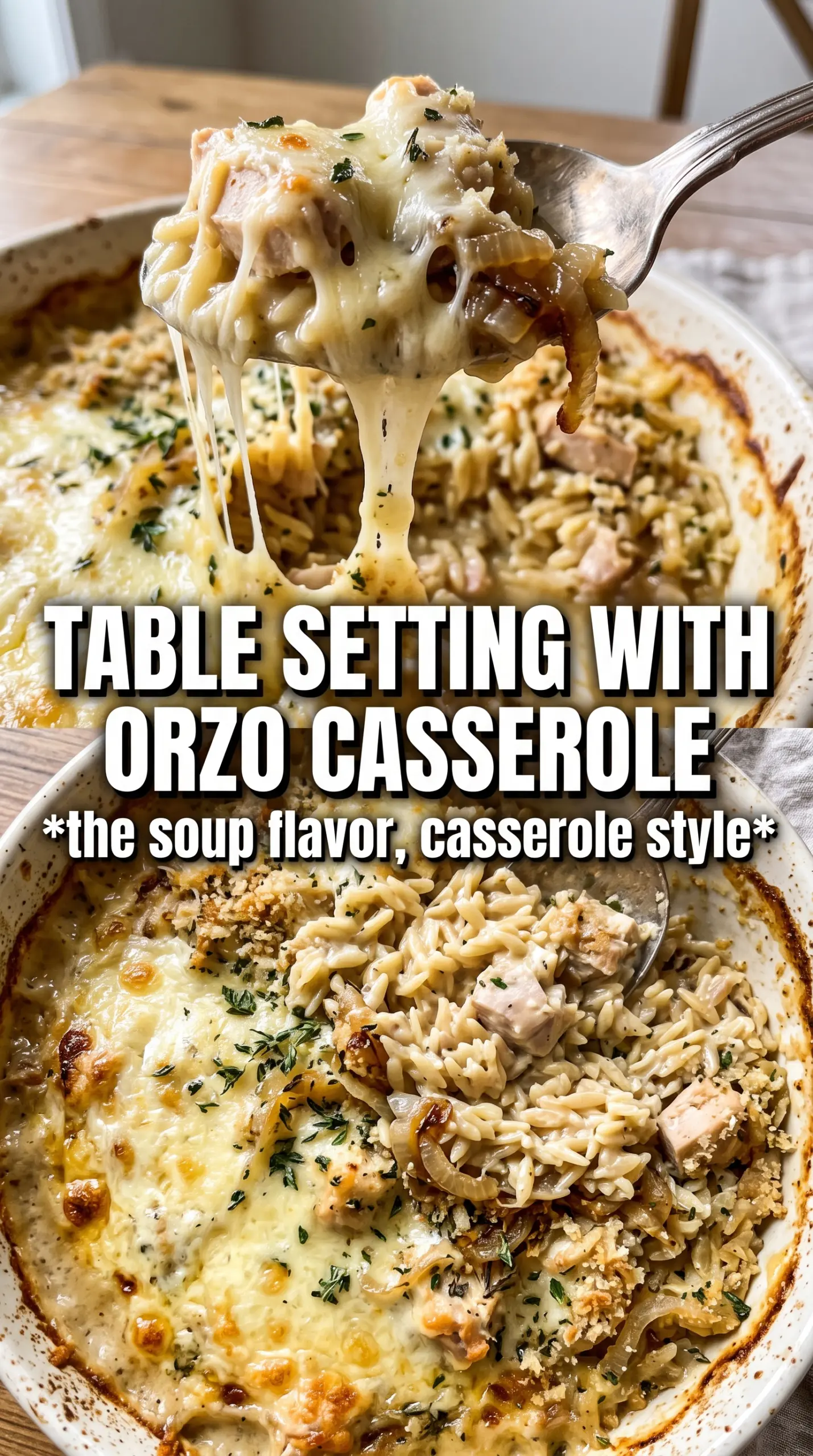
Stir in the cream cheese until the sauce looks smooth, then top with the Gruyere and move the skillet straight into the oven. By the end of the bake, the orzo should be tender with just a little bite left in the center, and the cheese should be melted with browned spots across the top. If the casserole looks dry before the orzo is done, it usually means the oven ran hot or the pan was too shallow.
How to Adapt It When You Need a Different Finish
Gluten-Free Swap
Use a sturdy gluten-free orzo or small rice-shaped pasta and watch the bake closely, since some brands soften faster than regular orzo. Keep the liquid amount the same at first, then check near the end; if it looks dry, add a small splash of broth before the cheese browns.
Dairy-Free Version
Swap the butter for olive oil and the cream cheese for a plain dairy-free cream cheese that melts well. The top won’t have the same nutty Gruyere crust, so use a dairy-free shredded mozzarella-style blend for browning, but expect a softer finish and less of that classic French onion richness.
Chicken Thighs Instead of Breast
Boneless chicken thighs stay a little juicier and give the casserole a richer flavor. Cut them to the same size as the breast pieces so they cook evenly in the same bake time.
Make-Ahead for Busy Nights
You can caramelize the onions earlier in the day and refrigerate them, which takes the longest part off your hands. Assemble the casserole right before baking so the orzo doesn’t start absorbing liquid too soon, or you’ll lose that creamy, spoonable texture.
Storage and Reheating
- Refrigerator: Store covered for up to 4 days. The orzo will thicken as it sits, so expect a firmer casserole the next day.
- Freezer: It freezes well in portions, but the sauce can loosen a little after thawing. Cool completely, wrap tightly, and freeze for up to 2 months.
- Reheating: Reheat covered in a 325F oven with a splash of broth to loosen the sauce. The biggest mistake is blasting it in the microwave until the cheese gets greasy and the chicken dries out.
Answers to the Questions Worth Asking
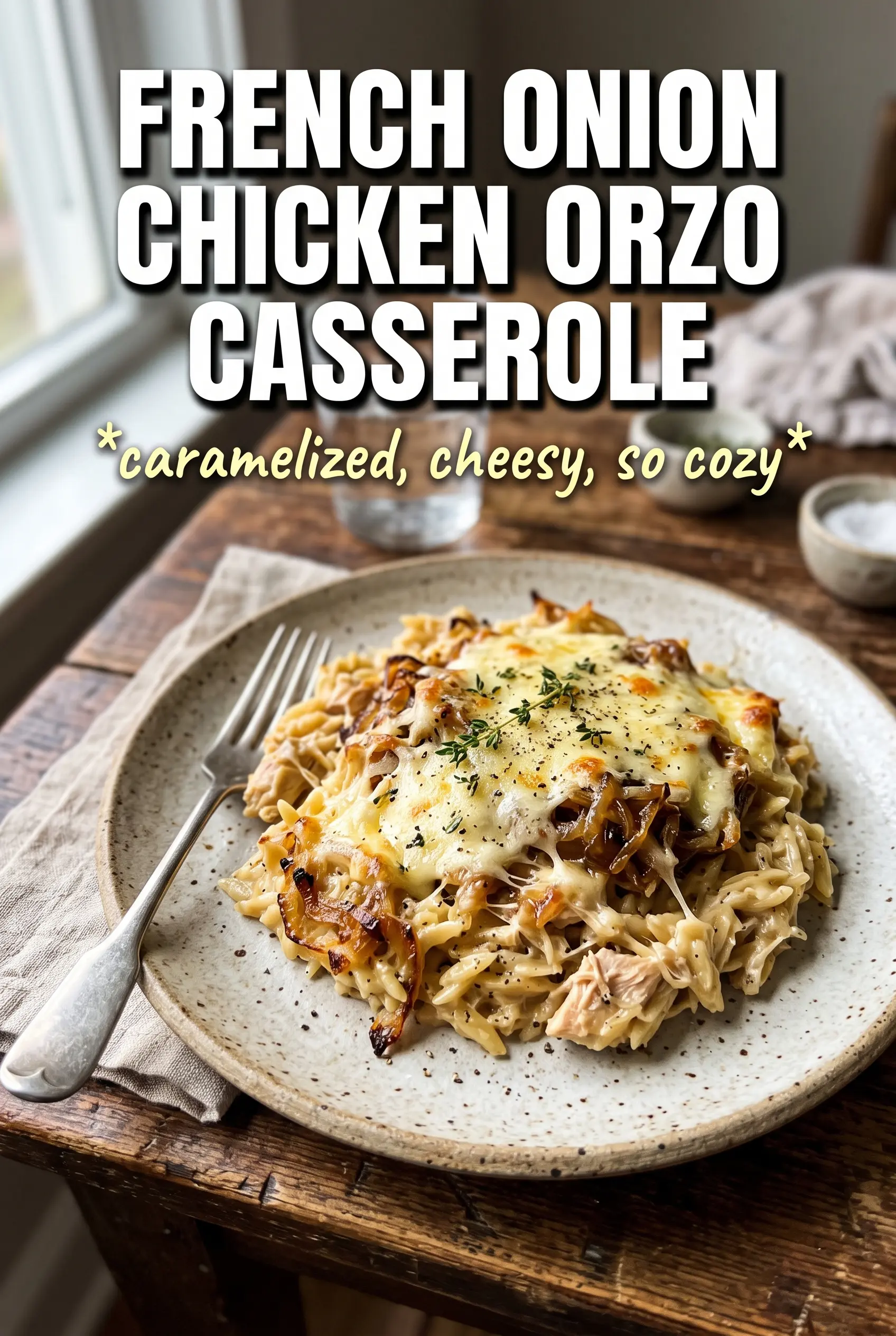
French Onion Chicken Orzo Casserole
Ingredients
Equipment
Method
- Preheat oven to 375F. Set a rack to the middle position so the casserole bakes evenly.
- Melt butter in a large oven-safe skillet over medium heat. Add onions and cook 30-35 minutes, stirring occasionally, until deeply caramelized and dark golden at the edges (visual cue: onions look jammy and brown).
- Add garlic and thyme and cook 2 minutes. Stir until fragrant (visual cue: steam and aroma, no raw garlic smell).
- Add wine and cook 2 more minutes. Let the liquid reduce slightly so the mixture looks glossy.
- Add beef broth, Worcestershire sauce, and uncooked orzo, then stir in diced chicken. Keep everything combined so the orzo is evenly coated.
- Bring the mixture to a simmer. Stir constantly and keep bubbling gently for a short moment before moving on.
- Stir in cubed cream cheese until melted. The sauce should turn creamy and smooth with no visible chunks (visual cue: thick, velvety texture).
- Season with salt and pepper to taste. Distribute evenly so every bite has seasoning.
- Scatter shredded Gruyère over the top. Cover the surface so it melts into a golden crust (visual cue: cheese layer fully covers).
- Bake 25-30 minutes until orzo is cooked, chicken is done, and cheese is golden. Remove when bubbling around the edges and the top looks browned and blistered.
- Garnish with fresh thyme before serving. Add it right after baking so it stays bright in color.