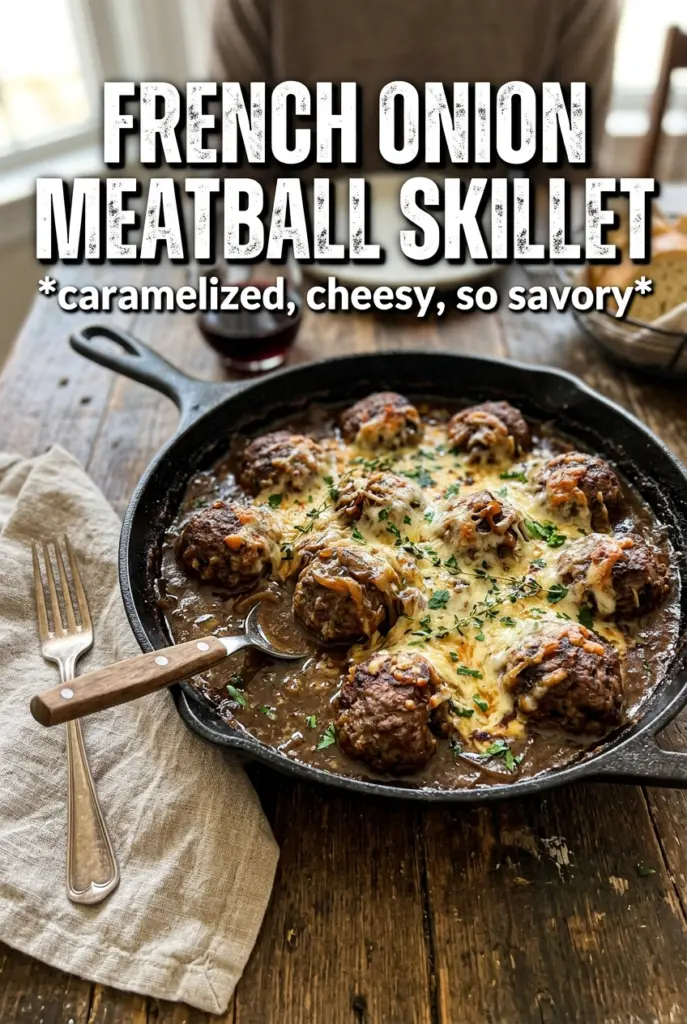
French onion meatballs hit that sweet spot between cozy and elegant: deeply caramelized onions, tender meatballs, and a bubbling blanket of Gruyere in one skillet. The broth turns rich and savory as it simmers around the meatballs, and the broiler gives the top that browned, stretchy finish you want when a dish is meant to come straight to the table.
What makes this version work is patience with the onions and restraint with the heat. If you rush the onions, you get sharp onion flavor instead of the jammy, almost-sweet base that makes this dish taste like French onion soup in dinner form. Browning the meatballs first gives the skillet fond, which adds depth to the sauce, and finishing under the broiler keeps the cheese from disappearing into the broth.
Below you’ll find the timing that keeps the onions from burning, the best way to keep the sauce balanced, and a few smart swaps if you need to adjust the recipe for what you’ve got on hand.
The onions cooked down into the sweetest, deepest broth, and the meatballs stayed tender even after simmering. My husband said it tasted like French onion soup met a meatball sub in the best way.
Love the melty Gruyere and caramelized onion sauce in this French Onion Meatball Skillet? Save it to Pinterest for the nights when you want something rich, savory, and made in one pan.
The Part Most People Rush: Building Sweet Onions Without Burning Them
The onions are the whole personality of this dish, and they need time. Medium-low heat lets them soften, sweat, and eventually turn deep golden brown without catching on the bottom of the pan. If you push the heat higher, the edges scorch before the centers melt down, and the sauce ends up tasting bitter instead of rich.
Use a wide skillet so the onions have room to cook instead of steam. Stir them often at the beginning, then more casually as they start to collapse and darken. A little sticking is normal; a hard, black crust is not. The brown bits left after the meatballs are a bonus, but the onions themselves should stay glossy and soft, not dry and brittle.
What Each Ingredient Is Actually Doing in the Skillet
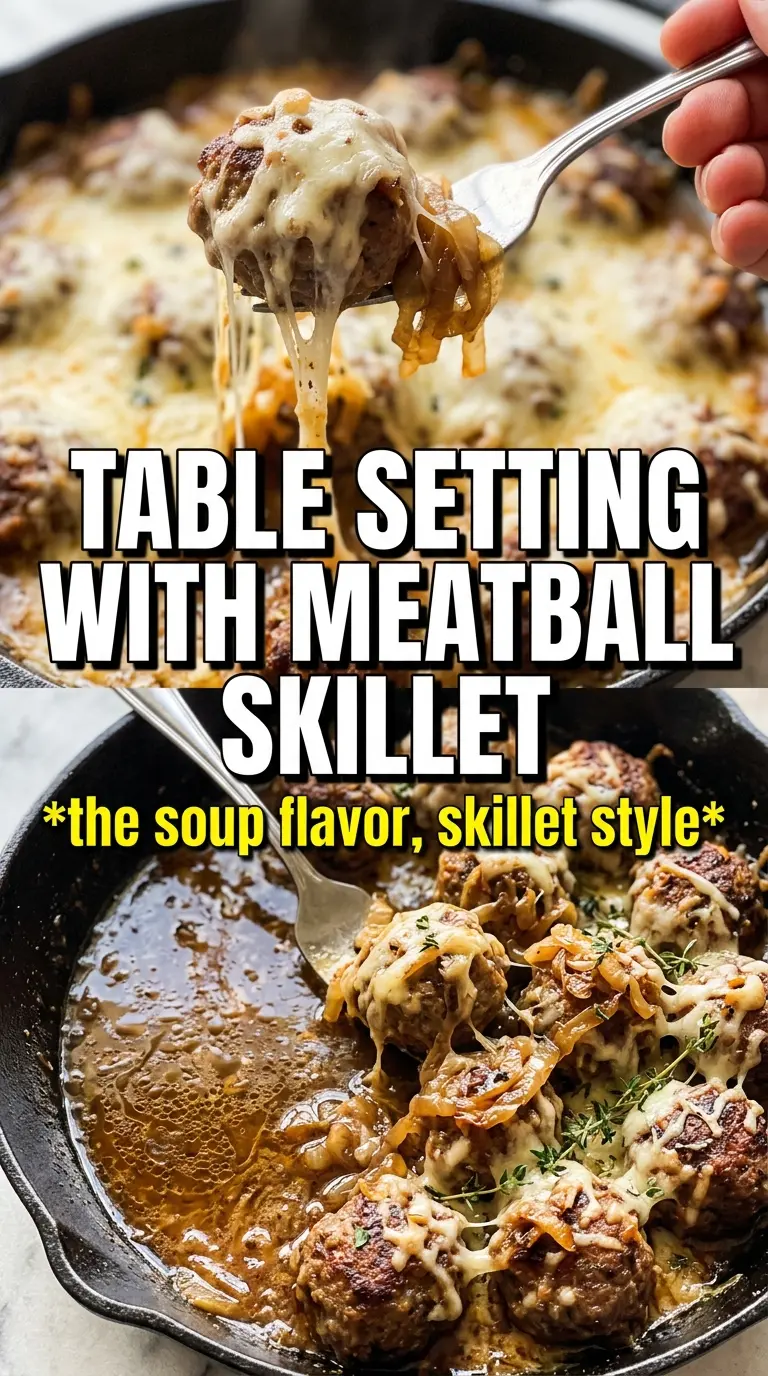
- Ground beef — Gives the meatballs enough fat to stay juicy while they simmer in the onion broth. Leaner beef works, but very lean meat can turn dry after the broiler, so I stick with regular ground beef here.
- Breadcrumbs and egg — These hold the meatballs together without making them dense. If you need a gluten-free version, use gluten-free breadcrumbs or crushed gluten-free crackers; the texture stays close as long as you don’t pack the meatballs too tightly.
- Worcestershire — This adds the savory backbone that makes the broth taste fuller. It matters in both the meatballs and the sauce, because it bridges the beef, onions, and cheese without needing a long ingredient list.
- Dry white wine — This deglazes the pan and lifts the browned bits into the sauce. If you don’t cook with wine, replace it with extra beef broth plus a small splash of white wine vinegar or lemon juice at the end for brightness.
- Gruyere — This is the cheese that gives you the signature nutty pull. Swiss cheese will melt fine, but Gruyere brings a deeper, more classic French onion flavor that holds up against the onions.
How to Keep the Meatballs Tender and the Broth Rich
Mixing the Meatballs Without Overworking Them
Combine the meatball ingredients just until the mixture comes together. If you keep kneading, the beef tightens up and the meatballs cook up firm instead of tender. Roll them into even sizes so they brown at the same rate, and stop the mixing as soon as you no longer see streaks of egg or dry breadcrumbs.
Browning for Flavor, Not for Cooking Through
Brown the meatballs in the buttered skillet until they have a deep golden crust on the outside. They don’t need to be cooked through at this stage; they’ll finish in the sauce later. If the skillet starts looking dry, lower the heat rather than adding more butter right away, because too much fat can keep the fond from developing properly.
Caramelizing the Onions in the Same Pan
After removing the meatballs, keep everything in the skillet and add the onions. The onions will pick up the browned bits from the meatballs as they cook, which is exactly where the flavor comes from. Once they turn jammy and dark golden, stir in the garlic and thyme for just a minute so the garlic doesn’t burn before you deglaze.
Finishing the Sauce and Broiler Top
Add the wine and scrape the bottom of the pan until the browned bits dissolve into the liquid. Stir in the broth and Worcestershire, then nestle the meatballs back in so they can simmer and absorb the onion flavor. When the cheese goes on, watch the broiler closely; it should turn bubbly and bronzed, not dark and oily. The line between perfect and scorched is short.
Three Ways to Adjust the Skillet Without Losing the Point
Make It Gluten-Free
Swap the breadcrumbs for gluten-free breadcrumbs or finely crushed gluten-free crackers. The meatballs still bind well, and the sauce doesn’t need any flour, so this is an easy adjustment with almost no change in texture.
Use Ground Turkey for a Lighter Version
Ground turkey works, but it needs a little help because it’s leaner than beef. Add a tablespoon of olive oil to the meatball mixture and watch the browning closely so the meatballs don’t dry out before they finish in the sauce.
Skip the Wine
Replace the white wine with extra beef broth and finish with a small splash of lemon juice or white wine vinegar. You’ll lose a little of the sharp, restaurant-style edge, but the dish still tastes rich and complete.
Storage and Reheating
- Refrigerator: Store leftovers for up to 4 days. The onions thicken a bit as they chill, which is normal and actually helps the sauce cling to the meatballs.
- Freezer: This freezes well, though the cheese is best added after reheating. Freeze the meatballs and onion sauce together in an airtight container for up to 2 months, then add fresh Gruyere before broiling or serving.
- Reheating: Reheat gently on the stove over low heat with a splash of broth to loosen the sauce. High heat can tighten the meatballs and make the onions stick, so warm it slowly until the center is hot and the sauce is glossy again.
Questions I Get Asked About This Recipe
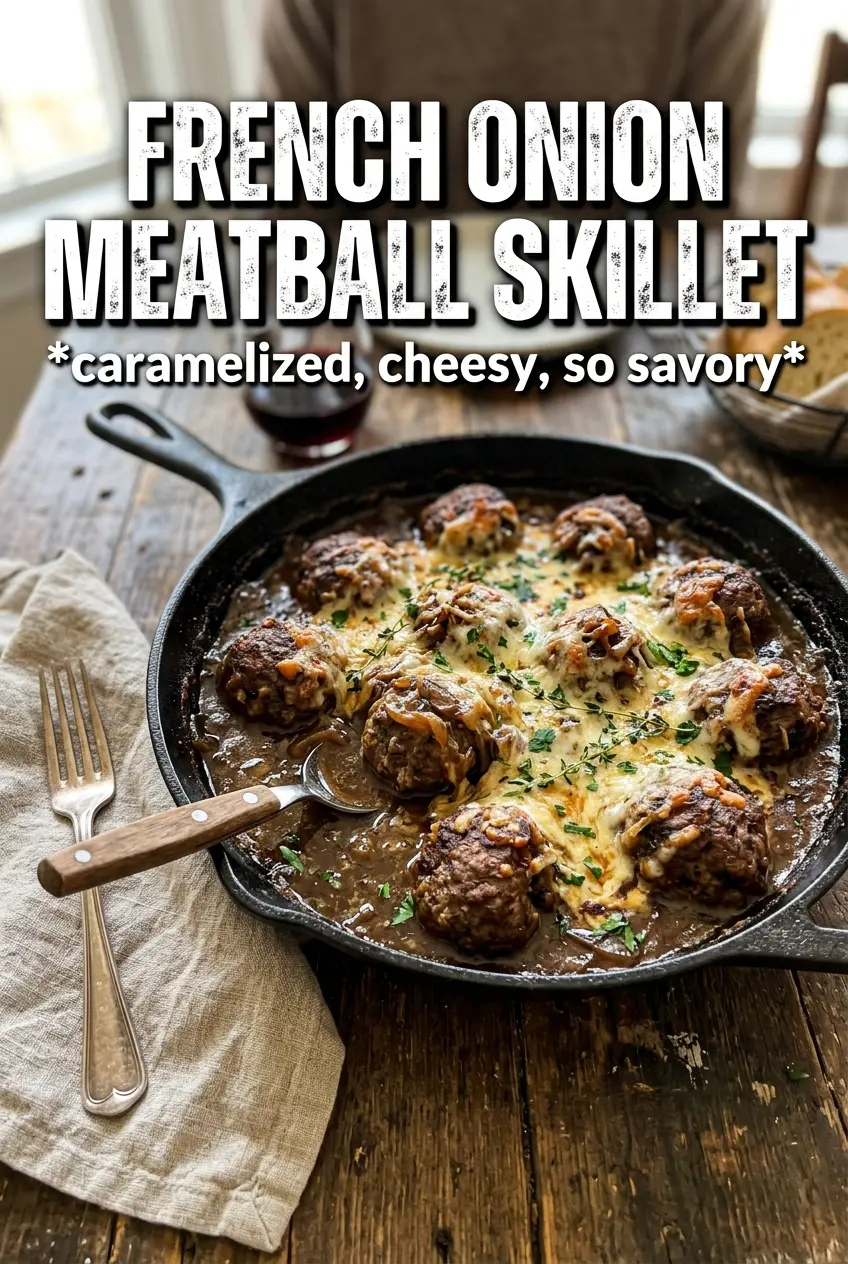
French Onion Meatball Skillet
Ingredients
Equipment
Method
- In a mixing bowl, combine ground beef, breadcrumbs, egg, Worcestershire, garlic powder, salt, and pepper until evenly combined and tacky.
- Roll the mixture into meatballs (about 1 to 1 1/2 inch each), spacing them on a plate as you work.
- Heat the cast iron skillet over medium heat and melt butter, then add the meatballs and brown in the butter.
- Continue browning until the meatballs are golden on most sides, then remove them to a plate.
- Lower heat to medium-low and cook onions in the same skillet, stirring occasionally, until deeply caramelized for 30-35 minutes.
- Add minced garlic and fresh thyme, stirring for about 30 seconds to 1 minute until fragrant.
- Pour in the dry white wine to deglaze the skillet, scraping up browned bits for 1-2 minutes.
- Stir in beef broth and Worcestershire, bringing the sauce to a gentle simmer.
- Nestle the browned meatballs into the onion sauce so they are partially submerged.
- Simmer for 10 minutes, allowing the meatballs to cook through and absorb the onion flavor.
- Scatter shredded Gruyère evenly over the skillet to cover the surface.
- Broil for 3-5 minutes until golden and bubbly, watching closely to prevent burning.