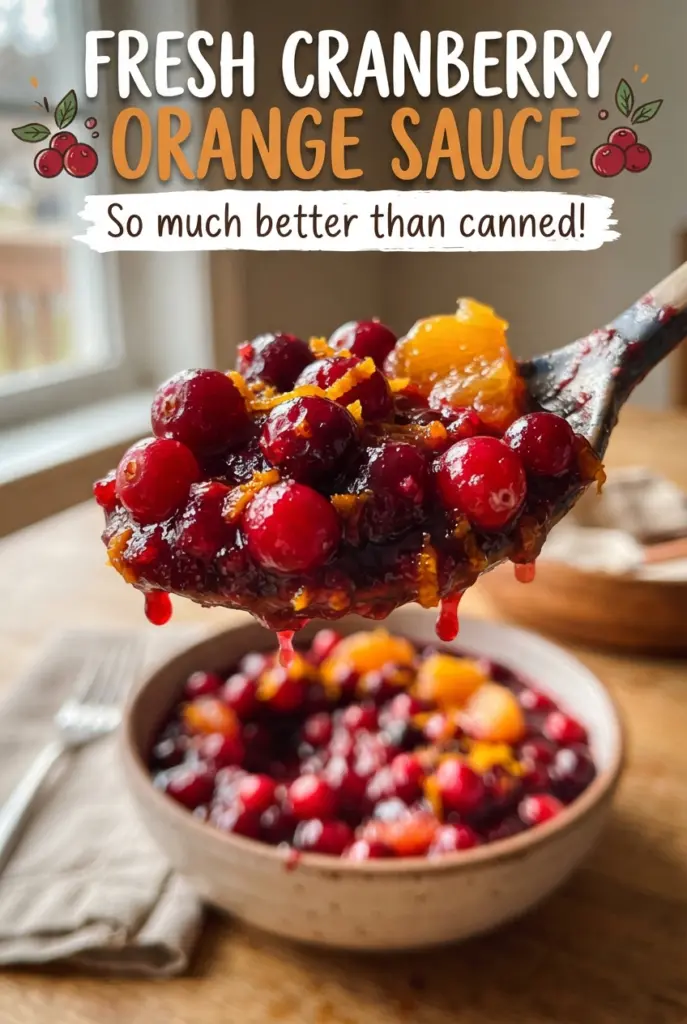
Fresh cranberry orange sauce lands on the table with that glossy, jewel-bright look that makes everything around it feel a little more special. The cranberries break down just enough to turn syrupy while a few stay whole for texture, and the orange gives it a clean, citrus lift instead of the flat sweetness you get from many store-bought versions. It’s the kind of side that cuts through rich food and wakes up a plate.
The trick is starting with orange juice and sugar first, then adding the cranberries once the liquid is already boiling. That gives the berries an immediate burst of heat, which helps them split and thicken the sauce without turning watery. The zest goes in after the pan comes off the heat so the orange stays fragrant instead of tasting cooked and dull.
Below you’ll find a simple method that keeps the orange segments intact, plus a few practical notes on substitutions, storage, and the one thing that matters most if you want the sauce to set up nicely in the fridge.
The sauce thickened up beautifully as it cooled, and the orange segments stayed juicy instead of disappearing into the pot. I served it with roast turkey and ended up spooning the leftovers over yogurt the next morning.
Bright, chunky cranberry orange sauce with fresh citrus flavor for turkey, ham, and holiday sides
The Trick to Cranberry Sauce That Sets Up Instead of Running Thin
The biggest mistake with cranberry sauce is pulling it off the heat too early. The liquid needs enough time at a steady simmer for the berries to burst and release their natural pectin, which is what gives the sauce body as it cools. If it looks a little loose in the pan, that’s normal; the texture tightens up once it chills.
Orange juice adds more than flavor here. It softens the sharp edge of the cranberries and gives the sauce enough liquid to cook evenly, but it also means the pan has to stay at an active simmer so the mixture reduces instead of staying soupy. If the sauce starts spitting hard, lower the heat slightly, but don’t let it drop to a bare wisp of steam or the berries will just warm through without breaking down.
What the Cranberries, Orange, and Sugar Are Each Doing
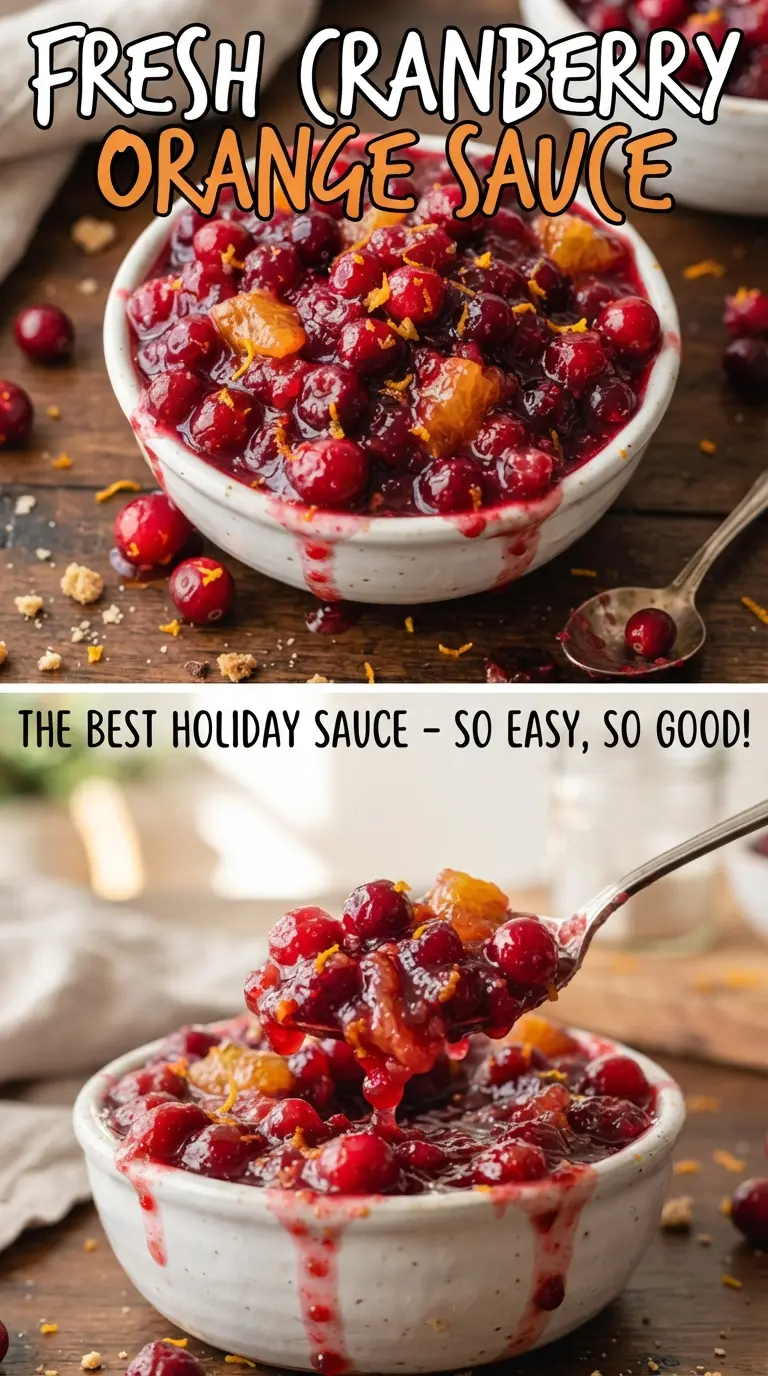
- Fresh cranberries — These are the backbone of the sauce. Fresh berries burst more cleanly than dried or frozen berries that have already lost some structure, and they give you that classic tart pop. Frozen cranberries work in a pinch; add them straight from the freezer and expect the simmer to take a minute longer.
- Fresh orange juice — Bottled juice can taste flat here because there’s nowhere for the flavor to hide. Fresh juice keeps the sauce bright and lets the cranberry tartness stay lively instead of muddy.
- Orange zest — This is where the orange flavor gets its perfume. Stir it in after the pan comes off the heat so the oils stay sharp and fragrant.
- Orange segments — Fold these in at the end so they stay juicy and intact. If you add them while the sauce is boiling, they’ll break apart and turn stringy.
- Sugar — It balances the tart cranberries and helps the sauce thicken as it cooks. You can reduce it slightly if you like a sharper sauce, but cutting it too much will make the finished texture thinner and more aggressively tart.
Building the Sauce Without Crushing the Orange Segments
Boiling the juice and sugar first
Bring the orange juice and sugar to a full boil in a saucepan before the cranberries go in. You want the sugar fully dissolved and the liquid hot enough that the berries start cooking the second they hit the pan. If the sugar sits on the bottom when the berries are added, it can clump or scorch before the sauce starts to thicken.
Letting the cranberries burst at a steady simmer
Once the cranberries and salt go in, keep the mixture at a lively simmer for about 10 minutes. You’ll hear the berries begin to pop, and the sauce will shift from watery and foamy to thicker and glossy. Stir now and then, but don’t mash the berries aggressively or you’ll lose the mix of smooth sauce and whole fruit.
Finishing with zest and folded-in citrus
Take the pan off the heat before adding the orange zest, then let the sauce cool slightly before folding in the orange segments. The residual heat is enough to perfume the zest without cooking off its oils, and the brief cooling protects the orange pieces from falling apart. If you want the segments to stay especially clean and bright, wait until the sauce is no longer steaming hard before adding them.
Make It Sharper or Sweeter
For a tarter sauce, drop the sugar by 2 tablespoons. The flavor will lean brighter and more cranberry-forward, but the sauce won’t set quite as softly. For a sweeter version, add another 2 tablespoons of sugar after tasting the finished sauce while it’s still warm.
Frozen Cranberries Work Fine
Frozen cranberries can go straight into the pot without thawing. They may take an extra minute or two to burst, but the final texture stays nearly the same. Don’t drain them first; the ice crystals will just melt into the sauce and throw off the ratio.
Dairy-Free and Naturally Gluten-Free
This sauce is already dairy-free and gluten-free as written. If you’re serving it with a meal that needs both, this side fits cleanly into a lot of menus without any extra adjustments.
Storage and Reheating
- Refrigerator: Store in an airtight container for up to 1 week. It will thicken as it chills and loosen again when warmed.
- Freezer: It freezes well for up to 2 months. Portion it into a freezer-safe container, leaving a little room at the top, because the sauce will expand slightly.
- Reheating: Thaw overnight in the fridge if frozen, then warm gently over low heat or let it sit at room temperature until spoonable. High heat can make the orange pieces break down and the texture turn jammy in the wrong way.
Questions I Get Asked About This Recipe
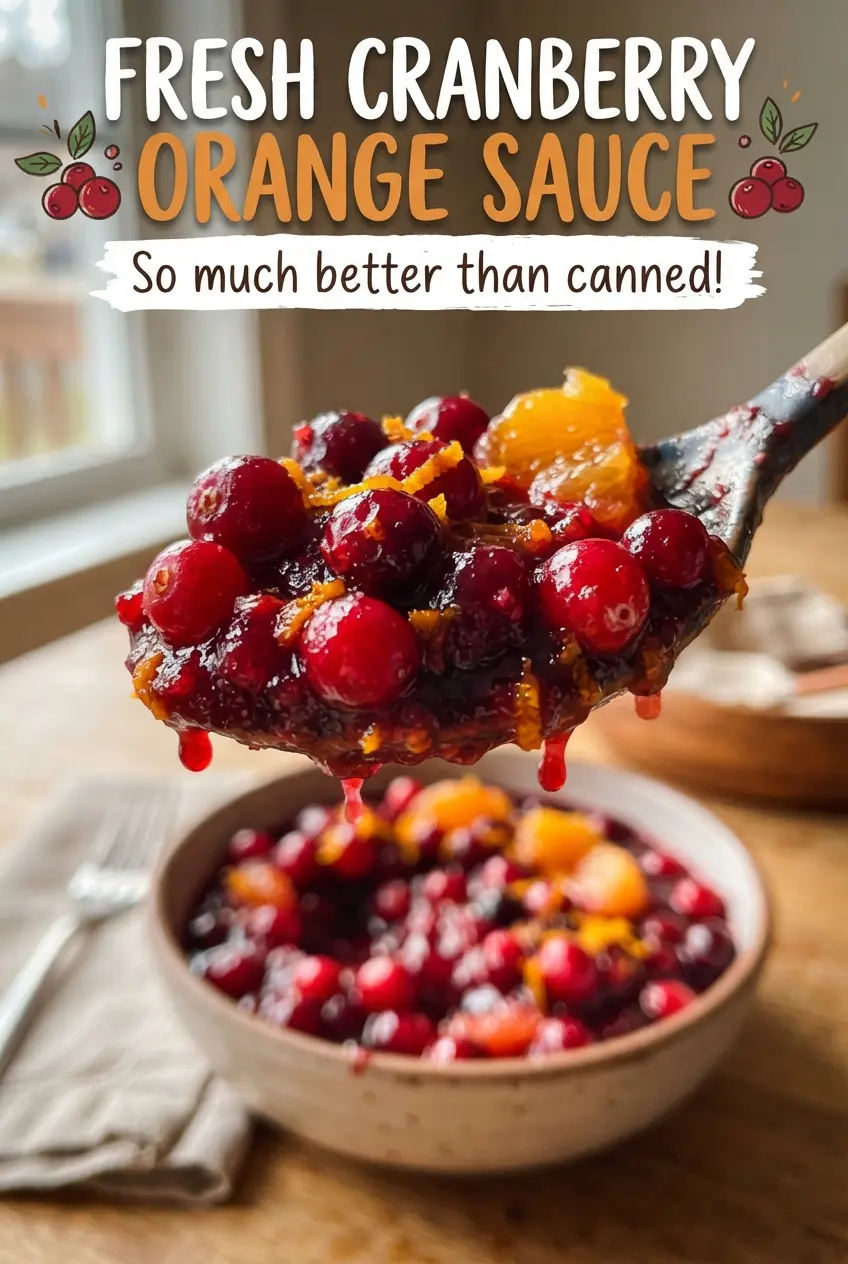
Fresh Cranberry Orange Sauce
Ingredients
Equipment
Method
- Bring sugar and fresh orange juice to a boil in a saucepan over medium-high heat, stirring until the sugar dissolves. Keep it at a rolling boil so the liquid bubbles steadily, about 1 to 2 minutes.
- Add fresh cranberries and salt, then return to a gentle boil. Simmer for 10 minutes, stirring occasionally, until most of the berries burst and the sauce looks thicker and more ruby.
- Remove from heat and stir in orange zest. The moment you add it, the sauce should smell bright and look more fragrant, no additional cooking needed.
- Cool slightly for 5 minutes, until warm rather than hot, then gently fold in the orange, peeled and segmented. Stop when just combined so the segments keep their shape.
- Chill until serving, covered, until cold and spoonable. A firmer texture forms after chilling, about 1 to 3 hours.