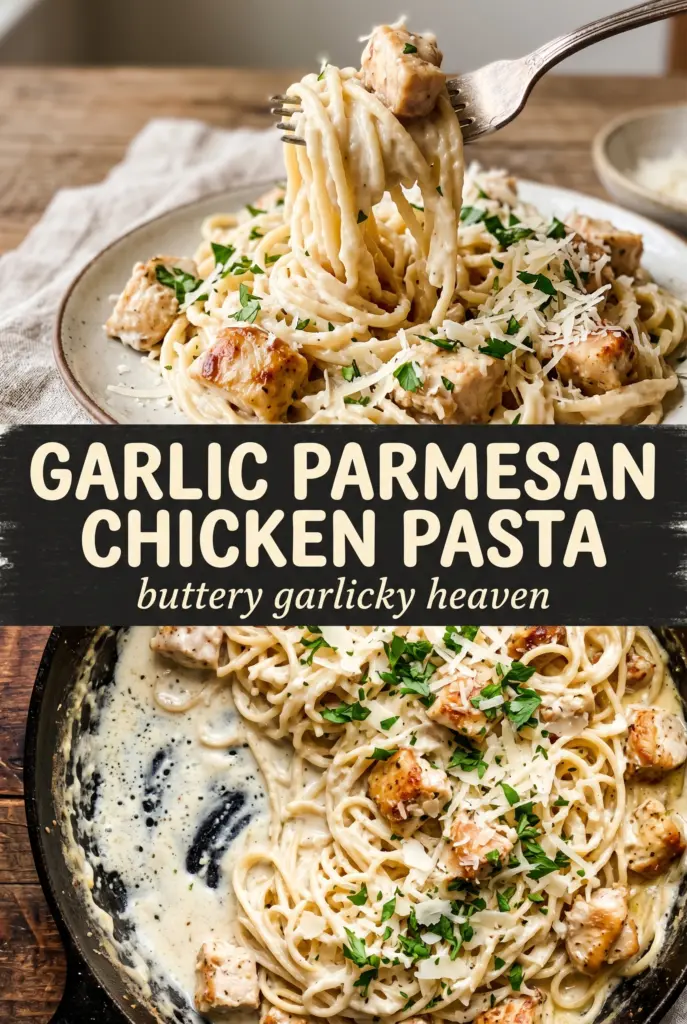
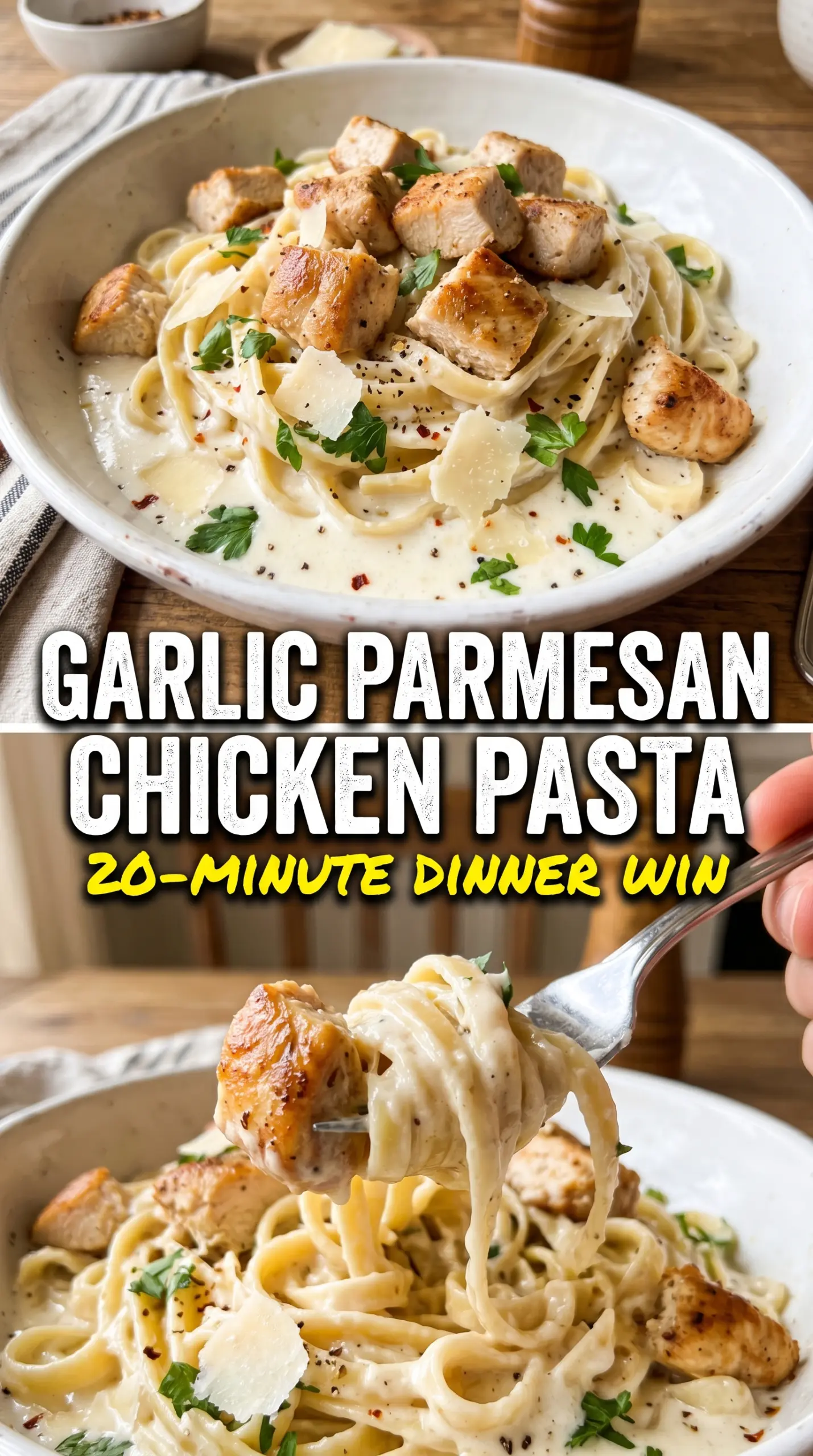
Silky garlic Parmesan sauce clings to every strand of pasta here, and the sliced chicken on top keeps the whole bowl from feeling heavy. The finished dish tastes like it came out of a much longer dinner plan, but it comes together in one skillet after the pasta is boiled. The sauce stays glossy instead of turning pasty, and that matters more than anything when you’re coating spaghetti with cream and cheese.
The key is building the sauce in the same pan you used for the chicken. Those browned bits left behind give the cream and broth a deeper, savory base, and the Parmesan melts better when the heat stays gentle. I also lean on a little reserved pasta water, which loosens the sauce just enough to coat instead of clump. Freshly grated Parmesan is worth it here; pre-shredded cheese can leave you with a grainy sauce that never fully smooths out.
Below, I walk through the part that most often goes wrong — getting the sauce thick and creamy without breaking it — plus a few practical swaps if you need to adjust the recipe for what’s in your kitchen.
The sauce turned out so smooth and coated the spaghetti perfectly, and the chicken stayed juicy even after slicing. I added a little pasta water at the end like the notes said, and it came together in under 30 minutes.
Creamy garlic Parmesan chicken pasta that stays silky, not gluey, with a sauce worth saving for tomorrow.
The Reason the Sauce Stays Creamy Instead of Turning Grainy
This dish lives or dies on heat control. Parmesan wants low, gentle heat; if you dump it into a bubbling cream sauce, the proteins tighten and the sauce can turn grainy or oily. That’s why the butter, garlic, cream, and broth simmer first until they’ve thickened a little on their own. The cheese goes in after that, off the hardest part of the heat.
The other mistake is skipping pasta water. Cream sauce needs a little starch to help it cling to the noodles, and reserved pasta water gives you that without thinning the flavor. Add it a splash at a time. You want a sauce that slides slowly off a spoon, not one that pours like soup or seizes into a paste.
- Chicken breasts — Slice them thin after resting so they stay juicy and sit nicely on top of the pasta. If your chicken breasts are uneven, pound them lightly first so they cook at the same pace.
- Freshly grated Parmesan — This is the ingredient that gives the sauce its body and salty depth. Pre-grated cheese often has anti-caking agents that make the sauce less smooth, so grate it yourself if you can.
- Heavy cream — Half-and-half can work in a pinch, but the sauce will be looser and a little less luxurious. Heavy cream holds up better when the Parmesan goes in.
- Chicken broth — This keeps the sauce from tasting flat and helps it loosen without adding more cream. Use a low-sodium broth if your Parmesan is already quite salty.
- Reserved pasta water — The starch in the water is what helps the sauce cling to spaghetti or fettuccine. Don’t skip it, even if the sauce looks thin at first; it often tightens as it coats the pasta.
What Each Ingredient Is Actually Doing in This Chicken Pasta
- Pasta (the vehicle) — Cook to al dente so it doesn’t turn mushy. Reserve water for sauce adjustment.
- Chicken (the protein) — Cut into uniform pieces so they cook evenly. Don’t overcook or it becomes dry.
- Butter or oil (the cooking medium) — This browses the chicken and carries flavors. Don’t skip browning.
- Cream or sauce (the richness base) — This brings everything together and coats the pasta. Balance with acid.
- Cheese (optional umami and binding) — This adds depth and helps sauce cling. Add off heat so it melts smoothly.
- Garlic and herbs (the flavor layers) — Cook with oil first to bloom. These define the dish’s personality.
- Acid (lemon, wine, or vinegar) — This prevents heavy sauces from tasting flat. Add at the end.
- Final toss (the emulsification) — Toss gently so pasta stays al dente and every piece gets coated.
Building the Garlic Parmesan Sauce in the Right Order
Searing the Chicken First
Season the chicken generously, then cook it in hot oil until the outside is golden and the center reaches 165°F. If the pan isn’t hot enough, the chicken will steam and stay pale instead of picking up color. Once it’s done, rest it before slicing so the juices stay in the meat instead of running onto the cutting board.
Waking Up the Garlic
Use the same skillet and drop the heat to medium before the garlic goes in with the butter. Garlic only needs about a minute, just until it smells fragrant and starts to soften; if it browns, the sauce will taste bitter. You’re not trying to toast it hard. You’re pulling flavor off the pan in a controlled way.
Letting the Cream Simmer Down
Pour in the cream and broth and let them bubble gently for 4 to 5 minutes. The goal is a slight reduction, not a hard boil. If the sauce is still very thin at this point, keep simmering a little longer; if it starts boiling aggressively, lower the heat right away so it doesn’t separate.
Finishing with Cheese and Pasta
Stir in the Parmesan off a stronger flame, then add the pasta and enough reserved water to coat every strand. Toss until the sauce turns glossy and hugs the noodles. If it looks tight or stringy, a splash more pasta water usually fixes it; if it looks loose, give it another minute in the warm pan before serving.
How to Adapt This for What’s in Your Kitchen
Make It Gluten-Free
Use your favorite gluten-free spaghetti or fettuccine and cook it just to tender, not soft. Gluten-free pasta can get gummy if it sits too long, so toss it with the sauce right away and add pasta water carefully because it can loosen fast.
Swap the Chicken for Shrimp
Shrimp works well if you want a faster cook, but it only needs a few minutes per side. Pull it as soon as it turns opaque so it stays tender, then build the sauce in the same pan. The flavor stays rich, but the dish feels a little lighter.
Use Half-and-Half Instead of Heavy Cream
This works if that’s what you have, but the sauce will be thinner and a bit less stable. Keep the simmer gentle and give it a little extra time to reduce before adding the cheese. The pasta water becomes even more important here because it helps the sauce cling.
Storage and Reheating
- Refrigerator: Store leftovers in an airtight container for up to 3 days. The sauce will thicken as it chills.
- Freezer: I don’t recommend freezing this one. Cream sauces with Parmesan tend to separate after thawing, and the pasta turns softer than you want.
- Reheating: Rewarm gently on the stove over low heat with a splash of broth, milk, or water. High heat is the fastest way to break the sauce, so take your time and stir until it loosens again.
Questions I Get Asked About This Recipe
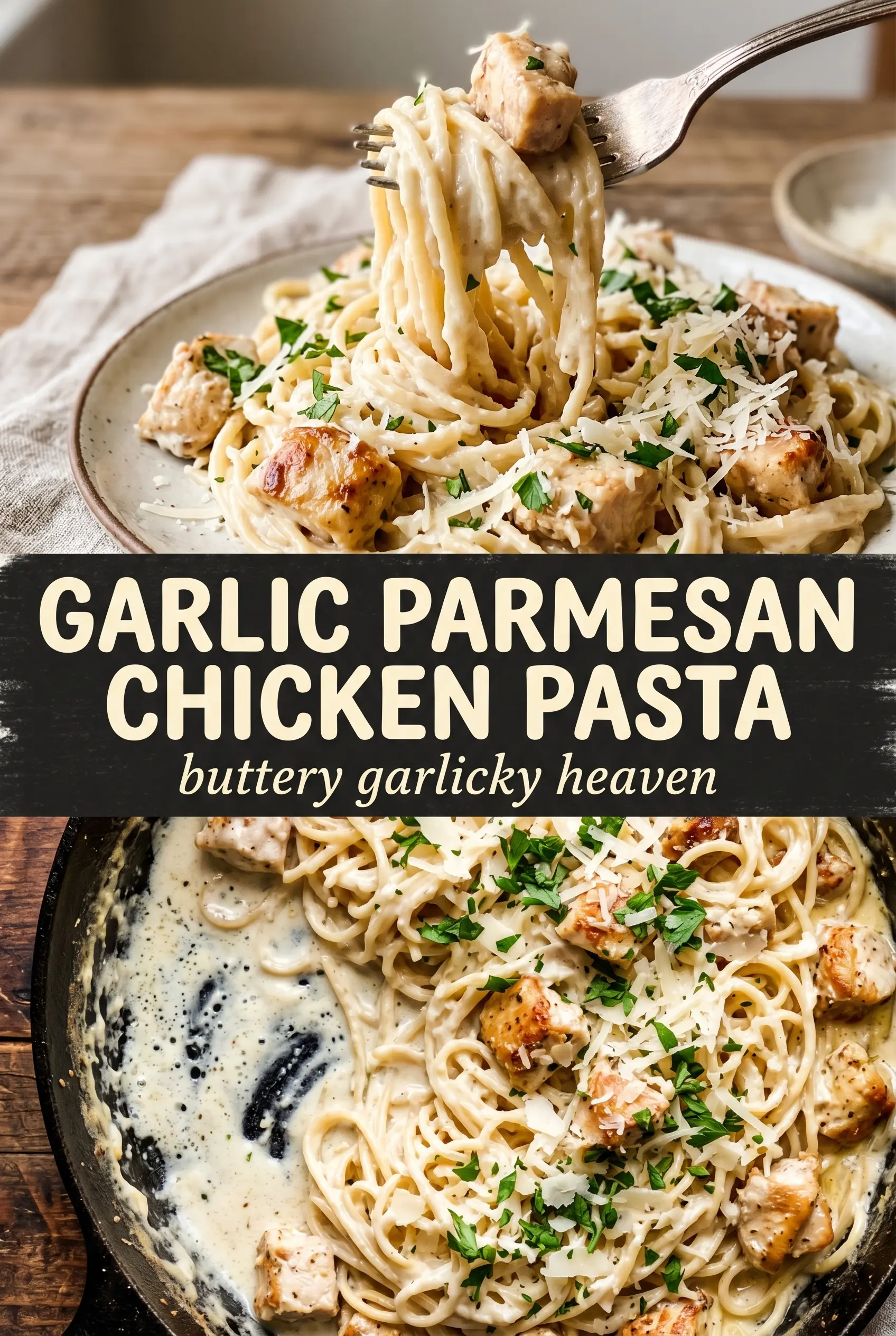
Garlic Parmesan Chicken Pasta
Ingredients
Equipment
Method
- Season the chicken breasts with salt, pepper, garlic powder, and Italian seasoning to taste. Heat olive oil in a large skillet over medium-high heat and cook the chicken for 5-6 minutes per side until golden and cooked through to 165°F, then rest and slice thin.
- In the same skillet, cook minced garlic in butter over medium heat for 1 minute, stirring until fragrant. Pour in heavy cream and chicken broth, then simmer for 4-5 minutes until slightly thickened.
- Stir in freshly grated Parmesan cheese, Italian seasoning, and red pepper flakes until the sauce is smooth. Add reserved pasta water a splash at a time as needed to loosen the sauce to a silky, clingy consistency.
- Toss the cooked spaghetti or fettuccine in the garlic Parmesan sauce until evenly coated. Divide among plates, top with sliced chicken, and garnish with fresh basil and extra Parmesan.