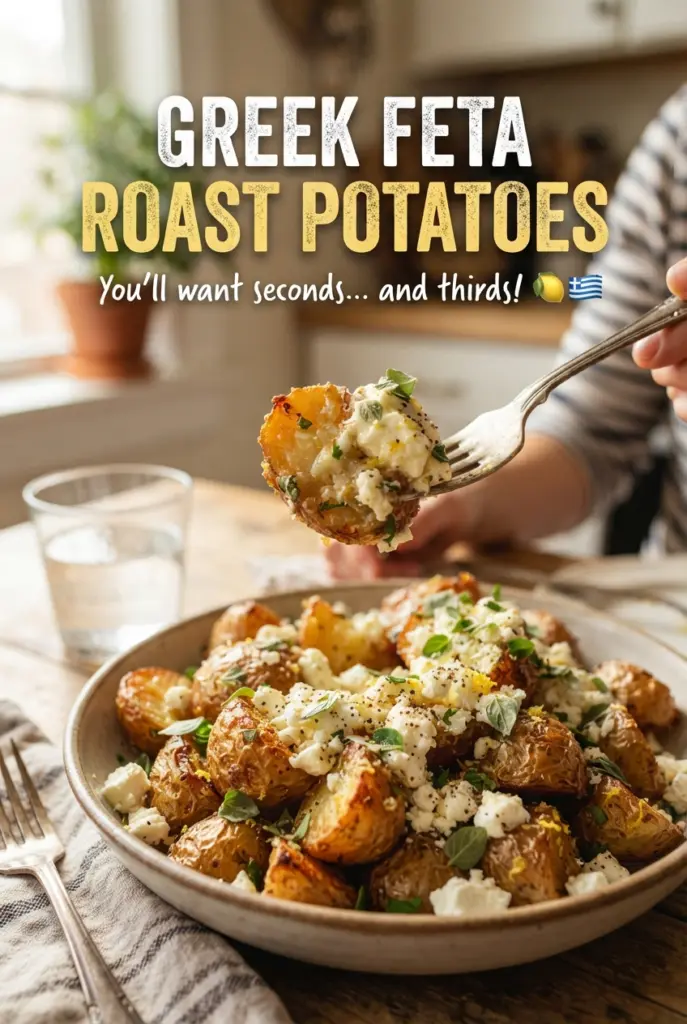
Greek feta roast potatoes come out with crisp, bronzed edges, soft centers, and a bright lemon-garlic pan sauce that clings to every wedge. The feta goes on at the end, so it stays crumbly and salty instead of melting into the pan. What you get is a side dish that eats like something much bigger than a simple tray of potatoes.
The key here is roasting the potatoes in a shallow bath of olive oil, lemon juice, broth, and garlic. That liquid cooks down as the potatoes roast, seasoning them from the outside in while the heat builds the crust. Yukon golds work especially well because they hold their shape without turning dry or mealy, and the wedge cut gives you those thick edges that can actually brown properly.
Below, I’ve included the timing detail that keeps the potatoes from steaming, plus a few swaps that still keep the Greek character intact. If you’ve ever ended up with pale potatoes sitting in a puddle, this version fixes that.
The potatoes turned out crisp on the edges and the lemon-garlic flavor soaked right in while the feta stayed nice and salty on top. I served them with grilled chicken and my husband went back for seconds before the main dish was even done.
Save these Greek feta roast potatoes for the nights when you want crisp lemon-oregano wedges with salty feta and almost no extra work.
The Reason These Potatoes Crisp Instead of Soaking It All Up
The biggest mistake with roast potatoes like these is crowding the pan with too much liquid and too little space. If the wedges sit on top of each other, the bottom pieces steam before they ever brown, and you end up with soft edges instead of the deep golden crust this dish needs. A single layer in a roasting pan gives the liquid room to reduce while the potatoes stay exposed to dry heat.
Flipping halfway through matters here because the first side spends the early part of the roast absorbing flavor from the pan, then the second side gets direct contact with the hot metal once the liquid has started to cook off. That’s the point where the edges start to take on color. If the pan still looks wet at the end, the potatoes need more time; don’t stop at “tender” if the liquid hasn’t fully reduced.
What the Lemon, Broth, and Feta Each Bring to the Pan
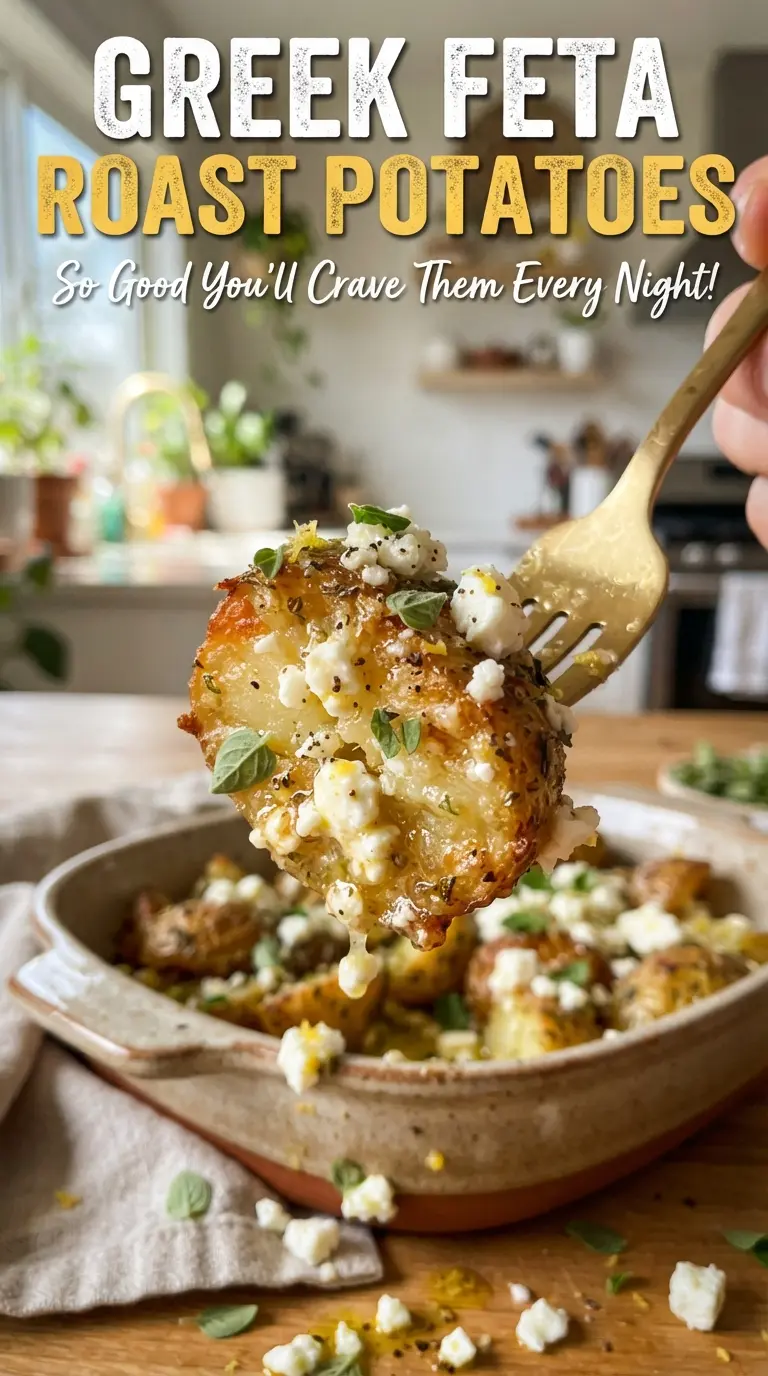
- Yukon gold potatoes — These hold their shape and roast to a creamy interior without falling apart. Russets will crisp faster but can dry out and crumble at the edges, while red potatoes stay a little firmer and won’t give you quite the same fluffy center. Cut them into even wedges so the smaller pieces don’t overcook before the larger ones are tender.
- Olive oil — This helps the edges brown and carries the oregano and garlic across the whole pan. A good everyday olive oil is fine here; save the expensive finishing oil for the end if you want to drizzle a little over the feta. The oil also helps the lemon juice and broth coat the potatoes instead of pooling separately.
- Lemon juice — This is the brightness that keeps the potatoes from tasting heavy. Fresh juice matters more than bottled because the flavor is cleaner and less sharp in a harsh way. If your lemons are especially tart, you can back off by a tablespoon and add a touch more broth, but don’t skip the acid entirely.
- Chicken broth — The broth softens the lemon and gives the roasting liquid a savory base as it reduces. Vegetable broth works if you want to keep the dish vegetarian, and it still gives enough body for the pan sauce. Water will cook the potatoes, but it won’t leave the same depth behind.
- Feta and herbs — Add both after roasting so the feta stays crumbly and the dill or parsley stays fresh. Pre-crumbled feta is fine, but a block crumbled by hand tends to taste creamier and less dry. If you want a sharper finish, use dill; parsley keeps it a little cleaner and greener.
Getting the Pan Hot Enough to Build a Real Roast
Tossing the Potatoes Thoroughly
Coat the wedges in the roasting pan itself so every piece picks up the oil, lemon, broth, garlic, oregano, salt, and pepper evenly. The liquid should look loose and glossy, not like a thick sauce. If some wedges are sitting dry on top, they’ll roast unevenly and those exposed spots can turn bland before the rest of the pan is done.
Roasting Until the Liquid Disappears
At 425°F, the pan should be hot enough to reduce the liquid while the potatoes cook through. You’re looking for tender wedges with browned edges and only a thin layer of syrupy juices left at the bottom, not a full puddle. If the liquid is still obvious at 50 minutes, give it a few more minutes uncovered so the potatoes can keep crisping instead of sitting in steam.
Finishing With Feta and Herbs
Scatter the feta over the potatoes as soon as they come out of the oven so the heat softens it slightly without melting it away. The herbs go on at the same time for a fresh finish that cuts through the richness. Serve immediately while the edges are still crisp, because this dish loses its best texture once it starts cooling in the pan.
How to Change the Dish Without Losing the Greek Character
Make It Vegetarian
Swap the chicken broth for vegetable broth and the potatoes will still roast up with plenty of savory depth. Use a broth with some body, not a thin salty one, because the liquid reduces and concentrates in the pan.
Use Parsley Instead of Dill
Parsley gives a cleaner, milder finish if you don’t want dill’s anise-like note. The dish will taste a little less herbal and a little more lemon-forward, which works well if you’re serving it beside grilled fish or chicken.
Make It Dairy-Free
Skip the feta and finish with extra herbs plus a pinch of flaky salt. You lose the salty creaminess that feta brings, so a little more salt at the end matters here, but the potatoes still keep their lemon-oregano identity.
Storage and Reheating
- Refrigerator: Store leftovers in an airtight container for up to 4 days. The potatoes will soften, but the flavor stays good.
- Freezer: They freeze, but the texture turns a little mealy after thawing, so I don’t recommend freezing this dish.
- Reheating: Reheat on a sheet pan in a 400°F oven until hot and the edges start to crisp again. The microwave will warm them, but it leaves the potatoes limp and the feta watery.
Answers to the Questions Worth Asking
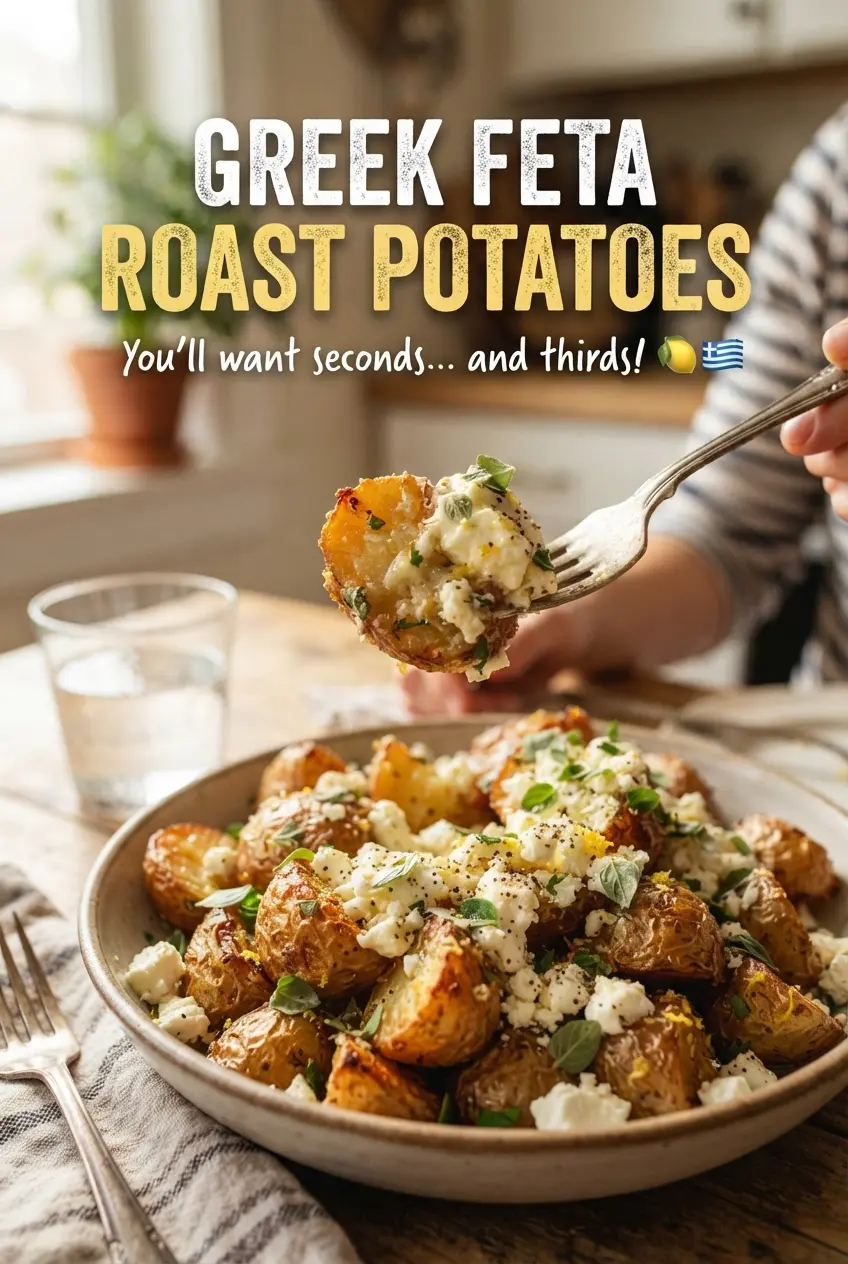
Greek Feta Roast Potatoes
Ingredients
Equipment
Method
- Preheat the oven to 425F and set out a roasting pan or sheet pan so it can heat fully.
- Toss the potato wedges with olive oil, lemon juice, chicken broth, garlic, oregano, salt, and black pepper in a roasting pan.
- Spread the potatoes in a single layer so they roast instead of steam.
- Roast for 45-50 minutes at 425F, flipping halfway, until the liquid is absorbed and the edges are crispy and golden.
- Top the hot potatoes with crumbled feta and fresh dill or parsley, then serve immediately while the edges stay crisp.


