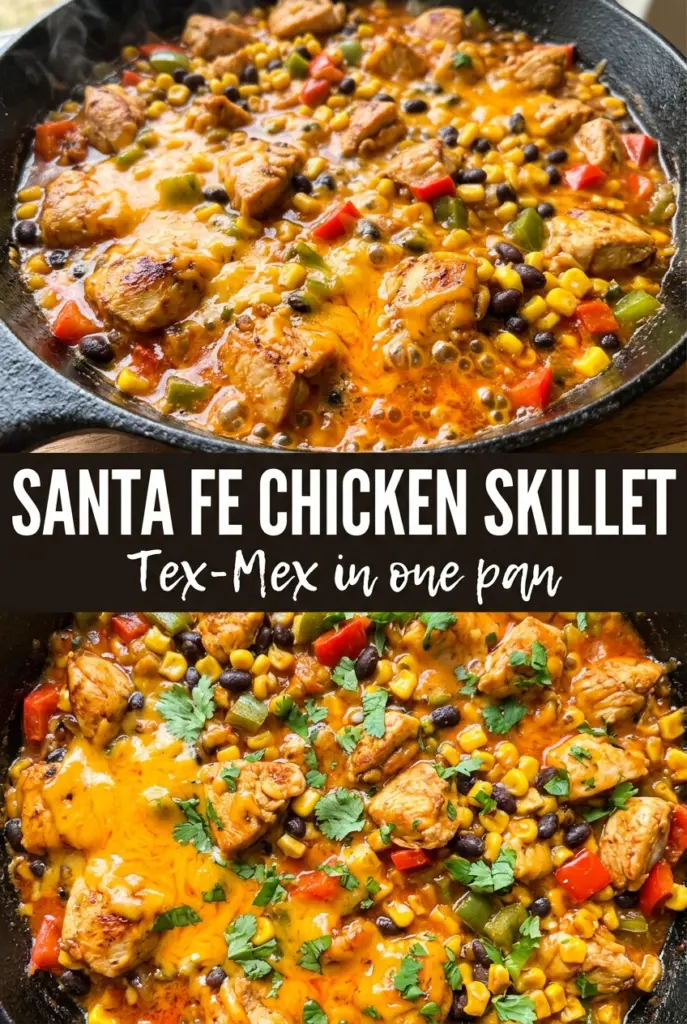
Golden chicken breasts tucked into a smoky skillet of black beans, corn, and tomatoes make this Santa Fe Chicken Skillet the kind of dinner that lands on the table fast but still feels like you cooked with intention. The chicken gets a hard sear first, so it stays juicy under the blanket of melted cheddar, and the sauce around it turns savory and a little tangy without needing much more than pantry staples.
What makes this version work is the order. The chicken seasons first, so the spices cling to the surface and bloom in the hot oil instead of disappearing into the broth. Then the beans, corn, and diced tomatoes with green chiles build a quick simmering base that does the heavy lifting while the chicken finishes cooking gently in the skillet. That keeps the meat tender and gives the whole pan a richer, more cohesive flavor than if everything went in at once.
Below you’ll find the small details that matter here: how to get a proper sear, when to cover the pan, and what to add at the end so the cheese melts without turning greasy. There are also a few easy ways to adapt it for what you have on hand, plus the storage note I rely on when I want leftovers that still taste fresh the next day.
The chicken browned beautifully and the sauce had just enough kick from the Rotel. I loved that the beans and corn stayed intact instead of getting mushy, and the cheddar melted into the broth in the best way.
Pin this Santa Fe Chicken Skillet for a fast Tex-Mex dinner with seared chicken, smoky beans, sweet corn, and melted cheddar.
The Seared Chicken Is What Keeps This Skillet from Going Watery
The biggest mistake with a chicken skillet like this is rushing straight into the sauce. If the chicken never gets real color first, the whole dish tastes flat and the pan liquid can turn thin instead of savory. A proper sear gives you browned bits in the skillet, and those bits dissolve into the broth as the beans and tomatoes simmer.
Use medium-high heat and leave the chicken alone long enough to pick up a deep golden crust. If it sticks at first, it usually isn’t ready to turn yet. Once it releases cleanly, you’re in the right spot. Pull the chicken out before the center cooks through, because it finishes gently in the sauce and stays juicy instead of drying out.
What Each Ingredient Is Actually Doing in This Dish

- Chicken breasts — Boneless skinless breasts give you a lean main protein that cooks quickly and slices cleanly under the melted cheese. If yours are very thick, pound them to an even thickness so the outside doesn’t overcook before the center reaches temperature.
- Taco seasoning — This is doing more than seasoning the meat; it gives the skillet its Southwest backbone right from the start. If your blend is salt-heavy, use a little less and season the finished dish at the table after tasting the sauce.
- Black beans — They add body and make the skillet feel like a full meal, not just chicken in a sauce. Drain and rinse them so the broth stays clean and doesn’t turn muddy.
- Frozen corn — Frozen corn works well here because it keeps a little pop after simmering. No need to thaw it first; it goes straight into the skillet and warms through as the sauce comes together.
- Diced tomatoes with green chiles — Rotel brings acidity, heat, and moisture in one can, which is why it works better here than plain diced tomatoes. If you swap it for regular diced tomatoes, add a small chopped green chile or a pinch of cayenne so the dish doesn’t taste too soft.
- Chicken broth — Just enough broth loosens the pan and helps the beans and tomatoes turn into a spoonable sauce. Use low-sodium if you can, especially if your taco seasoning already brings plenty of salt.
- Cheddar cheese — Shredded cheddar melts into the hot skillet and gives the top a creamy finish. Shred it yourself if possible; pre-shredded cheese can melt less smoothly because of the anti-caking coating.
How to Build the Skillet Without Overcooking the Chicken
Seasoning and Searing
Rub the taco seasoning over both sides of the chicken so every bite is coated before it hits the pan. Heat the oil until it shimmers, then lay the chicken down and let it sear without moving it for 4 to 5 minutes. You’re looking for a deep golden crust, not pale steamed chicken, so resist the urge to peek and shift it too early.
Turning the Pan Juicy
When the chicken is browned on both sides, take it out and build the sauce in the same skillet. Add the beans, corn, Rotel, and broth, then stir and scrape up every browned bit from the bottom. That fond is where the flavor lives, and if the pan looks dry or tight, the broth should loosen it into a simmering sauce rather than a soupy puddle.
Finishing Under the Lid
Set the chicken back into the skillet and cover it so the heat cooks it through gently. This is the part that keeps the breast meat tender. Uncover too soon and the sauce reduces too far before the chicken is ready; cover too tightly and then blast the heat, and you’ll end up with dry edges. Medium heat and a short covered simmer give you the best result.
The Cheese Finish
Once the chicken reaches 165°F, scatter the cheddar over the top and cover the pan again just until the cheese melts. Don’t leave it on the heat long enough for the cheese to separate and turn greasy. You want glossy, softened cheddar draped over the chicken and soaking into the sauce underneath.
How to Adapt This for Different Diets and Leftovers
Make It Dairy-Free
Skip the cheddar and finish with avocado, cilantro, and a squeeze of lime. The skillet still tastes complete because the broth, tomatoes, and taco seasoning carry the flavor, and the avocado adds the creamy finish the cheese would normally provide.
Use Chicken Thighs Instead of Breasts
Boneless skinless thighs work well if you want richer, more forgiving meat. They usually need a few extra minutes to cook through, and they stay juicy even if the skillet simmers a little longer than planned.
Make It Lower-Carb
Leave out the corn and add a little extra black bean only if that still fits your target, or replace the beans with sautéed bell peppers and zucchini for a lighter skillet. The texture changes, but the same seared chicken and smoky tomato base still carry the dish.
Storage and Reheating
- Refrigerator: Store leftovers in an airtight container for up to 4 days. The chicken stays moist, though the sauce thickens as it sits.
- Freezer: It freezes well for up to 2 months, but the cheese is best added after reheating if you want the smoothest texture.
- Reheating: Warm it gently in a covered skillet over medium-low heat with a splash of broth or water. High heat dries out the chicken and makes the cheese separate.
Answers to the Questions Worth Asking
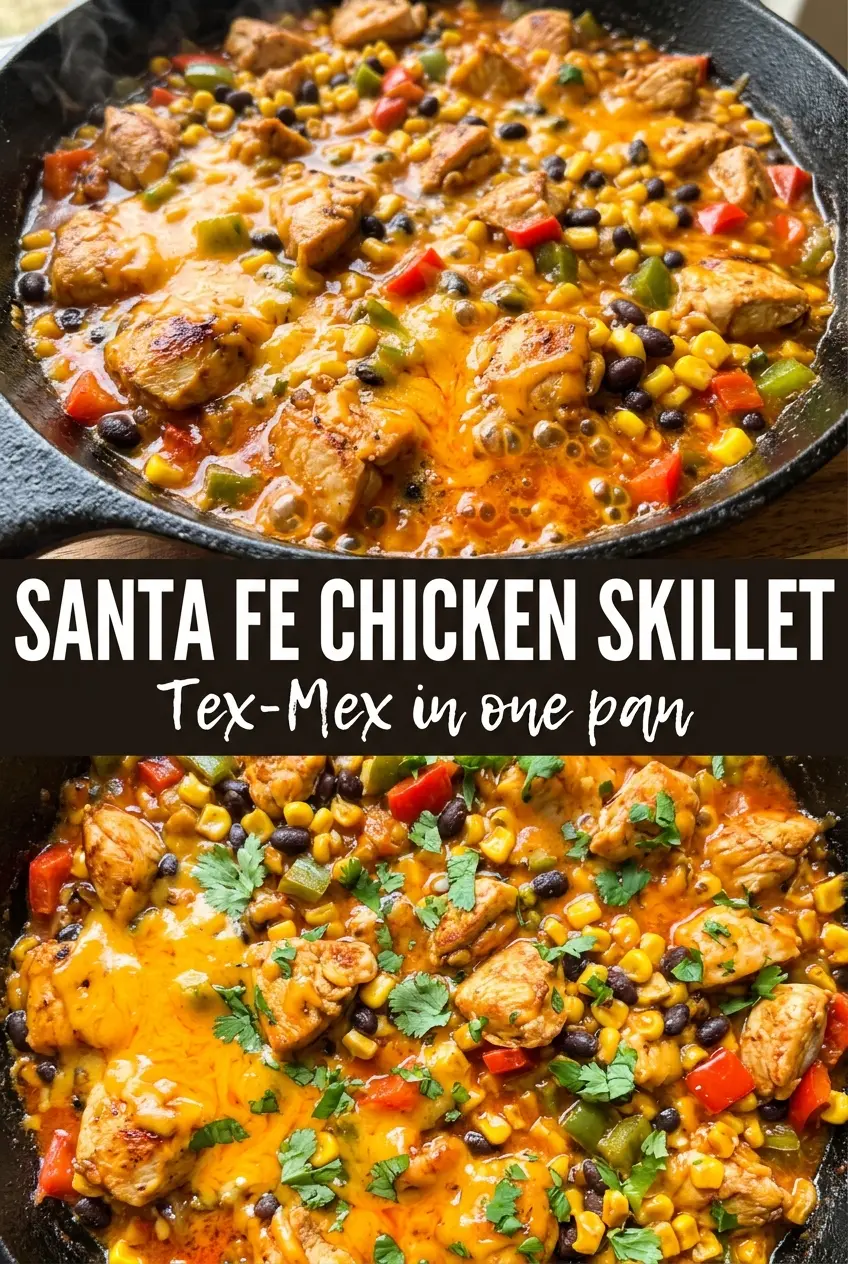
Santa Fe Chicken Skillet
Ingredients
Equipment
Method
- Rub chicken breasts with taco seasoning on both sides, coating evenly so the surface browns well. Set aside while you heat the skillet.
- Heat olive oil in a large cast iron skillet over medium-high heat until shimmering. Sear chicken for 4-5 minutes per side until golden, then remove to a plate.
- Add black beans, corn, Rotel, and chicken broth to the skillet, then stir to combine. Bring the mixture to a simmer over medium-high heat.
- Nestle the chicken breasts into the bean and corn mixture, then cover the skillet. Cook over medium heat for 8-10 minutes until the chicken reaches 165°F.
- Sprinkle shredded cheddar cheese over the top in an even layer. Cover for 2 minutes until melted.
- Garnish with fresh cilantro, sour cream, avocado, and lime wedges right before serving. Serve hot from the skillet.