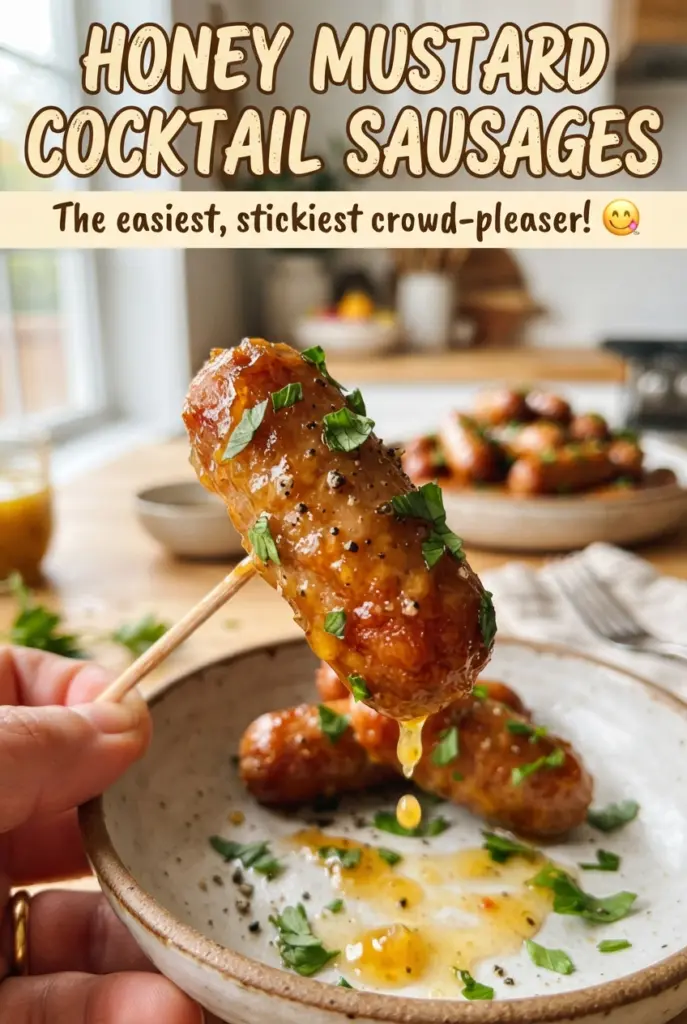
Sticky honey mustard cocktail sausages disappear fast because they hit that perfect middle ground: glossy, savory-sweet, and just sharp enough from the mustard to keep you reaching for another one. The glaze clings to every sausage instead of pooling in the pan, so each bite tastes concentrated and rich without feeling heavy. Served warm with toothpicks, they turn into the kind of appetizer people hover around until the skillet is scraped clean.
The balance matters here. Honey brings the shine and sweetness, but it needs the bite of whole grain mustard and Dijon to keep the sauce from tasting flat. A little soy sauce deepens the savory side, and the butter helps the glaze emulsify so it coats the sausages instead of breaking into an oily mess. Browning the sausages first also gives the sauce more to hold onto, which is the difference between a passable party snack and one that gets asked for again.
Below, I’ve included the little details that keep the glaze thick and glossy, plus a few easy ways to adapt it if you need a different mustard, a milder finish, or a make-ahead party pan that still serves warm.
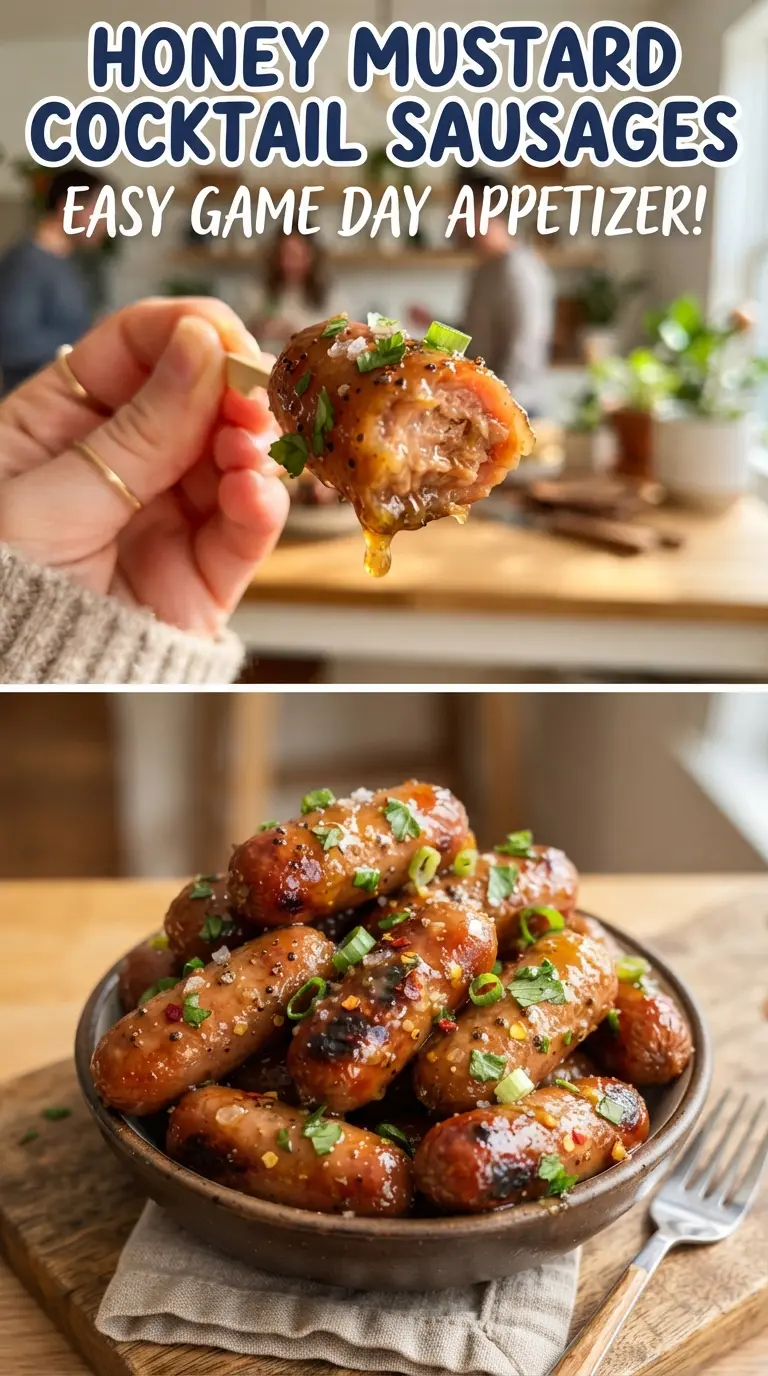
The glaze turned out shiny and thick in about 10 minutes, and the sesame seeds gave it that extra little finish that made people keep grabbing toothpicks.
Save these honey mustard cocktail sausages for the next game day spread or holiday tray when you want a fast appetizer with a sticky glaze and zero leftovers.
The Trick to Keeping the Honey Mustard Glaze Thick Instead of Runny
The biggest mistake with cocktail sausages is rushing the sauce before the pan has a chance to do its work. Browning the sausages first gives you a little fond at the bottom of the skillet, which adds depth when the honey and mustards go in. If you pour the glaze in too early or cook it over heat that’s too high, it can thin out and separate instead of turning sticky and glossy.
The other thing that matters is patience at the simmer stage. The glaze needs a few minutes to reduce after it hits the pan, and stirring often keeps the honey from catching before the liquid tightens up. You’ll know it’s ready when the sauce clings to the sausages and leaves a clean trail for a second or two when you drag a spoon through the pan.
What the Mustards, Honey, and Soy Sauce Are Each Doing Here
- Honey — This is what gives the glaze its shine and sticky finish. It also softens the sharp edges of the mustards, but it can’t do the whole job alone or the sauce tastes cloying. If your honey is very thick, warm it for a few seconds before whisking so it blends more easily.
- Whole grain mustard — This brings texture and a deeper mustard flavor than Dijon alone. Those little seeds help the sauce look rustic and clingy, which matters on small sausages. If you only have Dijon, use it, but the glaze will be smoother and a little less layered.
- Dijon mustard — Dijon gives the sauce its clean, sharp backbone. It keeps the glaze from tasting like straight honey and balances the richness of the butter. I wouldn’t skip it unless you need to, and if you do, add a little extra whole grain mustard for body.
- Soy sauce — This is the quiet ingredient that makes the whole pan taste more complete. It adds salt and umami without making the glaze taste overtly soy-based. Low-sodium soy sauce works well if that’s what you keep on hand.
- Butter — Butter helps the glaze emulsify and gives the sausages a better browning base. You can use oil in a pinch, but the sauce won’t have the same rounded finish. It also helps carry the garlic flavor without burning it immediately.
- Sesame seeds and chives — These are garnish, but they do real work. The sesame seeds add a little crunch, and the chives cut through the sweetness with a fresh onion note. Don’t skip both unless you have to, because the finish is part of what makes these feel party-ready.
How to Brown, Glaze, and Finish Them Without Burning the Sauce
Getting the Sausages Browned First
Melt the butter over medium heat, then add the cocktail sausages in a single layer if you can manage it. Let them sit long enough to pick up color before stirring, because pale sausages under a sweet glaze taste flat. You’re looking for a light golden-brown surface, not deep char, since they’ll finish in the sauce later.
Adding the Garlic Without Letting It Turn Bitter
Once the sausages are browned, add the minced garlic and stir for about 30 seconds. That’s long enough for the garlic to smell fragrant, but not long enough for it to scorch in the butter. If it starts to darken before the next step, lower the heat right away or the whole glaze can pick up a bitter edge.
Building the Glossy Honey Mustard Coat
Whisk the honey, both mustards, and soy sauce together before they hit the pan. Pour that mixture over the sausages and bring everything to a gentle simmer, not a hard boil. A hard boil can make the honey taste harsh and can pull the glaze apart; a steady simmer thickens it into a sticky coating that clings to the sausages.
Knowing When the Glaze Is Ready
Stir often as the sauce reduces, scraping the bottom so nothing sticks. After about 8 to 10 minutes, the glaze should look lacquered and move slowly around the pan instead of running like syrup. When it coats the back of a spoon and leaves glossy streaks on the skillet, it’s done. Finish with sesame seeds and chives right before serving so they stay visible and fresh.
How to Adapt These Cocktail Sausages for Different Crowds
Make Them Milder for Kids or Heat-Sensitive Guests
Use all Dijon and skip the whole grain mustard if you want a smoother, less seedy glaze. The flavor will be a little cleaner and less punchy, but it still lands in that sweet-savory lane. If you want even less tang, increase the honey by a tablespoon and reduce the soy sauce slightly.
Gluten-Free Version
Use certified gluten-free cocktail sausages and swap in a gluten-free tamari or coconut aminos for the soy sauce. Tamari gives the closest savory flavor, while coconut aminos are a touch sweeter and lighter. The glaze will still thicken the same way because the reduction comes from the honey, not the soy sauce.
Make-Ahead Party Pan
Cook the sausages and glaze them all the way through, then hold them on very low heat or in a slow cooker on warm for serving. If they sit too long on high heat, the glaze can tighten too much and turn sticky in the wrong way. Add the sesame seeds and chives right before serving so they stay fresh.
Storage and Reheating
- Refrigerator: Store leftovers in an airtight container for up to 4 days. The glaze thickens as it chills, so the sausages will look a little less glossy straight from the fridge.
- Freezer: These freeze well for about 2 months, though the glaze may loosen slightly after thawing. Cool completely before freezing in a sealed container, then thaw overnight in the refrigerator.
- Reheating: Warm gently in a skillet over low heat with a splash of water to loosen the sauce. Don’t blast them in the microwave or the sugar in the glaze can overcook and turn tacky around the edges before the center is hot.
Questions I Get Asked About This Recipe

Honey Mustard Cocktail Sausages
Ingredients
Equipment
Method
- Melt the butter in a large skillet over medium heat. Add the cocktail sausages and brown for 5-6 minutes, turning as needed until deeply golden.
- Add the minced garlic and cook for 30 seconds until fragrant, then keep the sausages evenly spaced in the skillet.
- Whisk together the honey, whole grain mustard, Dijon mustard, and soy sauce, then pour the mixture over the sausages. Stir to coat all sides so the glaze starts clinging to the browned surface.
- Simmer for 8-10 minutes over medium heat, stirring often, until the glaze is thick and sticky. Keep simmering until the sauce looks glossy and reduces enough to coat the sausages.
- Sprinkle sesame seeds and chopped fresh chives over the sausages. Serve warm immediately with toothpicks for easy grabbing, while the glaze is still sticky.