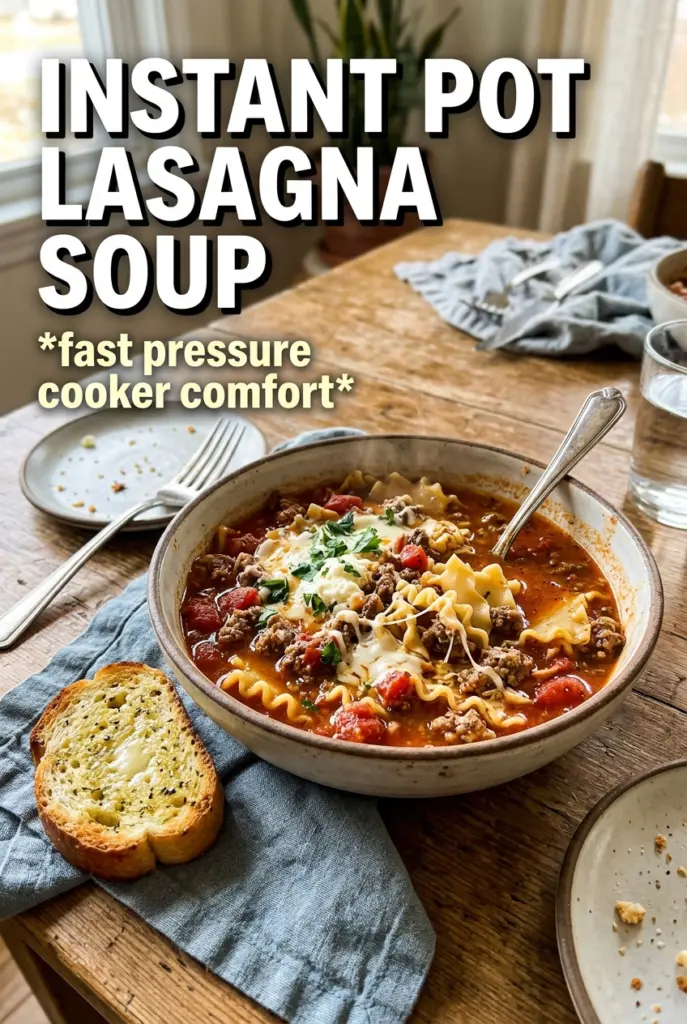
Instant Pot lasagna soup delivers all the comfort of a baked pan of lasagna without the layering, baking, or long wait. You get a rich tomato broth, tender ribbons of pasta, browned sausage, and a creamy cheese dollop that melts into the bowl and turns every spoonful into something bigger than soup. It eats like a full dinner, but it comes together fast enough for a weeknight.
The trick is building flavor before the pressure lid goes on. Browning the sausage and cooking the tomato paste with the onion and garlic gives the broth depth that plain dump-and-go soups miss. Breaking the noodles into short pieces also matters; they cook evenly under pressure and stay easy to eat without turning the pot into a tangled mess.
Below you’ll find the timing that keeps the noodles tender instead of mushy, plus a couple of smart swaps if you need to adjust the sausage or dairy. The cheese topping is worth keeping exactly as written if you can. It’s what makes this taste like lasagna instead of just tomato soup with pasta.
The noodles came out perfectly tender and the quick release kept them from going mushy. The ricotta-mozzarella topping melted into the broth just like lasagna filling, and my husband went back for seconds.
Love the rich broth, broken noodles, and melty ricotta topping in this Instant Pot lasagna soup? Save it to Pinterest for the nights when you want lasagna comfort without the oven.
The Secret to Keeping the Noodles Tender, Not Blown Out
The biggest mistake with lasagna soup is cooking the pasta too long in too much liquid. Under pressure, lasagna noodles soften fast, and if you give them extra time they turn bloated and fragile instead of pleasantly tender. Four minutes on High is enough here because the noodles are broken into short pieces and the pot is already full of hot broth.
Quick release matters just as much as the cook time. If the pressure naturally drifts down, the noodles keep absorbing liquid and the soup thickens into a casserole-like stew. That can be good if you want it thicker, but it’s not what gives you that brothy, spoonable texture with distinct noodles and sausage in every bite.
If the soup looks a little loose at first, give it a minute to settle. The starch from the pasta and the tomato base both thicken as they stand, and you can always finish with a small simmer if needed.
What Each Ingredient Is Actually Doing Here
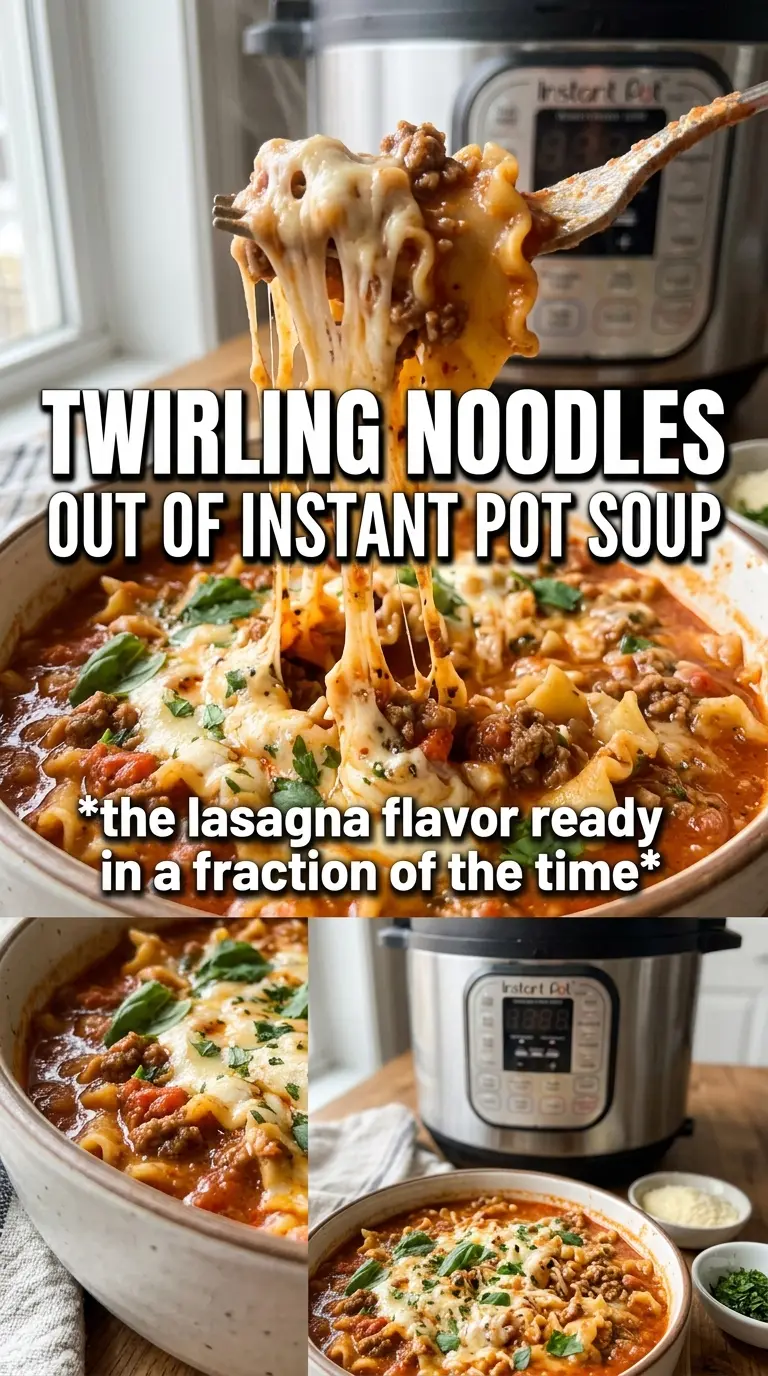
- Italian sausage — This is the backbone of the soup. It brings fat, seasoning, and enough savory depth that you don’t need a long simmer to build flavor. Mild or hot both work; hot sausage gives the broth more edge, while mild keeps it family-friendly.
- Tomato paste — A minute in the hot pot changes everything. It takes on a darker, sweeter edge and keeps the broth from tasting flat or canned. Don’t skip the sauté step here; that little bit of caramelization is what gives the soup that cooked-all-day taste.
- Crushed tomatoes plus diced tomatoes — The crushed tomatoes create the body of the broth, while the diced tomatoes leave you with little pops of texture. If you only have one or the other, use it, but the combination gives the best balance.
- Lasagna noodles — Broken into 2-inch pieces, they cook evenly and mimic the layered feel of lasagna without needing a separate pot. Standard noodles work best. No-boil noodles can become soft faster, so keep an eye on them if that’s what you use.
- Ricotta, mozzarella, and parmesan — The cheese mixture is the lasagna part of the soup. Ricotta keeps it creamy, mozzarella melts into the broth, and parmesan adds sharpness. If you use only ricotta, the topping can taste heavy; if you use only mozzarella, you lose that classic filling-like texture.
Building the Pot in the Right Order
Browning the Sausage First
Start with the sausage on Sauté and let it get color before anything else goes in. You want browned bits on the bottom of the pot, not gray crumbles swimming in their own fat. Drain off extra grease if there’s a lot, but leave enough behind to cook the onion. If the sausage is crowded and steams instead of browns, take a minute to break it up and let it sit undisturbed.
Waking Up the Onion, Garlic, and Tomato Paste
Add the onion and cook until it softens and looks glossy, about 3 minutes. Then stir in the garlic and tomato paste and cook for 1 minute, just until the garlic smells fragrant and the paste deepens in color. This is the layer that makes the broth taste built, not dumped together. If the garlic burns, the whole pot will taste sharp, so keep it moving and don’t let the heat run too high.
Pressure Cooking Without Overcooking the Pasta
Once the broth and tomatoes are in, press the broken noodles down under the liquid so they’re covered as much as possible. Seal and cook on High for 4 minutes, then do a quick release right away. That quick release is the difference between tender noodles and mush. If the soup seems a little thinner than you want, let it sit for a couple of minutes before you judge it — it thickens as the pasta finishes absorbing liquid.
The Cheese Finish
Stir together the ricotta, mozzarella, parmesan, and basil right before serving. A spoonful in each bowl gives you the creamy center that makes this taste like lasagna instead of tomato pasta soup. Don’t stir all the cheese into the pot unless you want a cloudier broth; the dollop looks better and keeps the texture more interesting. If you want the mozzarella to melt more, let the hot soup sit on top of the cheese for a minute before eating.
How to Make This Work With the Ingredients You Have
Dairy-Free Bowls That Still Feel Rich
Skip the ricotta-mozzarella-parmesan topping and finish each bowl with a spoonful of dairy-free cashew cream or a drizzle of olive oil. You’ll lose the classic lasagna filling effect, but the soup itself still has plenty of body from the sausage and tomatoes. A little fresh basil on top helps replace the brightness the cheese would have added.
Turkey or Chicken Sausage Swap
Use turkey or chicken sausage if that’s what you keep on hand. The soup will be a little leaner, so the tomato paste and cheese topping matter even more for richness. If the sausage is very mild, add an extra pinch of red pepper flakes or a little more Italian seasoning to keep the broth from tasting flat.
Gluten-Free Pasta Version
Use a sturdy gluten-free lasagna noodle or another short gluten-free pasta, but shorten the pressure time if the package suggests a quick cook. Gluten-free pasta can go soft fast in the Instant Pot, so check it early and release right away. If you need more control, pressure cook the soup base first, then stir in the pasta on Sauté until it reaches the texture you want.
Storage and Reheating
- Refrigerator: Store for up to 4 days. The noodles will keep absorbing broth, so expect the soup to thicken.
- Freezer: It freezes, but the pasta softens after thawing. For the best texture, freeze the broth and sausage without noodles, then cook fresh noodles when you reheat.
- Reheating: Warm gently on the stove or in the microwave with a splash of broth. High heat can make the noodles go past tender into limp, and that’s the fastest way to lose the lasagna-soup texture.
Answers to the Questions Worth Asking
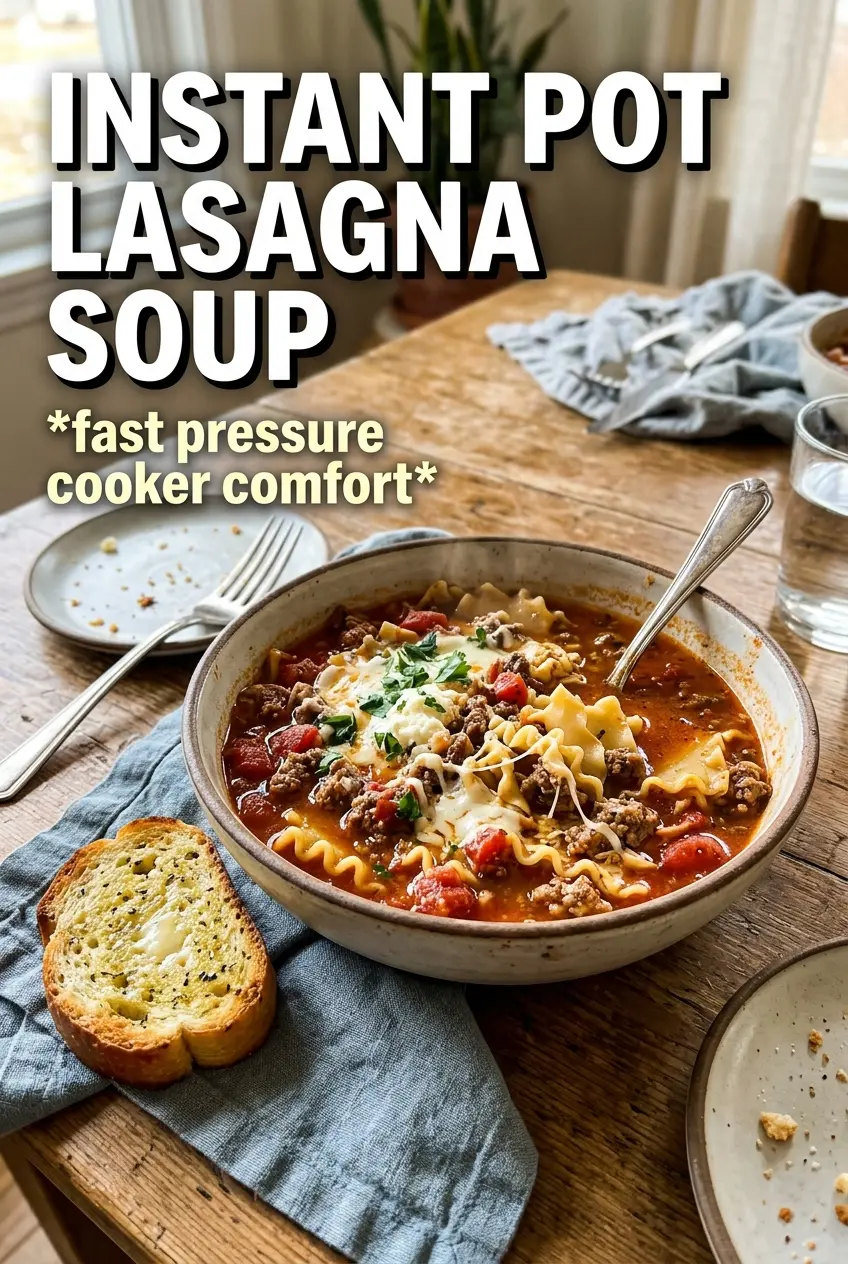
Instant Pot Lasagna Soup
Ingredients
Equipment
Method
- Set Instant Pot to Sauté and brown the Italian sausage, then drain excess fat.
- Add the diced onion and cook for 3 minutes, stirring until softened.
- Stir in the minced garlic and tomato paste and cook for 1 minute, just until fragrant.
- Add the crushed tomatoes, diced tomatoes, chicken broth, Italian seasoning, dried basil, and red pepper flakes, then stir to combine.
- Press the broken lasagna noodles down so they are submerged under the liquid.
- Seal the Instant Pot and pressure cook on High for 4 minutes, then quick release.
- Stir the soup, then season with salt and pepper.
- If the soup is too thick, add a splash of broth; if too thin, set to Sauté and simmer briefly until thickened.
- Mix ricotta, mozzarella, parmesan, and basil to form the cheese dollop.
- Ladle the soup into bowls and top each with a generous dollop of the cheese mixture.