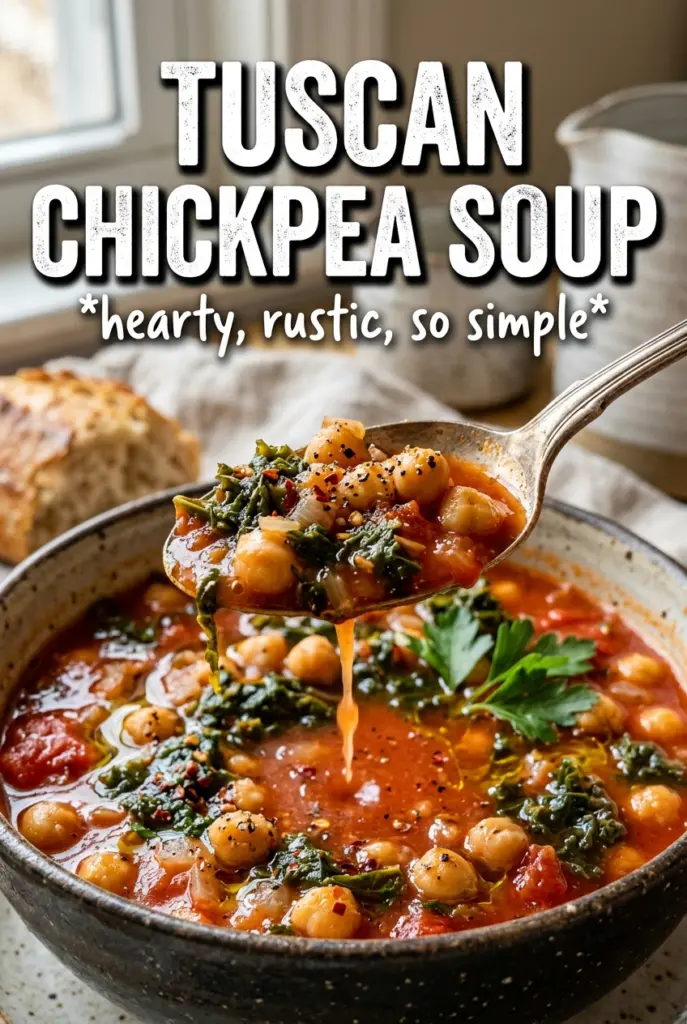
What makes Tuscan chickpea soup worth making again and again is the way it lands in the bowl: brothy but full, rustic without feeling heavy, and layered with garlic, rosemary, tomatoes, and just enough creaminess from the chickpeas to make every spoonful feel satisfying. The kale stays tender, the broth picks up a deep savory edge from the parmesan rind, and the finish with lemon and olive oil keeps the whole pot bright instead of flat.
The trick is building flavor in stages. Onion softens first, then garlic and red pepper flakes bloom in the oil before the broth goes in. That small bit of patience pays off. Chickpeas get a quick mash near the end, which thickens the soup without turning it into puree, and the kale goes in last so it keeps its color and a little bite.
Below you’ll find the small details that matter here: when to use the parmesan rind, how to get the broth thick enough without cream, and the swaps that still keep the soup balanced if you’re cooking around what you have.
The broth got so much richer after I simmered it with the parmesan rind, and mashing a few chickpeas made it taste thick and cozy without adding cream. My husband went back for seconds and asked if there was more for lunch tomorrow.
Save this Tuscan Chickpea Soup for the nights when you want a brothy, garlicky bowl with real body from chickpeas and herbs.
The Small Step That Keeps This Soup Brothy Instead of Bland
Most chickpea soups fall flat because everything gets dumped in at once and the onion never gets a chance to build a base. Here, the onion softens in olive oil first, which gives the broth a sweeter, rounder start. Garlic and red pepper flakes go in after that short sauté, not before, so the garlic tastes fragrant instead of sharp or bitter.
The other move that matters is mashing part of the chickpeas after they simmer. That gives you a broth with body while keeping the soup rustic. If you blend too much, the kale disappears into the pot and the texture turns pasty. If you skip the mash entirely, the soup eats more like vegetable broth with beans floating in it.
What Each Ingredient Is Actually Doing In This Bowl
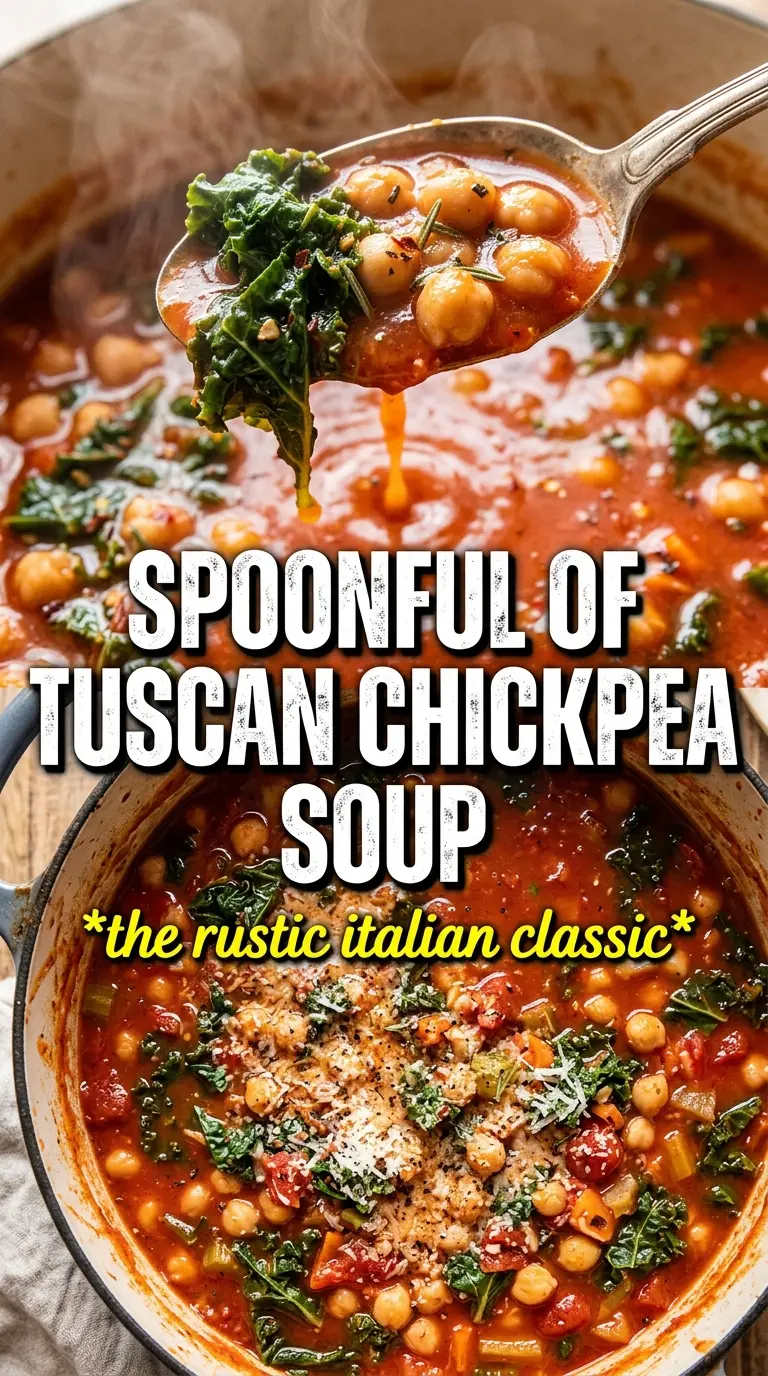
- Chickpeas — These are the backbone of the soup. Canned chickpeas work beautifully here because they stay intact but mash easily when you want more body. If you cook your own, use them fully tender or they’ll stay a little chalky in the broth.
- Fire-roasted diced tomatoes — These bring a gentle smoky note and a deeper tomato flavor than plain diced tomatoes. Regular diced tomatoes still work, but the soup will taste a little brighter and less layered.
- Fresh rosemary — Rosemary is one of the flavors that makes this taste unmistakably Tuscan. Use fresh if you can; dried rosemary can work in a pinch, but it needs a lighter hand because it reads woodier and can take over.
- Parmesan rind — This is where the savory depth comes from. It melts flavor into the broth without making it heavy, and it’s worth using if you have one. If you don’t, add a little extra parmesan at serving and a tiny pinch more salt.
- Kale — Kale holds its shape and gives the soup texture in the last few minutes. Chop it small so it softens evenly. If you swap in spinach, add it at the very end because it wilts fast and can disappear completely.
- Lemon and olive oil for serving — Don’t skip this finish. The lemon wakes up the chickpeas and keeps the broth from tasting one-note, while a final drizzle of olive oil gives the soup a smoother, richer finish.
How to Build the Pot So Everything Tastes Layered
Start With the Onion and Let It Go Soft
Heat the olive oil in a large pot over medium heat, then cook the diced onion until it turns translucent and sweet at the edges. You’re not looking for browning here, just softness and a little color. If the onion starts to catch, the heat is too high and the garlic that follows will taste harsh instead of mellow.
Wake Up the Garlic and Red Pepper
Once the onion is ready, add the garlic and red pepper flakes and stir for about 2 minutes. The garlic should smell fragrant and warm, not browned. If it starts to color fast, lower the heat immediately; burnt garlic will flatten the whole pot and there’s no hiding it later.
Simmer Until the Broth Has Real Body
Add the chickpeas, tomatoes, broth, rosemary, Italian seasoning, and parmesan rind, then bring everything to a boil before lowering it to a steady simmer. Give it about 20 minutes so the rosemary can perfume the broth and the tomatoes can soften into the liquid. Pull out the rosemary sprigs and rind before the next step, or they can overwhelm the soup with a sharp woody edge.
Thicken Without Losing the Rustic Texture
Ladle out about a cup of chickpeas and broth, mash them with a fork, and stir them back in. You can also mash some directly in the pot with a spoon against the side. The goal is a broth that lightly coats the spoon, not a puree. If the soup feels too thin after that, simmer it for a few more minutes before adding the kale.
Wilt the Kale at the End
Stir in the chopped kale and cook just until it softens and turns bright green, about 5 minutes. It should still have a little structure when you eat it. Overcooking kale makes it dull and mushy, and that’s the first thing to go wrong in a soup like this.
How to Adapt It When You Need a Different Finish
Make It Dairy-Free
Leave out the parmesan rind and finish with extra olive oil plus a little more lemon. You’ll lose some of the savory depth that parmesan adds, but the soup still tastes full because the tomatoes, garlic, and rosemary do the heavy lifting.
Make It Spicier
Increase the red pepper flakes to 1 teaspoon or finish each bowl with chili oil. Adding the heat at the end keeps it brighter and more noticeable than boiling it from the start, which can mute the spice.
Swap the Greens
Spinach, Swiss chard, or escarole all work. Spinach wilts in a minute, chard needs a few extra minutes, and escarole brings a faint bitterness that makes the soup taste a little more old-world.
Storage and Reheating
- Refrigerator: Keeps well for 4 days. The broth thickens a little as it sits, which is normal.
- Freezer: Freezes well for up to 3 months. Cool it completely first and leave a little room in the container for expansion. The kale softens more after thawing, but the soup still holds up.
- Reheating: Warm it gently on the stovetop over medium-low heat. Add a splash of broth or water if it seems too thick. Don’t boil it hard or the greens will break down too much and the broth can taste flat.
Answers to the Questions Worth Asking
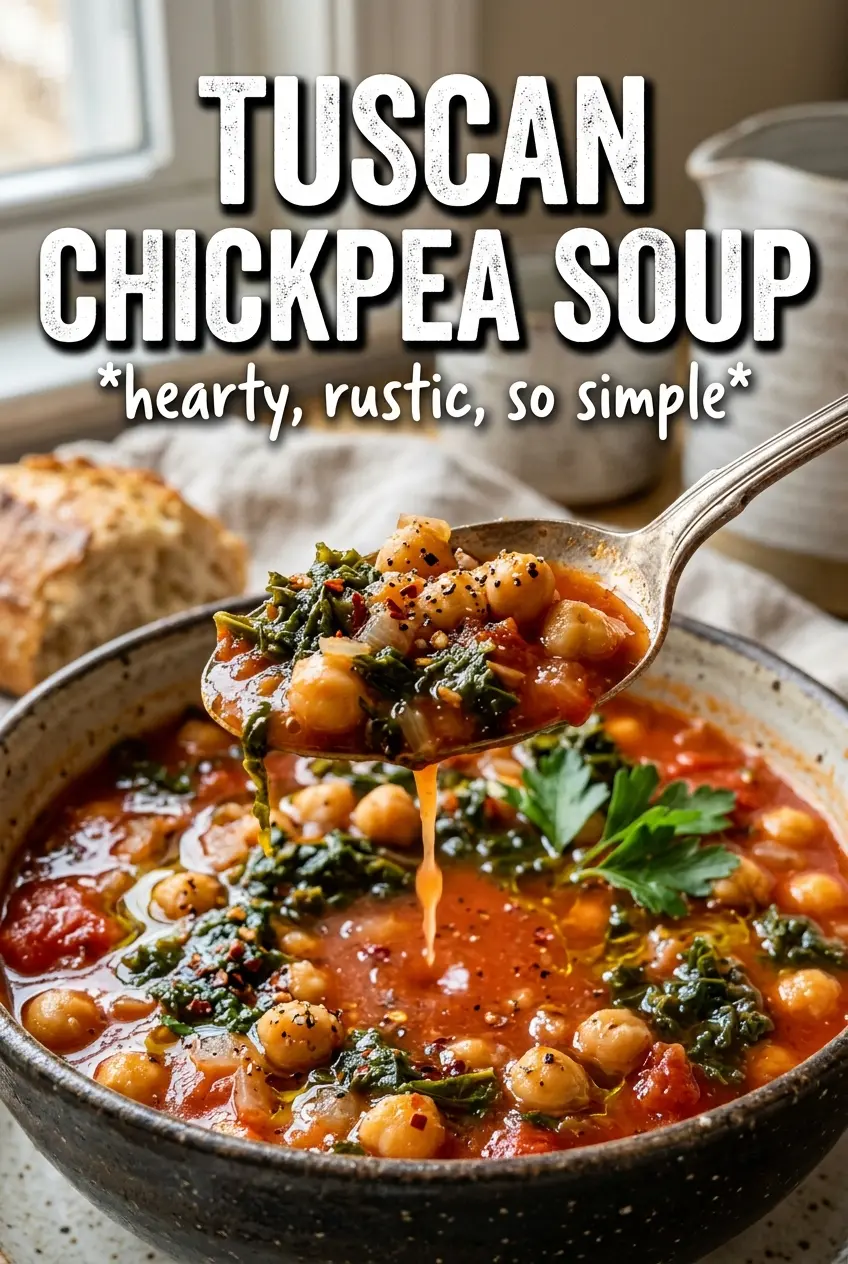
Tuscan Chickpea Soup
Ingredients
Equipment
Method
- Heat the olive oil in a large pot, then sauté the onion for 5 minutes until softened and lightly translucent.
- Add the garlic and red pepper flakes, and cook for 2 minutes until fragrant with visible sizzling.
- Add the chickpeas, fire-roasted diced tomatoes, vegetable broth, rosemary, Italian seasoning, and parmesan rind; bring to a boil.
- Simmer for 20 minutes until the flavors meld and the broth looks golden, then remove the rosemary and parmesan rind.
- Mash or blend about a third of the chickpeas until the soup turns thicker with a creamy texture.
- Add the kale and cook for 5 minutes until wilted and dark green.
- Season with salt and pepper to taste, then add lemon to brighten; drizzle with olive oil and sprinkle parmesan for serving.


