
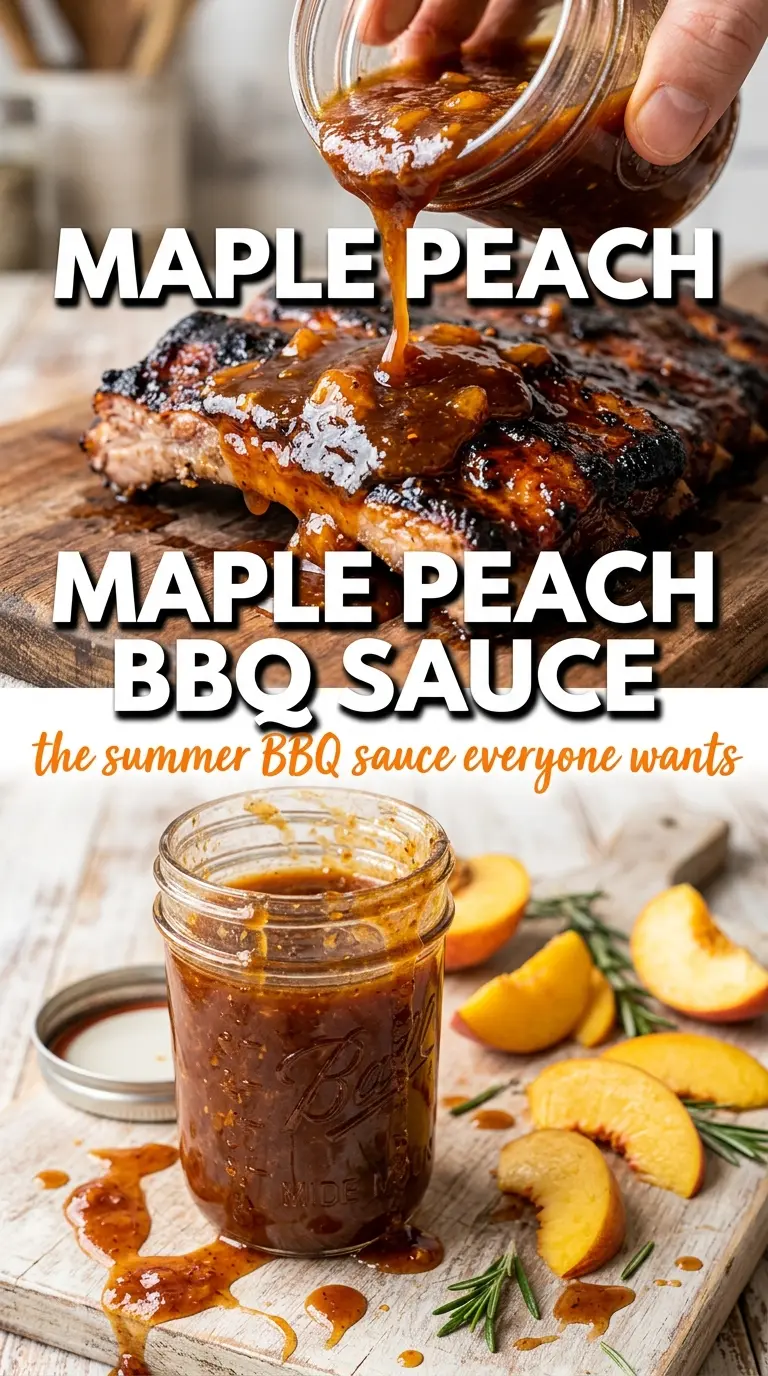
Glossy, sticky barbecue sauce with real peach body and maple depth earns a permanent place next to the grill. The fruit doesn’t just sweeten the sauce; it rounds out the vinegar, softens the smoke, and gives every brush-on coat a finish that clings to ribs, chicken, or grilled vegetables instead of sliding right off.
The key here is letting the peaches fully break down before blending. That extra simmer turns the fruit into a thick base instead of leaving the sauce watery or sharp. Maple syrup brings a different kind of sweetness than plain sugar, and together with brown sugar it builds a layered backbone that tastes cooked, not candy-sweet. A little cayenne keeps the sauce from turning flat.
Below, you’ll find the one texture cue that matters most, the ingredient swaps that still keep this sauce balanced, and the small finishing step that makes it thicken properly once it’s blended.
The peaches cooked down into the smoothest sauce, and after that last simmer it clung to the chicken instead of running off the plate. My husband kept sneaking spoonfuls from the pan.
Save this maple peach barbecue sauce for ribs, grilled chicken, and anything that needs a sticky sweet-smoky glaze.
The Trick to Keeping Fruit BBQ Sauce Thick Instead of Runny
Fruit barbecue sauces fail for one of two reasons: the fruit never cooks down enough, or the sauce gets blended and served before it has a chance to settle into a true glaze. Peaches hold a lot of water, so the simmer has to do more than soften them. It has to evaporate enough liquid that the sauce can coat a spoon instead of looking like a thin peach ketchup.
The second simmer after blending matters just as much. That’s when the sauce tightens up and the edge comes off the raw fruit texture. If it looks perfect in the blender but still seems loose in the pan, it will thicken a little more as it cools, so stop just before it reaches syrupy-jam thickness.
What Each Ingredient Is Doing in This Sauce
- Peaches — Use ripe peaches with good aroma and soft flesh. They cook down into the body of the sauce, and underripe fruit will stay sharp and fibrous. If peaches are out of season, thawed frozen peach slices work well; just cook off the extra liquid a few minutes longer.
- Pure maple syrup — This gives the sauce a warmer sweetness than plain sugar and helps it taste rounded instead of blunt. Use real maple syrup, not pancake syrup, or the flavor turns flat and overly sticky.
- Ketchup — Ketchup brings tomato tang, body, and salt in one move. It’s doing more work than it seems, so don’t swap in plain tomato paste unless you’re ready to rebalance the acid and sweetness from scratch.
- Apple cider vinegar — This keeps the sauce bright and cuts through the maple richness. If you need a substitute, white wine vinegar is the closest clean swap; use the same amount and expect a slightly sharper finish.
- Worcestershire sauce — It adds the savory depth that makes this taste like barbecue sauce instead of peach jam. There isn’t a true one-to-one replacement, but soy sauce plus a tiny splash of molasses can mimic some of the darkness if needed.
- Smoked paprika and cayenne — Smoked paprika gives the sauce its smoky backbone, and cayenne keeps the sweetness from taking over. If you want gentler heat, cut the cayenne in half; don’t skip it entirely or the sauce can taste one-note.
How to Build the Sauce So It Glazes, Not Splashes
Cook the Fruit Until It Collapses
Combine everything in the saucepan and bring it to a steady simmer over medium heat. Stir often at first so the maple syrup and brown sugar don’t settle and scorch on the bottom. You’re looking for the peaches to soften, then lose their shape completely; if they still look like diced fruit after 20 minutes, keep cooking because the sauce won’t blend into a smooth glaze yet.
Blend Smooth, Then Cook It Again
Once the peaches are fully broken down, blend the sauce until it looks glossy and even. An immersion blender is easiest, but a regular blender works too if you let the sauce cool slightly first. Return it to the pan and simmer a few more minutes so the texture tightens; this is where it goes from fruit sauce to barbecue sauce. If it seems thin right after blending, don’t panic — the final simmer and cooling time both help it thicken.
Season at the End
Salt and pepper go in after the sauce has cooked down. The flavor changes a lot as the peaches reduce, so seasoning too early can make the sauce taste either flat or too salty once it thickens. Taste it warm, then adjust the salt until the sweetness, vinegar, and smoke all sit in the same place.
How to Adapt This for Different Grills, Diets, and Pantry Gaps
Make it dairy-free and naturally gluten-free
This sauce is already dairy-free, and it can be gluten-free if your Worcestershire sauce is certified gluten-free. That’s the one ingredient to check carefully, because some brands include malt vinegar or other gluten sources. The finished sauce keeps the same texture and balance with no other changes.
Use frozen peaches when fresh ones aren’t ripe
Frozen peaches work well, and they’re often better than hard, underwhelming fresh fruit. Don’t thaw them completely before cooking; add them straight to the pan and give the sauce a few extra minutes so the extra moisture cooks off. The flavor stays bright, though the finished sauce may need a touch more vinegar to wake it up.
Make it spicier for ribs and burnt ends
Increase the cayenne to 1/2 teaspoon or add a pinch of chipotle powder for a deeper heat that hangs onto smoky meats. That change doesn’t just make it hotter; it pushes the sauce toward a darker, more barbecue-forward finish. Keep the maple and peach the same so the sauce still has contrast instead of tasting harsh.
Make a lower-sugar version
You can cut the brown sugar to 1 tablespoon and still get a balanced sauce because the peaches and maple already bring plenty of sweetness. The sauce will taste a little brighter and less sticky, which some people prefer for chicken or vegetables. If you reduce the sugar, just simmer it a minute or two longer so it still thickens properly.
Storage and Reheating
- Refrigerator: Store in a sealed jar or container for up to 2 weeks. It thickens as it chills, so don’t judge the final consistency while it’s still warm.
- Freezer: This freezes well for up to 3 months. Portion it into small containers so you can thaw only what you need, then whisk it after thawing to bring back the smooth texture.
- Reheating: Warm it gently in a small saucepan over low heat with a splash of water if needed. High heat can make the sugars catch on the bottom and turn the sauce sticky in the wrong way.
Answers to the Questions Worth Asking

Maple Peach Barbecue Sauce
Ingredients
Equipment
Method
- Combine diced peaches, pure maple syrup, ketchup, apple cider vinegar, Worcestershire sauce, brown sugar, minced garlic, smoked paprika, onion powder, and cayenne pepper in a medium saucepan.
- Bring the mixture to a simmer over medium heat, stirring frequently, until it actively bubbles.
- Cook for 20-25 minutes, stirring often, until the peaches have broken down completely and the sauce is thick and glossy.
- Blend the hot sauce until smooth using an immersion blender or regular blender, pausing to scrape down any thicker bits.
- Return the blended sauce to the pan and simmer for 5 minutes to reach your desired thick, sticky consistency.
- Season with salt and black pepper to taste, stirring until fully incorporated.
- Cool the sauce completely, then refrigerate in a sealed container for up to 2 weeks.